The interview posted below was conducted by yours truly, for the creative collaboration A Writer’s Shindig. Authors from the collaboration were all interviewed about their work as part of the initial project. This interview is about Stephen’s short story Trees Grow Around Wire. An author interview was posted after the conclusion of each story in the collection. You can read more about our collaboration and find all the previous interviews and stories at A Writer’s Shindig.
First things first — can you tell me a little bit about your writing? How long have you been doing it? What does writing do for you?
Steve:
My blog is nine years old. SteveForTheDeaf came from two things.
Firstly, as a long-haired, bone-idle twenty-something I spent hours debating music and trashy movies with other long-haired, bone-idle young folk in the pub. That was my kind of sport. I’m evangelical about low culture as high art.
Secondly, later on, I had a job that gave me untold hours alone in airports and hotels. Lots of travel, but on a fairly crappy budget. The blog felt like a fitting substitute for the pub. Me, my iPod, and my laptop wrote the first five years of it in waiting rooms, hotels, and terminals.
Over time, the writing itself started to wander. Reviews would drift into speculation, into narrative, into little flights of fancy. At the time it just felt like riffing, but looking back I think I was broadening my palette without really meaning to.
When Ted suggested setting up a story working group, it seemed to release something in me.
Like a sluice gate. And now I don’t seem to be able to stop writing short fiction.
It keeps me out of the pub at least.
Sarah:
The opening of your story evoked feelings of nostalgia in me for the farm where my grandparents lived. Your description of the cabin where your characters begin the tale is moving. Does this setting resemble anything that you’ve experienced in your own life?
Steve:
I’m glad it invoked a feeling of nostalgia. I did not grow up on a farm. I was an inner-city kid. So this, for me, was a kind of latent wish-fulfillment thing.
I do live in the countryside now, and when I see kids in our village getting fields and forests on their doorstep — wow. I just love that for them. Go on, kid. Get out there. I’m a latent treehugger. I love being in the woods. I mean love it. I walk for miles when circumstances allow. Through ancient forest and over hills. Me, my dogs, my wife. Heaven on Earth.
But I also know how I feel about where I grew up. I hated it then, and I hate it still. And when I knew I wanted to write from the perspective of a kid, I figured rural would help with an economy of characters.
Sarah:
Your protagonist could be anybody — any kid that never really fits into the life they’ve been handed. What do you think is the appeal of these kinds of misfit stories?
Steve:
I think we learn the rules of stories before we know we’re learning the rules of stories. Batman— or Master Wayne at least — Spider-Man, Carrie, The Ugly Duckling, Luke Skywalker. At their core they’re all “little kid lost”, off on an adventure.
At my most ambitious, I wanted to write something that had the sort of long shadows you find in A Monster Calls. Patrick Ness took an incomplete work from Siobhan Dowd and finished it after she died, and when I read it I was struck by the sense of before and after in that book. And I love an eldritch horror concept. I’m a big old goth at heart.
I also think that in this day and age, it might only be the misfits who actually read.
Sarah:
I also want to ask you about the absent mother. This element is common in fairy tales. I’d say there are other parts of your story that evoke an “other” fantastical realm as well. Did fairy tales play a part in the writing of this story?
Steve:
I did want to write a fairy tale of sorts. I can’t escape Poe or the Grimm, but I also wanted an old- school science-fiction feel. Something that could be rendered as a practical special effect — on screen, or in the mind. I use that phrase a lot: on screen in the mind.
While my mum was present, my upbringing was very male-centric. My dad. My brother. Uncles. Grandfather. All-male spaces are quite pungent. There’s rarely an objection to a workbench in the kitchen, a motorcycle engine on the dinnertable, or Swarfega for hand soap on the lavatory.
Sarah:
Without giving too much away, would you say that the protagonist himself is like a tree that grows around wire?
Steve:
Without wanting this to sound like therapy-speak, I think we’re all trees that grow around wire in a way.
The problems we face in life, or the things that shape us along the way that weren’t necessarily part of the plan, are the things we absorb into our personalities, into our behaviours, into our psyches, even our decision-making processes.
In this particular instance, nothing grows around that wire, because anything that touches it is cleaved clean. But does the boy grow around the presence into a man? Yeah, I’d say he does.
And he gets pretty close to it changing the course of his life. Even though he may have gone unpunished, or excused by the timeless indifference of the thing, he would certainly have taken a different route.
Sarah:
Finally, the protagonist is challenged by some difficult family dynamics. I like the way you tell the story of him maturing into a different kind of person than his father. But there’s a moment in the tale where the reader thinks that this might not be the case — “there was before, and now we were in the after.” What do you think might have happened had that moment gone differently between the two cousins?
Steve:
When I was talking to Ted about this story while I was writing it and we were workshopping it, Ted described it as a villain origin story that didn’t. I liked that.
The father in this feels to me like many men, especially men of a certain generation, as something of a blunt instrument. When he’s hurt, his behaviour is inconsiderate and selfish, but hopefully not in a cartoon villain way.
I wanted what the boy encounters in the woods to sharpen him rather than harden him. To make him more attuned to fear, consequence, and restraint, rather than less. So the idea that he grows into a man capable of a good life — one grounded in mutual regard, in valuing another person’s perspective — felt important.
When his partner later suggests making something safe, she represents a form of care that isn’t reactive or conditional. It’s simply present. She’s the first adult in the story who’s shown care as a resting state.
Sarah:
I loved reading these answers! Thanks for putting such time and care into them.
Steve:
Thank you Sarah. Can’t wait to hear about your story origins!
This story is part of the project A Writer’s Shindig. Stephen Bent’s story is the last of 6 short stories written for the project. You can read more about our collaboration and read all the stories posted thus far at A Writer’s Shindig.
The air outside was bright and heavy. Insects hummed in the grass. The clearing shone, almost white. Well, what passes for white around here. In each corner, where the sun caught the gravel, the bleached earth denied it had ever been mud, a bog, a puddle or dirt. It lay hard and unyielding. My favourite time of year. But I had no time to enjoy it. He was already walking toward the trees, rolling his shoulders like a boxer loosening up for a crowd that wasn’t there.
I followed because I was supposed to. “So this is it?” he said, not even looking around. “Your big wide whatever? Your secret world is just… all these bloody trees?” He gave a whistle, long and low. “Creepy as hell.” I felt utter contempt for this fool. “They’re just trees,” I said. “Yeah, and you’re just weird.” He found a stick and swung it at a branch overhead, snapping off the smaller twigs, enjoying the noise. “Have you got anything stashed out here? I reckon you’ve got dead birds out here. Or bones. Or dead girls.”
I said nothing. He laughed. “Look at you. Jesus. You go red when anyone talks.” We crossed the clearing. The house disappeared behind us the same way it always did. Obscured bit by bit, swallowed by trunks. When we first arrived, I used to stop halfway and check over my shoulder to make sure it hadn’t vanished for good. Now I knew each knock and turn. Each dip and shade. These woods. My Woods. Home.
So this time, I didn’t turn around. He kept talking. About how big his life was. About girls. About fights. About the bus ride home from school, and how a boy called Darren had cried when punched in the nose and mocked for bleeding. All of it was like he was performing for someone else. He prattled on. I endured, and the forest led us onwards. We reached the dip before I knew we were close. The trees thinned there. Like usual, the ground sloped away into the dell. He looked at me, eyebrows raised. “Is this something?” I gulped inside but didn’t let it show. “Oh. Careful,” I said. “It’s dangerous down there. It’s steep. Hard to climb out. I fell in once.” He grinned. “Then I guess we do it here.”
He shook himself down, arms loose and wobbling again. He made sure I saw his jaw was set. It was like he’d seen boxers do on TV, and I’d seen him do already. “I told you, didn’t I?” he said. “One day, you and I were going to fight. Guess what? Today’s your lucky day.”
He raised his fists. And here we were. Two cousins, facing each other. I didn’t lift my hands. I didn’t defend myself. He threw his first jab. Smiling. It was a phantom punch, all noise and wind.
It didn’t even graze me; it was designed to make me look to the left, where he pushed the air. It didn’t work. I just stared at him. He took a second swing. I moved aside. Not because I’m smart or agile. But because it was obvious and I was edgy and scared. That’s when he smiled. He knew the sport had begun.
“Alright then,” he said. “You’re in.” It was then that he hit me square in the stomach. The breath went out of me like a balloon. I doubled over, coughing. He stepped closer, still smiling. “Hard to climb out, is it?” he said. “Sumo rules. What if I push you in?”
He shoved me hard and full of contempt. My ire awoke. I shoved back. Dry dust sprayed around our shoes, my boots, and his trainers, scrabbling for grip. He was bigger. He was stronger. But I had fear. So much fear. Fear of the drop, fear of the thing that lived beneath it.
He lunged again. I crouched, half by instinct, half by prayer. His balance is off. He went over me, his weight too far forward, arms flailing. A grunt, a slip, a shadow, and then he was gone. Silence hit first. Thick, like time holding its breath.
Another one of those moments. There was before, and now we are in the after. I curled into a ball, as small as I could make myself. I tried to stop the world from moving. I knew full well what was down there. I’d known before we left the house. I knew.
I saw the speed he went in. The air in my chest felt cold and old, like the forest was holding it for me. But no… It turned out that’s not what happened. There was a noise. Not a scream. Not the clean, dry sound of something sliced. Just a heavy scuffle, the slide of earth, the crack of twigs. Then his voice. “What the hell is this?”
Coughing, spitting leaves. Then laughter, high and breathless. “Jesus. Thought you’d killed me.” I didn’t move. Didn’t answer. My hands were pressed flat to the ground, shaking. I waited for something else, some confirmation from below. But there was only his voice again, louder, surer now. “Are you coming down here, Shrimp? Are you going to help me out or what?”
The forest stayed still. No birds, no wind. Just the faint hum I sometimes thought I could hear until I centred myself and realised every time that it was my own heartbeat. I thought of it as the sound of the line remembering itself. But really, it was the hum of my own existence. I stayed kneeling at the rim, the sunlight hot on my back, listening to him thrash and swear. And somewhere underneath, that thinner sound, like a violin string pulled too tight, deciding, almost, whether to cut. I knew that sound was in my head. But it was deafening.
“My ear!” he exclaimed. “I cut my sodding ear.” The brute’s voice sickened me. But the risk to him down there was too great. Thrashing around in the presence of the thread, he was a danger to himself. That was too much for me to bear. “Cousin. Look to me,” I called down. “Give me your hand; I will pull you out.” He was still cupping his left ear as he made his way to the side I was standing on. Blood was making thin tributaries between his fingers from the cut to his lobe. I watched his every move. When he was close to the thread. When it was safely distant from him. I didn’t say a word. But he only ever really came close to it a second time once. And just for a moment.
He came over to my side. The safest side to climb out. Where tree roots made something close to a ladder if you knew how to look. I held down my hand. My cousin took it, and one foot after another, he made his way out of the dell. He walked back to the house, cupping his ear. Silent and changed, he went inside while I sat in the clearing looking back to the woods.
That month, I stopped returning to sit with the thread. Not out of fear. Out of respect. And because I no longer trusted myself around such simple solutions for things.
I carried with me for many years the weight of that day. The memory, shame and fury are ingrained with the time I almost led a member of my own ‘flesh and blood family’ to their doom at the threshold of an ancient and immovable presence.
The pallor that summer afternoon cast over my adolescence, my prime years and my middle passage from youth to man was immeasurable. I carried that weight like a cross. I knew full well what was there. But still, I let us go. I let him face that tall, thin and final thread. But he didn’t see it. It sliced him. His ear was disfigured for all time. And yet. He knew not what had happened. Not really. A scar. A moment. A long-forgotten occurrence.
Adulthood didn’t arrive with grand announcements. It came in small print: rent due on Fridays; laundry coins stacked in a jar; bus timetables folded into a wallet that always felt too thin. Or a pocket that was always too full of junk. I moved into town. College first, then university, then a job that changed names more often than duties. I kept reading, kept looking for straight lines where nature refused them. Those impossible edges that felt eternal. Sometimes I’d find them in a theorem proof, a gallery frame, or a shaft of light cut square in a cinema aisle. More often than not, there was nothing. Nothing with the exact, indifferent purity of what waited in those woods. Nothing that matched the thing I had studied and almost fed blood to.
Years did the quiet work years do. I became the person I wake up as. I met someone kind. Kind in the practical ways. The kettle is always half-filled; the coat is lifted from your shoulders before you ask; a laugh doesn’t need an audience. We lived above a laundrette. We are always surrounded by warm air and machine hum, a weather system of steam and lint. Lint that shows itself in the air. We built a routine you could lean your weight on without it giving way.
On Sundays, I phoned Dad. Weather, groceries, the price of this and that. Silence. His memory began to thin the way old fabric does: worn through at the elbows first, then everything else. Words slipped from his pockets like receipts he’d meant to keep. The hospital rang.
We drove back. He smiled at me without recognition, as if the person he meant to greet were standing just to my left. He’s been doing that for some time. This time, he was not listening when they gave his diagnosis. Three days later, he was gone.
Forester’s Cottage filled with murmurs after the funeral. Plates travelling from hand to hand, the low-tide noise of family using up all the words that never help. My aunt hugged me hard enough to mean it. My cousin hovered with a drink. His hair had grown long enough to swallow the missing crescent of his ear.
“Yeah, I’ve got a scar back there,” he said, scratching absently at the covered absence. “Never healed right. Funny how you don’t remember half these things.” He laughed once, weightless. “Bike accident, maybe. Or barbed wire. Doesn’t matter.”
That was the moment a gear clicked in me. Some wounds are larger from the outside; some histories are only visible if you were standing where the light fell. He clapped my shoulder and moved on, already smiling at the next listener, untouched by the clean, straight edge that had once found him.
When the house thinned of bodies, we stepped out. My wife didn’t ask where. The woods had a way of inviting and excusing at the same time. We walked without speaking. Branches recognised me. Accepted us. The path arranged itself out of habit.
At the lip of the dell, I breathed in air that had not moved since I was a boy. “Still here,” I said, not to be clever, just to answer something that had been asked. I went down the way my body remembered: heel sideways on the root that holds, palm on the slick bark that doesn’t. My mourning sitting on dirt and detail is unbecoming of the occasion. At the bottom, I hovered a hand over the place where the world narrows to a razor. My wife above me, outside the dip. Just looking around the woodlands and chatting to me like I was not facing the point in time that all separates into one of two.
I stood before the line. Looking up. High into the sky. Looking down. Deep into the earth. Cleaving all that passes through it into before and then after. I held out my index finger. Moved it closer and closer still to the break in the universe. Then I touched the thread. No noise. No speed. No hum. No movement.
A sting, bright and clean. A single bead of blood formed and fell, dividing itself again on a leaf below as if to show its working. Something loosened in me that had been tight for decades. Breathing deep, I stood stock still for a moment. Then, satisfied, I climbed back up.
My wife was waiting, looking down into the dip as if reading a warning sign only she could see. “This doesn’t look safe,” she said, voice low. “We should fence it off. If a child fell in there, they’d struggle to get out.” My throat tightened. “Yeah,” I said. We probably should.” She took my uninjured hand, and we walked away together. Behind us, a leaf let go and, mid-air, calmly became two. We didn’t turn.
Together, we packed the last of Dad’s things. The door took the key and clicked in that small, respectful way old locks do. In the car, the headlights combed the trunks, pulled long shadows up toward the sky and let them go. The road ahead curved the way roads curve in the real world: not straight, not fair, simply going where it goes.
“Given time…” I said to the windscreen. “Mmm? Sorry, love?” she said, drowsy from the day. “Trees grow around wire,” I said, and smiled because she didn’t know the source but understood the sentence.
This story is part of the project A Writer’s Shindig. Stephen Bent’s story is the last of 6 short stories written for the project. You can read more about our collaboration and read all the stories posted thus far at A Writer’s Shindig.
It was not a stumble; I didn’t snag my boot on a root or slip in the wet. It was a drop. It was that precipice. And I ran straight off the edge of it. Straight off of the world I’d been hurrying through and into a deep, high-sided bowl scooped into the forest floor. A hole in the ground, slick with leaves and shadows. I had landed hard on the side of the hole and slid down into its lowest point. With the breath punched from my lungs and my momentum stopped, I collapsed into a heap near the bottom. Something metallic skittered away from me into the mushy, pulpy leaves as I came to a stop. The compass.
I scrambled toward it instinctively, fingers reaching to grasp the gift Mum had given me for Cubs. And then I froze. Bewildered by what I saw. The compass lay in two imperfect pieces. Cleaved. One side was almost two-thirds of the object. The edges are as clean as polished glass. The rectangle the dial was mounted on now looked like a wedge. The glass was not cracked but cut perfectly with glinting edges. The needle too was severed. The larger part lay on top of leaves; the smaller piece continued to tumble for a second longer.
Something brushed my cheek. As light as a whisper. That’s when I saw it.
A vertical line, rising from the earth exactly where the compass had fallen. Thin as spider silk, yet unmistakably solid. Impossibly tall. It climbed past twisted branches into the colourless sky, unwavering.
I held my breath. A leaf drifted down lazily. As it touched the line, it parted silently. Two halves spiralled down, settling on either side. I studied the two halves of the leaf as they spiralled down to the ground, now on two separate paths of wind and gravity. One half clipped the line a second time. It became two more pieces again. One larger, one tiny. Finally, they rested on the ground. One right by the point the line stands proud of the earth. My eyes widened as I drank in the details of all the leaves around it. They were all cleaved in two by a perfect straight edge.
I surveyed the ground, and there are twigs in amongst the leaves. Does it cleave the trees the same way it did the leaves, my compass? When the wind blows a twig into its path?
Slowly, the slowest I’ve ever moved, I eased backwards. The line didn’t move. It didn’t hum. It simply existed. Standing impossibly tall. From the leaves to the sky.
Only when my back met roots sticking out of the side of the slope did I stop backing up. I sat there until my breathing calmed, until my panic-beating, rage-driven heart softened into something smaller. And I looked at the line reaching up into the canopy of the forest. And I felt its presence. I felt like it might feel mine too.
It went so high I could not see the top of it. It was so thin I wasn’t sure at what point I lost sight of it. Was it where it met the branches of trees? Staring up, I was convinced I could see it reach past the top. A circle of branches seemed to part around it, allowing it to sail up into the grey above.
Did it reach the sky where aeroplanes flew? Would it cut a 747 in two the way it did my compass? Did it go into space? Did it reach down into the rocks below? How long had this thing stood here? Was this bowl in the ground caused by it? I had so many questions. Until I hit upon one that scared me more than the others.
Is it alone? Was this the only strand of immovable, sharp cutting edge in this forest? Or were the woods full of these things? Slowly. Very, very carefully, I tried to leave the bowl. Pulling myself up on the roots, I began to plot a route out of the dip. As I climbed out, my caution focused on two things. Don’t fall backwards, don’t slip, and don’t suddenly find yourself face to face with the razor’s edge. And keep your eyes peeled for others. Watch how the leaves fall. Look to the sky, look at the leaves. Don’t accidentally rush into another one.
On the walk home, I moved so slowly I must have looked like a statue at times. I scanned every trunk, every post. Afraid of lines too straight.
When I got to the clearing, Dad was gone. I didn’t go out the rest of the day. He came home in the afternoon. Hauling firewood and a hessian bag of groceries into the kitchen. I put myself to bed without dinner in the early evening. But I didn’t sleep.
I didn’t go back straight away. My curiosity grew quietly, like roots in cold soil; the terror of escaping the line became curiosity about what I’d seen and then doubt that I’d seen it at all. Dad and I found a routine. Ways to keep the peace between us. Fragile though it was. We stopped talking about Mum. We stopped talking about feelings. We discussed many things. Fire, woodwork, car maintenance, and school bus routine. But never thoughts, hopes or fears. And that way, we didn’t openly hate each other.
I tried to be as invisible as possible at school. Stay in the crowd. Slip off when nobody is looking. Find ways to not be seen or picked for anything. That part came easily most days. But I couldn’t shake the feeling I’d seen something totally unique. I’d seen and interacted with something utterly eternal. Weeks went past, and whenever I closed my eyes, I saw the crack in the world. the hairline fracture that had the sharpest edge imaginable.
Eventually, I went to the school library. Miss Redding pointed me toward reference books and told me not to bend the spines. I found nothing useful. Optical illusions. Fences. Power lines. Light refraction.
But one afternoon, buried in a battered paperback on rural hazards, I found a single line. ‘Given time, trees will always grow around wire.’ Plain. Unadorned. It hit clean. I borrowed the book and read that sentence nightly. Sometimes I traced it with my finger. I didn’t fully understand. But it felt like the shape of something true. I still didn’t tell Dad. Silence had become furniture.
By the time I’d reached thirteen, I’d decided that would be a watershed. A real teenager. A young adult. The age of many. I walked deeper into the woods after school every night. testing my boundaries. My caution around there being ‘other lines’ remained. But I developed safe paths. In, out, around. One summer evening, my feet found their way back to the dell before my mind caught up. I knew for months and months that I’d come back. I just didn’t know it would be this night. Until I was there. The evening sun had taken on a golden glow.
The thread was still there. The sunset caught the line high above the trees. A shaft of gold. Beautiful but almost so thin you would not see it if you were not looking for it. But I’d been looking for it subconsciously every day in a way. Wondering if it was thinking about me the way I had been thinking about it. But it hadn’t. It had just been here. Not moving. Not wanting or waning. Just here. Solid and so, so thin.
As I gazed up and down the line, and without thinking, I started to climb down into the hole. Gently and carefully planning my route so I didn’t slip. I never took my eyes off of it. The fear remained, but my curiosity stood taller. Once on the flat earth of the bottom, most leaves from the autumn had rotted away, so I stood on grass and moss. I sat at the bottom for hours, watching consequences fall in silence. When I finally climbed out, my head felt clearer.
That scared me more than the thread did.
I returned monthly. Respectfully. I never touched it. I watched raindrops bead along its length in summer storms, splitting into twin streams when they met the line. I tested grass blades, feathers, and twigs. Each parted perfectly. I pondered the line from the book, “Given time, trees grow around wire.” I had seen it now with my own eyes.
The fence around the clearing that circled the cottage, our home. Part taught, part wire fence post. Where it passed the first row of trees that marked the edge of the forest, there was a fine example. A fence that Dad had told me he had helped put up with Grandad. Back when he was my age. It was now absorbed as part of the environment around which the tree lived. There was no hole in the bark. The wire went in one side and came out the other.
The fence posts themselves had weathered and weakened with age. They still stood up. But they were not the formidable structure they once had been. But for the trees’ intervention, they would have remained in place. Doing their job. The trees’ absorption of the presence of the fence was indifferent. The trees just kept growing despite the man-made barrier. Until it was part of the fence, and the fence was part of the tree.
So I sat looking at this thing. This implausible, eternal, indifferent, deathly thing. The thread wasn’t violent. It was indifferent. And that spoke to me in fearful ways I couldn’t name.
At fifteen, an axis shifted again. Dad made up with his sister, my aunt. For years, they hadn’t spoken. Not since we moved to the cottage. Was it because we moved to the cottage? I didn’t know. But now they were reconciled, and that meant my cousin on my dad’s side reappeared in my life. Two and a half years without him had passed. I didn’t realise what a pleasure that had been.
Always confident, a lot taller, with a grin sharpened by universal approval. I couldn’t bear him. All adults adored him, instinctively. He was a bully. Behind the scenes, a violent thug with a clean smile and a way of throwing adults off his scent. I could smell the rot in him. And he could smell the fear in me.
We ate dinner at my aunt’s house. Voices overlapped. Laughter inflated the room. The years apart seemed to melt away for Dad and for my aunt. For her husband and for my cousin, too. They talked of memories. Of what was missed in between, but never of the rift. Never of reconciliation or regret. Only forward. They drank and ate and made merry. And when the meal was done, they encouraged my cousin and me to head outside together.
To get some exercise. To go and have some fun. My cousin seemed to genuinely like that idea. He said he wanted to show me his bike. His goalposts. His den is at the bottom of their huge garden. I nodded in agreement and dreaded the idea. So once plates had cleared, and adults had uncorked another bottle, we were dismissed.
At first, things were polite enough. We sat on the patio furniture while my cousin spun the wheels on his upturned BMX and talked about brakes, tyre treads and pads that fitted on the frame of its hot-rod red frame. I was polite. I told him my bike was once Grandad’s. It weighed a ton. He laughed and called me a word I’d never heard before. I knew it was a slur.
As our time in the garden wore on, his tone shifted. “Why’d she really leave?” he whispered after putting his bike away as he tried to keep a run of volleys going with a football. “I don’t know,” I muttered, and he kicked the ball at me. It hit my hands and bounced back to him. He laughed. “She used to buy me good birthday presents. “I liked her,” he said, rolling the ball on his foot again for another three keepie uppies before it rolled off onto the lawn. “Me too. She was good at presents.” He cuffed the back of my head. “Bet she couldn’t stand the idea of living in those woods. You reek of them, you know.” I said nothing. Some cruelties are rehearsed. He’d been thinking about sticking me since I entered the house. I could tell. And now he’d done it; I just hoped he was done. “We should get into it one day,” he said. “You and me. Mano and Mono.” I didn’t correct him.
A month later, my aunt and her whole rotten household visited our cottage. Dad and Uncle shared manly exchanges outside the cottage. Roasting each other lightly with teases and roughhousing. My aunt had me show her around the cottage. She seemed to disapprove of the state of every single thing she saw. My cousin seemed even bigger and more verbose outside of his home. In mine, it felt like a violation. My quiet, monk-like peace and carefully trodden routines are violated by loud voices, questions and judgment. Again, a big meal where we all sat across the table. My aunt cooked it before she came. She heated it up once it had got here. I have to admit it was nice to have new potatoes, carrots and gravy. To have home-cooked (but not this home) food filling the house with a smell that made me remember Mum.
Dad had the wine covered. This is what was considered his way of hosting. Provide the wine. And the sloes. The stuff he’d got bottled under the stairs. Grimy-looking second-hand bottles filled with homemade forest-fruit-based booze. When opened, it reeked, and it always made the glasses dirty. I knew they’d get to that wretched stuff soon enough. So I tried to make my excuses. “I’ve got homework to do. I have to go to my room later.” I was planning to give myself some quiet time. Hoping my cousin would find me boring and want to stay with his parents and Dad instead of me. I wanted an escape boat in time.
“Don’t worry about that,” boomed Dad. “Why don’t you show your cousin around? Show him what you find so fascinating in those woods all the time.” I wanted to protest. I wanted to just say no. But I always do as I am told. So when the last of the ice cream and crumble had been scraped from the bowls, my cousin’s hand on my shoulder was all the signal it took. And that was the end of the only good meal I’d ever tasted in Forester’s Cottage.
“Come on, Shrimp,” he said, and the adults all laughed. “I’ll race you through the woods.” I suddenly wanted to throw up everything I’d just eaten. “Go on, son. Get out of here. Give us adults some space, yeah?” I nodded. I swallowed hard. And I went to pull on my boots. I just knew this was going to go badly. I just knew.
By the time I got one boot on. He was already trying to rag on me more than I had the willpower to bear. “Come on, Shrimp!” he shouted again. It got him a laugh last time. Why not, eh? It was like it was a name everyone agreed I deserved. The adults laughed from the table, their voices thick with drink. Dad called after us, “Don’t go too far!” and then laughed at his own line, as if danger itself was a punchline.
This story is part of the project A Writer’s Shindig. Stephen Bent’s story is the last of 6 short stories written for the project. You can read more about our collaboration and read all the stories posted thus far at A Writer’s Shindig.
I was 11 in 1985. We moved into Forester’s Cottage in early November, when the light went thin, and the trees stood like grey ribs around the clearing. Every winter before that, the streets had been lit by street lamps and rain on concrete, reflecting headlights. Living among these trees was the first time I’d seen real dark. Black featureless nature. A void of light on the really overcast nights.
The cottage had belonged to my grandfather. I didn’t ever get to know him, not really. I remembered boots by the door on the day of the funeral, mud flaking off them like scabs of dried outside dragged in. I remembered silence. It wasn’t like darkness. Silence always had something else in it. Smaller things, in the distance, in the walls.
Inside, the house smelt of damp wood, old stone and older tobacco. Dad propped the back door open while he hauled our boxes from the car, his wheezy breath fogging in the cold like it came from good lungs. I followed behind, hugging a damp cardboard box marked Bedroom. The cardboard had gone soft, and none of the straight edges held their intended lines anymore. The tape curled up the sides, peeling away from the pulpy frame but keeping the flaps in line. I held the bottom just in case.
We unpacked badly. Like men. Boxes slumped half open on the landing; coats hung from bent nails hammered into beams decades ago. Dad’s dad was a rudimentary decorator. Dad stacked tins in the cupboard and wiped dust with his sleeve. In the lounge, a gas fire hissed, trying its best. The smell was round and cloying. It filled the room up to your chin.
My box held my battling robots, lots of socks, some old schoolbooks from my last school, and the little brass compass Mum gave me when we walked the coast last summer. The hinge stuck, but when I pressed the clasp, it sprang open. The needle quivered toward north. I snapped it shut. Mounted on a rectangle of metal with a hole drilled in the bottom. I’m supposed to wear it around my neck, but the string went missing long ago.
That first night, the noisy new quiet pressed against my ears. When it was this kind of silent, even my breathing felt rude. I’d have to work out where it fits in between the fox barks, the owl hoots, the trees creaking and the plumbing groans. I lay awake, listening to the wind rattle the eaves and the gas ticking in the lounge. Somewhere deep in the house, floorboards sighed like someone shifting their weight.
Days blurred, cold and grey. Dad made tea that tasted of mud and disappeared into the woods with maps he didn’t explain; when he returned, he was always tired and short-tempered. The woods surrounded the cottage. Some days, I wondered how he got the car out because the trees were so dense in all directions.
I explored the clearing we lived in cautiously. There were carpets of moss, lying slick on fallen logs. I found many pale mushrooms clustered like tiny hands with little hats on the fingertips. Pools of cold, dirty water could always be found lurking between stones. If you ventured into the shadow, the place changed so fast. Three minutes into the trees, and the cottage vanished behind a crowd of indistinguishable trunks.
When I went to school, I would often sit alone on the bus. Mud on my shoes and a bit up my trousers, the smell of Dad’s cigarette smoke in my jumper. The other kids didn’t speak unkindly to me. They just didn’t speak to me. At all. School was cold. Small and smelled of disinfectant constantly.
We had been in the cottage about six weeks. I had been at the new school for about two years. Dad was drinking before he cooked. That was never a good sign. Burnt liver and onions again. He’d even put some wine in the pan. It made it taste funny. All I said was, “Mum never cooked my food with wine.” He took my plate, which still had most of the meal on it, and poured it into the bin. “She’s not coming back,” he said.
My fork was still paused halfway to my mouth. The last morsel of food balanced on it over the table. He swooped in and swallowed it whole off the prongs. “She left. The stuck-up cow! Wanted something else. Someone else. You’re stuck with ME! That’s just how it is.” He boomed as he chewed my last bite of food. My throat tightened. My belly rumbled. My eyes swelled. The cottage’s walls pressed in.
“You’re lying,” I whispered. Dad’s jaw bunched. “Don’t start. You’re done. Dinner is done. Get upstairs. BEDTIME!” He roared as he reached for the wine bottle.
“Mum loves me. I know she does.” I said as I sloped away from the table. His voice cracked. “Then why isn’t she here?” In a low hum, the sentence trailed off into a pained noise. “Because of you,” I said, and as I spat the sentence out, the words tasted older than me. They smelt of tobacco and wine. He sighed in that way he always did when he’d had enough and conversation was over. “Bed!” he commanded. I did as I was told. I always do as I am told.
Upstairs in that creaky, damp, wonky, stinky bedroom, I curled myself tight in my blankets. Pulling them in so hard against my chest. My hands hurt, and my shoulders set like clay. The patchwork one Mum had knitted for me still had the faintest smell of her washing powder in it. I’m not even sure Dad used washing powder.
I don’t think I slept a wink that night. It was like the floorboards, the owls, and the plumbing were mocking me.
I didn’t ever hear Dad creak up the stairs all night. I kept hearing him moving around. There were chairs, doors, and the tap on the sink making a deep donkey-like groan as he washed something up at two am. But I am sure he didn’t sleep. When I felt brave enough to come down for breakfast, he was still sitting there in the kitchen. The wine bottles were three now. Two big ones and a half-size one. Like a little family. Mum, Dad and me…
He barely looked up when I walked across the stone floor of the kitchen. I rushed to find my plimsolls by the back door because I could feel the cold through my socks so strongly that it felt like my feet were getting wet. I pulled them on and turned back to the kitchen table. He was leaning like a wounded hero in a movie. Holding his side. “Do you want tea?” I asked almost silently.
“Mmmm” was his only reply. I took it to mean yes. So I lifted the kettle from the stovetop and, with both hands, hauled it over to the big porcelain sink. I had to tiptoe still to reach the tap at the back. The whole time, Dad just sat there. Barely moving.
When the kettle was full, I hoiked it back over the edge of the sink. Spilling a little from the movement of the water inside. I carried the heavy steel kettle back to the stove. Passing Dad a second time on my way. I lifted it over one of the burners. A scraping noise rang out as it found the central point over the ring. Placed the hefty container on the iron grid around the rink. “Tea?” I enquired as I reached for the matches. “Dad? Tea?” He looked directly at me as I stood there with the matchbox in one hand and a lone match in the other. His big hands held out before him now silently commanding me to hand over the fire-making tools. I never get to do the best bit of anything.
I placed the matchbox and the lone match in his two palms. He rolled the stick across his fingers and through his knuckles without really gripping it at first. It arrived between his thumb and finger like a magic trick. He struck it hard and short against the rough side of the box. The crack and spark of the match head fascinated me as I watched. For a moment, he held it still. Letting the baby flame grow past the risky stage of an early end. Once we had an assured ‘burner’ on the go, he handed it to me like a tiny torch.
Carefully and with my hand cupped to protect the flame, I made my way back to the stove. I held my palm so close to the glowing bulbous light, hoping to feel more heat than I could bear. But it wasn’t so hot. Once the gas was lit, I searched the fridge for butter and milk. We had enough of both. And the bread bin still had three slices in a Sunblessed bag. The noggin looked OK, but the slices had early signs of blue dots. “Bread’s mouldy,” I muttered and shook the bag so the slices landed on the cutting board. Dad still barely moved. “Dad. The bread’s mouldy. Do you want something else?” He looked at me as if I’d just insulted him. “A bit of penicillin never hurt anyone,” he said, unblinking. I didn’t understand. “Do you need a tablet, Dad?” He held out his hand, but I was unsure of what he was asking for, so I just put my small hand in his. “Are you OK?” He closed his rough, warm fingers around my whole open palm. “Toast those slices, Son. A bit of mould will do us no harm.” I made a face. He didn’t like it. “No harm at all,” I tried to pull my arm away.
“I don’t want to eat mouldy bread, Dad. I don’t want to.” He closed his eyes, like he always did when he was ‘searching for his patience’. “You eat what we have, so there’s no waste, and you get a full tummy, Son.” I knew he was in a mood that could not be resisted, but unwisely, I continued to disagree.
“No. I don’t want to eat mouldy bread.” I pulled my arm from his grip. He looked outraged. “Mum never let the kitchen get like this,” I blurted, looking for words that would have maximum impact. That one didn’t land. He just put his hands on his knees and glared at me. “She’d never let things get into this state,” I reiterated. Dad smiled a threatening smile. “Don’t you mention her again, Boy.” I knew this was a precipice. A cliff edge in the conversation. I just walked out into thin air anyway. “Don’t YOU talk about her. She’s my mum. She’s mine, not yours. Not anymore.” I felt the air leave my lungs, the kitchen, and the world. I could hear a pin drop in that moment. He looked at me like nothing I’ve ever seen before or since. Like the world split in two that moment. There was before. And now we were in after.
Dad’s chair scraped. He rose sharply, but I was already running.
Cold air slapped my face as I bolted out of the kitchen door; I darted across the clearing. In twenty long strides, the forest swallowed me whole. Sharp black branches whipped my arms. Leaves skidded underfoot. Roots snared my boots. But I was not talking to gravity. I was a prey animal in flight mode. I pounded and pounded my feet against fallen leaves and squelchy muddy bits, leaping over twisted fallen branches and heading downhill. Deeper and deeper into the woods. I saw the leaf colours change. The reds and browns darkening to muddy, spotty, wet, half-rotted blacks. The ground tilted.
The interview posted below was conducted by Stephen Bent, a writer, blogger, and contributor to A Writer’s Shindig. Authors from the collaboration were all interviewed about their work as part of the initial project. This interview is about Ted’s short story Strapped for Love. An author interview will be posted after the conclusion of each story in the collection.
Steve: Hi Ted. I’ve got half a dozen immediate questions. We can dig down into each one for further stuff when you’ve considered them. Let’s start with origins and research. Strapped for Love feels grounded in real systems and objects, from Nevada’s brothel laws to the Vincent Black Lightning itself. Did the story begin with any of that real-world research, or did those details emerge as the narrative took shape?
Ted: I started with two very loose ideas, a song and an incident at work. The song is a Todd Snider story song called 45 Miles, where he’s talking about driving between Lake Tahoe and Reno to do a show, and there’s snow on the road, and they have a car accident. My wife and I do that drive all the time, so I’m familiar with the location and the fear of driving in snowy conditions-I’ve hit the mountain a couple of times, if you know what I mean. In the song he says they’re all listening to Richard Thompson on this drive. Now I had no idea who Richard Thompson was but Todd’s turned me on to lots of good stuff before, so I went looking to see what I could find, and there was this great sort of folky outlaw fable with amazing guitar and it was about this really famous motorcycle and a girl called Red Molly and Box Hill, which I’m guessing you’re familiar with. So that was something I wanted to do something with about the time we started this project. The second thing was a fellow and a girl who came into the bar and the girl was just really mean to both me and him. She asked for a shot of expensive tequila and when I told her there wasn’t enough and I would have to get more she got angry with me. “Just give me what’s in there-I’m not paying for it-he is.” I wanted to know why someone would order something like that and not want all of it. It only dawned on me later that she didn’t give a rat’s ass about the tequila-she was there meeting the guy who’d hired her and they were just passing time before they went off to their hotel room. Those sorts of transactions happen sometimes here and they’re always fascinating. The dynamic stuck with me and I wanted to talk about it from the girl’s side. I did do a little Wikipedia diving on both Nevada brothels and the Vincent Black Lightning, and from that I got to learn about Fairport Convention and Sandy Denny too. Did you know she did the background vocals on “The Battle of Evermore?”
Steve: I did know that, Ted. The only female on any OG Led Zeppelin recording. Sandy is sorely missed. And that song is my sister in law’s favourite (Vincent Black Lightning, she doesn’t care for LZ). Fantastic answer and all more reason to love Todd Snider. Next I want to dig into your writings historical and technical specificity. In this and your other work I’ve noticed you reference specific historical events and period technology. Is Strapped for Love part of that same impulse you felt in your novel Mansfield Ohio?
Ted: Mansfield, Ohio I really wrote for my mother, who grew up in a terrible situation. My family’s roots were in the Ohio River Valley. My father’s family were dairy farmers and railroad engineers, two things that have largely disappeared in this world. Grandma on Mom’s side was an architect, at that time a woman in a man’s world. I don’t have many memories of my visits to Ohio, so I did do some research. Timothy Brian McKee’s blog about Richland County was invaluable, and I offer him belated thanks here for the leads he gave me on Park Avenue West, the Hotel Lincoln, the Three Graces fountain, the heady days of Malabar, the Mansfield Tire and Rubber Company, and especially Mansfield’s underground restroom, which led me to William E. Jones’s Tearoom. The Westinghouse Ballroom I found on Facebook, along with many folks’ happy memories. I watched Mechanized Death at some point in high school, and that tied right in; at that point, it was almost like someone else was writing the story for me. I have a fascination with cameras, the balance of security and intrusion they give us. In the world where we exist those little girls might never have died, but on the flip side the invasion of Michael’s privacy killed him. Strapped for Love is much more based on my personal experiences and locations I can see from my front door, or near it. I think markers readers can relate to are important in a story, to bring them in, to make them say “hey, I remember that” or “I get that.” I hope I got some of them right.
Steve: Fantastic answer, Ted. I agree on markers in stories. They tell on the author and the reader in the same way. A great leveler. Like the references in songs you mentioned they can also provide a new perspective. Just like Todd and Vincent Black Lightning. I’m now seeing some things differently due to this marker insight in your own work. It’s a powerful tool and you wield it well. Music seems integral to your work even when you sideline the description of it slightly. Do you write to music?
Ted: I use music as inspiration for all of my writing. I still buy all my music (no streaming) and I make playlist after playlist. There’s so many references in my writing that I probably can’t even find them all any more, and that goes back to being fourteen or so and wanting to use every song title on Def Leppard’s Pyromania album as a chapter title for the idea that eventually became (The Moon is Too Bright) to See Many Stars. If you see something that tickles your music memory, know that I was probably thinking the same thing when I wrote it. It’s great for shared experience. It’s great for emotion. And another thing I like about music is the permanence of it. Steve, I know you’re a music guy, and that’s actually how I came across your blog. For those of you who aren’t aware, Steve is a wonderful resource for music, especially new stuff. I’ve gotten so many good recommendations from him. I wasn’t even searching WordPress when I found his work. I’d googled Mick Ronson guitar solos, and that sent me looking for the Wildhearts, and SteveForTheDeaf’s blog was the top hit.
Steve: That is very kind of you, Ted.
Ted: I have music playing almost constantly. All sorts of music, every genre that I’ve ever connected with. When I’m writing, if I’m in the right place, I don’t even hear it. For instance, we’re listening to “Sh-boom” by the Chords on constant replay in the house at this moment, because my wife is going to have to sing it in a play, which is going to be hilarious. And it’s not even driving me insane. Yet.
Steve: Ensemble storytelling is a tricky thing to nail. This story works as an ensemble, with no single character claiming the narrative outright. What draws you to ensemble structures, and how do you decide where to place narrative weight when several characters are in play??
Ted: I believe it’s the characters that drive a story, so when I need a story to go somewhere I tend to have a character that sends it along in that direction. Then I try to develop that character as much as I can, so that they’re not just a plot device or cardboard cutout. In Strapped for Love I had the very specific goal of starting with four characters who wanted something they couldn’t have. For Stacy it’s love. For Tim it’s excitement. For Janey it’s that motorcycle and the freedom it represents. And then for Two-Cents it becomes lifelong companionship, something he realizes he can have if he gives up other parts of his life. I also like to think that any of us could be any of those four characters with only a degree or two of separation from our actual lives.
Steve: Let’s step into uncomfortable territory for a moment. I want to ask you a classic writers question now. About writing characters unlike yourself. Many of your characters make choices you clearly don’t endorse. How do you approach writing people who do things you’d never do yourself, without either excusing them or turning them into villains?
Ted: With characters I try to see their side of things. I don’t tend to believe in either heroes or villains. I actually have a lot of trouble writing villains, because I don’t see the world as black and white and I find myself bypassing the temptation to judge choices or tell others what they should do. I think everyone and everything is influenced by the situation at hand and that creatures generally do what they have to do to in order to survive. For example, in my long fantasy tale (The Moon is Too Bright) To See Many Stars, I write from the perspective of both sides of the conflict. That could confuse readers who want answers to what is right and wrong in a world where those answers don’t exist. In my own life I often find that those answers come later; that my full understanding of a situation lags a long way behind what’s laid out right in front of me. I suppose the character of Tai is the exception to that in this story; he doesn’t really have any redeeming qualities. He’s a bully and a user, and I don’t like those sorts of people in real life; I hope he’s not two-dimensional.
Steve: Let’s do the hero worship thing now and discuss who you’re reading, influence, and admiration. Which published writers do you most enjoy reading right now, purely as a reader? And do you think it’s possible to admire other writers without their influence creeping into your own work?
Ted: I’ve been writing a long time now, and I do believe I’ve developed my own voice, but strong writers influence my writing tremendously, to the point where I know I can’t read them and write at the same time without brutal self-examination and editing. I always loved to read, but I hated being told what to read in high school, so I skipped a lot of it. I am forever grateful to the college professors who taught me what was really good and fostered my love for world literature. To get listical, my favorite authors are Malcolm Lowry, Garcia Marquez, Faulkner, Hemingway, Melville, Woolf, Achebe, Nabokov, Pynchon, Flann O’Brien, Rushdie, and oh my goodness I could go on forever. I just ordered Franny and Zooey for the front line library and I’ll tell you straight up that your recommendation of Under Milk Wood is going in there too. What poetry resided in Dylan Thomas. Thank you for that. For short stories my two favorites are “The Dead” by Joyce and “Good Old Neon” by David Foster Wallace. And I do believe those authors are all there, Up Above My Head, showing me what to do. Well, all of them except Rushdie, who is still with us in spite of the religious hatred directed at him. He’s there in my bookcase when I need him.
Steve: Your work circles permanence a lot, whether it’s music, place, or memory. Which makes me wonder about platform. So let’s talk about the medium that brought us all together in the shindig. You choose to publish your work on WordPress rather than through more traditional literary venues or platforms. What does that choice give you as a writer, creatively or practically?
Ted: When I was in eighth grade I remember telling a teacher that “anything that gets published has to be good, right?” They just laughed. I queried Chivalry and (The Moon is Too Bright) hundreds of times with agents and publishers. I’ve had agents get mad at me for badgering them. I went to this writing conference and when we were talking about query letters I asked why none of mine got a response. The agent replied, “Well, your query letter’s not any good.” I thought about that for a long time. Mainly because I pretty much copied that query letter from the one Brandon Sanderson used to get a publishing contract with a prominent agent who I won’t name. His was printed in Writer’s Market. And then I came across this quote from Toni Morrison, who I believe worked for Viking at the time. She said, “Even in the late nineteen-seventies, acquiring authors who were certain sellers outranked editing manuscripts or supporting emerging or aging authors through their careers.” That blew it wide open for me. Agents weren’t there to read my stuff, or help me get published, or to guide my writing. They were there for one thing and one thing only: to make money. So if my name was Trump, I could write any crap I wanted and get it published tomorrow. But without name recognition, no one at Knopf was truly going to read my work. And I’m not going to do the things that are required to get name recognition. I’m not going to play that game. It’s not my style, or even within my abilities. What I’m interested in is reading and writing. So I said fuck it and just started putting my novels up on WordPress for free. And guess what? People did read them. And people did like them. And that made me feel so good. And they’re not going anywhere. WordPress doesn’t delete old posts, and with the way AI is harvesting our words now who knows when one of us might write something that lasts forever? So I’m going to keep doing it, and I’m going to keep encouraging others to do it, because it’s real. I’m only half joking when I say I think I’m WordPress’s biggest proponent.
Photo by Josu00e9 Martin Segura Benites on Pexels.com
This story is part of the project A Writer’s Shindig. Ted Wallenius’s story is the fifth of 6 short stories written for the project. You can read more about our collaboration and read all the stories posted thus far at A Writer’s Shindig.
Everyone left the Corner Bar. Janey left with her escort. Two-Cents and Stacy rode in TwoCents’s black GMC, and Tim went with them, in the back seat. The peed-on man went home to take a shower. The bartender wiped down the counter and went home to his TV dinner.
After Stacy stepped inside without saying a word, Tim and Two-Cents sat together in Two-Cents’ driveway. Tim asked Two-Cents if he could buy a half gram of the Bolivian marching powder. Two-Cents gave Tim the cocaine and Tim went back across the street to his own house, changed into a dark shirt and black jeans, and waited in front of his living room window.
After midnight Tim saw the black truck start up in his neighbor’s driveway. It was a cold, windy night and he knew Two-Cents liked to warm up the GMC before leaving. Tim did a quick snort, spooning it in with the baby spoon he’d never had any use for. Then, feeling fine, he walked across the street. He opened the rear side door of the GMC and lay down across the back seat. A few minutes later Two-Cents came out and got into the driver’s seat. He drove straight to the Broken Pony without ever realizing Tim was in the truck with him.
When Two-Cents stopped the truck and got out Tim lay still and flat for a few more minutes. He maneuvered the plastic bag and the baby spoon out of his pocket and did another snort. Then he opened the back door, stepped carefully out onto the gravel lot, and looked around to get his bearings. He could see the main building with the rearing stallion on the face of it and the illuminated signage for the brothel. Behind the main building there were three sheds. Janey told him the one he needed was the one in the middle.
The middle shed had a good, sturdy ramp and a keypad lock. Tim walked carefully up the ramp and pressed the numbers Janey had given him into the lock. He heard the latch release with a click. Now he’d have to be fast. She told him there were cameras, and he’d have to turn on the lights to see what he was doing. He opened the door and stepped into the shed.
The light switch was beside the door. Tim Whiting clicked it on, fearless. He knew he could do it. People stole motorcycles all the time. The storage shed flooded with light. Tim’s eyes widened and blood roared through his heart. There it was. He couldn’t believe it.
Janey wasn’t lying. It was an honest-to-God Vincent Black Lightning, right there in front of him. It was up on an orange rear wheel stand, perpendicular to the raised platform, bathed in the lights like an angel’s chariot. The lights gleamed off the chrome in aerials and disappeared into its black sides.
Tim climbed on, feeling the frame and the leather beneath him. He scooped the last bit of white powder straight from the baggie into his nose and dropped his pewter baby spoon on the floor with a clatter. The keys were in the ignition. He thought that old kick starter would be a bitch to fire so he reared up off the saddle for it, but when he kicked it down with his boot, the engine, filled with a mix of high-octane gasoline and synthetic motor oil, turned over like a kitten purring.
Tim pushed the bike off the stand, put it in gear, and let go the clutch. The Vincent jumped off the platform. He gave it a little gas to get the rear wheel spinning and turned it like a jungle cat in the small space, facing it out the door and down the ramp. Tim smiled so wide he felt like his face was going to split open. He saw them now, people running out of the Broken Pony, gathering open-mouthed in the gravel court. Tim Whiting gassed the Vincent and roared down the steps. He went right through them, watching them dive out of his way like tenpins.
With a swooping turn Tim was off the gravel and out on the highway, wind whipping through his hair. The feeling of exultation that poured through him seemed to come from deep inside the motorcycle, roaring up through his thighs to his chest and out his open mouth as he yelled out his triumph.
“I feel free,” Tim Whiting thought.
Behind him Tai Botman spread his legs on the blacktop, took aim with the Colt Python he’d grabbed up in his office when he saw the intruder in his shed on his security camera, and squeezed off a shot that rocked Tai backwards on his heels and set the night on fire.
Tai Botman slid down the berm from the highway and dusted off his hands. “Why’re you looking at me like that?” he demanded of the assembled persons standing in the gravel courtyard of the Broken Pony. Since it was Friday night, there were two bouncers, both useless. There was a maid, a bartender, also useless, four johns, and six working girls who weren’t working. Tai wanted to shoot each and every one of them. His motorcycle had just disappeared down US 50, heading in the direction of Utah.
Tai said, “I didn’t hit him.” There was nothing out there. No cops, no emergency rooms, hardly even a gas station until Ely. No one who could catch a ‘52 Vincent Black Lightning.
Janey was in the doorway. She knew Tai had hit him. She’d heard Tim start the Vincent, put a robe on and made it to the door just in time to see the almost imperceptible wobble with the blast from the Colt as the taillights of the Vincent Black Lightning tore away into the darkness. Tai wouldn’t have seen it, not while he was trying to wrangle that elephant gun.
“You,” Tai said to her. “You did this.”
Now Two-Cents was in the doorway behind Janey, naked but for a purple towel wrapped around his midriff, his pimples red in the courtyard halogens.
“And you,” Tai menaced. He raised the Colt Python, six inches of stainless steel barrel, five more .357 magnum semiwadcutters ready to go in the wheel. He pointed the muzzle at Two-Cents’ face. Two-Cents raised his hands, knowing he was about to die.
“Cut it out, Tai. That’s brandishing,” Janey told him.
“I don’t give a shit, Janey,” Tai said. “It’s not even a felony. You stole my motorcycle.”
“It’s my motorcycle,” Janey said, “and I didn’t have anything to do with this.”
“Bullshit,” Tai said, but he lowered the pistol, which was a good thing for everyone, because the cavalry pulled into the courtyard with their red and blue lights flashing.
While Tai talked to the two officers, who knew quite well who he was and how much money he paid them to keep his business operational, all on the up and up of course, Janey went back inside, ignoring Two-Cents in his towel even when he reached out to see if she was okay.
Janey worked the dial on the wall safe in Tai’s office. The easiest way to crack a safe is to watch someone else dial the combination. She got it right on the first try. She removed the title for the Vincent Black Lightning and tucked it into her purse.
• • •
In the darkest part of the morning Two-Cents pulled his black truck into the driveway, crept into his house, went to the bathroom to wash his hands, and crept into bed beside his wife, Stacy. She didn’t wake, only mumbled a little at the shifting of the blankets and the mattress. Two-Cents pulled the covers up to his chin. It was cold in the house but under the blankets he felt the safety and security of his own bed and his own wife in a way he hadn’t before Tai Botman pointed that pistol right at his face.
He lay still, listening to Stacy sleep. When she coughed he turned towards her. Making sure his hands were warm enough, he put one on her stomach. After a moment he felt her hand come to rest on top of his, and then he rolled to her side and put both his arms around her.
Two-Cents had never had a gun pointed at him before. He was just a coke dealer. When people saw him they smiled. Still, he knew what business he was in, and he knew death was always a possibility. He thought about that movie Scarface, the Brian De Palma one, where Hector the Toad handcuffs Tony’s associate Angel to the shower plumbing and then dismembers him with the chainsaw. Two-Cents thought how they don’t show the murder in the movie but watching it you still know what’s going on and how awful it is. Once he started thinking about it Two-Cents couldn’t go to sleep.
“Hello,” Stacy said into his shoulder. “Where’ve you been?”
“Nowhere,” Two-Cents answered. Stacy muttered a little bit, but she didn’t say anything out loud. She started to fall asleep again, held fast between his arms.
“You know, Stacy,” Two-Cents said, “Maybe I don’t want to do the drug dealer thing anymore.”
“That’s okay,” she mumbled. “I think that would be a good idea, to quit doing that. What else would you do?”
“I don’t know,” Two-Cents said. He had transportation. He was an American citizen. He had a high school diploma. There were no convictions on his record. He didn’t mind washing dishes. It was kind of soothing, all that hot water and steam, the idea of reusing something, of making it new and useful again instead of just consuming it, up the nose, in it came in its bundles for the scale and out it went in tiny vials.
“Maybe get a straight job,” Two-Cents said. “Maybe just work and stay home for a while. We could make it, couldn’t we?”
“Yeah?” Stacy said. “Stay home? With me?”
“Yeah, maybe,” Two-Cents said.
He thought about what that meant, to have another person to listen to him groan when he put his socks on, another person to share a laugh with him when that cat fell out of the tree on TV, another person to cook spaghetti and put a ladle of the sauce into it and stir it all up to get it coated and tear up the lettuce nice and small. To go to bed and know that another person was going to be there too, nearby, undemanding in sleep. A companion.
Now Stacy shifted in the bed. She put her arms around him too and held him tight, there in the safe darkness under the covers. “I think I’d like that,” Stacy hummed. “I could switch into the bakery,” she hummed. “They’re looking for a full-time manager. It’s union. Better pay, and health insurance for both of us.”
“You know how to do that?” Two-Cents teased her. “Make all those curlicues and roses?”
“Yeah,” Stacy said. “I know how to do that.”
After a while, Two-Cents said, “Me too.”
“You know how to make flowers out of frosting?” Stacy teased.
“No,” Two-Cents said. “I mean I think I’d like it too.”
“There’s other things I can do for you, you know,” Stacy told him. “I’m good at it.”
“I know,” Two-Cents said. “It just . . . I just . . .”
“It’s okay,” Stacy told him, and that’s how they fell asleep, warm, safe, and together.
Photo by Josu00e9 Martin Segura Benites on Pexels.com
This story is part of the project A Writer’s Shindig. Ted Wallenius’s story is the fifth of 6 short stories written for the project. You can read more about our collaboration and read all the stories posted thus far at A Writer’s Shindig.
While she gathered her things together at the Broken Pony, packing the things she wanted to keep, making a pile of the things she would throw out, another pile of the shoes, clothes, and costume jewelry she knew the other girls would want, Janey Jones thought about her Dad and his friends.
She remembered them, all of them, sitting in the shop around the corner from the house, Mom in the kitchen making fried chicken and biscuits and Janey, already impatient with the trappings of domestic life, not wanting to see how to make gravy, not wanting to wash dishes ever, not wanting to smell cooking grease or have flour on her hands, waiting for her mother to give her permission to run down to the shop and let her Dad know that dinner would be ready in half an hour.
Janey, pelting down the alley, white Keds tipped with dirt, the dress her mother had made her slashing at her knees and the white paint chipping off the sides of the houses and falling in the heat of the summer evening, running down to the shop where her Dad sat relaxing, waiting for his friends. They would all be there for poker after dinner and she wanted to see them, they always smiled at her and gave her soda pop and sometimes they asked her to run an errand for them: go to the liquor store and talk to Bobby there and bring back the pint he owes me, or get us some club crackers and a salami. Things like that.
Sighing and unbuttoning their vests so she could see the jewelry, the gold chains hanging on their necks and smell their aftershave mixing with the scent of their leather shoes, sometimes they even lifted their hands and asked Janey for advice on their cards, not because they thought she knew the answer but because for that sort of man asking a pretty girl was the same as making your own luck.
Before dinner nobody was there yet at the shop and it was just her Dad sitting with the ledger in front of him. When Janey came in he closed the book and shook his head like he was tired of all those numbers. Then he picked up his guitar and strummed the steel strings. It was a Lowden Fsize acoustic with a cedar top and a mahogany and rosewood neck, a beautiful instrument, he’d won the money to buy it playing poker and from bets on football. In her memory he could play it just like Richard Thompson, making the strings go so fast that the air in the shop seemed to vibrate and the sound that came out of it was like twenty guitars, not just one. Janey’s father was a bookmaker, that’s what he did, until one day when she was twelve years old with her red hair still in pigtails Mom cried in the kitchen and he didn’t come for dinner. Janey ran to the shop but he wasn’t there; there was no one there.
Janey tried to forget the way he’d been short-tempered with them all that week because he didn’t come home ever again, and that wasn’t the way she wanted to remember her father.
She wanted to remember him smiling at her and taking her chin in his hand and saying, “Hey, squirt, how about you run over to the store and get us a couple packs of cigarettes.” His friends went somewhere else to play poker. The shop with its sashed windows and the paint peeling up from the glazing went too, because there was no reason to pay rent on it, and the guitar also passed into other hands and was gone forever, because then they needed money so they could live.
When she was finished packing, Janey Jones picked up the Hermés bag made of shiny white crocodile leather and took a look around the room that had been her life for ten years. Without her paintings on the wall and the clothes in the closet there wasn’t much to it. Her stuff was stacked on the bed. Janey humphed, knowing she might miss the girls sometimes, the late-night camaraderie, the horror stories, shrieking in laughter about some guy’s twisted dick, commiserating about the crushes the girls were always falling into and, immediately, out of. Janey knew she was ready to move on.
Janey Jones walked into Tai Botman’s office and set the Birkin bag on Tai’s desk. The bag was stuffed with cash. Some of it fell out the top onto the desk. Tai, who was busy doing the month’s numbers, frowned at the interruption. Then he realized it was Janey, saw the cash, and changed his frown to a smile. Janey Jones was his best girl. None of the others could touch her. They came and went. Some of them started out like gangbusters, on hot streaks that would make Tai think he was maybe on to something, but they always fizzled out, got grumpy, started pleading sickness, found boyfriends to take care of them and lost interest in the business, or just went home to Kansas.
Janey’d been his best earner for over ten years. She wasn’t the prettiest, the narrowest, the most talented, or the nicest sex worker he’d ever met. She just brought them back, again and again, repeat customers like the day is long. Even Tai couldn’t really figure it out.
“This is it,” Janey said.
“What?” Tai replied.
“The last payment,” Janey said. Tai Botman clicked at his keyboard. Janey shifted in her chair. She pointed at the Birkin and said, “Here’s the last five grand. You wanna give me a hard time for paying it off early, Tai? Charge me a fee?”
Tai steepled his hands. “The last payment? Payment for what?”
“My motorcycle,” Janey said.
Tai Botman shook his head in wonder. He said, “Ten years ago, we took a trip together to Las Vegas. While we were there, we went to an auto auction. We went out and had that big steak dinner at the MGM Grand and then I wanted to go see the cars. That was how it started. At the auction you saw it. The motorcycle you’ve longed for ever since you were a teenager. Sleek, simple, black and chrome. It was up on a podium at the back. It was just cherry. You’ve always had good taste, Janey.”
“There ain’t nothing beats a ‘52 Vincent and a red headed girl,” Janey agreed.
“They never even rolled it out onto the auction floor,” Tai said. “You begged me to buy it for you. You said you’d pay it off in installments.”
“That’s right,” Janey Jones agreed. “It cost you sixty thousand dollars. I kept my part of the agreement. $1000 dollars a month, for one hundred and twenty months. That’s fifteen percent interest, you leech. You know that? Gimme the keys.”
“What then?” Tai said. “What are you going to do once I give you that bike?”
Janey had the four packed suitcases sitting on the bed in her room, which she’d had to rent from him for ten years too. Four suitcases plus seven dress bags plus ten hatboxes. Four crates of shoes. That was just the best ones. And the jewelry and the furs.
For ten years, she’d had to have an escort when she left her Mound House neighborhood, even to go to the store for tampons. She hadn’t been able to own a car or have a bank account. She wasn’t allowed to go to school, or to have a phone that Tai or one of the bouncers wouldn’t take from her and look over every night. She wasn’t allowed to use a computer that didn’t have all the good stuff locked off.
It wasn’t Janey’s fault if she’d turned Tai Botman’s business into a lucrative gig for herself. It wasn’t her fault if he hadn’t managed to skim off all her earnings, with the rent and the licensing and food and the medical and all the rest of it. It wasn’t her fault if she knew men who had more money than a small-town pimp on the edge of America’s Great Basin, that desolate sink for all that was wretched in humankind, would ever understand.
“Once I’ve got my bike I’m outta here,” Janey said. “I made a deal with myself, a long time ago. Once I’ve got my Vincent you’ll never see me again.” She was aware as she said it that he wouldn’t like it, but her own feelings on the subject outweighed the smarter decision, which would have been to stay silent. Tai should know. He should know her. He should know how Janey felt, and he should respect it. It was the new millennium, after all. Well into the new millennium.
“I want you to look at something,” Tai said. He slid the Birkin bag out of the way, spilling more twenties on the desk in the process, and turned his computer monitor around so that Janey could see. On the screen was her motorcycle. It was an online auction site. She couldn’t help but look at the price. The condition said FAIR. The starting auction price said $338,000.
“Now, I hold the paper on the Vincent,” Tai said. “It’s in the safe right over there.” He pointed at his wall safe. “I bought it without your help. And I realize that we talked a bit about how you could take it from me, but I always thought we were just sort of joking around, you know, because we liked each other.”
“What about my thousand bucks every month?” Janey asked. She’d known, of course. She’d known he’d pull this shit.
Tai said, “The value of that motorcycle can’t even be calculated. It’s in mint condition. It’s got 476 miles on the odometer. I change the fluids every sixth months. The brakes, the engine, they’re all pristine. The gas in the tank’s been taken care of, the carb, everything. The battery gets a trickle charge. It’s sitting on new rubber but I even have the original tires in storage. It’s hot, baby, a thousand cc’s of two-stroke, V-Twin glory. Rollie Free used the ‘48 prototype to set a land speed record on the Bonneville Salt Flats just 400 miles in that direction,” Tai Botman gestured east. “They maybe made thirty of the ‘52’s, and there’s only 19 left that anyone knows about. This is one of ‘em. Maybe the prettiest one. There’s no way I’m giving you that bike for $120,000. That’s ludicrous. I don’t care if your Dad loved the song. I don’t care if he sang it to you when you were a girl. The bike is priceless, Janey.”
Tai stood up. He went to his safe, spun the dial, and opened the door. He took out bundles of hundreds. One hundred bills to the bundle, ten thousand dollars in each one of them, held with its fat strip of glue paper. One, two, he set them in front of Janey, three four. Until there were twelve of them. Then he set down two more. “Interest,” Tai said. “For holding your money. Like a bank. I can even continue to keep it for you, if you want. It’s probably safer than putting it under your mattress, but you do what you want.”
“On that note, Janey,” Tai said, “how are you ever going to get all that stuff you’ve got stacked on your bed out of the Broken Pony?”
“I need to go out,” Janey said. “Will you please call me an escort?”
“Sure thing,” Tai said with a smile.
• • •
“There’s a guy over there wants everyone to smell him,” the bartender hissed at Two-Cents. It was Friday night, and Two-Cents and Stacy had invited their next-door neighbor to go for a beer at the Corner Bar. Now he, Stacy, and Tim Whiting sat huddled in a threesome on stools, alternatively watching the rare bubble rise to the surface of their beers and the bottles in the back bar mirror. “Says a girl peed on him over at the Broken Pony.
“What’s the Broken Pony?” Two-Cents asked.
Stacy kicked him in the ankle from her stool, making him wince his pimple covered cheeks. She mused how most of the time she couldn’t get Two-Cents to say a word, and when he did talk it was to say something stupid. “What’d you do that for?” Two-Cents demanded.
“You know why,” Stacy said, taking a demure sip from her beer, examining her strappy red platforms for any scuff marks, then returning them to the railing beneath the bar. The shoes were new and she loved them. She had glitter nail polish on her toes.
“You think that really happened?” Two-Cents asked.
“He sure smells like something happened.” The bartender made a face, nodding in the direction of the customer in question, who was nursing a bourbon at the far end of the bar. “It is not pleasant.”
The door to the Corner Bar blew open and Janey Jones came flying through it. As the door slammed shut behind her, Two-Cents’ pock-marked face turned bright red and he buried his nose in his beer, refusing to look up from the bar-top. Stacy eyed the newcomer with interest. The Corner Bar, which rarely had two females in it at the same time, seemed to grow warmer.
Janey wore acid-washed blue jeans with holes in them and a black shirt covered with rhinestone sparkles.
“I like your blouse,” Stacy told the stranger. Janey’s long red hair shone in the light.
Two-Cents pondered the luck that would have his wife and his moll sitting next to one another at the bar and wondered if he should feign illness, or at least run to the bathroom and do a quick bump.
A troll-faced man lumbered in behind Janey. He sat down beside her and somehow disappeared. He didn’t actually disappear, it was just that with the sparks flying off Janey they all forgot about him.
Stacy watched, fascinated. Two-Cents, overcome with shame and the need for something to lift his spirits, nudged Tim’s shoulder. The two of them crept off to the bathroom like girls.
“Give me a shot of Patron,” Janey ordered the bartender.
Without taking his eyes off her, the bartender reached for the back bar and brought the bottle forward. He reached below the bar and set a shot glass in front of Janey. He could tell without looking that there wasn’t enough tequila in the bottle.
“You want me to chill it for you?” the bartender asked.
“I don’t care,” Janey snapped. “Do whatever it is you do.”
The bartender shrugged, squeezed the last drops of tequila into a tin, added some ice, and started stirring. Frost crept up the metal sides of the tin. He covered it, strained the clear liquid into the glass, hoped against hope it would be enough, saw that it wasn’t.
“I’ll have to go back to get another bottle,” he said.
“Just give it to me,” Janey said.
“It’s not enough,” the bartender protested.
Janey stared daggers at him. “Just give it to me like that, you putz. I’m not paying for it, he is. And don’t you ever argue with me again.”
She drained the tequila without changing her expression and turned to her escort. “Pay the man,” she said, which he did before fading into the background again, like lumpy elevator music.
Stacy couldn’t take her eyes off Janey. “Are you a—” she began.
“I used to work at the Broken Pony,” Janey said. She turned on her escort. “Go wait in the car,” she ordered. He didn’t move, just shimmered back into substance on his stool.
“What, you think I’m going to split out the back door? Go wait in the car.”
Driving wind blew into the Corner Bar as Janey’s escort opened the door and made himself scarce.
“That’s a bitter, bitter woman,” the bartender said to no one in particular.
Two-Cents and Tim Whiting came back from the bathroom, sniffling like they’d had a good cry together. They turned up their noses when they passed the lonely peed-on man at the other end of the bar and hurried back over to where Stacy and Janey sat.
“Hi, Two-Cents,” Janey said.
“You two know one another?” Stacy queried. Two-Cents turned red again.
Tim Whiting thought of an incident he’d seen with Stacy and her husband Two-Cents. He’d been in his living room, slouched on the couch, a can of beer in one hand and the remote in the other, nothing important on the television set. There’d probably been drool hanging from his lip or pillow lines on his cheek. It was around five o’clock, summertime, quitting time for people who still had to go to work.
Two-Cents pulled into the driveway and sat like he usually did, a shadow behind the tinted windows, working on some business deal or other, checking over his accounts, or contacting his dealer, or whatever it was he did in there. For some reason, Tim stood up and went over to stand behind the curtains and look over at his neighbors’ drive across the street.
Unbeknownst to Two-Cents, bent over his phone in the driver’s seat, Stacy came out the front door into the driveway and crept like a ninja along the side of the truck. As Tim watched, she ducked down to pass the driver’s side window and crept towards the back corner of the truck, where she paused, lying in wait like a mongoose.
When Two-Cents opened the door and stepped out, distracted, she bunny-hopped towards him from behind and reached up to put both her hands over his eyes. At first Two-Cents straightened in surprise, perhaps even anger or fear that he was about to be robbed, but then he realized it was his wife. He turned and wrapped his arms around her, and then the two of them went into the house together, smiling.
Now Stacy turned on Two-Cents. She had rage in her eyes. “Is this the girl you’ve been stepping out to see?” she demanded. “Don’t bother lying to me, Two-Cents. I know it is.”
Two-Cents set his head on his hands on the bar. He glanced at his beer.
“You know, you’re really a piece of work,” Stacy said. “Does the word ‘husband’ mean anything to you?”
Two-Cents didn’t say anything. What was he going to say?
“Do you remember when we took our vows? In the church? In the church, Two-Cents. Your mother was there. You know, it’s not just me you’ve got to please, it’s the man upstairs. He’s judging you too, since it doesn’t seem like you have any ability to judge yourself. Or restrain yourself. How much of our money have you given this woman?”
Embarrassed, Tim Whiting turned to his other side, where Janey Jones sat on her stool, out of arm’s reach of the jilted woman. No one had better say Janey didn’t earn her money. And no one had better say if you took better care of him at home. If anyone on either side of Tim said either one of those two things he knew it would start the whole bar on fire, with him sitting right there in the middle.
Stacy’s anger was reserved for her husband. “You know, it’s bad enough that you’re nothing but a low-life drug dealer, but on top of that you’re not even a faithful low-life drug dealer.” She pulled Two-Cents away, over to the dark end of the Corner Bar, leaving Janey and Tim alone on their stools.
When Tim said, “Love is so complicated” to himself, Janey overheard him.
“Love?” she demanded from her stool. “What’s that? I just need someone to help me get back my motorcycle.”
Tim perked up. The cocaine buzzed around in his brain. Tim liked motorcycles. “What kind of bike?” he said. “Where is it? I’ll get it for you.”
Janey appraised him with slitted eyes. “You ever been to the Broken Pony?”
“Nope,” Tim said, not sure if he should be embarrassed about the admission. It was one thing to talk about the whorehouses with guys like Two-Cents. It was another to talk about them with someone who worked there.
“Hmm,” Janey mused. “That’s good. Tai knows everyone who’s ever been to the Broken Pony, and he’s got cameras everywhere. If he recognized you there’d be no way. But if you’ve never been there . . .” she trailed off, thinking.
“I’ve never been there,” Tim repeated. “And who’s Tai?”
“Here’s what we’re gonna do,” Janey said, and explained it to him.
“Are you sure he’ll come back out?” Tim Whiting asked.
They both looked to the dark end of the bar, where Stacy continued to berate her husband.
“Oh, he’ll come back out,” Janey said. “He always comes when I call. They all come when I call.”
Photo by Josu00e9 Martin Segura Benites on Pexels.com
This story is part of the project A Writer’s Shindig. Ted Wallenius’s story is the fifth of 6 short stories written for the project. You can read more about our collaboration and read all the stories posted thus far at A Writer’s Shindig.
“I feel free,” Two-Cents thought.
A moment later he remembered the double white lines of delicious Bolivian marching powder he and Janey Jones had just hoovered up in the bathroom. The bathroom was neither men’s nor women’s; it was just a bathroom, with clean towels, artwork including a small statue of a wild horse, and matching color potpourri.
Two-Cents thought, “That’s usually when they shoot you.”
He took a look around the front room. There wasn’t a gun or a uniform in sight. Just the girls and the bartender, a big kid with a crew cut and a barrel chest who probably hadn’t poured a drink all night. People didn’t go to the Broken Pony to drink, and if they were there under false pretenses they were quickly made to feel they needed to go somewhere else, across Highway 50 to the Corner Bar, for instance. The bartender at the Broken Pony was an expert at making people feel they needed to move on. It was a business, after all; there was competition right across the street, in those pink cottages with their lace curtains and silk sheets on the beds that was on Home Box Office back around the turn of the millennium.
Nevada was the only state in the Union that admitted the world’s oldest profession existed, making it legal in any county with less than 700,000 residents and no contradicting ordinance. Brothels paid an estimated half a million tax dollars per year in Lyon County, where the Broken Pony was located, and where girls as young as eighteen could do it legally. The Covid-19 epidemic and resulting regulations were devastating to the business, but now Lyon County was growing. Elon Musk had come, searching for a new mineral fortune in the form of lithium for his batteries, and bringing with him thousands of workers, many of whom were away from their families and church groups and lonely for the sorts of company the brothels could provide.
There were many requirements for the operation of a brothel. All workers had to be licensed, documented, and were required to pay taxes on their proceeds. The sex workers underwent required weekly checks for gonorrhea and chlamydia with a licensed physician, and once a month for HIV and syphilis. In 2009, Heidi Fleiss applied to start a male brothel, and urethral inspections were added to the list so boys could participate as well. Before any act with a customer began, a physical inspection of the client’s genitalia was conducted. Condoms were required for oral, vaginal, and anal intercourse.
As a result of all the rules there were only nineteen licensed brothels in Nevada. They were regulated and safe. In partnership with state and federal authorities, they defended against human trafficking and child pornography. There were rumors of girls who retired young and lived comfortable second lives on the proceeds of their labors. The nineteen licensed brothels accounted for less than one percent of the prostitution which occurred in Nevada. The rest happened on Las Vegas street corners, in motel rooms in Reno, and everywhere else in between, from Elko to Ely, from Tehachapi to Tonopah.
Tai Botman, the owner of the Broken Pony, tried to keep all this in mind at the holidays, when he dressed his girls up and drove them fifty miles over Spooner Summit to Lake Tahoe, where they enjoyed appetizers at Wolf by Vanderpump, Beef Wellington at Gordon Ramsey’s Hell’s Kitchen, and finally a bottle table at PEEK Nightclub in Harrah’s, dancing and swilling Cristal until the wee hours of the morning.
Now it was the end of August, the dog days, heat, dust and ennui, and one of the girls in the Broken Pony’s parlor began tinkering on the piano. It was the sort of piano that has a folding lid over old ivory keys. The girl began by lifting the lid. She had dark hair that went all the way down to her waist and she wore rose-colored underwear. The girl wasn’t playing any sort of melody but she tinkled the piano keys with two fingers while she stared at Two-Cents. She was so skinny that her teddy sagged on her chest.
Two-Cents dropped his gaze first and turned back to the bar. When he did, the girl in the teddy slammed the lid back down over the keys on the piano with a loud bang, snorted like a truck driver, and walked dismissively over to the other side of the room, where she stood under a large smoky, sepia tinted portrait of William Bonney, adopting the outlaw’s exact same posture except that she didn’t have a rifle under her arm to use as a crutch.
Another of the girls, this one with purple hair, sat on the red velvet barstool next to Two-Cents, showing the bartender professional photos she’d had done. By looking over her shoulder TwoCents could see that she had 1) no hangups about her body, 2) fascinating skills as a contortionist, and 3) the ability to blow fire. This second girl looked slyly back at Two-Cents, making Two-Cents drop his gaze again, pretending he hadn’t been sneaking a look at her photos on the bar top. At that point the purple-haired girl also huffed, dismounted from her stool, and went to stand beside the skinny girl in the rose-colored underwear, both of them imitating the blank stare on Billy the Kid’s face. Two-Cents tried not to take it personally. He wondered how much longer it was going to be before Janey returned from the back of the house to save him.
He was almost ready to wander back there to look for her. That would get the house muscle involved, and not in a good way. The house muscle was the same fellow Two-Cents didn’t want to know about the four 8-balls of cocaine he had in vials in the pockets of his jeans. Drugs were strictly off limits inside the Broken Pony. The discovery of illicit substances in the Broken Pony would cause Tai Botman, the brothel owner, to lose his brothel owners’ license. Brothel owners’ licenses were very expensive, argued over, bribed over, graves dug over, and Tai Botman had absolutely no interest in that sort of trouble.
Two-Cents was a cocaine dealer. Elon Musk’s operation went on twenty-four hours a day, three hundred and sixty-five days a year, and when his workers were off shift they wanted to party. In Lyon County, non-violent crime was up thirty percent. The police department and the clerk of courts were both hiring. Two-Cents had a good reputation and good suppliers, and because of the fentanyl danger and the proliferation of meth in northern Nevada those two things were important. Two-Cents did a profitable business that kept him up and away from home at all hours, day and night.
At last Janey came hustling back into the front room of the Broken Pony, heading straight for Two-Cents, her filmy black nightgown billowing businesslike behind her. Breathless, she thanked him for waiting. “Sorry,” she said, “housekeeping’s behind today.” The black nightgown accented her red hair. Two–Cents breathed a sigh of relief and mentally checked the state of his package.
Janey was still thinking how the last guy had insisted she squat overtop his chest and pee on him. He was a good customer and she couldn’t afford to disappoint him. For the housekeeper Rosa, who had to strip the sheets and muttered to herself while she was doing so, louder when Janey was in earshot, he was a catastrophe. If this kept up Rosa was considering purchasing some rubber sheets, although on the face of it she knew lack of absorbency was not going to improve the situation.
• • •
Stacy Worth loved her husband. Or at least she thought she did. She didn’t feel very loving when she caught him going to the Broken Pony. She caught him because of his phone.
“Who’s this message from?” she demanded, showing him the text: Meet up? Half an hour?
Two-Cents shrugged. He wasn’t a man of many words. He held out his hand for the phone but she refused to return it.
She worked on the phone, wanting to throw it at him. A few keystrokes and she pinned the message on Google Maps. “This is from Mound House,” she said. “What were you doing in Mound House?”
“Work friend,” Two-Cents mumbled, wondering how he could’ve forgotten to turn off location services again. He’d needed directions for a delivery was how.
“You don’t know anyone in Mound House,” Stacy chided him. “This is from the Broken Pony.”
“He’s doing some electrical work there,” Two–Cents lied.
Then Stacy did throw the phone at him. She started to cry. “Now I have to get tested for VD.
And now she knew what all those charges were on the credit card.
It wasn’t entirely Two-Cents’ fault. Stacy wasn’t interested in sex. When she was nineteen years old, she went into labor at thirty weeks. Before the doctors could perform a C-section the dead thing inside her came out, sideways, ripping her open from the top of her vagina all the way back to her anus. Stacy needed four blood transfusions and almost died. When it was all over her body had changed. The nerves were all torn up. Stacy was left with no baby, no man, and bladder incontinence.
For a long time Stacy wallowed in self-pity. Then she met Two-Cents, who was the most passive, least judgmental man she’d ever encountered. He accepted her as she was. When he asked her to she married him. And she loved her husband. She loved it when he held her, with his arms around her and her cheek pressed against his chest. Still, she didn’t want him to put that thing inside her. It didn’t feel good, and she couldn’t understand her friends when they said they liked it.
“You need to see some girl’s hatchet wound that bad?” she sobbed to Two-Cents.
Stacy had image problems. She was a bigger girl, shaped more like a weeble-wobble than an hour glass. She had curly blond hair that she hated even though the shining tresses inspired jealousy in all her friends. Because she thought she had to overdo it to make herself attractive she used a color of lipstick that was too pink for her complexion. Somehow it ended up going real well with her hair and the green eyeshadow she used on her eyes.
When Stacy looked at herself in the mirror she often thought of Bette Midler, Barbara Streisand, or, on bad days, Dee Snider.
It didn’t help that she was now forty-two and childless.
It didn’t help that she still worked the check out line at the local grocery store, that she saw the same people over and over again, day after day, and that she made the same small talk. There was Mrs. Merkle on Tuesdays, collecting her butter, milk, and eggs. There was Mr. Dinetta on Fridays, in line with his slipper moccasins, his driving cap, his Burberry scarf, and his frozen lasagna. Stacy wanted to tell Mr. Dinetta to take a cooking class; the lasagna would be better and he might meet someone.
It didn’t help that her husband’s name was Two-Cents, or that he was a good for nothing smalltime cocaine dealer who liked seeing prostitutes more than he liked her.
• • •
Tim Whiting crouched amongst the dead sunflowers at the edge of his property. He’d been meaning to take them out for at least a week. On Oprah’s twenty-year-old advice Tim was reading The Corrections. In summertime the heads were just like Jonathan Franzen described them, “meaty and splendid, heavy as brownies . . . Nature could hardly have devised a more inviting bed”, but now there weren’t any more bright yellow flowers, there weren’t any more goldfinches bouncing the stalks up and down as they pulled out the seeds, making the patch of sunflowers look like it was infested with a convention of partying garden gnomes. It was just grayish-brown sticks and spiky deadheads, sharp enough to draw blood. Not that those deadheads didn’t still conceal life. Tim would find them there in spring, the green shoots coming up one, two, and then in swaths. He didn’t mind. He admired anything that could thrive in that clay, in the heat, wind, and drought of Great Basin summers.
Tim had been a motocross racer. The day it all ended he wore the red and black livery of Ameropump Racing Injectors. He’d taken the hole shot with ease, kneed his nearest competitor off his line and out of balance as he passed, then roared around the track once, gaining the whole way, until he was four lengths out in front. At the end of the second lap, on the second to last jump, the big one, the one they called the Wu-Tang, he decided to really let it loose. He hit the lip hard, flying higher than he ever had, riding the wind, skying so high, engine purring. A photographer at the bottom of the Wu-Tang took a photo at the pinnacle of Tim’s flight, capturing the slogan on his jersey. It read “Big Air by A.R.I.” Tim still had the photo hanging over his bed.
Thirty feet up in mid-air, his throttle cable snapped. Without the revolutions of the motor to stabilize it, the bike nosed over and dove straight at the ground. Tim, surprised, paralyzed, watched in disbelief as the brown dirt, chewed up by a hundred knobby wheels, came closer, closer, drifting up to meet him and the handlebars of his motorcycle. Wham. The impact broke out five of his front teeth and shattered his knuckles, all four on his right hand and three on his left, sparing both his thumbs and left pinky, but that was it. Just like that his racing career was over. ARI took their colors and their sponsorship and their Big Air elsewhere.
Rehabilitation sucked. Tim had dentures and casts on both hands. When the casts came off the physical therapy was endless, painful at first, then so boring he couldn’t stand it. When he was ready the doctor suggested he try something physical to loosen up the joints. Tim, who’d grown up in cowboy boots, settled on roping. He got a bale of hay and put it out in his front yard, in front of the bright yellow sunflowers. He tacked a set of steer horns to the hay bale, and then he sat on his front porch with a cold can of beer and spun a lasso at his makeshift bull, over and over, all day long, right hand, left hand, until he could make and release normal fists again.
Now, twenty years after Oprah and Jonathan Franzen dueled over his selection to her book club, there were crushed cans of beer scattered all around the bale of hay. There was a can of Red Bull balanced between the steer horns, and the sunflowers were all dead and scratchy.
Tim Whiting looked across the street, to the house where Stacy Worth lived. Tim liked Stacy. A lot. He knew she had a husband, but it didn’t keep him from liking her. There was just something about her. She wasn’t beautiful in a skinny flighty vapid made-up influencer super-model cartoon sort of way. She was beautiful because she was real, and because she smiled at Tim and waved at him whenever she saw him from across the street.
Crouching to snip the dead sunflowers, Tim hoped Stacy wouldn’t come outside. As men grow older their bodies change, and that change is most apparent when they’re wearing pants. Pants that used to stay buttoned around slim, youthful waists now insisted on pulling down, down, and down over pear-shaped, beer-reinforced middles. Tim could feel the autumn air directly on his lower back. And in the crack of his ass. If his neighbor Stacy took an innocent glance out her window right now she’d get a full look at what clothes were supposed to hide on people.
To keep his pants in place, Tim drove to Kohl’s and picked himself out a pair of suspenders. They were red suspenders, and when he chose them he had an almost pleasant moment picturing himself chopping firewood and looking like Paul Bunyan, possibly even with his shirt unbuttoned all the way down his chest and the suspenders accentuating his bulging pectorals and six-pack abs and the sweat on his brow in a way that would make Stacy unable to resist a sideways glance.
The problem was, when the time came to raze the sunflowers, Tim didn’t put on the suspenders. Instead he hoped against hope that those push-ups and sit-ups he did, all summer long, some days anyway, would make the jeans work the way they were supposed to, the way they used to.
Now he needed to turn in a direction that would directly expose his butt crack to Stacy, who was no doubt watching from her living room window. Sure, he could stand up and shake his knees out and walk around to the other side and maybe get the bastard from there, but that was so much more work than just turning that way and making the cut.
He turned, feeling the air caress the portion of his anatomy he’d rather not expose. With two squeezes of the lopper he almost got through the sunflower stalk. The damn thing was as big around as his wrist. Just to be sure he was alone in the neighborhood he glanced across the street to the front door of the Worths’. As he did, Stacy walked out on her porch and waved at him.
“Hi, Tim!” Stacy called.
“Good morning, Stacy!” Tim felt blood rush to his face as he straightened and yanked his pants up over his hips.
“That’s quite a view,” she laughed. “Just like when the plumber came last week.”
The interview posted below was conducted by Jeremy Miller, a writer, blogger, and contributor to A Writer’s Shindig. Authors from the collaboration were all interviewed about their work as part of the initial project. This interview is about the short story Loss. An author interview will be posted after the conclusion of each story in the collection.
Jeremy: Your title “Loss” is powerfully simple. Was there a loss that was most present for you while writing?
Emily: Ha, nothing that complex. I’m actually just bad at titles and tend to go with the simplest thing. In this case, it’s about loss, of a child, of a life that was supposed to be.
Jeremy: To me the main themes of this piece are invisible labor and the burden of care, is that what you expect the reader to take away?
Emily: I don’t want there to be a particular thing people take away. People will all take away something different from each story, and I think that’s what’s valuable about them.
Jeremy: To me the repeated undercurrent is Elle thinking that if it ends badly, it will be her fault no matter what, I think that’s something we can all identify with, is that a feeling that’s been a big presence in your life?
Emily: This is a good question. I do tend to blame myself when anything goes wrong, and that does seem to have appeared here. I also think when you care about anyone and something terrible happens, there’s going to be some self-blame there, especially when it’s someone vulnerable, someone you’re responsible for.
Jeremy: To me this story is powered less by external action than by Elle’s internal catastrophizing, the tension escalates through thought loops, self-interrogation, and moral replay, mirroring how guilt actually functions in real time rather than how thrillers usually depict missing-child narratives – was there a particular frame of mind you had in making the reader feel this way?
Emily: Yes, it very much was. It’s not about the question of what happened to the child as much as it is about the people living through the nightmare. It’s about the loss, the grief of that, and how that plays out in real life.
Jeremy: One of the most striking themes to me is how normal everything is right up until it isn’t, can you talk about that choice?
Emily: That’s how it happens in real life. Everything is normal, and then suddenly, unpredictably, it isn’t. Elle is going through another day, knowing everything that’s supposed to happen in her very boring life. Then it changes in a way she never expected. A lot of the horror is from that.
Jeremy: Elle is constantly monitoring herself, her body language, her tone, even her breathing. Was that hyper-self-awareness something you consciously put in from the beginning or did it emerge naturally as you wrote?
Emily: It came out as I wrote, as I tried to imagine what Elle would be thinking and feeling. She feels scrutinized and judged harshly, and also like she deserves it. It manifests in her not wanting to be seen as guilty and trying to monitor everything she does.
Jeremy: Kara is antagonistic but she’s also clearly in unbearable pain. How did you approach writing her without turning her into a villain?
Emily: I made sure that not every interaction with her is negative and that she has more to her than just being an angry mom. She’s blinded by anger at first, but once she can see more clearly, she’s more reasonable. She’s struggling and snappish, but also hurt and showing it.
Jeremy: Everyday objects take on enormous emotional weight. Do you deliberately assign symbolic value to mundane details, or does that meaning accumulate through repetition?
Emily: I tend to write things more like the latter than the former. In real life, things have whatever value you assign to them, and that’s usually from them appearing more than once.
Jeremy: The story raises questions about blame, who is responsible, who is forgiven, and who is presumed guilty. Were you interested in culpability, or the performance of blame in moments of crisis?
Emily: Somewhat. I think I was more leaning towards sometimes you can make a mistake or there’s an accident through carelessness, but it’s not really anyone’s fault. When what happened is very serious, guilt may be assigned, but that doesn’t mean it’s right.
Jeremy: This story sits adjacent to crime and missing child stories but resists their conventions. Were you consciously pushing back against those genres, or writing toward a truth?
Emily: Both, I would say. I didn’t want it to be as much about the missing child as the feelings of the people around him, which in the end, I feel is the truth I was getting at. Horrible things happen, and you have to find some way to deal with them.
Jeremy: What’s the first thing you remember writing?
Emily: Ever? An attempt at a book when I was about twelve. I’d been sharing my idea with a friend. I think I managed a page. I didn’t quite know what I was doing.
Jeremy: How did you land on WordPress and where if anywhere did you post your writing before?
Emily: I’ve been on other platforms, particularly Blogger, which is where I had my first blog. I’ve posted some writing there before, but nothing I was serious about. I’ve also tried a few other forums, though nothing very substantial.
Jeremy: What do you feel you learned from Ted’s Writer’s Shindig?
Emily: Mostly that I write too long and really need to get to the point in a short story. Also how differently people can read the same story.
Jeremy: What are you excited to work on next?
Emily: I’m currently working on a new novel and am about halfway done with the first draft. It’s an idea I’ve had for a while and the third book in a series I’ve been working on, so I’m really enjoying it.
Jeremy: What question do you wish I asked but didn’t?
Emily: Do you agree with your character’s ultimate choice? The answer to that would be: No, it’s something I would never be able to do. It just seemed like what Elle would do after all that she’d been through.
This story is part of the project A Writer’s Shindig. Emily Amsel’s story is the fourth of 6 short stories written for the project. You can read more about our collaboration and read all the stories posted thus far at A Writer’s Shindig.
When she woke, her muscles twanged and a headache greeted her, and lifting her head produced another bolt of pain. Someone had filled her mouth with paste, an interesting feat considering how she’d slept. She staggered into the bathroom and a ghoul looked back at her from the mirror.
At the center of the vanity was the clock-slash-radio-slash-wireless charging station where she put her phone in the mornings to listen to music while she fixed her hair and did her makeup and Hugh complained good-naturedly about her taste in music. The neon blue numbers switched to a new minute, but it must have been broken, because it informed her it was not only afternoon, it had been twenty four hours since Hugh had gone out back and announced he couldn’t see his son.
The first twenty four hours were crucial, that was repeated in every crime show she had ever come across, and she almost never watched them. She trotted downstairs in hopes that they had forgotten to wake her after some big development, but Hugh and Kara were in the living room, her husband on the couch, his ex seated in the chair Elle hated like it was some sort of throne. When Kara saw her, his upper lip curled like she was something she scraped off her shoe, but it quickly melted back into indifference.
“Nothing?” Elle said, and Hugh looked up at her as if surprised to see her there.
“They brought out dogs,” he said. “I gave them some old laundry to use for scent. They haven’t found anything. Maybe the fire is interfering with them—”
An electric shock jolted her. “Fire?”
“Your stupid neighbors next door left something on the stove when they went out looking for Justin,” Kara said.
The light around her was now too bright, bleaching the world of color. Elle rested a hand on the wall before she fell, feeling her way over to the kitchen counter stool. Clearly unimpressed with the performance, Kara stood, something bitter making her face twitch.
“I need to head home,” she said. “I need to talk to my mother.”
Her steps resonated with sharp clicks on the floor, now scuffed and caked in mud. When she threw the door open, the bang of it hitting the wall made Elle yelp and jump back to her feet. Hugh grabbed her hand and squeezed for dear life, and a stranger appeared in the door. This man had a badge on his belt, and he wore scuffed jeans, like he’d been out with the search party. He wiped his boots on the welcome mat before he came inside.
“Everything all right in here?” the man asked.
“My ex wife is careless in her stress,” Hugh said, and Elle had to shake free of his hands before her fingers snapped.
“I don’t think we’ve met,” the stranger said, holding his hand out towards Elle. “I’m Phillip Michelakis. Detective with the state police.”
She took his hand. His grip was firmer than hers.
I’m sorry, I practically fell unconscious when I went to bed,” she told him, because she needed to justify her absence. He shook his head like it didn’t matter to him. But that did not mean it was so.
“Can I talk to you for a minute?” he said. “In private?”
His eyes remained fixed on her, and she wanted so badly to squirm. He’d be registering every movement, another clue to hang her with.
“I’m going to take a shower,” Hugh said in a low rasp. Then he lumbered up the stairs with heavy footfalls, leaving her with this man who put his hands in his pockets and rocked back on his heels while his eyes continued to bore holes into her. A hint of smoke bit into her eyes, and the haze masking the outside light made her walk to the still open door. The windows of the Holloway house were open with a fan had been stuck in one to suck out the remaining smoke.
“The kid left soup on the stove for hours,” Michelakis said. “Water boiled away, then the stuff inside turned to char. There’s a couple of firefighters here and they ran over when the smoke alarm went off. No serious damage.”
“That’s a relief,” Elle said, and she shut the door.
“This is starting to look serious,” he said. “The dogs haven’t been able to pick up a scent, but it’s starting to look like it isn’t a case where he wandered off.”
Elle sucked in air. “You think someone took him?”
“It’s a possibility. We have an emergency alert out, and everyone in your neighborhood is being interviewed. Was there anything at all out of place yesterday? Did you see a person or a vehicle that didn’t belong?”
She leaned against the door, not caring about the knob jabbing into her back. The day had been sunny, the sky full of puffy white clouds that did not threaten rain. It was cool enough that she regretted not bringing a jacket, but only for about ten minutes. The entire time she was outside, nothing felt wrong, she didn’t feel like she was being watched—unlike now, where the eyes crawling over her made her skin prickle.
“No,” she said. “God, I wish there were. No, wait, no, definitely not. But the only cars in driveways were ones I knew, no one had parked on the street, and everyone outside had belonged.”
“Walk me through what you remember about yesterday,” he said, and she did, and once she finished, he asked her to go through it all once more. After finishing again, her throat hurt and she went to the kitchen for a glass of water, and she could not ignore the clok-clok of his boots against the laminate floor as he followed.
“But you hadn’t seen or heard him since your husband left.”
Tears blurred her vision. She put down the glass before she dropped it.
“I meant to look,” she said, voice now a rasp. “I really did. He’s never wandered off before. The farthest he’s gone without telling us is into the neighbor’s yard, and he was still within sight.
Michelakis nodded, once up and down, his eyes never moving. Everyone was thinking the same thing, she left a five year old unsupervised, she deserved what was coming to her.
“It could happen to anyone,” he said. “I’ve done the same thing with my girls. You live in a safe place, you think they’ll be safe if you look away. Most of the time they are.”
God, he couldn’t sound more phony if he had a script in front of him.
“Now this is a little personal,” he said in that same, cozening tone. “How are things at home? Between you and your husband, you and Justin, Hugh and his son?”
No wonder he wanted her buttered up. All the better to grease out the details.
“Nothing notable,” she said. “Justin’s five, and when Hugh uses a firm tone, he always goes along with it.”
“Never does the old ‘you’re not my mom’ thing?”
Elle shook her head. “I don’t make the rules, just enforce them, and he knows if I say something, it’s because Mom and Dad say so. And Hugh’s always patient with him. I can get tired of Justin’s bouncing off the walls and shrieking every other syllable, but Hugh rolls with everything. He’s always been an easy going guy. It’s one of the reasons I like him.”
“So the marriage is good.”
“Yes, I’d say so. I never wanted to have screaming matches like my parents did, and he’s the same.”
He looked down at her feet, the pale pink nail polish getting chipped. Usually she redid them on Sunday. The detective licked his lips. Elle’s jaw clenched, not sure if it was predatory or thoughtful.
“But that isn’t how it was with Kara,” he said.
“I didn’t know them then, so I could only tell you what he told me. They were heading towards divorce before she got pregnant, and after just broke them apart completely.”
“Yes, that’s what he said. Her too, for the most part.” His eyes, threaded with red, focused on her. “How do they coparent together?” “
In my experience, fine. There’s hiccups, like when Justin got his first bike, Hugh was upset he wasn’t there in person and just had the video. Kara apologized. Same if he screws up.”
“Hm. Okay, thank you. I have more people to talk to, so I’ll—”
“Do you think someone took Justin?”
The question burst out before she could stop it. His eyebrows twitched up in what may have been surprised. Elle was certainly no poker player.
“Honestly, we have no evidence of that. None of your neighbors reported anything out of the ordinary, except one car that belongs to the boyfriend of a girl on the next street. They didn’t want her parents to find out they were still dating. We’re doing background checks on people, but the worst so far is a guy who peed outside across from a school last winter, and a guy who slept with a fifteen year old when he was nineteen.” He shut his eyes and sighed. “I don’t suppose anyone around here’s made you feel uneasy, have they?”
Her shoulders slumped. She moved from in front of the door so he could make his escape.
“Nothing. It’s why I love this place. Such a good neighborhood.”
“We’re still looking for him,” he said, hurriedly, as if to reassure. “No one has any intentions of giving up.”
He opened the door and in came a waft of bitter air. Some haze still, but it was starting to clear. Maybe the dogs would find something soon.
No, they had to find something soon.
She sat on the couch to wait. Her phone went off, and when Elle heard her sister’s voice, the dam finally burst. It was such a relief to get it out, opening an infected wound in an attempt to flush out the disease. If the low battery indicator didn’t start flashing, she might never have stopped.
“I’ll call Dad, tell him what’s going on,” Amy said. He’d express concern, maybe even leave a voicemail, and never follow up.
“Thanks,” Elle said dully. Tried to come up with something else. Failed.
“Call me tomorrow,” Amy said. “I’m off work.”
Work!
The call disconnected, and Elle plugged her phone in. There was no way she could sit at a desk and stare at marketing reports like they actually mattered. Her manager was going to be pissed, badmouthing her to others, sending passive aggressive messages that were a hair below being actionable. Elle sent a message to Veronika, she’d be out next week, family emergency, take it from her vacation time. She left her phone on the kitchen counter where she wouldn’t have to look at it for a while.
She went to find Hugh and he was upstairs lying on their bed, curled up on his side and hugging his pillow. She climbed in beside him and draped her arm over him, murmuring apologies for leaving him alone for so long. He squeezed her hand in acknowledgement.
“What if they don’t bring him home today?” he said.
“They will,” she said, and it should have been the truth.
The sun set on the second day. Kara returned with her mother in tow, and after five minutes of screaming and crying, Elle excused herself. One of them spat something at her, she nodded though she did not know if that was the appropriate response, and she headed to the master bathroom and shut the door. At the bottom of her makeup drawer was a zippered bag of old brushes and tools. Amongst the dust and dulled eyebrow pencils was a pill bottle leftover from her dental surgery. They had to be expired at this point, but Elle popped a couple anyway, then flushed the toilet and went back downstairs to stand next to Hugh.
More screaming, and Elle floated over all of it, even when it was turned her way. She took out her phone, not sure who she was going to call, and Faith slapped it out of her hand, and Elle snatched the item up a second before Faith’s foot slammed onto the spot where it had fallen.
“You need to leave,” Hugh said, his voice bigger than the crying woman. Elle pressed her face into his arm. Warm. Safe.
“I’ll be back later,” Kara said, almost a threat.
“I’ll leave the lights on for you.”
The other woman gave Elle a puzzled look, but then Kara was distracted by her wailing mother. “You said you’d hold it together,” Kara muttered.
Finally, they were gone, and Elle and Hugh sat together on the couch as the light faded. The doorbell rang and Hugh’s hand squeezed hers before he went to answer it.
The man was vaguely familiar, in rugged jeans and flannel and smelling faintly of mud and wet grass. The search was done. The volunteers had to go back to work, to their own children.
“We haven’t seen any sign of him,” he said. “I don’t think he’s anywhere around here.”
“What about the dogs?” Hugh asked.
The man shook his head. More conversation. Hugh started crying and the man squirmed and excused himself.
Hugh grabbed Elle and shook her, fingers pinching into her shoulders. “This isn’t happening, this can’t be happening.”
“I’m so sorry,” she said, prying his fingers from her shoulders. “If I looked. If I just looked!”
He shook his head, and she did not know what it meant, absolution or condemnation.
It grew dark. Elle kept her promise and flipped on the outside lights, and returned to her husband to wait for Kara. By the time the woman returned, Elle’s head wasn’t drifting away from her body as much, but she wished it was. When Kara cried, it wasn’t the banshee wails of her mother. It was a soft, painful sob that made her heart hurt.
“We have to go out there ourselves,” Kara said through the tears. She started to rise from the hassock she’d been sitting on. “We can’t give up. We can still find him!”
“He’s not out there,” Hugh said. “They would have seen something. The police will track him down. They’ll bring him home before he’s hurt.”
Kara dropped back down. The gut-twisting sobs started again and Hugh moved next to her, arm around his shoulders, and Elle reached over to take her hands.
“I’m sorry,” she said. Once again, her words received no response.
The crying tapered into sniffles, then into empty silence. “What are we supposed to do now?” Kara said.
Elle sat back on the couch, staring at the black television screen. She could have turned it on, drowned out some of her thoughts with a bad show, but she didn’t deserve it. Hugh moved next to her, pressed against her, staring out the sliding glass doors that led to the patio. For a few minutes, Kara sat with them, but she started tapping her fingers, then her feet, then got up to pace through the house. It was funny how much her restlessness was reminiscent of Justin, who never sat in one place for more than five minutes.
The question Kara posed had an answer, Elle began to think, and it was not one anyone would want to hear. They could do nothing.
“I’m going to go lie down,” she said. “Because otherwise I’m going to throw up.”
“Did you have dinner?” Hugh asked, and Elle couldn’t remember. Perhaps that was why her stomach was contemplating suicide.
The night was quiet, but at dawn, Hugh’s mother arrived, and Leslie did not yell, she did not accuse, but her grief was as overpowering as her perfume. Throughout the week, when they were still trying to hope, people kept coming by and they said it was for support, sometimes they even brought food, but they were prying for details. That’s all it ever was.
Any news? Have you thought of anything? What were you doing when you first noticed he was gone? Have you looked here? There? Where? Who? When?
Elle received them all, even Hugh’s friend from college who they hadn’t seen since their engagement party. The next time Kara showed up, she brought her father, and while he kept his mouth shut, his eyes were full of black fire. He would blame his former son in law for every woe for the rest of his life.
The first week passed, then the second. Elle’s manager called to ask her when she was coming back because she was out of vacation and sick time.
“Do you want to take family leave?” Veronika asked, and without the exasperation normally present in the woman’s words, and voice, and general existence of time off work. Elle took the phone from her ear to make sure she had dialed the right number.
“I’m going to have to,” Elle said. “I could try to work, but I…”
Her throat pinched. A noise came out, but she wasn’t sure the phone picked it up.
“I’m going to send you the names of some therapists,” Veronika said. “Um, they’re on our insurance plan, so please, call, make an appointment.”
Who the hell even are you? Elle did not say, because speaking was beyond her. She did manage to squeak out a thanks before she hung up, and somehow Veronika had actually meant it and sent a bunch of names and numbers.
She had turned into a figure of pity, which was probably better than being a figure of suspicion. The cops came back a few times, and while their questions were always personal, Elle never got the impression that she was being interrogated. Maybe that was the point, that she shouldn’t know she was under suspicion. Then came the day Michelakis arrived, hang dog expression on his face, like she caught him sending racist memes and he wasn’t really sorry but he had to act like he was.
“We’ve exhausted every lead,” he said, mostly to Hugh. “The tip line hasn’t brought anything substantive. We’ve talked to everyone. We’re not giving up, but until we have something more to go on…”
He sighed and for a moment, Elle believed he was as miserable as he seemed.
“We’re putting the case to the side. I promise, I’ll keep looking over it, and anything that comes up, I will leap on with both feet.”
Hugh stared, mouth slightly open. He hadn’t shaved in three days and his whiskers were uneven, and a lot grayer than she expected.
“Have you told Kara yet?” Elle asked.
“I’m on my way there after I finish with you.” He stood. “I’m sorry for your loss.”
Hugh gasped, eyes wide and twitching. Elle put her hand on his leg and squeezed before he screamed.
It was the first time anyone ever said it. Justin was gone. He was not coming back.
Days. Weeks. Months. Candlelight vigils. Interviews to get the word out. Therapy. Crying. Screaming. Silence.
Hugh came home while Elle was in the kitchen. Her night to cook dinner. Stew from a can. She’d had a long day and didn’t feel like using knives.
He sat down at the kitchen table. “They let me go today.”
It was only then she turned and noticed the backpack he kept his laptop in was crammed full, and next to it rested a plastic container full of the fidget toys he kept on his desk, photos (their wedding, Justin), and his speaker, among other odds and ends.
“How could they—”
“They showed a lot of patience,” he said, his tone one of despair muffled by forced enthusiasm. “I should have been fired months ago. I show up and barely do anything. I can’t…” His forehead wrinkled and he blinked several times. “Concentrate.”
She moved next to him, rested her head on his shoulder, rubbed his hand.
“What do you want to do now?” she asked.
“I can pick up some freelance stuff until I find something else,” he said, eagerly, earnestly. He meant it, but that didn’t mean he was always capable of doing so. Some months it wasn’t even a thousand, others it was closer to four. It depended on whether he was able to do more than stare at the screen.
Sometimes, he called different agencies. He even got a phone call with an FBI agent once, but it never yielded anything. On the one year anniversary, they were interviewed by two different news stations, and it was around that time Elle noticed she’d been blocked by Kara on social media. After the interview on the second anniversary, she’d realized she only talked to her husband’s ex once in the past year, to hand over some toys Kara wanted as keepsakes.
Year three brought even less attention. It was probably for the best. Hugh had taken to pulling out strands of his hair. Intensive therapy helped, at least a little.
Before the third anniversary, the Boudreaus moved away. Laine came to say goodbye, because Deion still asked about Justin at times. Elle texted her a picture in case she wanted to print it out for him.
“I’m sorry about what happened,” Laine said. They hugged. A week later, the moving van in front of their house was fully packed. When the doorbell rang, Elle expected Laine or Michelle had brought Deion for one final farewell, but it was Kara standing on the other side.
She must have lost thirty pounds over the past few years, and she’d never been a large woman. Her frame was skeletal, and her skin was rough, pores dilated, a lot of wrinkles that hadn’t been there before. It had been some time since they’d seen each other, but that long?
Elle tried to cover her shock at the other woman’s appearance. The blank expression on Kara’s face made it hard to tell if it worked.
“I didn’t expect you to come by,” Elle said. “It’s been so long since we’ve talked. How’ve you been?”
“Is Hugh here,” Kara said. “I’m afraid not. He’ll be home in an hour. You can wait if you—”
“I’m moving,” she said. “Near to my sister. I need some distance.”
Elle nodded. “I can understand that. If we ever hear anything, I’ll let you know right away.”
“Let the police do it,” Kara said. Then she turned and went back to her car, which she left idling at the curb.
I’m never going to see her again, Elle thought. That thought brought neither sadness nor relief. It didn’t really bring anything.
Hugh reacted more strongly than she expected, perhaps because there was no clearer sign that the mother of his child was giving up. Therapy was upped to twice a week for a while.
Kara left. The two of them stayed, five years, then ten. Hugh’s father died, a stroke, right around the time Elle had a lump in her breast removed. After the surgery, when Hugh brought her home, mounting dread engulfed her as she entered the house. She let it sit for a while, but her job had turned to garbage the past few years and there were better prospects in other states.
“It’s time for us to move,” she said to Hugh.
He blinked, then left the room. They didn’t talk much for the next three days, and Elle didn’t want to admit she was looking up divorce lawyers on her laptop. Then he sat her down and asked where she’d want to settle.
“You’re okay with this?” she asked.
“I know you’re right,” he said. “I’ve known this for a while. Sometimes when you get stuck, that first step takes some preparation.”
“We’re never going to forget,” she promised.
A real estate agent was contacted, a bright woman with too-white teeth and roots at the top of her bleached hair. She walked through their home pointing out things that would need to be moved or repaired in order to present the house at its best.
“That dishwasher’s got to go,” she said, heading out the sliding glass doors. Then there was a crack in the patio that needed fixing, and she suggested a fence would make parents with young kids feel safer. “You don’t want them thinking their babies might wander off.”
Tears filled Elle’s eyes and she would have excused herself if Hugh hadn’t darted in the house first. She told the agent they’d get on the fence tomorrow.
The fence guy came a week later, followed by the property evaluator who put down wooden stakes with pink plastic flags tied to them. While he was hammering one down, he moved around and fell forward, avoiding the stake but hitting the ground. Elle ran out to check on him but he was young and already getting to his feet.
“Is that an animal burrow?” he asked.
“There are some limestone caverns in the area,” she said. “There are openings everywhere, though I didn’t know one that big was on our property.”
“Man, I could’ve broken an ankle in there.” He glanced back at it. “Better have the contractor fill it in.”
The boundary stakes were done, and the fence would be started next Monday. He headed back towards the front and she checked the hole, the only opening that was actually on their property. They never mowed this far back and most of it was obscured by long grass and vines twisting out of the woods, and she swept these aside for a better look. Maybe two feet across, an almost vertical shaft. In the shadows was a glimmer that shouldn’t have been there.
Wincing preemptively for her knees, Elle knelt and took out her phone, hoping this wouldn’t be the exact moment her phone slipped from her grip. She hit the flashlight app and the light came on, and the glimmer, which may have been neon green before years of dirt settled on it, had a familiar pattern. A soccer ball pattern, in fact.
She stretched her arm farther and a scream stuck in her throat. Her arm trembled and she pulled it back before she really did lose her phone. She’d never be able to reach in there to retrieve it, and she could never allow anyone else to. The hole wasn’t that wide, but damn, it was deep, and the evaluator was lucky he hadn’t slid in deeper. If he’d been any smaller and at a worse angle, he might have fallen, and he’d never be able to wriggle out of that shaft. Well, maybe it was possible. He was an adult, after all.
The fence guys would fill in the hole, and she and Hugh could move away and they could finally live again. Even if not knowing hurt, the truth would be worse. It would kill him faster than a stroke. A single, barking laugh escaped her, but if she gave into it, it would never stop, and she’d be bashing her head against the rocky soil in an attempt to contain the avalanche.
The night it happened. She’d been dreaming. Dreaming of Justin crying out for his father.
“Ma’am!” the evaluator yelled. “Can you sign this?”
Elle straightened. “Right with you!”
She walked quickly to catch up with him. The past was buried. Let it stay that way.

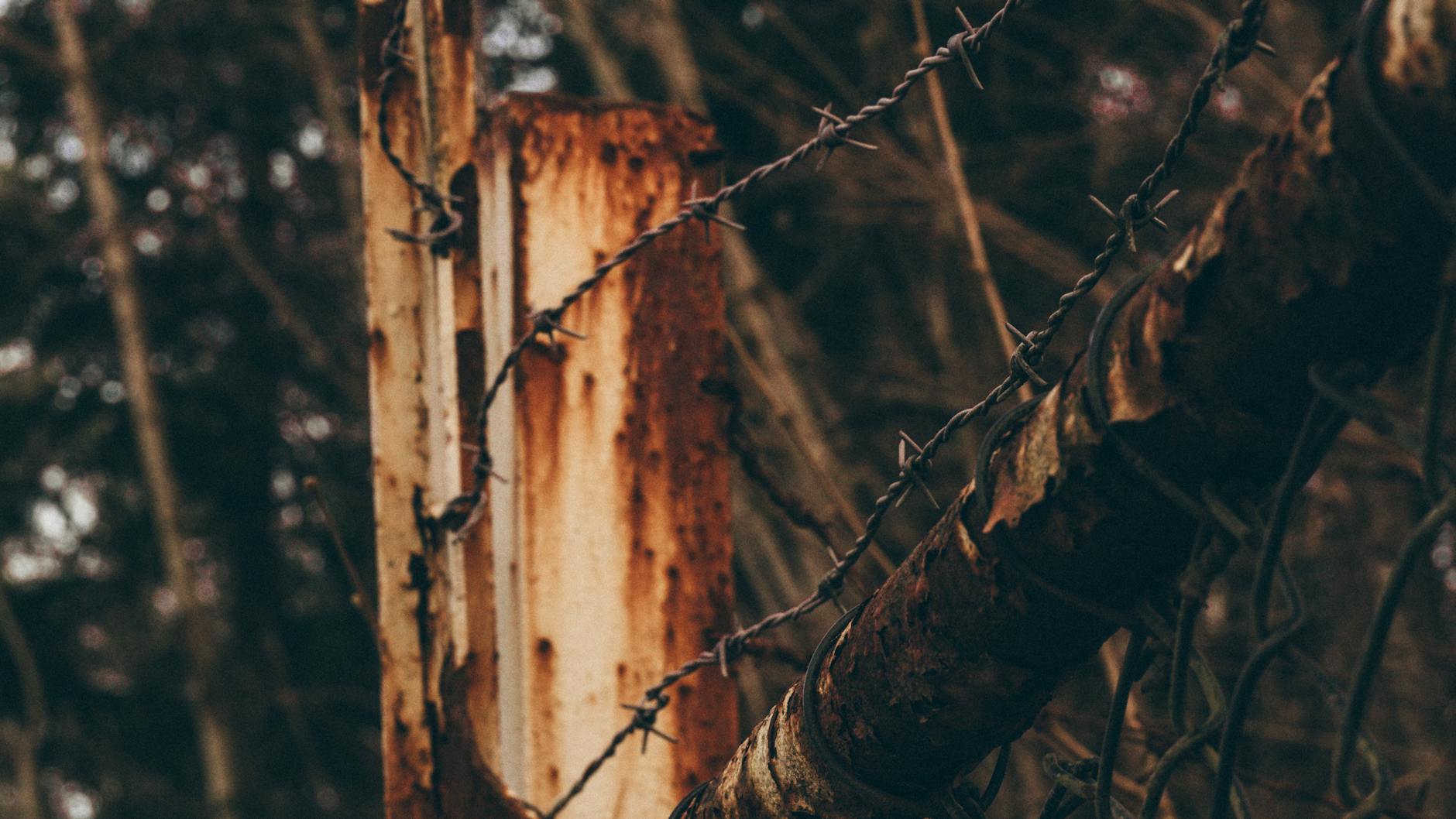



 The Quick and the Dead