Elisabeth was drenched in fear. She had not been out of the house that day, not since she had returned home from Edward’s apartment that morning. She had not accomplished anything that day—had not cleaned the house or made herself lunch or lit the candles when the sky began to grow dark. The ash falling out of the sky had seeped into her small room, had soaked into her skin as she had sat unmoving, barely conscious of her surroundings. Was Edward awake? She wondered. Would he be playing tonight?
She bit down on her nail in nervousness. All day she had waited for the monsters to drag her away, to whip her and force her to work in the mines. Were they looking for her? Had they even noticed she was gone? Elisabeth remembered the exterminations, the way the monsters had taken Adam from her as he screamed. What have happened to him after that? She thought of it often, Adam transformed into a giant piece of machinery, working day after day with rest, for the rest of his life, the subject to torture and mutilations. The guinea pig for all kinds of horrendous experimentation. Or had they simply killed him quickly and used his life energy to power their machines? Elisabeth was startled from the grim thoughts by a soft knock at her door.
The ash was still falling down around him as he stood on her front step waiting patiently for her to answer, if she was even there at all. The ash was soft but the thoughts that it brought to his mind were not. The ash was from the mines, the underground tunnels where all whom the monsters had enslaved to their drums beat the earth with their shovels and picks. He knew of the fires that burned in the earth to turn the steel into molten liquid, used to shape beams and poles, columns, and sheets of buildings. He also knew the monsters burned humans who had become less than exemplary in those fires. The apathy he had lived in for so long had made him forget all the stories of the tunnels Irene had shared with him. The piano had consumed him. No, he thought. The monsters had made the sweet voice of his piano consume him.
He felt the dull pounding in his head typical of this time of night. He knew now that it was the machines urging him to sit and play, to make the piano sing them to sleep, lull away the cares of the day. But this night, Edward was determined not to. He had no love for the monsters, the ones who had stolen away his family, his home ,his country. They had stolen Irene. They had taken away someone from Elizabeth as well. He had sensed it in her that morning when she stood before him, the soft gray of the morning shining through his windows. The soft gray of the evening was burning his soul with panick. He knocked again at her door fervently, desperately, harder than before. Maybe they had taken her away too. Maybe they knew he was standing outside her door.
Edward’s panic intensified. In his fear he heard himself yell for Elizabeth. He beat on the door with his fist, calling her, his patience gone, his mind reeling with the thoughts of what they would do to him if he did not hide from their greasy eyes.
“Elisabeth!” he called again
And by some miracle she opened the door and, without a word, pulled him inside
“Don’t speak,” Elisabeth whispered in the dark. The apartment was dark. The waning sun gave no light to the small room by the door. “I’ve waited for them,” she continued. “All day, I sat in the heat and the silence waiting for them to take me away. They didn’t come.” She drew in her breath unsteadily and gasped as she exhaled. Her hands found their way to his chest and she spread her palms over his bare skin. He was still in his underwear. He smelled like cigarettes, the tar and poison hung heavy on his lips as she pressed her face closer to him, whispering lower out of fear. “I don’t think they know.”
“If they haven’t realized your betrayal, they will surely realize mine,” he said anxiously.
“What?” she asked in a hush, pressing herself closer to his body. Ash was smeared on his arms and back his eyes were glossed with terror.
But he had not the heart to tell her his weary story. Instead, he put an arm around her waist drawing her closer allowing her femininity to soothe away his fears. The pounding in his brain subsided. Elisabeth lay her head lightly against him as Edward wrapped her in his other arm. They waited, swaying in the front room, dark and hot, sweat running down both of their faces. Would the monsters come? What would they do to them when they found them entangled such as this? It was a crime in their eyes, for an embrace could lead to organic sex, and that led to unregistered human young, who were not bred for top quality work in the tunnels.
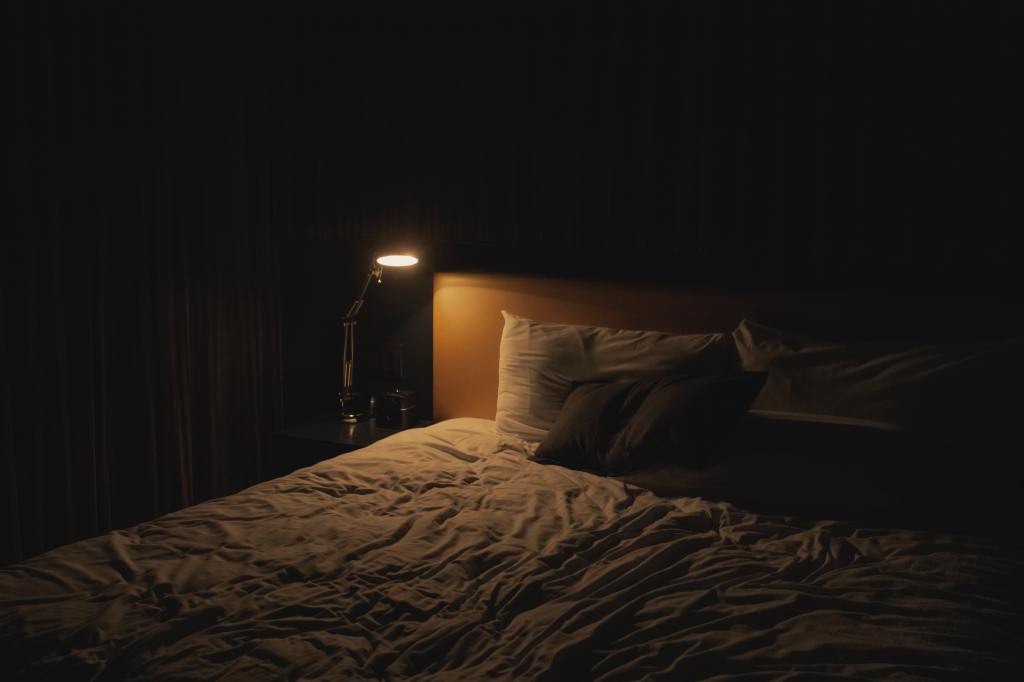
Did Edward care anymore? Did Elisabeth? He touched the woman’s face and moved to kiss her as he had once kissed Irene. If the monsters found them together they would surely be killed and that was better than living in fear, wasn’t it? Surely it was. A fire of defiance burned suddenly in Edward and he kissed Elisabeth as if he had never kissed anyone else in his life. He moved with her down the hallway, took her into the dark bedroom. She stretched out on the bed, letting him lay down beside her, touch her, move with her. He felt her in his soul, in his brain, as he pushed hard against her in the dark. They were one, two lost pieces fit together. It did not matter what the monsters did to them once they realized what had happened this night.
He lay in a trance, Elisabeth curled beside him, her head resting gently in the crook of his armpit. His desire was sated, and the weariness was overcoming him. He glanced longingly at the woman next to him, and rubbed her head, feeling the smooth length of her hair. She had met his every move, as if she were an extension of him. Elisabeth pressed against him in her sleep. She trailed her hand over him, lightly rubbing over his chest and down his stomach. He wondered if the monsters knew they were together. He wondered if they cared. He closed his eyes.
Edward was troubled. In his mind, he saw the great waters of the ocean, stretched out before him, an expanse of salt and death. He saw the swallowed beach, the gray morning mist mixing with the ash as the two fell out of the sky, dancing in dreary patterns before they lay down to die on the earth. It was that day again. He dreamed of it often, always the same, ending the same miserable way every time he slept with it in his mind.
That morning as the ash fell down and the rain came from the sky, Irene had left him alone in the apartment. There was no argument between them and he had not tired to stop her from going. There were times when he wished he had said something to her. Maybe then she would have stayed. But the monsters had called her, and who in all the world could resist their call?
She had said to him as she awoke that day, “I must leave you. I am never coming back.”
He swallowed hard, allowing her words to soak into his soul. “But I need you here with me, Irene.”
“My name is not Irene,” she replied stubbornly. There had been real tear in her eyes that day. Real human tears. Edward had not seen them since his mother had been exterminated, and then they had been his own.
He touched her face lovingly, in a vain hope to dissuade her from her decision. She stiffened under his fingertips, shuddered as he pressed his whole hand to her cheek. He knew she was too far from his reach. The monsters had called her. She was never coming back. So, he kissed her, softly and slowly, passionately, with all the love he had for her. Her lips were smoother under his, yet they quivered with hesitancy. She loved him not as she once had, for now she loved the monsters and their drums more.
He let her go out the door that morning, allowing her to walk right out of his life, down into the tunnels where the hum and the clank and the drone ever ceased. Edward was empty, consumed with an ache so great that he was not sure he could live under its weight. His only reason to live had walked out on him that morning, off into the mix of dust and mist falling from the sky, dancing drearily before it died on the earth. Irene had left him alone. Taking his hat, he made his way down to the beach.
It was in his dreams that he saw this beach now, the sea swelling up like a bee sting. The beach had been swallowed by the raging ocean that year, for the rain had come and poured out its sorrow for the world onto the coast. It was there, on that morning after Irene had walked away, that Edward walked out to sea.
The wind was high, moaning in the gray of the early morning as if the ghosts were abroad. Edward sat in the tide, inviting the ocean to wash him away, carry him far from the city and all the grief that had stricken him there. His mother was gone, Irene was gone, his county, his race all but gone and he wished with every atom of his structure that the roaring sea would swallow him the way it had swallowed the beach that year. It nearly did.
Edward was caught in the undertow, and at the moment, terror streaked through him. But he was drug under and held down by the water, its strong arms grasping his limbs with fists of iron. He flailed his arms and legs forcefully, desperately, attempting to break free of the confining prison that held him under the waves. His lungs burned for air. Edward thought of Irene, scrambling to live in case she changed her mind. If he died, she would have nothing to come back to if she escaped, if the monsters left, if the last humans won and drove them back into the far reaches of the universe from whence they had come. He needed to live for hope of victory to be thrive.
Miraculously, (and indeed it was a miracle), a hand pulled Edward from the water back into the life-giving air. He was lifted out of the sea and dropped into an open over-large metal can. He knew instantly a monster had captured him; one of the cleaning machines had found him flailing about in the water and deposited him into a can of trash like all the garbage found in the sea. He was alive! But now he had the problem of how to escape. A few minutes more and he would suffocate, for the great lid had already been snapped in place, sealing him into a metallic, lightless prison.
Edward lay in a daze, hours later, on his back in the center of a clean white table. He looked up into a shining light, so bright it stung his eyes with tears. Above his head, encircling, floating just inches from his face were the metal hands of the monsters, their claws waving dangerously, threatening to slice his flesh. The scene was lurid. The monsters seemed to notice every flinch he made, every fear burning in his brain. They knew his terror, were thriving off it. Edward heard one of them speaking, its metal voice pinging like a pinball inside his head.
“Don’t be afraid. We will not harm you friend,” it breathed, close to his face, its eyes wet with grease and oil. The face of the monster was smooth, shining like the sun underneath the lights. Its teeth clanged together, and Edward heard the whirring of its heartbeats inside its aluminum skin. The other monsters crowded around, drawing breaths of awe and wonder. He heard the ping of their voices but could not discern any words they spoke.
“You have something we need, Edward,” the monster hovering over his face said. This was the same monster who had spoken to Edward first. It was apparent that was the appointed leader of whatever operation they were carrying out. “Edward, tell us of the black wooden box with white teeth that sits silent in your living room.”
He was confused. The monster had used his human name. He didn’t know what to make of any of this. The question rolled threw him. “That is my great grandmother’s piano. I haven’t played it since I was small. Mother made me play it.”
“We want you to play it,” the greasy eyed animated hunk of metal creaked in its high pinging voice.
“What do you mean?” Edward asked, bewildered.
“The song that the box sings when you rest your hands in its mouth lulls our weary bodies. Please, will you make it sing for us?”
“I’m not sure I remember how…” Edward started to say, but he was rudely interrupted by a shrill whine from the monsters above him.
“You will make the box sing, or else we will send you to the mines, Edward,” the lead monster’s voice clanged in his ears. “You do not have a choice. We must hear the song of the box tonight, every night. Forever.”
The clanging, the pinging in his brain continued until he was scooped up into the hands of the greasy, oily-eyed conqueror. “Go Edward, and you may keep your name.”
And Edward found himself wandering alone beside the swollen ocean, the beach swallowed by the water, the mist and dust were still falling from the sky, and the sun was setting on the horizon. Where had he been? Why did he have this urge to play this great grandmother’s piano after all the years it had sat neglected in his living room? Edward did not know how the day had passed so quickly, but he knew he had to return home before the sun set, to make music.
When Edward awoke from the imagines of his past, the images of his accidental encounter with the machines who had enslaved him, the sun hung low. He rolled out of the bed, his head pounding with the whir of machines, mechanical voices spitting phrases at him in their pinging language. He was troubled. The accident was still fresh in his thoughts. He lit a cigarette, sucked on the end of it as if his life depended on it and wiped the sweat off his brow. He was not sure if he should sit at the piano this night. He realized now that he was just as brainwashed as the rest of humanity.
She looked out her window into the morning dust. She looked out the window every morning to watch the dust fall from the sky, silently, eerily, before she started her day. And every morning before she reported to the tunnels for work, she stopped outside Edward’s door, and pondered over his manner. He was a talented musician, and he was consumed with playing his piano. It seemed that it had kept him alive after the accident, that it was his one reason for continuing to live after what happened. She wondered why he only played when no one else could listen.
Well, she had listened many times. At dusk when she came home from the tunnels, she longed for the clock to tick away the hours until he sat down at the keys. She listened freely, she listened with longing in her heart to see the man who let an instrument sing the words his soul could not say. It was a rare gift to have talent such as his. Why did he hide it?
Every morning after she wondered this, she passed on, leaving him to sleep while she toiled for the monsters. They had taken her mind and her body, and most of her soul from her—except for this small part of her that made her curious about Edward. Maybe she was the only one left who wondered about Edward. In the beginning it had not been so. After the monsters had exterminated the ones who would not be useful, renamed people and put them to work, everyone had wondered why Edward stayed alone, played at night, loved the music as much as he did. But everyone soon had given their lives away to the ones who now ruled them, and in time, they no longer wondered. They had forgotten how.
She however, still held on to a bit of her humanity. She had not been turned into a machine by the monsters. She was not enslaved to their drums and their calls and their meaningless names, for she still had a human name. They had missed her somehow, on the day they had come and taken away the world. Her name was still Elisabeth.
Maybe her name was the reason why she still wondered. Maybe the reason she could stand in front of Edward’s door every morning and think of him, the strange man she had never met, was because she wasn’t part of their society. She worked under the monsters and reported for assignment, but they had no record of her existence at all. They had not changed her name, and they did not know that she was not one of them.
When she realized that, as she was standing before Edwards’ door that morning, the ash falling like rain around her, she decided that there was no point in continuing her life as if she was under their control. For the first time, she did not pass by the door and go to the tunnels where the monsters waited with their drums. She turned the knob on Edward’s door, hoping, praying that it would be unlocked. And it was.
Slowly, she entered the hot dark of the small apartment, much like her own. Same gray walls, same dampness, same dreariness resting on her spirit as she walked across the floor. It groaned under her weight, creaking and shifting as she continued along a path to the back bedroom. She assumed it Edward’s room. Her heart raced as she turned the knob. She heard the breathing coming from behind the thin wooden door.
Elisabeth stopped. Afraid to go on, she dropped her hand from the knob, and as silently as she could made her way back to the front of the apartment. She waited by the front door, her hand on the knob, her heart in her throat. I should leave, she thought. I should go to the tunnels and do what I do every day. There isn’t any reason why this should be different. It can be just like any other day.
She considered her own erratic thought. No, it cant. I’ve already changed on thing that happens everyd ay. I’m here and I’ve never been here before. That makes today different. It isn’t a regular day. I came in here to see Edward, and I should go back and see Edward, even if he does not see me.
Slowly, she took the hallway back to the bedroom where he lay asleep. The door was not fully shut as it had been before. She frowned in confusion. As she pushed the door open her eyes fell on an empty bed and then a raised window shade. The covers were rumpled, the carpet was stained, and Edward was nowhere to be seen.
“Who are you?” she heard a man say behind her.
She screamed and flipped around to face a man with a bit of beard on his chin, deep brown eyes, handsome but scabby and scrubby. There was pain in his face, it wore him away, making him seem tired and lonely.
“Are you Edward?” Elisabeth asked softly.
“Yes. Who are you?” he asked again.
“I’m Elisabeth, your neighbor. I came to see you,” she stammered.
“No one comes to see me. No one knows me.” He was agitated with her, and yet she detected that he was also flattered by her presence. She knew she was lovely, and she could see his appraisal of her in his eyes. They trailed slowly over her features, over her firm body, flowing black hair falling around her face, hot green eyes set into her skull, skin smooth and pale like milk.
He was surprised that anyone had come to see him. Even more surprised that this woman had lived next to him and he had never noticed her before. “Do I know you?” he asked.
“I don’t know you. I just live in the next apartment. I hear you play every night. I wanted to say hello.”
“What’s your name?” he asked, even though she had already told him.
“Elisabeth,” she repeated.
Her name sounded as a bell, ringing clean and crisp in the morning breeze. It called the weariness out of him, filled him with a great passion and warmth. “Elisabeth,” he echoed her. “They would’ve changed your name to Fictishmafec.” He smiled, recalling the girl who was now enslaved to the monsters and their drums. Her name had been the same as this woman’s. “Why were you allowed to keep you name?”
“I don’t know. I was missed. Skipped. They did not look at me and rename me. I was allowed to go on as who I always was.” She bit her lip and Edward realized that she was nervous. Of what? Of him? Certainly not. He of all people was not the one to be feared. He was the only one in the world that was like her, an unnamed citizen-slave. Why had he been allowed to keep his name? He wondered about that sometimes, but it didn’t seem to matter much. He wondered what it would be like to hold this woman, to touch her, to kiss her, to love her in the that was not common anymore. The machines had taken natural love away. They had taken Irene away. Maybe this was the woman could help him escape the torment of the drums in the deep places of the world where the monsters bred.
Elizabeth, though he did not know, was thinking the same thing. They were not the monster’s slaves. They were outside the society of monsters, they had been skipped. Missed and passed over. And now that they had found each other, they would no longer feel like outcasts. They could be like a braided cord. “All this time, you were right under my nose,” she said quietly. “Just next door.”
True compassion lit in her eyes as she gazed at him. Edward hadn’t seen that look in anyone’s eyes for more years that he could count. He was overwhelmed with a longing he had not experienced since the accident. He wanted to laugh and cry and hold her and push her away all in the same instant. He had finally found something that he needed, though it did not have a name, and he was terrified of losing it before he ever touched it. Was it love? It could have been, although this was unlike any love he had ever known. As a child he had loved his mother, but it had not felt like this. As a young man he had loved Irene, but never had it felt like this. This feeling wrenched his guts, twisted his heart, caused his brain to beat in time with this pulse. He trembled, as his soul seemed to mesh with Elisabeth’s though he dared not to touch her or look into her hot green eyes.
“Do you have to leave now?” Edward asked her after a long silence.
“No. I can stay forever,” she whispered. She nearly cringed at the words. Forever would not be long if they were discovered.
“What about the monsters? Won’t they know that you aren’t in the tunnels?”
“I have no name to them. I don’t exist. I never have to work in the tunnels again.” She was nervous. Edwards was biting his nail and popping his knuckles, smoothing his hair all because he didn’t know what else to do. She could tell he was worrying about something, remembering a time he did not want to remember. Or anticipating something horrible. She fed off his energy, feeling anxiety pressing against her chest.
In reality, Edward was only fidgeting out of nervousness. He had not seen a woman since Irene had left, since the accident had occurred. Irene had loved him until the very end, he was sure, and why she had chosen that day to go was still a mystery. Irene was what he had always called, her, but it was not her name. The monsters had renamed her Wegilina. He had never called her that. She had left because the monster’s drums were more important in her mind that their love. She had left that day, after the dust had fallen as it does every morning. It was the day the accident had happened.
“Edward?” Elisabeth responded to his concerned expression. “Have I said something wrong?”
He swallowed hard, expecting to rid himself of the cold lump in his throat. “No. I was only remembering.”
Elisabeth suspected she knew what was tearing him apart. He had loved before the monsters had taken that away from him. Surely there were many secrets in his soul that he could not share. There were no longer the right words to express such agony. All but a few had forgotten the language used to express one’s innermost feeling, one’s joys and pains. Even if Edward could say the right words, Elisabeth knew she would not be able to understand. She knew the pain her felt, though, for it was also in heart. Adam had been slaughtered in the exterminations. It had been long since she had thought of him. Her eyes grew moist as tears formed, rolled slowly down her face. Edward was surprised, when he looked at her again. Can she read my heart? He thought. I didn’t think anyone could anymore.
“Why cry, Elisabeth? It’s not wise.” He smiled at her reassuringly. Edward let out a sigh, a yawn and rubbed his tired, burning eyes. Elisabeth took note of it and prepared herself to leave the apartment.
“Rest. I did not intend to keep you,” she said politely as she moved way.
“Will I see you again?” Edward asked just as she walked past.
She turned, smiling brightly “Of course you will.” But in truth, she was not so sure of her words. Worry arose in her and bit at her brain like a mad dog. Will the monsters find me? Will they exterminate me the way they exterminated Adam? She left the hot dark of Edward’s hallway, left him standing in his underwear and returned to her own dwelling on the other side of his wall.
The house was hot, the air stifling and smokey from the candles that burned in every room. A draft blew up from under the door to the bathroom across the hall. He’d left the window open. He sat silently at the piano, feet bare, wearing only his underwear, smoking a cigarette. He waited for the clock to strike. He sat here every night waiting for the clock to strike. And as soon as the chimes rang, he played. He would play until the sun peered into his window the next morning.
It hadn’t always been like this. There were times he was sure that he had been normal—not nocturnal—and lived a normal life, but there had been an accident, and now, this was his life. Sitting up all night, every night, playing piano without pause. In fact, he vaguely remembered a time when he didn’t want to play piano at all, when his mother forced him to sit and practice until his back hurt from keeping proper posture. There had been days like that, but he wasn’t sure if they had been real, or if he had only imagined them, scenes taken from his nightmares.
He tapped his cigarette ashes off into the little glass tray sitting on the table beside him. He looked at the clock. In a few minutes, it would be time. The heat from the fires burning around his small apartment had made him unbelievably sweaty, but he wouldn’t unlight the candles until he went to sleep. He would not go to sleep until he saw the sun. The sun would not come until he had played the piano all night. He could not play until the clock chimed.
Popping his toes, he stretched. There was a dull pounding in his brain. It came to him every night just as the clock was about to chime. The clock would strike, he would go into a trance and pay the notes that were ingrained into him. All the old masters, like Beethoven and Mozart and the new writers like Gethben and Sultchuz, even musical pieces he has composed himself, would flow out of him, playing on the keys, lulling the neighbors into dreams. When he played, he was free from the life here in the city. He was unchained by his urban habitation. He wandered through ancient forests and over seas, under mountains beneath a blanket of bright stars.
It was almost time. He put out his cigarette and prepared to play as he watched the clock’s hands come ever, ever closer to 9. He felt his hands begin to sweat as he rested his fingers on the ivory keys. Pianos keys were rarely made from ivory anymore. Actually, no pianos keys were made from real ivory. The elephant had died out long before he was born and the only ivory available now was produced in a lab. It was expensive, and companies that produced pianos—which, in fact, was only one company—used pristine, clinically white plastic instead. But he had received this piano from his great grandmother, who had died shortly after the turn of the century. It was old, older than his great-grandmother. After the accident, he had become obsessed with restoring it to its proper glory. He was proud to know that his piano’s keys were real ivory, from a long dead elephant that he had never seen.
The clock struck suddenly. As it chimed, he banged on the keys, then lightly played a much softer melody, and then a sad song, and then a ballad of spring. He felt the pounding in his head rest as he tinkered away at the piano.
The neighbors in their beds heard not a note at all, and those who were up late for a snack listened to the music respectfully. They had become accustomed to his nighttime playing, and frankly, it no longer bothered most of them. They all knew what had happened to poor Edward years ago when the waters had risen and the beach had been swallowed. He hadn’t been right since it happened. So, they let him sit in solitude and play his great-grandmother’s piano, with all the candles turned on in the middle of the night. As long as Edward didn’t knock over those candles and set the whole complex on fire, no one cared to bother him about his nocturnal preoccupation. After all, what would you expect from a man named after his mother’s mother’s great grandfather’s great uncle? With a name like Edward, who would be a normal human being?
Of course, before the war everyone had been named strange old names like Edward. The mayor’s name had been Bill, the pastor had been called Peter, the midwife’s name was Ruth. Edward’s neighbors had all had names like Susan and Lucy and Edmond. Edward’s wife has been named Irene. But no one would remember this once they were gone. There were no records of the names peoples had been called before the war. In fact, there was no record of the war. The war was only remembered by Edward, who now lived alone because of the accident.
It had been a freak accident, indeed. Edward often thought of it when he was alone, all the candles burning as he played his piano. When he played, and it was dark, and the world was asleep, there was nothing else to think of, since the accident was the reason he played. Before that day, his great-grandmother’s piano had sat untouched in the living room, covered in a thin layer of dust. He glanced at it once in a while, but never did he sit down at the bench and play the way he played now. If his mother could only see him! How proud she would be with his devotion. But his mother had passed during the war, before the accident. Her name had been Maria. Who knows what name the monsters would have given her, had she not died during their exterminations. Edward had known another Maria as well. She lived units over in his complex, but her name was now Gerara. In the monsters’ language it was a praise of beauty. But it was in no way as beautiful a name as Maria.
Edward remembered his mother, her gentle touch, her soft voice, her curling dark hair. Her face was always lean, her lips always pouty, and her eyes always thoughtful. During the war, they were seldom dry. She had cried nearly every night over the death of Edward’s father. Although he had perished years and years before in a country called Afghanistan, the war with the monsters reminded her of the war with the Afghans. As far as he knew, that country—as well as his own, the United States of America—had been broken apart and redivided into sections by the monsters.
He rarely thought of the monsters. There was no point. They had come, they had conquered the world through mass extermination, and now they ruled from their centralized brain located deep underground, where it was warm. The monsters thought the surface was unbearably cold. No human could go down into the earth, towards the core, where their city grew, for the heat would have burned them to ash. Despite their separation, the monsters still held humans in their grasp. For the most part, they looked after their well-being and he was not oppressed, so why would he complain?
In fact, it was the monsters who had led him to be what he was now. The monsters had made him into the drone that sat and played the piano every night until the sun rose over the horizon. Edward secretly admired the monsters, although he never had the courage to admit it aloud. Edward was the product of their experiments, a being that had been reformed into a worker for the good of the monsters. The music he played soothed their thoughts and worries. The notes vibrated down into the hive where they lived, while they relaxed after a long day of building. What they were building, no one ever knew, and where they were getting the supplies, no one dared to guess—thieving them from the humans was probably the answer. They could be heard in the daytime clanking and cracking and rumbling in the deep. When the night fell, they became strangely quiet as they became drunk from the music Edward played on his piano miles and miles above their heads.
Sweat dripped from his brow and he paused momentarily to wipe it away. The sky was progressively becoming lighter, a soft gray of morning that had come to mean it was time to rest. Slowly, he finished his musical selection and rose from the bench. He was drenched with sweat, tired with aches in his hands and legs. The fatigue penetrated to his bones. Around his apartment he went, blowing out the candles he had lit to set him in the right mood. He wiped his face with the towel hanging on the doorknob of his bedroom, pushed open the door and collapsed onto the bed, soft and wonderful under his body. Sleep came, uninterrupted by dreams.
My family has a Christmas tradition to tell ghost stories. My brother uncovered this little known custom from the 19th century about 5 years ago. Ever since then, we gather around the tree, after the presents have been opened and the dinner has been eaten, and listen to a tale. My dad has written the most ghost stories of the family, with my brother claiming the title of second most prolific. In 2021, I contributed to the tradition for the first time. This story was inspired by a trip to Mackinac Island, MI, where I learned that in the past, residents used to cut and place trees in the ice that formed on the lake, so they could easily find their way to the mainland and home again if they ever needed to leave the island in winter.
Edwin looked out across the frozen lake towards the mainland. Behind him, his sleigh rested on ice, thick over the stones of the beach. He could see the line of evergreen trees that had been planted in the ice marking the path between the island and the rest of Michigan. He could also see how there was a storm gathering. It looked like snow.
It was a risk, he knew, but if he stayed close to the trees, then he was sure he could find his way across when it was time to come home. He only needed a few things from the general store. It wouldn’t take long to do the shopping. Maybe the storm would even stay off until he was safe home.
Next to him, Joseph sucked his teeth, thinking. Edwin gave him a questioning look. “What is it?” he asked, knowing his brother had something he wanted to say. He could see it in his posture.
“Might not be worth it,” he said. “Could go tomorrow, once the snow is on the ground.”
Edwin thought about their mother’s wracking cough, and her worsening fever. “We’ve waited too long already.”
“Alright,” Joseph replied, resigned to the plan. “But we should be quick.” He gingerly stepped onto the ice, testing his footing. “Not too quick,” he added. “It’s slick.”
Edwin followed Joseph across the frozen lake, careful to keep him within arm’s reach. He lugged the sled behind him. The sound of its metal skis scratching the ice were the only sound on the wind, except of course the wind itself.
By the time they reached the mainland, Edwin knew it had been a mistake to cross. The snow was beginning to swirl around them, huge plate sized flakes. The sky deepened to a dark gray, the same color as the rocks around the lake. He tugged his scarf tighter around his neck, and hunched against the wind.
“I’ll get the flour and oil,” Joseph offered. “You go to the pharmacy.”
“I’d rather stay together,” Edwin said, uneasiness sliding through him.
“We have to be fast, Ed.” His brother eyed him pleadingly. “It’ll be quicker this way.”
Edwin hesitated but nodded at Joseph’s plan. He was older. He’d crossed in worse weather than this.
Edwin left the sled with his brother and went as fast as he dared down the icy street to the pharmacy. He could see the pharmacist going through the shop, putting out the lanterns. He tried the door, but it was locked. He banged at the glass, drawing the attention of the man inside. Slowly, the pharmacist, Dr. Cuthbert, came to the door.
“Was just closing up,” he said, through a crack in the door.
“Please, sir, my mother is very ill,” Edwin said, nearly interrupting the man.
Dr. Cuthbert sighed shortly, then opened the door enough for Edwin to squeeze in. He moved towards the counter as Edwin trailed him. “What’s bothering her?” he asked.
“She’s got a terrible cough. Had it for weeks now. Sometimes she can’t catch her breath her fits are so bad.” He paused, unsure how the older man would feel about his makeshift medicine “Me and Joseph have been funneling whiskey into her, just so she can sleep.”
“Hmmmm,” Dr. Cuthbert murmured to himself as he pulled a bottle off the shelf. “I think a little honey in her tea might be better for her. Mix in some thyme for her as well, and that should do the trick.” He began to package up the items he had pulled from the shelf. Outside, the wind was gusting along the buildings, howling eerily. “You be careful going back across the lake, son,” he said.
Edwin nodded to Dr Cuthbert, hastily placing two coins on the counter before stuffing the tea, honey and thyme into his coat pocket. He retreated from the warmth of the shop into the driving snow. He could hardly see the cobbles anymore. He marched towards the grocery, seeing Joseph waiting for him with the sled, loaded with flour and a few other goods.
“We should wait until it blows over!” Joseph called to him as he neared.
Edwin looked around him at the empty street. All the shops had gone dark. “Where?” he asked.
Joseph twisted his mouth. He was nervous. “Alright, stay close,” he said.
Edwin tried to walk directly in Joseph’s tracks as they started across the lake. The snow was thick now, thicker than it seemed possible. The sled was sinking into it. Edwin knew they might have to pick it and carry it before too long. He wondered if the flour would be any good by the time they made it home. He dug his hand into his pocket, clutching at the parcels there, the reason he had dared brave the storm.
But something was missing.
He gasped, and looked behind him in the show. Where had he dropped the bag of thyme leaves? How had it slipped from his pocket?
“Edwin?” Joseph’s voice was fearful. “What are you doing?”
“I dropped it!” he said, frantic. He began to backtrack, hoping, but knowing, he would never find it in the show.
“Edwin!” his brother called again. “Come back!”
But Edwin was lost in thought, in his quest to find the missing package. The snowflakes were smaller now. Maybe the worst of the storm was over. Keeping his head down, his eyes fixed on the snow at his feet, he scanned the ground, searching. He couldn’t hear Joseph’s call any longer.
Looking up, he realized her couldn’t see the line of evergreens either. He was lost on the lake.
He was in a full panic now. He couldn’t stay out here until daylight. He would freeze. He had to keep moving, but which direction? He looked to his right and it was just as obscured with snow and cloud as his right. He resisted the urge to plunk himself down in the snow and weep.
He clutched his arms around himself, rubbing his hands over them for warmth. He closed his eyes and prayed for a miracle.
When he opened them, feeling slightly calmed, he saw it. A small brown package at his feet, one corner of it sticking out of the snow. The thyme! He reached down, plucking it from it’s near-tomb. He felt in his pocket for the tea and the honey. Stuffing the thyme into his coat, he began to look around him. Which way was home?
“Joseph!” he called. There was no answer.
Then, in the distance, he saw a small flash. He squinted. It was a light. He wondered who else was out here on the ice. “Joseph!” he called again, moving towards the light. It wobbled back and forth, as if someone was carrying it on a pole. He trailed after it, whoever carried it knew where they were going. What was odd, though, is that he never seemed to gain on it. The light bobbled in the distance, seeming always to be just at his view of vision no matter how fast he moved.
He could see the island rising through the mist now, and his heart felt a little lighter. But then he remembered Joseph. Had he turned back to find him? Was he still waiting on the lake?
He came up the shore, the ice turning to stones before the stones turned to dirt and then the remnants of last summer’s grass. There, on the dock, was Joseph, one hand on the rope of the sled.
Edwin ran towards him, arms outstretched. “Joseph!” he breathed, as he crashed into him.
“You could have died!” his brother scolded, sounding angry even as he squeezed him around the ribs. “Why did you go back?”
“I dropped one of the packages from the pharmacy,” Edwin muttered.
Joseph sighed with understanding. “Did you find it?” he asked.
Edwin nodded repeatedly, relieved and still surprised by the small miracle that had been. Then he frowned, remembering. “Was that you with the light?”
Joseph frowned. “What light?”
“There was someone else on the ice. I followed the light of their lantern.”
Joseph looked confused. “I didn’t see anyone else come this way. No one with a lantern anyway.”
“Oh,” Edwin replied, frowning. “Then…” But he didn’t finish the sentence. He fingered the package of thyme in his pocket. “Let’s just go home,” he said instead. Joseph put an arm around his shoulders, steering him away from the dock.
Sometimes I have a thought based on one line, and I run with the idea. My brother Matt, who is a co-owner of Wet Ink Games, gave me a suggestion to look at the elves described in Into the Wyrd and Wild, to generate a piece of fiction to include in the second edition of the book. During the course of the conversation, the idea of an elf stuffing men into a tree and leaving them there was mentioned as a joke. As I thought more about it though, it seemed like a good starting place for story. Why would an elf want to stuff a man into a tree? Sometimes, when I run with an idea, it takes me into a direction I did not anticipate. That’s what happened when writing this short story. I had thought to write a story about the interplay between humans and one of the elf clans, but it turned out to be a story about mentorship.
The four men moved lightly through the trees, the youngest of them, Olwen, glancing around nervously. It was his first time. The other three hunters, hardened by their experiences, moved more easily. Olwen wondered if he would ever be as confident as his companions. He wondered if he would ever come back into the Wilds with them after this was over.
Garvin looked over his shoulder, smiling at Olwen’s nervous expression. “Almost there, lad!” he said, as if they were on a jaunt through the meadow. “We’ll take one if we can, and then camp in our usual place.” The party was hunting cindershams. They’d been promised three times their normal rate if they could also find an ether rat.
“We have to stay the night in here?” Olwen asked. He couldn’t judge how far the sun had sunk towards the horizon. The thick canopy blocked nearly all the light.
Behind Olwen, Manford laughed at his cowardice. “You don’t want to be moving through these woods at night if you can avoid it,” he explained. “Especially not if you’re hunting cindershams.”
“Right,” Garvin agreed. “Better to stay put and wait out the nasty things that come creeping.”
“Nasty things?” Olwen squeaked.
At the back of the line of men, the fourth companion, Bran, chortled.
“Easy to find a cindersham at night, Olwen,” Garvin said. “But you wouldn’t want to. Better to hunt them during the day, while they rest. You come upon one in the darkness and you’re likely to end up a torch.”
“I didn’t realize that we’d have to go so far to find them, that we wouldn’t have time to get back out of the…”
Garvin halted, causing the line of men behind him to stop short. Olwen nearly bumped into his solid back. He held up a hand, stilling any questions. After a moment, he said, “Hear that?”
A soft scuttering sound rolled out of the underbrush. Olwen whispered, “Is that a cindersham?”
Garvin readied his bow and Olwen unsheathed the skinning knife at his side. Sweat dripping down the young man’s face. He wiped his arm across his forehead.
“On three,” Garvin said. “One…two…”
The brush parted and out stepped a creature, like a human and not. Great horns sprouted from her head and shoulders. She was clothed only in vines, which hardly covered any of her body. Her eyes were like pools of darkness and she flashed a wicked, toothy smile of fangs. She smelled like rot and dead wood. Olwen covered his nose at her stink.
“You wouldn’t want to shoot me,” she said, coming forward out of the underbrush. All four of the men stepped back from her as she moved. Her smiled widened at their fear. “Especially not since I can help you find the cindershams you seek.”
“We can hunt them on our own, elf,” Garvin growled.
“Not here,” she said lazily, as if it didn’t matter. “They’ve all gone away.”
“You scared them off?” Garvin asked. He lowered his bow. “Why would you do that?”
“So you’d ask for my help,” she said. Olwen couldn’t read any expression in her eyes.
Garvin grumbled to himself before replying, “But why would you want to help us?”
“I need one of you,” she said, taking another step closer. This time the four men stayed rooted where they stood. “To make a child,” she added.
Olwen nearly choked at her admission. Bran huffed and Manford sucked his teeth. Garvin rubbed his beard in thought. “What’s the matter? You don’t fancy stealing one for yourself like the rest of your kind do?”
She hissed at them, her sharp teeth seeming too big for her mouth. Her dark eyes sparkled with something sinister. “I don’t want to wait for one of them to mature,” she sneered.
Garvin looked at his three companions, all wide eyed at the horrid suggestion. “I don’t think you’ll get one of us to agree,” he explained.
“I suppose I could just take the little one off your hands,” she said, pointing at Olwen. “He doesn’t look like he’d put up much of a fight.”
“Me?!” Olwen exclaimed, his voice as high pitched as a whistle.
“Now hold on here…” Manford began, before he was interrupted by the elf.
“Or I could stuff all four of you into the nice, hollow tree I found back there until one of you volunteers,” the elf said, gesturing behind her with a smirk.
Garvin sighed heavily. “Oh, all right,” he said. “I’ll help you…get a child if that’s what you want. But we get the pelts first.”
“Hmmm…” the elf mused. “And how do I know that you won’t desert me before you can fulfill your promise?”
“You really think any of us wants to get stuffed into a tree?” Manford suggested.
She laughed. “Very well, men. I’ll help you get your pelts first.” She turned her back to them, moving back into the thicket from which she had emerged. “This way,” she called.
Olwen’s teeth chattered as they moved through the woods. He felt they would shake right out of his skull. “Are you really going to…to…with that?” he asked Garvin in a hushed tone.
Garvin shushed him. “Trust me, she can hear you,” he whispered.
Olwen squirmed in his own skin. “But Garvin! You can’t just…”
“It’s not the craziest thing I’ve ever done in here,” Garvin answered. Before Olwen could answer, he reluctantly added, “Besides. I’ve done it before.”
“You have?!” Olwen hissed.
“There’s a couple of clans who’ve decided it’s easier to take men and women who venture in here than to snatch children from the outside,” Garvin explained.
“Why do they need humans?” Olwen asked, his horror only multiplying as the moved through the woods.
“We can’t breed on our own,” the elf answered. “We need you to survive.”
Garvin smiled grimly at his companion. “I told you she could hear us.”
A little time passed in silence before the elf finally stopped. “There are three cindershams hiding just on the other side of these trees, behind a fallen log,” she said, pointing to a stand of pines.
Garvin motioned to his companions. Manford and Bran moved off to the left. Garvin pulled Olwen to the right. Together, they flanked the stand of pines, closing in on the cindershams. Olwen could hear them moving lazily. There was barely enough daylight left to see them well as they came around the log. Olwen readied his knife and Garvin raised his bow.
Garvin’s arrow hit one of them in the side. It roared in pain, the fire of its tail flickering to life. Manford had managed to hit a second one and it flopped to its side, dead. The third one belched out a gust of flame at Manford and Bran. The two men screamed, rushing from the jet of fire and dropping to the forest floor. Olwen watched them frantically rolling to put out the flames burning through their clothes.
Garvin shot another arrow at the roaring beast. He missed as the cindersham turned, skittering into the trees. Olwen watched its tail light flickering into the distance. He felt entranced by it. He swayed on his feet.
“Don’t look at its light, lad,” Garvin said, shaking him by the shoulders.
Olwen blinked stupidly, then came back to his own wits. He looked to the other two cindershams, one dead, one still thrashing from the pain of its wound. Manford, hair signed, cheek reddened from burns, stood close to it, watching it struggle. He waited until the creature’s movements began to slow, then thumped it hard on the head with the end of his knife. The cindersham stilled, dead.
“Alright, Olwen,” Garvin said. “Get to skinning.”
Olwen, Bran and Garvin worked quickly to strip the cindershams of their pelts, while Manford sat on the log, rubbing salve over his burned face and arms. Olwen tried not to stare at his companion, but couldn’t keep his eyes from wandering. “Hazard of the job, Olwen,” Manford said, as if it didn’t bother him. “I’ve known men who were burned worse than this trying to hunt down the beasts.”
“Is that salve going to be enough?” Olwen asked. “The burns look bad, Manford.”
The older man shrugged. “I’ll live,” he said, as if it didn’t matter.
The sun set as they finished with the carcasses. Manford worked on building a fire and by its light, set to butchering one of the animals.
Olwen swallowed noisily. “Are you eating that?”
Manford looked at him questioningly. “It’s good meat,” he answered.
Olwen wasn’t sure. “It smells like ash,” he said.
“I won’t make you eat it if you don’t want any,” Manford replied.
Garvin had carefully scraped the hides and was busy stretching them over the log to dry. “It’s not so bad, Olwen. A little chewy, but better than an empty belly.”
“If you can stand the taste of it,” the elf said. At the sound of her voice, the four men jumped. They hadn’t seen her since she had showed them the cindershams’ hiding place.
Garvin stood, awkwardly toying with his hands at his sides. “You come back for your…eh, payment, I suppose?”
The completely wicked smile that spread across her features sent a shiver through Olwen.
Garvin nodded to Manford. “Set up camp. You know what to do to survive the night.” Manford nodded as Garvin moved towards the elf. She seemed to slither through the trees with him. She made Olwen think of a cat toying with a mouse.
The night deepened. Manford kept the fire burning. Bran was snoring within minutes of laying down. Olwen tried to sleep, but the sounds of the woods kept him awake. At every call, croak or whistle, he startled, his heart racing. Strange laughter, moaning, whispering and hissing invaded his ears. He tried not to think if any of the sounds were coming from Garvin and the elf.
When the sun rose, Olwen was surprised to find himself blinking sleepily. He didn’t feel that he had slept at all, but as he rubbed his eyes, he knew that he must have nodded off at some point. Manford was lying down now, and it was Bran who tended the fire. Olwen was surprised to see Garvin back, sitting on the log, eating some of the leftover meat from the previous night. He was rubbing his hand over one of the pelts. Olwen shifted and the noise drew Bran and Garvin’s attention to him.
“You slept?” Garvin teased. “I couldn’t sleep my first night in this place.”
The admission brought a smile to Olwen’s face. “And here I thought I was just a coward,” he joked. It was the first thing he had been able to say since entering the woods that wasn’t filled with fear.
Garvin smiled back. “This place isn’t for the weak-hearted, lad,” Garvin said. “You’ve survived one night. You can survive again.”
The words didn’t bring much comfort to him, but Olwen was still appreciative.
On the way out of the woods, the pelts strapped tightly to his back, Garvin walked beside Olwen. “Not every job will be like this,” he said quietly. “This one was easy.” In light of what had passed in the last day, Olwen wondered what Garvin would consider difficult. “We lose people in here, Olwen. Sometimes they come out and they’re never the same. And sometimes…well, sometimes they never come out at all.”
“Why do you keep going back?” Olwen dared to ask.
Garvin tried to hide a secretive smile from him, but Olwen noticed nonetheless. “It’s not all bad,” Garvin explained. “Lots of rare and marvelous stuff in these woods, isn’t there?”
Olwen thought about the pelts Garvin carried, and the stories of treasure, rare artifacts and magic he had heard from other adventurers. “Is it worth it though?” he asked. “Is it worth…what you have to do sometimes?”
Garvin gave him a shy smile. “Haven’t found a reason yet to quit.”
Olwen nodded, looking ahead to the edge of the trees, where the sun light was hitting the meadows that lay just beyond the boundary. “Well, then I guess I’ll come back with you. See if I can come to appreciate it as much as you have.”
Garvin clapped him on the back as they moved out of the boundary of the wood.
My development as a horror writer continued in 2021, when I had the opportunity to write two pieces of fiction for the second edition of Into the Wyrd and Wild, published by Wet Ink Games in collaboration with Feral Indie Studio. The stories I wrote for the game line presented a new kind of challenge for me. For previous projects, I had been given the setting and the scenery. Into the Wyrd and Wild is designed to be used with any other game world or system, and thus the players and story tellers create the setting. At the time, I had been listening to The Bookwoman of Troublesome Creek, written by Kim Michele Richardson, and Appalachia was on my mind. When writing this story, I wanted to capture the feel of people who live on the outskirts. The tale hinges on a concept from Into the Wyrd and Wild called Lunar Madness, and draws on the idea that terrible things can happen when you go into places you don’t belong.
“Pull that curtain shut,” Mama said.
Janna did as she was told, shutting out the bright light of the full moon. She glanced across the room to her grandfather, asleep in the chair next to the fire. He didn’t like the full moon. Janna wondered why.
Mama went into the tiny kitchen and Janna could hear her scraping clean the pan from supper into the dog’s bowl. The big dog, Buck, was scratching at the back door, whining and barking to be let in to eat. Janna stole another glance at Grandpa. He was stirring at the noise.
“What’s he yapping at?” Papa asked, coming into the main living room from one of the tiny bedrooms on the east side of the house.
“Hungry,” Janna said.
Papa called out to Mama. “Irelle! Get the dog!” He grumbled to himself as Mama called back an indistinct answer. She opened the back room and Janna heard Buck scramble into the house.
The sound of his collar clicking against the bowl as he ate drowned out any other sounds in the cabin. When he was finished eating, Janna heard Buck’s nails clicking across the wooden planks of the floor. He came around the corner of the kitchen, looking for her. She patted her lap, calling to him. The big dog bounded to her, licking her face and her hands as she scratched his ears and rubbed his back.
“Get that animal out of here,” Papa said coldly. He was stuffing his pipe with tobacco.
Janna rose from her seat at the window, “Come on, boy,” she said, tugging at Buck’s collar. He followed her outside to the yard where she tied him to his rope again. She sat down in the cool grass and leaned against Buck after he sank down next to her. The wind blew a warm summer breeze over her. She sighed as she stroked Buck’s broad, dark shoulders.
From her place atop the hill, she looked out over the valley. A stream separated her hilltop cabin from the next hill over and Janna could see, even in the pale darkness, the line of trees that started at the base of that hill, running up and down and up again all the way into the low mountains. The night creatures were quiet. Just a few chirps and hums from a cricket or two broke the silence of the night. She gazed up at the full moon, again wondering why Grandpa hated it so much. Janna thought it was lovely. It cast everything in the most beautiful silver glow. She looked down the hill to the stream, where the water sparkled like jewels. Buck was snoring beside her. She patted his head and rose from her spot on the ground, heading off down the hill to the stream.
She didn’t get far before she heard footsteps. She turned to see who was following her and was surprised to see Grandpa standing there. “What in the hell are you doing, girl?” he asked. His eyes were wild with fright. He grabbed her arm and began dragging her back up the hill before she could fully answer. “Get yourself killed out here, you will! You can’t be going around under the moon like that!”
“Grandpa!” Janna called. “Let go!” But he didn’t release her. “I was just going down to the water!”
“Too close,” he muttered. “Too close. You’d never be safe.”
Mama was waiting for them in the doorway. Buck was standing at attention, watching as Grandpa dragged her into the house. He barked once and tried to follow them, but Mama shut the door on him. His barking only intensified, and he scratched at the door. “Mama! Get Buck! Let him know I’m okay,” Janna said, as Grandpa pushed her down into a chair at the table.
His eyes were still wild. He came very close to her face. “Never ever go out when there’s a full moon, Janna,” he hissed.
“Now, Pa, don’t you think you’re being a little hard on her?” Papa asked Grandpa from his chair by the fire. His tobacco smoke had already filled the small room and Janna wrinkled her nose at the smell.
“No!” Grandpa argued, glaring at his son-in-law. “You can’t know how horrible it might be, Jed. You weren’t there.”
Janna looked from her Grandpa to her Papa. Both the men had fallen silent as stone. “What was horrible?” Janna dared to ask.
“Hush,” Mama said. “Go get scrubbed up for bed,” she instructed.
Janna gave a Grandpa lingering, pleading look, silently hoping he would tell her what made him so afraid. He lowered his eyes from hers, turning his head towards the fire. “Do what your Mama tells you girl,” he said stoically.
Janna felt a heaviness on her that she’d never felt before. Seemed like everyone but her was in on some dark secret. It made her feel small and scared. What could be so bad that they couldn’t tell her? “Grandpa?” she asked, reaching for his hand.
“Ah!” he gasped when she touched him. He was shaking and Janna saw tears brimming his eyes. “The madness of it!” he whispered, not looking at her. “The madness,” he said, scrubbing at his face. His features twisted, screwed up tight like he couldn’t breathe. Janna clutched his hand tighter. “Grandpa?” she whispered. “Are you alright?”
“Janna, you’re upsetting your Grandpa. Run on, now. Get to bed!” Mama came around behind her, pulling her up from the chair. Janna tried to argue but Mama had a firm grip on her as she hauled her towards the door of her tiny bedroom. Mama shoved her inside then shut the door tight behind her.
Angry and embarrassed, Janna thought about barging straight out her room and confronting them about what they were hiding. As her hand came to the handle, she thought better of it. Someone was wailing, and she could hear low arguing. The fighting grew louder and after a few minutes she could make out the words Mama and Papa were saying.
“You can’t hide it from her now, Irelle!” Papa yelled.
“What good would it do?” There was a pause. “Just look at him! What good does it do to drag it up out of the past? Would it stop these fits he has at the sight of the moon? At the thought of the woods?” Grandpa’s moaning and wailing had continued through the arguing.
“She won’t forget this, Irelle, and she’ll wonder,” Papa said, his voice angry and hard.
“She’s a good girl, Jed! She won’t want to send him into a fit!”
There was a scuffling sound, and Janna wondered what was happening. She heard a chair scooting across the floor and outside Buck was barking again. But the arguing was done and so was the wailing. She pressed her ear to the door, holding her breath. She could hear low murmuring but nothing else.
She flew across the room at the sounds of footsteps approaching her door. She hopped into her bed and ducked under the covers to hide the fact that she hadn’t changed into her nightgown yet. Her door creaked open and Mama stood there in the doorway, looking as hard and bitter as the ice on a pond. “Bed,” she said, sounding like ice too. Mama wiped a hand across her face. “Don’t you ask about things you don’t know about again,” she said. She quickly shut the door.
In the morning, Grandpa seemed his usual self, though Janna kept a close eye on him at breakfast to satisfy herself that he hadn’t lost his wits. Despite her scrutiny, there was no sign of the wildness she had seen in him last night. Whatever had disturbed him had vanished like the moon in the face of the sun.
When dusk came, she made sure to close the curtain before Mama asked. She sat outside with Buck after he’d eaten just like she normally did, but she made sure to stay close to the house. There were clouds in the sky tonight, but she didn’t think clouds would prevent her Grandpa from fearing for her if she wandered too far away again. The air was full of sound tonight, not like last night, when it had been unnaturally quiet. Janna wondered about that too, gazing down the hill, across the stream into the woods.
“Janna!” Mama called from the doorway.
She gave Buck a scratch behind his ears, hugging his neck before she rose from her place beside him. Brushing off her skirts, she went to the house, sure that Mama would instruct her to head straight for bed. She’d pass Grandpa, nodding off in the chair by the fire, and Papa, silently smoking his pipe, just as she always did at night time when she was sent to bed. She’d lay awake for a time listening to the night sounds of the summer.
When she passed into the house, she frowned at what she saw. Papa and Grandpa were sitting at the kitchen table, stiff backed and stern. Mama shut the door behind her and gave her a little nudge forward. “Sit down, girl,” she said, before she joined the men at the table. Janna swallowed nervously. She tried to think what she might have done that would get her into trouble. The only thing she could think of was what had happened last night.
She slowly slunk into her chair at the table, trying to make herself small. “Am I in trouble?” she asked timidly.
Grandpa smiled, then reached for her. She gladly took his hand as she met his gaze. “No, girl. You’ve done nothing wrong.”
“Then why do you all look so stern?” she asked. She sat a little taller in the chair.
“Do you want to tell her?” Papa asked. Janna wasn’t sure who he was asking.
Mama cleared her throat. “Janna, something bad happened to Grandpa,” she began.
Fear clutched her. “Are you hurt?” she asked, her eyes feeling too wet.
“It was a long time ago,” Grandpa said. His face twisted with grief for just a moment before he continued. “It’s why I was afraid for you last night. When I saw you, going down the hill…” He broke, his sentence ending in a rasping gasp.
“Grandpa, you don’t have to say if you don’t want,” Janna offered.
He shook his head, dismissing her concern. “Not even your Mama knows all of it,” he continued, composing himself. “But, I think maybe I should tell you what really happened the night we lost Abel.”
Abel. Her uncle she’d never met. Something bad had happened to him. Mama didn’t talk about it and neither did Grandpa. Janna’s thoughts raced. Could it have something to do with the strange way Grandpa acted about the moon? Could it have something to do with the woods?
Grandpa squeezed her hand. “I can’t talk about without going a little…strange…” he struggled to say. “It’s like something is in me that doesn’t want to come out. Like something cast a spell over me to keep my tongue behind my teeth.”
Janna’s heart was hammering now. She tried slow steady breaths to calm herself, but it didn’t work. Still her heart thudded against her ribs like it meant to burst from her. “Did you go into the woods, Grandpa? Did something happen?” she asked. If Janna could ask him questions, then maybe he wouldn’t have to talk. Maybe they could understand without him having to say any words at all.
Grandpa nodded, his face twisted with pain. He made a noise like he was choking and clutched at his throat. Breathing rapidly, raggedly, he squeezed her hand tighter, until it hurt. Fear was slithering through her, like a cold, creeping spell. She shivered.
“Stop!” Mama called. “Pap, please. Don’t talk of it. You know you can’t!”
Janna’s fear for Grandpa overpowered her curiosity. “I don’t need to know, Grandpa,” she whispered. “Whatever it was, it doesn’t matter. I promise I won’t go near the woods again.”
He nodded again, and the terrifying purple color began to drain from his face. “Can’t say. She won’t let me say,” Grandpa gasped.
Janna couldn’t help herself. “Who?” she asked softly.
Grandpa only shook his head, rubbing his throat as if it pained him.
“The woman who took Abel,” Mama said softly.
Janna’s eyes flew to Mama. “What do you know?” she asked.
“That’s all we know,” Papa said. Grandpa got up from the table, slowly moving across the room to his chair by the fire. “That’s all we need to know,” Papa added.
Janna watched Grandpa for a time, rubbing his throat and his face, before falling asleep in the chair like it was any other night. Outside Buck was scratching at the door like he always did. Janna wondered if he was afraid of the woods too.
Writing short fiction for an RPG always takes a thorough perusal of the game materials. You have to understand not only the setting and the mood that the game is trying to impart, but also the potential threats and experiences the players of the game might have. Whenever I’ve asked to write game fiction, I pick out something in particular from the game handbook and craft a story around it. This story was written for the (upcoming) game Dark Places and Demogorgans, which will be published by Wet Ink Games in collaboration with Bloat Games (no release date at the time of this writing). The setting is the 1980s as we remember them, except for there are strange creatures that lurk in our world, some of them just out of sight.
Thunk. Thunk. Thunk. Thunk.
The sounds of the ball on the pavement echoed across the empty school yard. Alan was hogging the ball. Harry looked across the soccer fields to where the sun was hanging low in the sky. On the other side of the court, Jacob was stripping off his shirt, not paying attention to the game. Evan was trying to reach in, making a steal attempt for what seemed like the hundredth time that evening. Harry looked back to the sun, red as a rose and deepening.
“Come on!” he called. “My mom wants me home before dark!”
Alan dribbled the ball, laughing as he faked Evan, running up the court and making a lay-up. He missed.
Jacob came back to the game. “Your mom still makes you follow that rule? What are you, a baby?”
Harry rolled his eyes. “I’m walking home if you don’t finish this game now. Come on, Alan! Just make a shot already!”
Alan had managed to collect his own rebound and was dribbling towards the goal again, Evan on his heels. They jumped, colliding in the air as Alan released the ball. Harry and Jacob watched its perfect arc.
Swish.
“That’s game,” Evan called, disappointment in his tone.
The sound of an engine came rolling into the parking lot. The boys squinted in the beams of the headlights. The car pulled in right next to Jacob’s. Alan watched excitedly as two girls got out of the car.
“Hey,” Megan said, swinging her dark hair over her shoulder. The other girl, Annie, didn’t even look up from her magazine as she walked towards the court. She smacked her gum loudly, blowing little bubbles and popping them with a crunch. The lengthening shadows cast an eerie darkness over her face.
“Hey,” Jacob responded, picking up his discarded shirt and heading towards the girls. Megan whispered something in his ear. Smiling, he turned back to his friends. “Give me a minute, will ya?”
Harry huffed loudly. “Come on! Don’t make me walk home!” Darkness was fast enveloping the school grounds. The streetlights around them flickered on one by one. “My mom’s gonna kill me,” he muttered, sinking down onto a bench by the court, watching Jacob walk towards the school with Megan. They turned the corner of the building, disappearing out of sight.
Annie leaned against the trunk of Megan’s car. She didn’t pay the boys any mind, absorbed in whatever she was reading in her Tiger Beat. Evan smirked at Alan, as Alan took another shot with the ball. It bounced off the rim. Evan sauntered towards the girl. Harry watched with amusement as he leaned against the car with her. Annie didn’t even look up.
“Watcha reading?” Evan asked, leaning over her shoulder.
Annie paused, sliding her eyes up slowly before meeting his gaze. “You really interested?” she asked.
Evan tried not to fumble through his next words. “Well, if it’s interesting to you, maybe it’ll be interesting to me.”
Harry snickered. Evan was never going to convince Annie that he was worth her time. He looked towards the school, watching for Jacob and Megan to return. A shadow moved across the light above the doors that led to the gymnasium.
“Was that a bat?” he asked, standing up. Evan and Annie were staring in the direction of the school. They seemed nervous. Harry realized Alan was no longer dribbling the ball. He looked over his shoulder, back to the court, but Alan was gone. The ball rolled slowly across the court, coming to rest in the grass. It was quiet enough to hear the soft scratch of the blades against the rubber.
“Alan?” Harry called.
Evan and Annie had left their place at Megan’s car, moving towards him with widened eyes. “Something weird is going on here,” Annie said.
The sun had fully set now. There was just a touch of hazy blue on the horizon. The air was still; too still. Harry didn’t even hear a cricket chirping. “Alan!” Harry called again. Not even the sound of the wind returned to him.
“I’m getting Megan and getting out of here. This is creeping me out,” Annie said, clutching her magazine to her chest. Evan tried to snake an arm around her, but she dodged out of his way.
With a pop, the light above the gymnasium doors went out.
Annie screamed, grabbing Evan’s arm to steady her. Harry drew a deep breath and called again for his friend. “Alan!” He turned, trying to peer across the soccer fields in the darkness. “Jacob?” He called, his nerves rising.
“Shhhh!” Evan chastised. Lowering his voice, he hissed, “Do you hear that?”
The three listened closely, drawing near to each other in concern. Annie’s eyes were wide with fright. Evan squinted as he strained to hear the soft scritch, scritch, scritch that had caught his ear.
“What is that?” Annie asked, frantic.
Harry kept this gaze on the field. There was a figure moving out there in the darkness. It seemed to waver as it moved. “Is that Alan?” he asked quietly.
A rustling in the bushes released another scream from Annie. She clapped her hands over her mouth as soon as it began, stifling the sound.
“Will you stop that?” Evan snipped.
Harry stood very still. He could almost sense something around them, just out of his range of vision. A darkness streaked across the corner of his eye. He glanced, but it was gone. It happened again; and again, he turned. There was nothing there.
Scritch. Scritch. Scritch.
“I’m waiting in the car,” Annie whispered. She walked fast, stiff-backed across the court, opening the door of Megan’s car. She let loose a third scream.
Evan and Harry went running for her. She slammed the door before they could reach her. “There’s something…it was…what is it?”
Evan peered into the car. “There’s nothing there Annie.”
“There was! It went away when I looked at it.”
Harry froze. He could still see the thing that hovered in the corner of his eye, right out of his sight. “What’s behind me?” he asked slowly.
Annie and Evan both shook their heads. “Nothing,” Evan whispered.
Annie was shaking with fright. She shook her hands at her sides and shifted her weight from foot to foot. “One of you get Jacob and Megan.”
Evan and Harry looked at each other. “Not it,” said Evan.
Harry sighed, and then turned from his friend. Alan stood behind him with the ball in his hands. Startled, Harry gasped, then slugged the other boy on the arm. “Alan! What the hell?!”
“Something funny is going on,” Alan said. “It’s too dark.”
“Where did you go?” Harry asked, hoping that it was Alan he had seen in the dark. “Was that you out on the field?”
“I had to take a leak,” Alan said defensively. “But something was out there. Creeped me out.”
“What was out there?” Annie asked.
“I don’t know. I couldn’t get a look at it.”
The four of them stood still and silent for a moment. Another light on the school building went out. No one so much as breathed.
“Where is Jacob?” Harry hissed.
“Go get them!” Annie prodded. “We have to get out of here.”
Screaming broke the silence. Annie started to cry, blubbering for one of the boys to find Megan and Jacob. Harry sighed, stilling his racing heart, then headed for the school.
He turned the corner where Megan and Jacob had gone. It was unnaturally dark. “Jacob!” he called. “Megan!” His voice died in that mass of blackness before him. He could hear Megan talking. “Megan?” he called again.
There was movement in the darkness. Two shapes began to emerge. He took a step forward but stopped when he recognized his friends. Megan was crying, and Jacob was pulling her along by the arm.
“Turn around, Harry. We’re getting out of here,” Jacob said, blowing past him.
Jacob drug Megan to her car, ignoring all the questions being asked of him. He stuffed her into the driver seat. “Go to my house if you want,” he told her. She was shaking and crying as she turned the key in the ignition. Annie slumped into shotgun, looking pale. She patted her friend on the arm. Jacob kissed her forehead. “I gotta take Alan and Harry home first,” he explained.
Harry was going to be in so much trouble, and his mom would never believe him about the weird darkness just out of sight.
The boys piled into the car after the girls pulled out of the parking lot. Jacob didn’t even turn on the radio as they drove away. Harry snuck a glance out the rearview mirror. The school yard was darker than it should be. He wondered if he would still see the darkness when he was home. Would it still be hanging just out of sight?
They drove for a time in silence before Jacob finally asked the question they were all thinking. “What the hell was that?”
When I began writing short fiction for hire, I did not expect that I would be writing horror stories. Horror is not a genre I typically like to read, yet I found that if given a topic, I could write a pretty good horror story. My work with Wet Ink Games has led me to write several short horror stories. The following story appeared in Tome of Beasts, a supplemental book for the game Never Going Home. The story is set on the battlefield somewhere in Europe in 1917, after the horrors of the Great War opened a veil into another world of strange creatures and monsters, drawn to chaos and destruction. One of the beasts that players can encounter in the game is the Comfort Siren, which is exactly as it sounds. This story was published in 2019 by Wet Ink Games.
“Cold out tonight.”
I turned my head towards Cloyd. He was rubbing his hands together as he breathed onto them; his air a puff of cloud steaming in the night. “Uh huh,” I grunted. Who cares? We’re all gonna die anyway.
Cloyd clapped me on the shoulder, a fresh smile spreading across his face. “What’s the matter? You’re thinking about that woman, aren’t you?”
“I’m not thinking about her,” I grumped back. “No way she was real anyway.”
Cloyd’s smile was gone in an instant. “You mean…”. He lowered his voice. “You don’t think she was…was she one of those things?”
“Eh!” I spat the taste of mud from my mouth. Everything tasted like mud out here. The air, the water, the food. We lived in mud. We slept in mud. We were all going to end up in the mud in the end.
“You think they’re real, though,” Cloyd pressed.
“I don’t know what I saw,” I sighed. My breath swirled in the air in front of me. “Maybe I was just dreaming.”
At that, he laughed. “Dreaming! Yes, dreaming. That’s what you were doing. Dreaming of being home, with the sweet smell of a woman, a good stew, a hot cup of tea… Sleeping in a bed… I was dreaming too, Abner. But I’ve never had a dream like that.”
I shook off his words. He was right, but I didn’t want to tell him what I thought. I didn’t want to scare him.
He’d been with me when she first appeared. She had thick curls and wore an ivory dress. The lace around the collar as nearly the same color as her neck. Her cheeks and lips were a deep pink. She didn’t have a speck of dirt on her. That alone would have given me a clue that she wasn’t real, but there were other signs. She had a fire lit; she was boiling water. I could smell the tea that was already steeping in the mug she had laid out on the ground. She had blankets—such clean blankets!—and meat roasting on a spit.
“Come,” she said. “I have enough for you,” she cooed as she gestured to the roasting meat. The grease dripped into the fire, hissing on the logs.
Cloyd’s eyes were glazing over as he moved nearer. “Wait,” I said, catching him on the shoulder. “Wait.”
She bent down, lifting her kettle from the fire. I watched as she poured the water into another mug. The fire popped, sending up a spray of sparks around her. She smiled, something devilish, as the flames licked at the meat.
I took my hand from Cloyd, now being drawn in myself. My mind was fighting with my body. Don’t go near. She’s one of them. She’s not real.
We were saved by the braying of our dogs. We were lucky enough to still have dogs out here, and every time we let them loose to hunt we figured it would be the last we saw of them. They came bounding over the ground, having caught a rat, or a bird or whatever else was still living out here. They barked and barked at the woman—the creature—knowing intuitively she was a threat.
She hissed a hellish sound as the dogs came into her camp. Her wail pierced the night as she faded into a dark mist.
Our dogs, as confused as we were, sniffed all over the ground. But there was nothing left. No tea. No meat. No blankets. No woman.
“Well, at any rate, glad the dogs came when they did. What do you think she would have done to us?” Cloyd almost sounded as if he wished she had captured us.
“Not sure it would have been like you’re imagining, Cloyd.” I turned up my coat collar against the wind. God! It’s cold!
“Better than this. Even if she sucked the life out of us. For at least a moment, it would have been better than this.”
“Fresh, hot meat…” I mused, falling into the trap of daydreaming.
“I can almost taste the grease. I can feel the warmth of that tea spreading through me,” Cloyd continued.
“Mmmmmmm…” I agreed, my eyes closed, remembering what food tasted like.
Cloyd furiously tapped me on the shoulder. “Abner!” He whispered. “Abner! She’s back!”
I opened my eyes. Had we conjured her? Or had she simple come because we wanted her?
“Don’t look at her, Cloyd. Don’t go near her.” I cast my eyes to the ground, trying to will her away. We had no dogs to save us this time. The dogs were with Samuel and David tonight.
“Come,” I heard the creature say. “Come. Warm yourself by my fire.”
“Run, Cloyd. Run away,” I whispered.
“No, you go. Go. She can have me.” He began moving away from me, slowly. I caught hold of him. He turned, a mix of fear and relief in his eyes. “Go, Abner!” he pleaded.
“Come, Abner,” she said. She held up a steaming mug, offering me comfort, warmth, a piece of home.
I couldn’t leave Cloyd alone with her. I stepped closer to her fire as he sat down within its light. The woman wrapped one of her blankets around his shoulders. He took the steaming mug, sipping joyfully. She carved a piece of meat from the roast and offered him a bite. He let out a laugh as the juice dripped down his chin.
Then she turned to me. Resist her. Resist her for Cloyd. Try to save him from himself. I didn’t sit. I didn’t take her offered cup. She frowned at me.
“Oh, Abner…what can I give you?” She came closer to me. My heart hammered against my ribs. Her pink lips, like a dusty rose, pouted at me. “Maybe you want something…more…like this?” She slowly unbuttoned the buttons of her lace collar, showing me her pale flesh.
Sweat was beading on my brow. “Cloyd, we can’t stay here,” I said, though my feet were rooted to the ground. “Cloyd…”
But Cloyd was far away, lost on his own thoughts as he gleefully ate the roast from the spit. The grease fell into the flames with each cut he made. The flames looked like the flames within the woman’s eyes.
“Come to me, Abner,” she whispered. Her lips moved towards mine. We kissed.
I felt the life leaving me. She drew it from me as I fought with her. It was no use. She would kill me, and then she would do the same to Cloyd.
Her kiss wasn’t even sweet. It tasted like mud, just like everything else.
(Find the chapters and a description of the project here.)
There are several ways I could have retold this story. I could have stayed true to the original narrative, and written about two people continuing their lives after facing condemnation and shame. I could have written both Jesse and Rebecca as unapologetic and shameless. I could have written about a scandalous affair that tears apart a family and the community around it. I could have written about a predatory spiritual leader. In the end, I chose to write about two people who get swept up in their emotions, who then must navigate the consequences of their choices.
I expected this story to produce strong emotions in readers. Whether or not we belong to a faith community, the experience of guilt is nearly universal. I would argue that being shamed is also, especially in communities of faith, particularly for women. I personally have been shamed by religious leaders and mentors. This is, unfortunately, an all-too-common experience. Readers may have found this story triggering and difficult to confront. I do not minimize these feelings. Many of us carry religious and spiritual trauma, handed to us by the people who were meant to guide us on our walk of faith. If this has happened to you, know that I see you. I wrote this story, in part, for you.
There will always be ruler followers—like Martha—and those who break rules—like Rebecca. Hawthorne imagined a community that felt the need to punish and marginalize the rule breaker. I wanted to imagine a community that was more kind. My hope is that in imagining such a community, it shows the reader a path to replicate it in their own life.