The interview posted below was conducted by yours truly, for the creative collaboration A Writer’s Shindig. Authors from the collaboration were all interviewed about their work as part of the initial project. This interview is about Stephen’s short story Trees Grow Around Wire. An author interview was posted after the conclusion of each story in the collection. You can read more about our collaboration and find all the previous interviews and stories at A Writer’s Shindig.
First things first — can you tell me a little bit about your writing? How long have you been doing it? What does writing do for you?
Steve:
My blog is nine years old. SteveForTheDeaf came from two things.
Firstly, as a long-haired, bone-idle twenty-something I spent hours debating music and trashy movies with other long-haired, bone-idle young folk in the pub. That was my kind of sport. I’m evangelical about low culture as high art.
Secondly, later on, I had a job that gave me untold hours alone in airports and hotels. Lots of travel, but on a fairly crappy budget. The blog felt like a fitting substitute for the pub. Me, my iPod, and my laptop wrote the first five years of it in waiting rooms, hotels, and terminals.
Over time, the writing itself started to wander. Reviews would drift into speculation, into narrative, into little flights of fancy. At the time it just felt like riffing, but looking back I think I was broadening my palette without really meaning to.
When Ted suggested setting up a story working group, it seemed to release something in me.
Like a sluice gate. And now I don’t seem to be able to stop writing short fiction.
It keeps me out of the pub at least.
Sarah:
The opening of your story evoked feelings of nostalgia in me for the farm where my grandparents lived. Your description of the cabin where your characters begin the tale is moving. Does this setting resemble anything that you’ve experienced in your own life?
Steve:
I’m glad it invoked a feeling of nostalgia. I did not grow up on a farm. I was an inner-city kid. So this, for me, was a kind of latent wish-fulfillment thing.
I do live in the countryside now, and when I see kids in our village getting fields and forests on their doorstep — wow. I just love that for them. Go on, kid. Get out there. I’m a latent treehugger. I love being in the woods. I mean love it. I walk for miles when circumstances allow. Through ancient forest and over hills. Me, my dogs, my wife. Heaven on Earth.
But I also know how I feel about where I grew up. I hated it then, and I hate it still. And when I knew I wanted to write from the perspective of a kid, I figured rural would help with an economy of characters.
Sarah:
Your protagonist could be anybody — any kid that never really fits into the life they’ve been handed. What do you think is the appeal of these kinds of misfit stories?
Steve:
I think we learn the rules of stories before we know we’re learning the rules of stories. Batman— or Master Wayne at least — Spider-Man, Carrie, The Ugly Duckling, Luke Skywalker. At their core they’re all “little kid lost”, off on an adventure.
At my most ambitious, I wanted to write something that had the sort of long shadows you find in A Monster Calls. Patrick Ness took an incomplete work from Siobhan Dowd and finished it after she died, and when I read it I was struck by the sense of before and after in that book. And I love an eldritch horror concept. I’m a big old goth at heart.
I also think that in this day and age, it might only be the misfits who actually read.
Sarah:
I also want to ask you about the absent mother. This element is common in fairy tales. I’d say there are other parts of your story that evoke an “other” fantastical realm as well. Did fairy tales play a part in the writing of this story?
Steve:
I did want to write a fairy tale of sorts. I can’t escape Poe or the Grimm, but I also wanted an old- school science-fiction feel. Something that could be rendered as a practical special effect — on screen, or in the mind. I use that phrase a lot: on screen in the mind.
While my mum was present, my upbringing was very male-centric. My dad. My brother. Uncles. Grandfather. All-male spaces are quite pungent. There’s rarely an objection to a workbench in the kitchen, a motorcycle engine on the dinnertable, or Swarfega for hand soap on the lavatory.
Sarah:
Without giving too much away, would you say that the protagonist himself is like a tree that grows around wire?
Steve:
Without wanting this to sound like therapy-speak, I think we’re all trees that grow around wire in a way.
The problems we face in life, or the things that shape us along the way that weren’t necessarily part of the plan, are the things we absorb into our personalities, into our behaviours, into our psyches, even our decision-making processes.
In this particular instance, nothing grows around that wire, because anything that touches it is cleaved clean. But does the boy grow around the presence into a man? Yeah, I’d say he does.
And he gets pretty close to it changing the course of his life. Even though he may have gone unpunished, or excused by the timeless indifference of the thing, he would certainly have taken a different route.
Sarah:
Finally, the protagonist is challenged by some difficult family dynamics. I like the way you tell the story of him maturing into a different kind of person than his father. But there’s a moment in the tale where the reader thinks that this might not be the case — “there was before, and now we were in the after.” What do you think might have happened had that moment gone differently between the two cousins?
Steve:
When I was talking to Ted about this story while I was writing it and we were workshopping it, Ted described it as a villain origin story that didn’t. I liked that.
The father in this feels to me like many men, especially men of a certain generation, as something of a blunt instrument. When he’s hurt, his behaviour is inconsiderate and selfish, but hopefully not in a cartoon villain way.
I wanted what the boy encounters in the woods to sharpen him rather than harden him. To make him more attuned to fear, consequence, and restraint, rather than less. So the idea that he grows into a man capable of a good life — one grounded in mutual regard, in valuing another person’s perspective — felt important.
When his partner later suggests making something safe, she represents a form of care that isn’t reactive or conditional. It’s simply present. She’s the first adult in the story who’s shown care as a resting state.
Sarah:
I loved reading these answers! Thanks for putting such time and care into them.
Steve:
Thank you Sarah. Can’t wait to hear about your story origins!
The interview posted below was conducted by Stephen Bent, a writer, blogger, and contributor to A Writer’s Shindig. Authors from the collaboration were all interviewed about their work as part of the initial project. This interview is about Ted’s short story Strapped for Love. An author interview will be posted after the conclusion of each story in the collection.
Steve: Hi Ted. I’ve got half a dozen immediate questions. We can dig down into each one for further stuff when you’ve considered them. Let’s start with origins and research. Strapped for Love feels grounded in real systems and objects, from Nevada’s brothel laws to the Vincent Black Lightning itself. Did the story begin with any of that real-world research, or did those details emerge as the narrative took shape?
Ted: I started with two very loose ideas, a song and an incident at work. The song is a Todd Snider story song called 45 Miles, where he’s talking about driving between Lake Tahoe and Reno to do a show, and there’s snow on the road, and they have a car accident. My wife and I do that drive all the time, so I’m familiar with the location and the fear of driving in snowy conditions-I’ve hit the mountain a couple of times, if you know what I mean. In the song he says they’re all listening to Richard Thompson on this drive. Now I had no idea who Richard Thompson was but Todd’s turned me on to lots of good stuff before, so I went looking to see what I could find, and there was this great sort of folky outlaw fable with amazing guitar and it was about this really famous motorcycle and a girl called Red Molly and Box Hill, which I’m guessing you’re familiar with. So that was something I wanted to do something with about the time we started this project. The second thing was a fellow and a girl who came into the bar and the girl was just really mean to both me and him. She asked for a shot of expensive tequila and when I told her there wasn’t enough and I would have to get more she got angry with me. “Just give me what’s in there-I’m not paying for it-he is.” I wanted to know why someone would order something like that and not want all of it. It only dawned on me later that she didn’t give a rat’s ass about the tequila-she was there meeting the guy who’d hired her and they were just passing time before they went off to their hotel room. Those sorts of transactions happen sometimes here and they’re always fascinating. The dynamic stuck with me and I wanted to talk about it from the girl’s side. I did do a little Wikipedia diving on both Nevada brothels and the Vincent Black Lightning, and from that I got to learn about Fairport Convention and Sandy Denny too. Did you know she did the background vocals on “The Battle of Evermore?”
Steve: I did know that, Ted. The only female on any OG Led Zeppelin recording. Sandy is sorely missed. And that song is my sister in law’s favourite (Vincent Black Lightning, she doesn’t care for LZ). Fantastic answer and all more reason to love Todd Snider. Next I want to dig into your writings historical and technical specificity. In this and your other work I’ve noticed you reference specific historical events and period technology. Is Strapped for Love part of that same impulse you felt in your novel Mansfield Ohio?
Ted: Mansfield, Ohio I really wrote for my mother, who grew up in a terrible situation. My family’s roots were in the Ohio River Valley. My father’s family were dairy farmers and railroad engineers, two things that have largely disappeared in this world. Grandma on Mom’s side was an architect, at that time a woman in a man’s world. I don’t have many memories of my visits to Ohio, so I did do some research. Timothy Brian McKee’s blog about Richland County was invaluable, and I offer him belated thanks here for the leads he gave me on Park Avenue West, the Hotel Lincoln, the Three Graces fountain, the heady days of Malabar, the Mansfield Tire and Rubber Company, and especially Mansfield’s underground restroom, which led me to William E. Jones’s Tearoom. The Westinghouse Ballroom I found on Facebook, along with many folks’ happy memories. I watched Mechanized Death at some point in high school, and that tied right in; at that point, it was almost like someone else was writing the story for me. I have a fascination with cameras, the balance of security and intrusion they give us. In the world where we exist those little girls might never have died, but on the flip side the invasion of Michael’s privacy killed him. Strapped for Love is much more based on my personal experiences and locations I can see from my front door, or near it. I think markers readers can relate to are important in a story, to bring them in, to make them say “hey, I remember that” or “I get that.” I hope I got some of them right.
Steve: Fantastic answer, Ted. I agree on markers in stories. They tell on the author and the reader in the same way. A great leveler. Like the references in songs you mentioned they can also provide a new perspective. Just like Todd and Vincent Black Lightning. I’m now seeing some things differently due to this marker insight in your own work. It’s a powerful tool and you wield it well. Music seems integral to your work even when you sideline the description of it slightly. Do you write to music?
Ted: I use music as inspiration for all of my writing. I still buy all my music (no streaming) and I make playlist after playlist. There’s so many references in my writing that I probably can’t even find them all any more, and that goes back to being fourteen or so and wanting to use every song title on Def Leppard’s Pyromania album as a chapter title for the idea that eventually became (The Moon is Too Bright) to See Many Stars. If you see something that tickles your music memory, know that I was probably thinking the same thing when I wrote it. It’s great for shared experience. It’s great for emotion. And another thing I like about music is the permanence of it. Steve, I know you’re a music guy, and that’s actually how I came across your blog. For those of you who aren’t aware, Steve is a wonderful resource for music, especially new stuff. I’ve gotten so many good recommendations from him. I wasn’t even searching WordPress when I found his work. I’d googled Mick Ronson guitar solos, and that sent me looking for the Wildhearts, and SteveForTheDeaf’s blog was the top hit.
Steve: That is very kind of you, Ted.
Ted: I have music playing almost constantly. All sorts of music, every genre that I’ve ever connected with. When I’m writing, if I’m in the right place, I don’t even hear it. For instance, we’re listening to “Sh-boom” by the Chords on constant replay in the house at this moment, because my wife is going to have to sing it in a play, which is going to be hilarious. And it’s not even driving me insane. Yet.
Steve: Ensemble storytelling is a tricky thing to nail. This story works as an ensemble, with no single character claiming the narrative outright. What draws you to ensemble structures, and how do you decide where to place narrative weight when several characters are in play??
Ted: I believe it’s the characters that drive a story, so when I need a story to go somewhere I tend to have a character that sends it along in that direction. Then I try to develop that character as much as I can, so that they’re not just a plot device or cardboard cutout. In Strapped for Love I had the very specific goal of starting with four characters who wanted something they couldn’t have. For Stacy it’s love. For Tim it’s excitement. For Janey it’s that motorcycle and the freedom it represents. And then for Two-Cents it becomes lifelong companionship, something he realizes he can have if he gives up other parts of his life. I also like to think that any of us could be any of those four characters with only a degree or two of separation from our actual lives.
Steve: Let’s step into uncomfortable territory for a moment. I want to ask you a classic writers question now. About writing characters unlike yourself. Many of your characters make choices you clearly don’t endorse. How do you approach writing people who do things you’d never do yourself, without either excusing them or turning them into villains?
Ted: With characters I try to see their side of things. I don’t tend to believe in either heroes or villains. I actually have a lot of trouble writing villains, because I don’t see the world as black and white and I find myself bypassing the temptation to judge choices or tell others what they should do. I think everyone and everything is influenced by the situation at hand and that creatures generally do what they have to do to in order to survive. For example, in my long fantasy tale (The Moon is Too Bright) To See Many Stars, I write from the perspective of both sides of the conflict. That could confuse readers who want answers to what is right and wrong in a world where those answers don’t exist. In my own life I often find that those answers come later; that my full understanding of a situation lags a long way behind what’s laid out right in front of me. I suppose the character of Tai is the exception to that in this story; he doesn’t really have any redeeming qualities. He’s a bully and a user, and I don’t like those sorts of people in real life; I hope he’s not two-dimensional.
Steve: Let’s do the hero worship thing now and discuss who you’re reading, influence, and admiration. Which published writers do you most enjoy reading right now, purely as a reader? And do you think it’s possible to admire other writers without their influence creeping into your own work?
Ted: I’ve been writing a long time now, and I do believe I’ve developed my own voice, but strong writers influence my writing tremendously, to the point where I know I can’t read them and write at the same time without brutal self-examination and editing. I always loved to read, but I hated being told what to read in high school, so I skipped a lot of it. I am forever grateful to the college professors who taught me what was really good and fostered my love for world literature. To get listical, my favorite authors are Malcolm Lowry, Garcia Marquez, Faulkner, Hemingway, Melville, Woolf, Achebe, Nabokov, Pynchon, Flann O’Brien, Rushdie, and oh my goodness I could go on forever. I just ordered Franny and Zooey for the front line library and I’ll tell you straight up that your recommendation of Under Milk Wood is going in there too. What poetry resided in Dylan Thomas. Thank you for that. For short stories my two favorites are “The Dead” by Joyce and “Good Old Neon” by David Foster Wallace. And I do believe those authors are all there, Up Above My Head, showing me what to do. Well, all of them except Rushdie, who is still with us in spite of the religious hatred directed at him. He’s there in my bookcase when I need him.
Steve: Your work circles permanence a lot, whether it’s music, place, or memory. Which makes me wonder about platform. So let’s talk about the medium that brought us all together in the shindig. You choose to publish your work on WordPress rather than through more traditional literary venues or platforms. What does that choice give you as a writer, creatively or practically?
Ted: When I was in eighth grade I remember telling a teacher that “anything that gets published has to be good, right?” They just laughed. I queried Chivalry and (The Moon is Too Bright) hundreds of times with agents and publishers. I’ve had agents get mad at me for badgering them. I went to this writing conference and when we were talking about query letters I asked why none of mine got a response. The agent replied, “Well, your query letter’s not any good.” I thought about that for a long time. Mainly because I pretty much copied that query letter from the one Brandon Sanderson used to get a publishing contract with a prominent agent who I won’t name. His was printed in Writer’s Market. And then I came across this quote from Toni Morrison, who I believe worked for Viking at the time. She said, “Even in the late nineteen-seventies, acquiring authors who were certain sellers outranked editing manuscripts or supporting emerging or aging authors through their careers.” That blew it wide open for me. Agents weren’t there to read my stuff, or help me get published, or to guide my writing. They were there for one thing and one thing only: to make money. So if my name was Trump, I could write any crap I wanted and get it published tomorrow. But without name recognition, no one at Knopf was truly going to read my work. And I’m not going to do the things that are required to get name recognition. I’m not going to play that game. It’s not my style, or even within my abilities. What I’m interested in is reading and writing. So I said fuck it and just started putting my novels up on WordPress for free. And guess what? People did read them. And people did like them. And that made me feel so good. And they’re not going anywhere. WordPress doesn’t delete old posts, and with the way AI is harvesting our words now who knows when one of us might write something that lasts forever? So I’m going to keep doing it, and I’m going to keep encouraging others to do it, because it’s real. I’m only half joking when I say I think I’m WordPress’s biggest proponent.
The interview posted below was conducted by Jeremy Miller, a writer, blogger, and contributor to A Writer’s Shindig. Authors from the collaboration were all interviewed about their work as part of the initial project. This interview is about the short story Loss. An author interview will be posted after the conclusion of each story in the collection.
Jeremy: Your title “Loss” is powerfully simple. Was there a loss that was most present for you while writing?
Emily: Ha, nothing that complex. I’m actually just bad at titles and tend to go with the simplest thing. In this case, it’s about loss, of a child, of a life that was supposed to be.
Jeremy: To me the main themes of this piece are invisible labor and the burden of care, is that what you expect the reader to take away?
Emily: I don’t want there to be a particular thing people take away. People will all take away something different from each story, and I think that’s what’s valuable about them.
Jeremy: To me the repeated undercurrent is Elle thinking that if it ends badly, it will be her fault no matter what, I think that’s something we can all identify with, is that a feeling that’s been a big presence in your life?
Emily: This is a good question. I do tend to blame myself when anything goes wrong, and that does seem to have appeared here. I also think when you care about anyone and something terrible happens, there’s going to be some self-blame there, especially when it’s someone vulnerable, someone you’re responsible for.
Jeremy: To me this story is powered less by external action than by Elle’s internal catastrophizing, the tension escalates through thought loops, self-interrogation, and moral replay, mirroring how guilt actually functions in real time rather than how thrillers usually depict missing-child narratives – was there a particular frame of mind you had in making the reader feel this way?
Emily: Yes, it very much was. It’s not about the question of what happened to the child as much as it is about the people living through the nightmare. It’s about the loss, the grief of that, and how that plays out in real life.
Jeremy: One of the most striking themes to me is how normal everything is right up until it isn’t, can you talk about that choice?
Emily: That’s how it happens in real life. Everything is normal, and then suddenly, unpredictably, it isn’t. Elle is going through another day, knowing everything that’s supposed to happen in her very boring life. Then it changes in a way she never expected. A lot of the horror is from that.
Jeremy: Elle is constantly monitoring herself, her body language, her tone, even her breathing. Was that hyper-self-awareness something you consciously put in from the beginning or did it emerge naturally as you wrote?
Emily: It came out as I wrote, as I tried to imagine what Elle would be thinking and feeling. She feels scrutinized and judged harshly, and also like she deserves it. It manifests in her not wanting to be seen as guilty and trying to monitor everything she does.
Jeremy: Kara is antagonistic but she’s also clearly in unbearable pain. How did you approach writing her without turning her into a villain?
Emily: I made sure that not every interaction with her is negative and that she has more to her than just being an angry mom. She’s blinded by anger at first, but once she can see more clearly, she’s more reasonable. She’s struggling and snappish, but also hurt and showing it.
Jeremy: Everyday objects take on enormous emotional weight. Do you deliberately assign symbolic value to mundane details, or does that meaning accumulate through repetition?
Emily: I tend to write things more like the latter than the former. In real life, things have whatever value you assign to them, and that’s usually from them appearing more than once.
Jeremy: The story raises questions about blame, who is responsible, who is forgiven, and who is presumed guilty. Were you interested in culpability, or the performance of blame in moments of crisis?
Emily: Somewhat. I think I was more leaning towards sometimes you can make a mistake or there’s an accident through carelessness, but it’s not really anyone’s fault. When what happened is very serious, guilt may be assigned, but that doesn’t mean it’s right.
Jeremy: This story sits adjacent to crime and missing child stories but resists their conventions. Were you consciously pushing back against those genres, or writing toward a truth?
Emily: Both, I would say. I didn’t want it to be as much about the missing child as the feelings of the people around him, which in the end, I feel is the truth I was getting at. Horrible things happen, and you have to find some way to deal with them.
Jeremy: What’s the first thing you remember writing?
Emily: Ever? An attempt at a book when I was about twelve. I’d been sharing my idea with a friend. I think I managed a page. I didn’t quite know what I was doing.
Jeremy: How did you land on WordPress and where if anywhere did you post your writing before?
Emily: I’ve been on other platforms, particularly Blogger, which is where I had my first blog. I’ve posted some writing there before, but nothing I was serious about. I’ve also tried a few other forums, though nothing very substantial.
Jeremy: What do you feel you learned from Ted’s Writer’s Shindig?
Emily: Mostly that I write too long and really need to get to the point in a short story. Also how differently people can read the same story.
Jeremy: What are you excited to work on next?
Emily: I’m currently working on a new novel and am about halfway done with the first draft. It’s an idea I’ve had for a while and the third book in a series I’ve been working on, so I’m really enjoying it.
Jeremy: What question do you wish I asked but didn’t?
Emily: Do you agree with your character’s ultimate choice? The answer to that would be: No, it’s something I would never be able to do. It just seemed like what Elle would do after all that she’d been through.
The interview posted below was conducted by Emily Amsel, a writer, blogger, and contributor to A Writer’s Shindig. Authors from the collaboration were all interviewed about their work as part of the initial project. This interview is about the short story Corrections. An author interview will be posted after the conclusion of each story in the collection.
Jeremy: The idea came from my girlfriend’s cat. She (the cat not my girlfriend) has a toy mouse that she drops in her water bowl all the time and the internet said one possible reason for that behavior is that she’s trying to drown her prey. I got the notion that she was mad that she kept drowning the same mouse over and over and it wouldn’t die. From there I had the idea of an assassin that keeps killing the same target over and over. Why would that happen? At first I was just going to leave it unexplained but then I decided that wasn’t much of a story. I don’t know if having it be a test for a super-secret society is better but it’s more definitive at least.
Emily: What gave you the idea for the main character?
Jeremy: I can’t really explain why but I almost always write female main characters. Not a ton is revealed about her, but I figure a woman who ends up killing people for a living would probably have a pretty unpleasant history and that’s what I tried to allude to at least.
Emily: Your story is in first person. Is that the tense you prefer to write in? How do you feel about third person?
Jeremy: I almost always write in the first person. I know that it’s something of a crutch for me. I have a hard time writing in the third person. When I’m reading it’s actually what I prefer.
Emily: Is fiction what you prefer to write? How do you feel about non-fiction?
Jeremy: Fiction is the only thing I write, I don’t know enough about anything to write non-fiction. I do enjoy reading non-fiction.
Emily: Where did you get all the background for the story? What research did you do?
Jeremy: I can’t say that I did a ton of research. Another germ of the idea was from my girlfriend. She used to be a public defender and she really does say that the women’s prison here in Mitchelville is really nice compared to men’s facilities. I had previously done some research on women’s prisons for something else I wrote so I had some basics but overall I wouldn’t claim that it’s terrible realistic.
Emily: How long have you been writing? How did you get into it?
Jeremy: Kind of depends what you want to consider writing. I remember writing stories in school all the way back, usually because I got in trouble for them. When I was 10 or 11 my mom got a typewriter and I think part of why I started writing just for myself was because I wanted to play with it. I was really into reading so part of the appeal was to make the stories the way I wanted them to be.
Emily: Some people have a hard time writing description, some dialogue, some basic things like grammar. What difficulties in writing do you have?
Jeremy: Descriptions are my biggest weakness. My grammar probably isn’t great either but that bothers me less. I know some people cringe when they read my stuff because I try to write the way people actually talk, which includes both bad grammar and syntax but I assure you that at least 30% of it is intentional.
Emily: How has your life affected what you write? Does your writing resemble your real life in any way?
Jeremy: Writing is one of my main/favorite hobbies so it’s effected my life in that way, what I like to spend my time on.
Emily: Why do you post on WordPress? What is it you like to post?
Jeremy: There was a wordpress blog that become popular in gaming circles. I had never heard of it before that. The platform I was blogging on was dying so I decided to give it a try.
More About Jeremy: Mostly I post serialized fiction but sometimes I just ramble about whatever. It used to bug me that the latter generally got a lot more attention than the former but I get it. Even if it’s good, which is always questionable, any fiction I write is going to depend on the reader liking whatever weird sci-fi or supernatural thing I’m writing about but if I post something about how I’m losing my mind because a vole got in my house and I can’t catch it that’s something with a broader appeal.
The interview posted below was conducted by Ted Wallenius, a writer, blogger, and the Herder of Cats for A Writer’s Shindig. Authors from the collaboration were all interviewed about their work as part of the initial project. An author interview will be posted after the conclusion of each story in the collection.
Jolene: Hello everyone. I’m Jolene Rice AKA Chico’s Mom. Chico is my 10 pound Chihuahua. He’s found a place in most of my works. When it comes to writing, I’m all over the place: poetry, fan fiction, Christian fiction and science fiction. Disclaimer; I am from Appalachia. I’m fiercely proud of my heritage and the rich culture it represents. It’s reflected in many of the characters I’ve created. In An Oily Mess, there may be words that you think are errors. I color my writing with the everyday language used in my geography. As I like to say, “I’m country as cornbread.” I’m excited about this project with y’all.
Ted: Great to see you Jolene! Thanks for coming in and I’m so glad to see you! Jolene: Thank you for the invitation.
Ted: You were the first WordPress blogger I found who was interested in writing. Even if you don’t know it, your fingerprints are all over this place. I wouldn’t dream of doing it without you.
Jolene: Thank you. As always, you are so kind.
Ted: What’s your favorite short story?
Jolene: Ray Bradbury- All Summer in a Day
Ted: I remember that story a little bit. My mother loved Ray Bradbury. What about it do you especially like?
Jolene: I was in elementary school when we read All Summer in a Day. In a nutshell, it is a story about a little girl from Earth whose parents moved to Venus. On Venus, they get two hours of sunlight every seven years. None of the children can remember sunlight. Except Margot, the little girl from Earth. The other children are so jealous of her, they lock her in a closet and she misses the two hours of sun light. All these years later, I remember this story. How mean other people can be to someone just because they are different. Or have had different life experiences. I credit Ray Bradbury for my love of science fiction.
Ted: What’s the first piece of fiction you remember writing, and how old were you?
Jolene: The Legend of Dan Gut. I was in high school. My English teacher had us write a story and presented it to the class. Dan Gut was the name of the holler where my dad grew up. No one knew why or how it got its name. So, I made up a story about it. Later, before I published it on WordPress, I cleaned it up. https://chicosmom.com/2022/10/31/the-legend-of-dan-gut/
Ted: That is a wonderful anecdote. And holler is a wonderful word. I’m gonna have to check out this story.
Jolene: Thank you.
Ted: Have you had any really good teachers or mentors in the writing world, or even people who made great characters for your stories?
Jolene: The teacher I mentioned before from high school. And a casual mentor that I work with sometimes. We have very different writing styles. So it makes him good at saying, what about this or that? Have you tried this? Or, stick with that. Some of the characters in my stories get their base from my life. But ultimately it’s like I put all the experiences I’ve had in a blender and see what happens. In my story Sunshine Valley, the character of Jack is based on my dad. In real life, my dad never worked at a saw mill. And was never in a hot air balloon.
Ted: I feel like you have a really good touch with both emotion and conflict. Where do you think that comes from?
Jolene: Thanks. It may be a combination of things, I listen more than I talk. And I’m a people watcher.
Ted: I confess to the people watching thing too. And the listening. Although sometimes I talk too much. I need to learn to cut that out. This is what it’s all about though. People. Humanity. Shared experience. Darkness in common. What’s been your biggest writing challenge?
Jolene: Grammar! I tend to write the way I talk. Being from the Appalachian part of Kentucky, I like to mix our country/mountain slang into my work. It adds to the grammar nightmare for me.
Ted: I love your ‘accent’ and I know I’ve gotten on you for some things but please understand I respect your background and everything you do!
Jolene: I’ve always had trouble with grammar. It’s an area I know I need to work on.
Ted: Hmm. There’s always someone saying do this do that, and as a reader there does need to be a sort of code, so that we can all be in pretty much the same place. But I don’t think it should be or even can be written in stone and it does evolve over time. There’s no reason Appalachian shouldn’t be considered a valid language, if you know what I mean. It’s about acceptance and originality.
Jolene: I use it freely.
Ted: What’s the first book you remember reading and saying “I’d like to/could do that”?
Jolene: It was one of Stephen King’s novels. And I don’t even remember which one. The idea of reading it intimidated me. He’s so popular, well liked and respected. I remember being stunned by its simplicity. There were no $5.00 words. They used to be fifty cents; had to adjust for inflation. I didn’t need a dictionary to read any of it. They were simple words pieced together to paint a story.
Ted: I remember The Dead Zone being in my parent’s bookshelf, and just being scared of it. Then one day I went to the library and checked out Misery. The book by a writer about being a writer. I loved it. I’ve sort of moved past my Stephen King phase, but I’ll never get over my first creative writing professor in college saying “Don’t try to be like Stephen King.” I wanted to say “Why not? He’s sold about a billion books. Why wouldn’t I want to write like that?”
Jolene: For real.
Ted: And you know I respect his advice on writing. What are you reading right now?
Jolene: Cure for the Common Life by Max Lucado. It’s an Audiobook. I really enjoy his writing. He puts a lot of life anecdotes in his storytelling. And he puts the Bible in an easy to understand perspective.
Ted: I’ve heard of him. I’m not a theology guy, although I’m fascinated by religion. Heck, I’m not even an audiobook guy. I like anyone who can connect. What’s his best piece of advice for you?
Jolene: Keep it simple. Lucado takes the very complex subject of religion and makes it simple and relatable.
Ted: That’s great advice. For writing too. We (as writers) always want to complicate things up, introduce too much when a little will do just as well. Less is more in so many cases. I think we tend to fall in love with the words we think up. Do you remember the first time you really felt like you connected with something you wrote on WordPress?
Jolene: The Snake and The Rabbit. I’m a huge Sherlock Holmes fan. That is a piece of fan fiction I wrote, hopefully showing honor for my love of the characters.
Ted: That was the first full length story of yours I read. It was also one of the first reviews I wrote for a fellow WordPress writer. I remember being like “this is fan fiction” (I had no experience with that) and then I remember being amazed by the feel you had for your setting and characters. Your love for the material was so evident. I was astounded by your skill and your story. It changed my mind about ‘fan fiction.’ Recommended reading, everyone.
Jolene: Thank you.
Ted: Okay, last question I think. I need a good book to read, because I’m done with The Corrections. I know your first choice is probably the Bible, and I’ve got no problem with that, but would you tell me another piece of literary fiction you liked that you think I would like too? I’d love to have a good, honest recommendation.
Jolene: The Sherlock Holmes canon.
Ted: That’s a great recommendation. I haven’t read any Sherlock Holmes in years, and there’s a reason that character became so popular. Thanks Jolene, it’s been a pleasure talking to you!
This story is part of the project A Writer’s Shindig. Jolene Rice’s story is the second of 6 short stories written for the project. You can read more about our collaboration and read all the stories posted thus far at A Writer’s Shindig.
Skin Care
Cassandra spent every Sunday at the library. The library was her happy place. The smell of old books brought back sweet memories of her childhood. On Saturday morning, while other children her age were watching cartoons, she and her dad were off to the library. It was always something different; from strange animals the children were allowed to pet, to puppet shows, it was all happening at the library. While she was living on the streets, the library intimidated her. What if they threw her out? It would shatter her happy place. Cassandra was thrilled that the library was on the other side of the park near the spa, close enough she could walk. Her Sundays were filled with sweet childhood memories and learning about skin care. She could do things like have her clients wash their faces in rose water. From time to time, she applied masks. Not being a doctor, she was afraid to do much more. That didn’t stop her from learning. The letter opener that she was using was an extraction needles someone left behind. There were other sized needles, tweezers, and comedone extractors. Cassandra had never used a comedone extractor. Didn’t even think there was one at the spa. They looked like a small open hole on the end of a pencil. Where her letter opener was used to poke the skin, you pressed down on a comedone extractor allowing the pustule to protrude through the hole. It was supposed to be gentler on the skin than using your fingers to squeeze the pustule out. She got tickled; one piece looked like a spatula. A tiny little spatula for your pores. Pieces could be purchased individually or in sets. Sets started around $10.00 to hundreds when you started looking at gold plated hypoallergenic tools.
When Mr. Daily discovered she was really interested in the job, he showed her tools other techs had left behind and gave her the pick of the litter.
Jackson rolled up beside her in his chair as she set at a computer in the library. She didn’t jump; he rolled up beside her all the time. “Would you like to grab a drink when you’re finished?” he asked. “Just a drink.”
While Cassandra was sitting at the computer, she did a YouTube search for the salon, Youthful Wishes. Jackson was right, hundreds of thousands of people watched these videos. After five videos, she could tell which ones Jackson had filmed verses the girl. Cassandra began pointing them out.
He laughed. “Good eye.”
They left the library to get coffee.
“What did you do in the before time?” Jackson asked. Cassandra just sipped her coffee. “Well,” he stammered, then tried a different approach. “Was their anything special about the before time?”
“Not much.” She sipped again at her coffee, “I’m from a painfully small town called Sunshine Valley.”
“Why did you come here?”
Cassandra said, “No plan. I thought moving to the big city would be the answer to all of life’s problems. You know, stay here for a little while and then go home being heralded a hero. I would be able to get what I wanted.”
“What you wanted.” Jackson asked.
“What I thought I wanted,” Cassandra told him as she sipped at the coffee. “It is amazing how our priorities change. Things that where once so important, now just seem stupid.”
“You moved here without a plan?”
She laughed, “You could say that. What about you?”
Jackson didn’t answer right away. “To be honest, I didn’t have a plan either.”
They both just laughed.
More homesickness
Cassandra awoke with a start. She’d been dreaming about her grandmother. Maw would be so ashamed of some of the things her Sue Bug had done in the big city to survive. The moonlight from the open curtains poured into her room, falling on a pack of paper she’d found in her scavenger hunt ‘girling up’ her new workspace. She hadn’t left home because of a horrible family life. Her family was fantastic. Hateful Guts was the reason she left. She wanted to prove to him that more than one person could leave a small town and win. But damn! Was this winning?
She used some of the paper to write a letter to her parents. Cassandra told them it was her goal to be home by Christmas.
Cassandra jumped when Mr. Daily called her name. The bow-legged penguin was sneaky. But then, she reasoned, in order to be a good, pervert you needed the art of stealth? She opened the door for him.
“Oh, sorry. Never meant to startle you.” He almost blushed. “Should’ve knocked.
“It’s fine, Mr. Daily. I was lost in another world.”
“I wanted to pick your brain. Do you have any great ideas for a Valentine’s Day special?”
“For the spa as a whole or just us?”
“As a whole.”
“I might not be the right person to ask but I will do my best.”
He smiled and left.
She sat cross legged on her bed thinking about ideas for a promo. Honestly, she wasn’t the right person to ask. Love had always eluded her. Even when she got close to love it slipped through her fingers. Her love life was a joke. In high school she had a huge crush on a guy. Her parents didn’t teach her about crushes. There was zero guidance. Subsequently, everyone knew about her crush. ‘One day’, she always told herself. ‘One day’. When that one day came, it would be perfect. She was already in love. He couldn’t help but fall head over heels in love with her. Life would be perfect.
When that day did come, it wasn’t the fairy tale romance she had little girl dreams about. It was horrible. It was screaming, shouting, an emotionally dead nightmare. He worked long hours. Would clam up and not talk to her for days. When he did speak, he shouted at her. She’d convinced herself she could fix it. Fix him. Sitting here, now, it hit her like a bucket of ice water. He had his own crush. And she had ran away to the big city chasing someone else. Trying to be someone else. If she could be that other woman, maybe he would finally love her?
“Jackson,” she said out loud. “Maybe he could help me?”
They got coffee and went for another walk in the park. She told him about Mr. Daily asking her for promo ideas. Asking Jackson if he had any ideas?
“I have no desire to help you.”
His comment shook her. “Why?”
Jackson took a deep breath, “Cassandra, I need your help. I’m an investigative reporter doing a story on Dr. Mac.”
“How long have you been here?”
“Three years.”
“You’re kidding?”
Jackson asked, confused. “About?”
“You’re an investigative journalist but you drink those drinks?”
“What do you know?”
“Nothing. Just the timing isn’t good.” Cassandra paused, pursing her lips. “I need to work this out in my headfirst.”
“I don’t follow.”
“That’s why you’ve been here three years.”
That cut deep but he sucked it up. “Then help me.”
“I’m saving up enough money to go home. I’m not sure I want to help you.”
“Help me tear down Dr. Mac’s playhouse.”
“Why?”
“Dr. Mac is not a good person. Who hires a pervert to run their side piece?”
“Side piece?” Cassandra asked.
“Her clinic is downtown. Miles away from this dump. Downtown is where all the action takes place. Where she does all her photo shoots with high powered politicians. Downtown is where her rich clients go. This dump is where she sends her poorer clients.”
Cassandra stopped walking. “Her?”
“Yeah.”
Cassandra was instantly pissed. “Do you want to bring her down just because she’s a successful woman?”
“No,” Jackson gasped. “Heavens no. She’s a bad doctor. Dr. Mac encourages the clients to eat oil rich or highly processed foods. She prescribes them oils instead of hydrating lotions. Some have even been prescribed oil pills.”
“Cod or fish oil can be good for people.”
“No, these are straight up oil. Like cooking oil. She owns a lab, Earth Bound. They make oil pills out of vegetable oil that you can buy at the grocery and then prescribe to her patients. It’s what got me onto her.”
Cassandra started walking again, thinking. “Here’s the first clue I’m going to give you, stop drinking those shakes. I want to be sure I’m right before I tell you what I think is in them.”
“First clue,” Jackson smiled.
Bringing down the house
Over the next year, Cassandra kept feeding Jackson information that didn’t make sense to her. The shakes. And while it was noble that Mr. Daily only hired society’s rejects; Cassandra never filled out one piece of income paperwork.
Cassandra’s new room was much closer to the massage parlor side of the salon. One night she heard crying through the air vent above her bed. A small voice whimpered, “I just want to go home.” Then she thought she heard someone say. “Shh, it will be okay. The first time is always the worst.” Cassandra had been through a lot of hard times, but no one had ever made her do anything against her will. This was the last straw. Yes, she would help Jackson bring Dr. Mac’s playhouse down.
Jackson couldn’t really bring Dr. Mac down. No newspaper wanted to touch the story. Dr. Mac donated heavily to the city and to many charities. She was considered a ‘who’s who’ among the city’s social elite. It was Cassandra’s idea to use the internet. To spread the word that Dr. Mac was a bad doctor. And they had proof. Dr. Mac was prescribing her patients oil and oil pills. The oil Millie used on her clients was Dr. Mac’s creation. Dr. Mac was encouraging her patient’s skin to produce too much oil so they would go to her spa.
Cassandra had started using her library time to find anything they could use against Dr. Mac. She found a newspaper article from five years back, outlining indecent exposure charges against Mr. Daily. She found another newspaper; front page was an article about Dr. Mac opening her first skin care clinic. In what she hoped would be the first of many. And who was in the picture with her, Mr. Daily. They learned that Dr. Mac and Mr. Daily were brother and sister. Cassandra and Jackson assumed that Mr. Daily was all in’ on her shenanigan since his sister was kind enough to let him run the spa. And she had bailed him out. Mr. Daily was never charged. Dr. Mac’s money talked louder than the charges. In a paper dated for the next day, following the indecent exposure claims was a retraction from the paper stating it had all been a misunderstanding. That same year, Dr. Mac donated $100,000 to the chief of polices reelection campaign. Chatter from several internet sites called it ‘hush money’. The more they dug, the dirtier Dr. Mac got.
Cassandra was right. The shakes were bad news. Least of all being that no one had filed for a food handlers license. When she was able to prove what was in them and told Jackson, he was sick for a week. “How many of those did you drink?” Cassandra asked smiling. His response was puking again. It didn’t matter where he was at when she mentioned the shakes, he threw up. Each one had a purpose: the ‘Cassandra’ was for vitality. ‘Sue’ was overall health. ‘Jackson’ was for mental focus. ‘Millie’ was for skin health. Mr. Daily’s was the ‘Randy’. It was blue for a reason. Giving the shakes employees names just ended up being creepy.
By the time the internet was done with Dr. Mac no one wanted her pustule shakes. Or her oil heavy skin care regimen.
Going home
Jackson watched Cassandra sprint up the steps of the bus. This was not the same woman he first met, dripping wet and hungry. She was alive. Happy.
“Do I get to know your last name?” He asked as Cassandra stepped onto the bus.
This story is part of the project A Writer’s Shindig. Jolene Rice’s story is the second of 6 short stories written for the project. You can read more about our collaboration and read all the stories posted thus far at A Writer’s Shindig.
Doing a good job
Cassandra had clients start asking for her by name. She tried to be gentle and not cause much bleeding, especially on someone’s face.
One day on her lunch break, Cassandra wandered over to the hair salon. As Cassandra watched the beautician work, one said, “I bet you’ve lost ten pounds.” The beautician showed the client a large pile of hair in the floor. It gave Cassandra an idea. She started collecting all matter from a client in a jar. After each session, she put it on a scale in front of her client and announced how much the jar weighed. Making sure the client knew how much the jar weight before she started filling it. Mr. Daily liked it so much that he made a contest out of it.
Cassandra was good at her job and Mr. Daily noticed. After a month, she got a cot. After two months, she got new clothes. After six months she got special items like Rose water for her clients to wash their face. Mr. Daily started doing before and after photos. Even her YouTube videos got more views than the other techs.
Move
As Cassandra came out of the bathroom, the smell of pizza hit her in the stomach.
“Come”, Sue patted the floor. “Join us.”
“Just a moment.” A sick feeling overtook Cassandra, as she started looking for her dollar. “Where is it?” she said more, to herself than anyone? She flung her belongings onto her cot. “Where is it?” she shouted.
“Oh,” Millie sighed. “We were a dollar short on the pizza, so I borrowed yours,” she announced with pride.
“You had no right.” Cassandra shouted.
“It’s just a dollar,” Millie reported.
“That was the last dollar from the last paycheck I made from the before time.”
“The before time?” Jackson asked, raising an eyebrow.
“It was the last dollar from my old life.” Cassandra cried.
Millie sank her teeth into a slice of pizza. “Time to let that shit go.”
“That was my decision. Not yours.” Cassandra left the room.
She bumped into Mr. Daily in the hall. He noticed her puffy cheeks and handed her a hanky. “Clean, promise.”
She smiled, “I’m fine. Thank you.”
“I was looking for you.” He returned the hanky he had offered her to a different pocket, before he pulled out one to mop his head with. “How would you like to move?”
“Move?”
“Come,” he grinned. She followed him through one dingy hallway to another. They stopped in front of a dirty green door. “Come.” It was an equally small room like the one she was already in, dirty but empty of people. And it had a real bed. The only door in the room led to a small bathroom with a tub. How long had it been since she’d had a proper bath? “Your reward.” Mr. Daily smiled. “Clients love you.”
“I’ll go get my stuff.”
“Good. Good.” He blushed. “Oh, good.”
Mr. Daily did a little dance in the hall. Not noticing that Cassandra saw him. ‘Dance fat man, dance,’ she thought smiling to herself. The image of a penguin flooded her mind again. This time it had on a top hat and was dancing with a cane.
It didn’t take long for the other techs to start treating her differently. Millie flipped her off. Down under the table where clients couldn’t see. “All over a dollar.” Millie hissed, with a downcast smile.
Each tech was busy, quietly working on a client. Soft music played in the background, filling in the space. Phyllis’s client was a young man. With each extraction, the man said, “Ouch!” or drew a sharp breath through his teeth. Phyllis ignored his winching noises and kept working. Jackson filmed the entire cession. Each time silence returned to the room the man cried out in pain. He’d give Cassandra a minute to relax and then shatter her nerves all over again.
Suddenly he screamed and started thrashing like a two-year-old in a candy store after being told he couldn’t have another lollipop. Cassandra almost poked her client in the eye.
“I’m so sorry.” Cassandra apologized.
The lady smiled at Cassandra, turned then shouted at the man, “Idiot! What’s wrong with you?”
Mr. Daily rushed into the room, mopping his head. “What?!”
“Sounds like a temper tantrum to me.” Cassandra’s client reported, pointing in the man’s direction.
“What did you do?” Mr. Daily questioned Phyllis.
“She hurt me!” The man rose up off the table, blood pouring down his face
“Phyllis?!” Mr. Daily shouted.
Jackson was now sitting beside Cassandra. He had stopped recording the cession with Phyllis when the man cried out. “She’s fired,” he reported. “That’s her third offense.” Before he moved to roll away, “Oh here.” He handed her a dollar.
“No, it’s okay.” Cassandra smiled. “I’m over it. Why will she get fired?”
“Phyllis will ignore client instructions.” Jackson said. “Her first offence was a woman who wanted her back done in sections. The client was on some very strong blood thinners and was afraid that she would start bleeding. The woman fell asleep, and Phyllis did her whole back in one sitting. We didn’t think we’d ever get the bleeding stopped. The client threatened to sue.
A new girl was sitting at Cassandra station when she showed up for work the next morning. Jackson was right. Phyllis did get fired. Mr. Daily did it quietly.
Mr. Daily had put the sign back in the window. He had a passion for hiring homeless people, drifters and folks down on their luck. Score one for Mr. Daily, Cassandra thought. Was it really hurting anyone that he watched the girls shower? Maybe he watched the guys too. Growing up in a small town, that was the sort of thing that got you branded as a pervert, but he did this really great thing of hiring undesirable folks.
Homesick
Cassandra stood in the phone booth with her fingers shaking. She picked up the receiver. Then quickly hung it up. “Let it go.” She let out a long even breath as a way to steady herself. Suddenly, she couldn’t remember her parent’s phone number. The only number that came to her was Hateful Gut’s. But he would know how to get ahold of her folks. The number rang once before she slammed the receiver back onto its holder. “No. Not him.”
She jumped as someone beat on the glass. “Hey lady,” the man was very drunk and slurring his words. “Get out lady.” As she opened the door, the man tipped his hat. “Gotta call a ride lady.” He licked his lips, “gotta,” stumbling backwards, “ride.” The phone rang as he stepped inside. His hand shook picking up the receiver. He spoke into the phone. “Gotta. Need ride.” He burped.
Cassandra sat on a nearby bench watching him as she built up her courage to try again. The man all but fell out of the phone booth. Smiled at her; tipped his hat again. He stumbled around. With his back to Cassandra, he peed on the phone booth. A beat cop walked past her then tapped the drunk man on the shoulder. As the drunk man turned, he peed on the officers’ shoes. “You, my ride?”
“Oh yeah,” the officer spoke. “Yeah, I’m your ride.”
A cold wind started blowing. It blew a sheet of last month’s news across her shoes. Why couldn’t people throw trash away? The streets were lined with garbage cans. Throwing this away wasn’t difficult. The phone rang, pulling Cassandra from her thoughts. She just stared at the booth while the phone inside rang out five times. Cassandra smiled; it would be too sweet if Hateful Guts was the one trying to call back. “Good, score one for me.”
Shots rang out through the night. “Time to go home,” she said to herself. Passing the booth, the phone started ringing again.
New work stuff
A knock-on Cassandra’s door startled her. It was Mr. Daily. She answered the door with a protein shake in her hand. “Good?” he asked, pointing at the shake.
“It’s okay.”
“Just, okay?” Mr. Daily asked.
“I’m not real hungry but I needed something.”
He changed the subject. “Come with me.” He talked as they walked. “This building is an old hotel. Dr. Mac has been transforming it into a salon. How would you like your own workspace? You did such a great job training our new girl. She’s gentle and kind.”
“Thank you.”
Mr. Daily stopped; Cassandra thought it was two doors down from the big open room they all worked in. He opened a door to a room. The smell told Cassandra it had been freshly painted. There were no decorations of any kind, it was just a plain white room. “This is going to be your workspace. We’ll get you a new workstation.” He paused. “You can girl it up.”
“Girl it up?”
“Flowers and shit.”
She couldn’t contain her laughter. “Thank you, Mr. Daily.”
He twisted his shoe on the carpet, “what’s your favorite flavor?”
“Carmal.” Mr. Daily looked blank. She smiled, “caramel.”
Mr. Daily just giggled.
The penguin was back. Her mind filled with the image of a penguin wearing pink rabbit ears, munching on a chocolate egg, with a ribbon of caramel hanging from its mouth. It was all she could do not to laugh. She never wanted Mr. Daily to think she was making fun of him, but he always conjured up that penguin image.
She did ‘girl up’ the new workspace, a little. Mr. Daily allowed her to look for things that might be nicer from the empty rooms of the hotel. Lighter curtains, a couple small end tables, a fake tree for the corner of the room. She even found a compact disc player with a bunch of classical compact discs; perfect.
Her first client for her new space arrived with Jackson in tow. It was Tantrum Man. He was drinking something. “Have you tried these?” Tantrum Man asked just before he sucked at the straw, forcing pink liquid up. “This is great.”
She and Jackson exchanged glances. Both admitted they had not tried the drink. “This might be the best thing Dr. Mac has done.” Tantrum Man drew more pink liquid up the straw.
More and more of Cassandra’s clients came in drinking Dr. Mac’s new drinks. Cassandra even saw Jackson drinking them. One day he held the drink in his hand up high so she could see it. It was in a clear cup. From the bottom up, it was white. About an inch from the bottom was a band of brown, more white, then a small pink band, then more white. The top was brown with whipped topping and a cherry. “This one is called the ‘Cassandra!”’ He laughed.
Cassandra didn’t say a word. She suddenly felt naked.
Jackson slurped at the drink. “I taste vanilla and caramel. Delicious!” He smacked his lips.
Her client had a different drink, the pink one. “It’s the ‘Millie’,” her client reported. “It’s hot strawberry. It’s a sweet heat. I like it.”
Jackson locked eyes with Cassandra. “The ‘Cassandra’ is my favorite.”
She moved to start setting her client up. “I’m honored.”
That evening Cassandra was surprised to find a bouquet of red roses in the floor outside her bedroom door. The card read, “Thank you. Dr. Mac.”
This story is part of the project A Writer’s Shindig. Jolene Rice’s story is the second of 6 short stories written for the project. You can read more about our collaboration and read all the stories posted thus far at A Writer’s Shindig.
A job
Cassandra stopped. Rain was seeping through the taped hole in her raincoat. Wiggling her toes inside the boots was squishy. The waterproofing was long gone. In her wildest dreams, she never imagined it would take this long. How many stories floated around back home of Bob or Bill going off to Detroit, getting a factory job and making it big? She had only heard one story about Carl, who couldn’t make the big city dream work. It scared her to death thinking she would end up like Carl. That’s why she stayed, too afraid to go home as a failure. This decision left her penniless, homeless and hopeless.
Looking up, there was a HELP WANTED sign in a window. Her damp hand caressed the last dollar she had to her name. She wouldn’t spend it. Couldn’t. That was the last dollar she had. Even if someone gave her $5.00; this one stayed. It was the last dollar from the last paycheck she’d earned. ‘The last one’, she reminded herself. Her dad would preach to her brother, ‘son, any job is better than no job’. Just now she was beginning to know what he was preaching about.
A drop of water ran down her back, it shocked her out of the haze she was in. This rain was relentless. Worst of all; it was cold. Cold rain was ushering in months of the white stuff. Bitter cold temperatures. Nights of worry. Nights of being afraid she would freeze to death. Long days of hunger. Even the rats were safe from her knife when it got that cold. All creatures needed warmth.
HELP WANTED. The sign seemed to pulse and glow. She admonished herself, ‘no one will hire me in the shape I’m in. I’m soaked to the bone, and I know I stink’. But the sign kept pulsing and glowing. Beyond the sign was an empty waiting room. No one was anywhere. “Go on. At least we tried,” that still small voice encouraged. Another drop of cold rain rolled down her back. “What the hell? It will get me out of the rain for a minute.” Taking a deep breath for courage, she opened the door, walked over to the sign and removed it from the window. In her hand, it no longer glowed. Or pulsed. It was just a plastic sign.
A man about her height waddled from behind a curtain covered door. His bald head shone, even in the dim light of the waiting room. He breathed hard, removed a hanky from his pocket and sopped his head. His walk reminded Cassandra of a bow-legged penguin. Her mind suddenly filled with the image of a penguin on a horse; complete with a cowboy hat, spurs and chaps with a piece of straw hanging out of its mouth. ‘Crooked as a dog’s hind leg. Funny little man’, she thought.
The polyester suit he had on was from 1970, at least, and was busting at the seams. ‘No one wore plaid or polyester anymore, did they?
“What you want?” He barked at her. Cassandra jumped, holding up the sign. “Rug! Rug!” he shouted. Pointing a shaky finger at her, “Rug!” She realized she was dripping in the floor. The carpet under her was wet. She did as he requested, moving to the rug. He waddled back through the curtain, returning with towels. It shocked her that he laid the towels on the floor with such care. Even more of a shock, his pants didn’t bust open when he squatted down.
After raising up, he wiped at his head with the hanky again and as he eyed her up and down. “You need place to stay?” he grunted.
“Maybe,” she answered cautiously.
“Come.”
Cassandra followed him through the curtain, down a dark hallway to a small dingy room. Four cots were in the room, three were occupied, with other people stretched out in the floor. He left her standing in the doorway. The empty cot obviously belonged to the lady standing in her personal space. Cassandra’s main thought was that this lady needed to back up off her.
“He never comes in our personal space.” The woman giggled.
This woman with ‘No personal boundaries’ ushered Cassandra into the room. “Come, come. He acts like a jerk but he’s really not. Not as long as you work. I’m Sue.” She touched her chest. “Millie,” she continued, pointing at the redhead. “Phyllis and Jackson.” Jackson had his back to the girls. “Jackson is one of our camera operators,” she giggled, as she led Cassandra to a small, equally dirty bathroom. “In the morning, I’ll show you the ropes.”
Cassandra didn’t get a cot. It didn’t matter. This space was dry. Unless the ceiling caved in, she was content.
When her nerves settled, her stomach let out a long loud groan. Jackson jumped, then asked, “hungry?”
“A little.” She admitted. Each of them pulled out something for her to eat, offering their treasures to her. “I only have a dollar,” she blushed.
Jackson snorted. “Who knows when we’ll be hungry.” It wasn’t a question. It was a statement of fact.
At, 7 a.m. Millie kicked the bottom of Cassandra’s foot. Millie was carrying towels and soap scraps in her arms. “Come. Lucky you, there’s soap scraps today.” Cassandra thought they were going OUTSIDE! In that moment Cassandra was too shocked to ask why they were going outside. She had enough of being outside. When they reached the outer door, a blast of cold wind hit Cassandra in the face, filling her mind with all the reminders of why outside sucked!
Jackson pointed to a shower; “no one really knows who set it up. We just know it works. We are all usually so tired when we get finished for the day; no one has the energy to search for answers.” This shower looked like one Cassandra had seen in a movie once. A girl was showering in a little box outside of a beach house to keep from getting so much sand in the house. Lucky for the house, she guessed, but not for the girl. That was the scene in the movie where the girl was violently murdered. This thought made her shiver and Sue noticed.
Sue yawned and stretched, pulling Cassandra’s attention away from the freezing weather outside for a brief moment. “We should let you pick. The shower in the bathroom is lukewarm, but we all know Mr. Daily watches us.” Sue gave a nervous chuckle, “who showers in their clothes. Right. I guess it’s the price we pay,” she shrugged. “We have all gotten used to cold showers.”
Phyllis gave a sarcastic grunt, “some of us like it.”
“Let him watch,” Cassandra snapped. Almost running away from the cold rain shower. It might feel good in the heat of summer but not today. The last thing she wanted was to be bone cold – AGAIN. Honestly, who really knew? If Mr. Daily wanted to watch them that badly, he might have been camped out on the roof. Cassandra didn’t care if he saw her naked or not. All the things she had done to survive on the streets, a Peeping Tom wasn’t that scary.
When she walked back into the small room, wrapped in towels, Phyllis giggled. “Mr. Daily got his money’s worth from you. Here,” she handed over a set of blue scrubs. “These are old but clean. They’ll do until you can get different things.”
Cassandra was happy not to be putting on her old, dirty clothes. One of the hardest things for her to do was put her dirty clothes back on once her body was clean. Doing this made her feel dirty all over again. There weren’t many places on the streets to do laundry.
Cassandra’s new job
The job she had stumbled into was a spa. Her first day was spent observing. There were three sections: a hair salon that included manicuring and pedicuring, a massage parlor, and skin care. She learned really fast that skin care was pimple popping and black head extractions. That would be her job. The skin care section had six chairs; four ladies and one guy were busy working.
Sue cut through the silence. “If we go to any of the sections for service, we get docked a day’s pay. Jackson and I have been here the longest. We let each other cut our hair.” She ran her fingers through her brown bob. “He does good. One of us can cut your hair when you’re ready.” She paused, “if you want to. We do good for self-taught. The only words of warning, if you don’t work, you don’t get paid. The only holidays are Thanksgiving and Christmas. Don’t be mean to the clients. It’s so hard to know where Mr. Daily will draw a line. This guy Ted used to work here, got fired ‘cause a client smacked him on the ass and Ted told him to keep his hands to himself. Mr. Daily told him be flattered. He had a nice ass for a man.”
“You are beautiful.” Sue told Cassandra. “Don’t be surprised if you get lots of attention. Even from Mr. Daily.”
Cassandra sat with Sue, watching. The person she was working on had just a few blemishes that needed removed. Sue wore a face mask, glasses with a set of magnifiers clipped onto them. On her tray she had gauze, Q-Tip’s, and what for the world to Cassandra looked like a letter opener. On the thumb of Sue’s left glove, she stuck a sticker of a raven. On the thumb of her right glove, she placed a sticker with a name, logo, and phone number. “The stickers are to tell us apart on camera.” She wiggled her right thumb, “and of course advertising the spa.” They never use our names. Sue smiled. “You get to pick your sticker out before you officially start.”
Cassandra watched in silence as Sue worked. First, Sue instructed her client to wash his face. Then Sue tucked a towel under the collar of his shirt. As Sue massaged his face, she hummed a little tune. Cassandra hadn’t heard the song before. When she was finished humming, the cleansing began. Sue used the letter opener to poke a hole in the skin over top of the blackhead. Cassandra was amazed that Sue used her fingers to push the black head out of the pore. There was a little blood but not much. The pustule was then collected off the skin with the letter opener and gently placed on the gloved index finger of Sue’s left hand.
Cassandra thought she should be repulsed by this. In the moment when she found out what she would be doing, there was a moment of ick. But watching Sue work, that ick was quickly being replaced with curiosity.
If the client you were working with had a bad complexion, you got a camera operator. There were only two. Jackson and a lady.
Millie oiled her clients faces. Others did nothing, just got to work. Some clients liked to chat while others were quiet. Cassandra didn’t like the oil Millie used. It immediately started soaking through Millie’s gloves. Both the client and Millie were oily messes by the end of the session.
Day 2
Before Cassandra started, Sue showed her sheets of stickers. “We have already chosen our stickers. Pick what you like.” Sue smiled. It didn’t take long; Cassandra picked out a sunshine. As she caressed the sheet with her thumb, a ping of homesickness raced through her. What was her family doing right now? Mom was cooking breakfast. Dad was puttering in the shed. She hadn’t talked to them in a long time. How nice it would be to hear their voices.
Cassandra’s first client was a sixteen-year-old girl. It was all Cassandra could do not to cry. This girl didn’t have a face. She was a pustule with eyes. A woman was berating the girls every step. Cassandra thought it might be the girl’s mother. She wasn’t sure. Living on the streets had taught her not to judge relationships. Here was a young girl with an older female making her life hell.
“You haven’t been following the doctor’s orders!” The woman yelled at the girl. “You haven’t been taking your pills! How am I going to marry off a pus bag? If you were fat, at least that would give me something to work with!” This woman wanted to sit close to the girl, continuing her assault, but Cassandra wouldn’t let her.
Once alone with the girl, Cassandra got her to talk. She was taking the medicine. Doing all the skin care regimens Dr. Mac had prescribed. Her face had never gotten this bad.
Jackson rolled over to them and began filming. He made eye contact with Cassandra and mouthed, “You got this.”
Cassandra started at the girl’s forehead and worked her way down. Cassandra felt more confident starting at the hair line. If she did more harm than good, this girl could comb her hair this way or that way to hide a fraction of her face. After her client had washed her face, Cassandra tucked a towel around her client’s shirt collar. She instructed her to remove her earrings. Cassandra didn’t see a necklace.
Cassandra’s hands shook as she picked up her letter opener. Looking up, Jackson was watching her. He winked. Right, she’s got this. She traced her client’s hair line with her finger. Then began above the left ear. Her first extraction slid out with ease. As did the second and third. Poke, squeeze. There went four and five. With each extraction, Cassandra became more confident. She felt bad the first time she made a pore bleed. It didn’t last long. A wipe with her cotton ball usually did the trick before moving on.
In the center of the girl’s forehead was a cluster of inflamed pores. Four of them were massive as compared to the smaller ones Cassandra had been extracting. She poked one, did a little squeeze and nothing happened. With another try, she poked a little deep. The hole started bleeding. Cassandra gave it a good squeeze. She jumped as pus hit the face shield. “That one was juicy.” Jackson commented. “Take off your shield, let me get a shot of that before you clean it off.” Cassandra was thrown a little by his comment. But she figured he knew what he was talking about and did as he had instructed.
After four hours, her eyes needed a break. “How are you feeling?” Cassandra asked the girl.
She snubbed, “just wanna cry.”
“Let’s take a break. Go to the bathroom and cry. Wash your face. Maybe even go get something to eat.” The girl gave her a weak smile. “You’re doing great.” Cassandra reassured her. When the girl had left the room, Jackson spoke, “we are getting some really good footage. That one that popped and went airborne was great.”
Cassandra carefully took her gloves off, stretching out her fingers. “My hands are already killing me.” She rolled her shoulders and neck. “I can’t believe how exhausted I feel.”
“I’ve learned from other techs, this first week is a killer. Don’t worry, your hands and shoulders will get used to this all too quickly.” Jackson smiled.
“What are you doing with the footage?”
“The really good,” he put great emphasis on the work good. “Stuff gets put on YouTube. You won’t believe the thousands of people that watch these. It’s more exposure for the spa and Dr. Mac.” He noticed Cassandra squeezing her hands. “When we are finished for today, I know where a couple stress balls are. They will do great things for your hands.”
“Thanks, you.” Cassandra was amazed that he noticed anything at all. The one man that had been in her life, other than her dad, noticed nothing other than what was right in front of him.
It hadn’t been fifteen minutes; the older lady and Cassandra’s young client were back. “Why are you up? You’re not done. Now you’re swollen and still gross,” the older lady yelled at the young girl.
“I stopped the session,” Cassandra reported. “You scheduled this session for eight hours and you will get eight hours, but state law says I get an hour for lunch.” Cassandra pointed around the room. “Everyone else is busy.”
“I want to see the time stamp on the video,” the older lady demanded. “I want to make sure I get my eight hours.” Cassandra looked toward Jackson in disbelief; he nodded in acknowledgment. “Why is her face still puffy and gross?” the lady demanded.
Cassandra held up her letter opener. “Our skin is our largest organ. I’m poking holes in it. Of course it’s going to be angry. How would you like it if I poked you?”
“Do your job!” the woman huffed, stomping out of the room.
That evening, the shower was the only place Cassandra was able to be alone. She sat in the floor shower sobbing. Not only for the way that woman, who she assumed was the girl’s mother; treated her. Cassandra assumed that level of destructive language murdered that young girl’s self-esteem. It was so hard being a girl/woman in the first place. To have your parents, especially your mother, not support you, makes it even harder.
The interview posted below was conducted by Jolene Rice, another member of A Writer’s Shindig, in response to the story Smoke on the Water. Authors from the collaboration were all interviewed about their work as part of the initial project. An author interview will be posted after the conclusion of each story in the collection.
Jolene: Smoke on the water is a sweet and innocent story about love. Great care has been taken in telling us about the excitement and nerves associated with that first meeting. Do you prefer writing love stories?
Sarah: I would say that most of the stories I write have an element of romance in them. Exploring the relationship between people is what drives my writing, and one of the most universal feelings there is is romance. But love comes in all kinds of shapes. This story is about the innocence of a first love, puppy love, a crush that is uncomplicated. It’s probably the most heartfelt love story I have written. I wanted readers to feel good when reading this one, instead of feeling how complicated love can sometimes be.
Jolene: You did that very well. Smoke on the Water left this reader with a smile on my face. It’s simple and very pleasing to read. Part of that simple feeling comes from the place and time frame the story is set in. What were the factors in picking the story’s setting?
Sarah: My preferred setting is a fantasy world. I also have a great love of European history. These two tactors drove the decision to set the story in a light fantasy world. The protagonist, being so young and naïve, played into the decision to make the world feel cozy.
Jolene: On your blog,www.sarahorraten.com, there are a lot of posts with religious content. Particularly Christianity. Does faith (good for bad) play an active role in all your writing?
Sarah: Yes. I grew up in a Southerner Baptist church that rejected regressive changes to church doctrine and polity in the 90s. After meeting my husband, I left the denomination for a more inclusive one for women, the United Methodist Church. However, this denomination has also been fraught with conversations about who is in and who is out over the last decade, particularly around queer individuals. It’s been frustrating to watch. I earned a Master of Arts in Religion from Louisville Seminary in 2025 (which is a Presbyterian school), and was once upon a time pursuing ordination as a deacon. The last year of my life has been a time of struggling with the institutional systems that make up most of religious experience in the United States. Processing some of my own experiences (and traumas) has led to many posts on the blog.
Jolene: I realize over the course of our lives, we change. As your life has developed, who has influence your writing the most?
Sarah: In my early writing, Tolkien’s writing was a heavy influence, especially in my first novel. But the more | grow into my own writing, the more I find it shaped by the biblical text, mythology and fairy tales. Sometimes I write very regular fiction as well, much like Jodi Picoult, focusing on ordinary people living lives that are difficult or navigating relationships that are trying. I also find that my personal experiences are beginning to shape my story telling and my poetry. There is rich material to draw on from my own life, and I put those things into my writing.
Jolene: I had a teacher in high that said the best stories are the ones that reflect true to us experiences. What one character or one experience in your body of work is ‘true to you’?
Sarah: Though most of my characters have elements of me and my experience in them, Rebecca Laudner, from my novella “Overcome” is the most like me. Rebecca struggles with keeping up appearances, fear of being judged for her choices, and the frustration of not being able to pursue what she desires. I’ve spent my adult life unlearning these patterns. I think Rebecca ends up in a good spot with these struggles by the end of her story.
Jolene: With the experience of being part of A Writers’ Shindig in mind, what have been your biggest takeaways from this group?
Sarah: My biggest take away is that there are other people out there telling great stories. I’m a software developer in my “real life” and I have learned that developing and writing code is so individualized. However, it’s better when you get with 1 or 2 others and talk about best practices. Writing is a bit like that too. I have a unique voice, and so does every other author. But the voices together can bring out the best song. Very cheesy sounding,| know, but l am a firm believer that collaboration sharpens the tool.
Jolene: In the biography you posted for A Writer’ Shindig, you stated you live in Kentucky. How does your geography affect your writing?
Sarah: I live in one of the most urban areas of Kentucky. That said, we are still not even in the top 10 largest cities in the United States. We often say that Louisville (where I live) is one of the biggest small towns in America. If you’re from here, you undoubtedly know a guy who knows a guy. Many of the people that I know who have relocated to Louisville are from Appalachia, and the history of that part of the state really is embedded in our culture state wide, as is love of race horses, bourbon and basketball. Hardly any of these things show up in my writing. Because I myself am not from Appalachia, I feel that it would be disingenuous for me to write about it- especially when we have amazing authors like Barbara Kingsolver and Silas House who are already doing that. If any of the uniquely KY, or more specifically, Louisville culture shows up in my writing, it is probably in the kinds of communities I put into my stories-either religious, close knit friends, or family and kin. Since most of my stories are not set in the real world, not much of the real world of KY gets used as part of the setting.
Jolene: When did you first get bitten by the writing bug?
Sarah: I have been writing since I was a teenager. I used to work at Kroger (which is a grocery store for those who don’t know) and when I was bored in the evenings working after school, I used to print out strips of the receipt paper from the printer and write pieces of stories and poems on them. I had notebooks full of ideas. Lots of the scenes I wrote on those receipt papers or in the notebooks ended up in my first novel, The World Between.
Jolene: Is there anything I didn’t ask you about that you want people to know about you and your writing.
Sarah: I think the most important thing for my readers to know is that as a self-published author, I rely on word of mouth to get my writing in front of readers. I don’t have fanfare, or ads, or a publicist, or any tricks that help me get my work out there. My writing gets read because I find readers who then invite others to my writing. The greatest compliment I can ever receive as an author is for someone to tell a friend about me.
Jolene: Final question: Where do you see the future taking you as an author?
Sarah: I have just been accepted to a PhD program for Comparative Humanities. If l am able to stay in academia after l earn my degree, I see more academic writing in my future. My interests lie in Religion in literature, specifically how Christianity is being processed and/or rejected in contemporary novels. I hope exploring this topic opens up a different kind of writing for me in the future.
That said, I will always be a fiction writer, and I will always want to tell stories. I have some ideas for future projects based on the book of Judges, the book of Esther, a prequel novel for The World Between, and an upcoming poetry collection (my artist and I are putting the finishing touches on the book now, and we will be crowdfunding it this Spring on Kickstarter). Other than that, I would like to increase the number of author events I do throughout the year so I can continue to meet people who are interested in the kind of writing I do.
Jolene: Congratulations on being accepted into a PHD program. Sounds like you are going to be very busy.

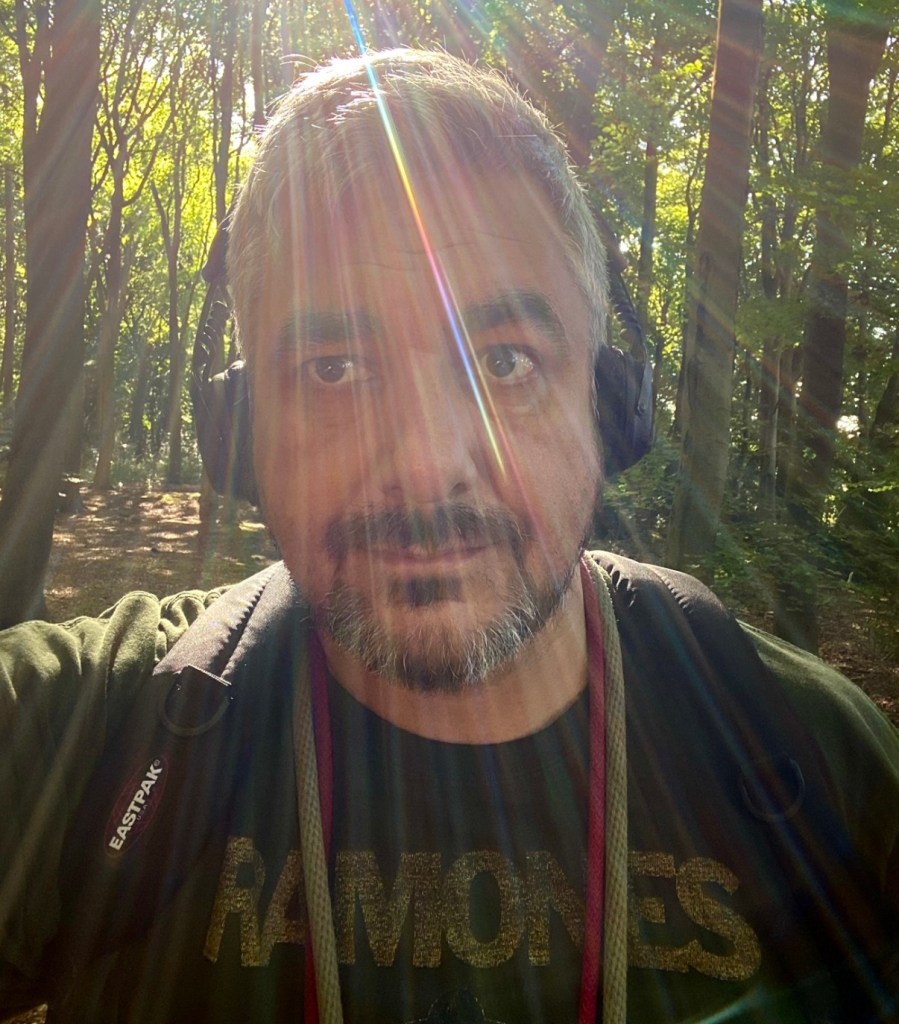
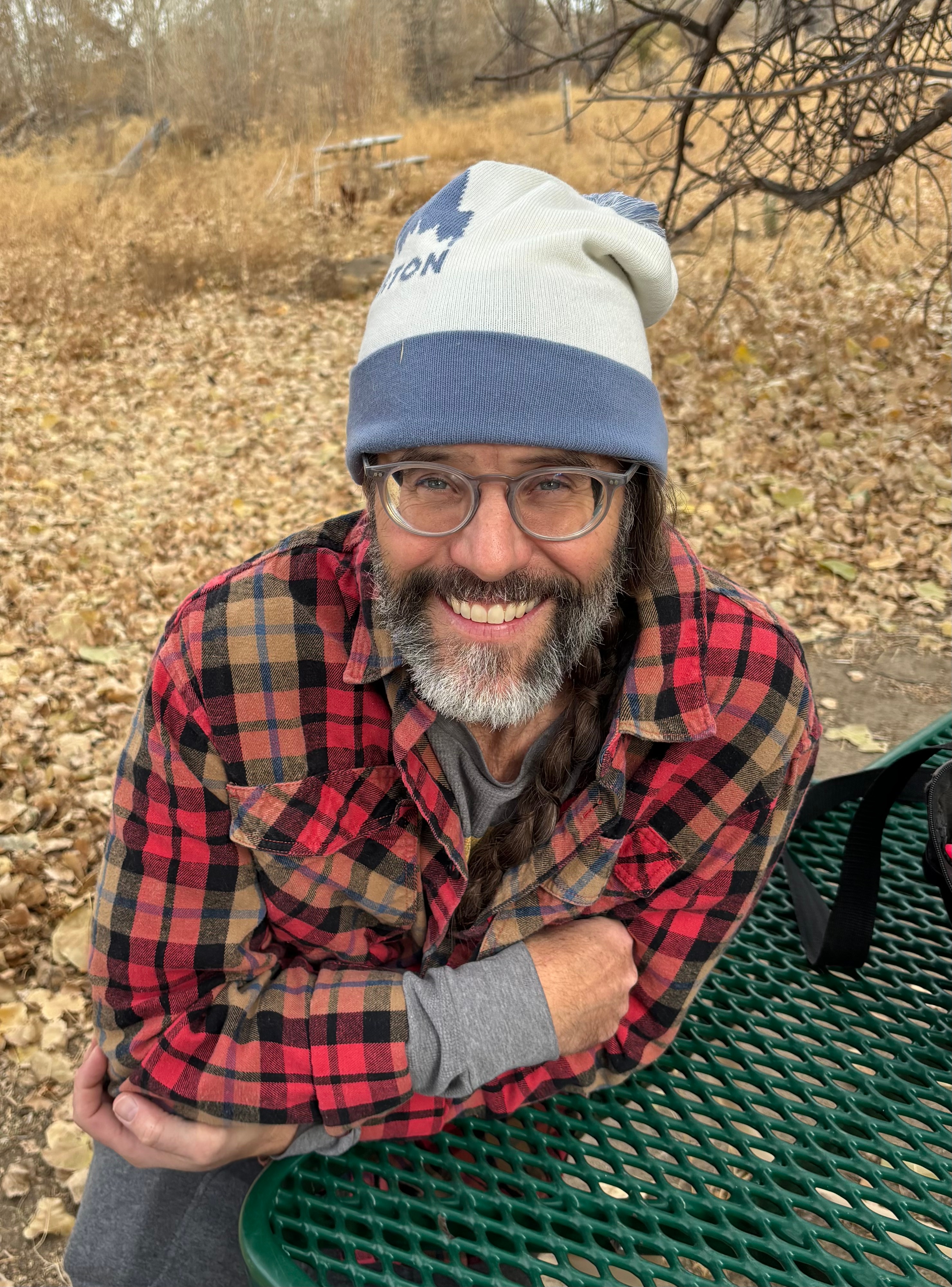

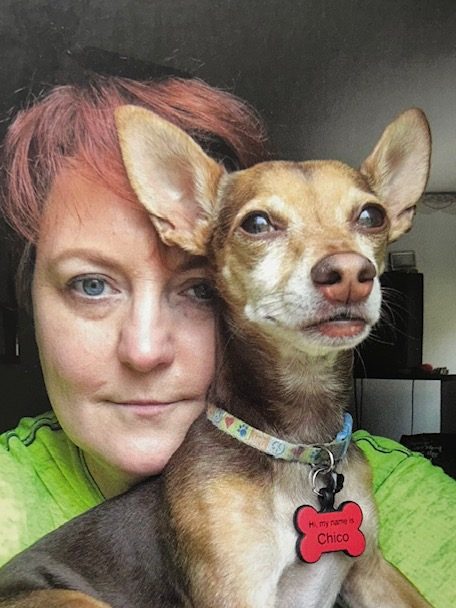


 The Quick and the Dead