Canada is not like how I thought it would be. It’s better than I had heard. It’s better than I ever imagined.
Mira, Simon and I spent four months in refugee housing. It was an apartment block filled with women and their kids, or kids living with an assigned guardian from the Canadian government, men and women who didn’t fit tightly into the heteronormative package, people who didn’t have strict adherence to gender norms. It was glorious.
We were moved into permanent housing towards the end of the year. I was given clearance to work. I was told how to apply for public school and assistance with after school care. I was told I would qualify for healthcare benefits and government assistance with food and other staples for the next six months. After that, I could apply to keep my status and it would be dependent upon my income. It was free for me to attend formal schooling if I wanted it, since I hadn’t had the opportunity in Massachusetts. My children were given twelve vouchers for sessions with a therapist specialized in childhood trauma at a government run mental health clinic. I was given discounted sessions for a year. We took advantage of all of these opportunities. It was liberating to seen as a person, to be cared for as an individual in my own right, and to be affirmed by people who knew that what I had lived through had been like a waking nightmare.
About a year into our new life, when a future that didn’t include fear was beginning to take shape, I got an official looking letter in the mail. It was from the Ministry of Refugee Relocation. I thought perhaps it a one year check in with us, or perhaps a benefit was expiring, or this was a notice that there were additional services we were eligible for. I set the letter on the kitchen table, to open after I had put the kids in bed, before I began to read through the homework for my adult education course on modern history of North America.
“Mom?” Mira asked as I was tucking her in. The blanket had come from the woman who lived next door. She had been resettled her for ten years. She knit a blanket for anyone that moved into this apartment complex.
“Yes?” I asked, leaning my face close to hers.
“Sometimes, I miss Daddy,” she confessed.
My heart seized. She had never mentioned this. Neither had Simon. I struggled with what to say to her. “Sometimes, I miss him too,” I said. I did not love Mark, but there were times when I missed the marriage, the idea of it, even if it was a sham. I missed the security it gave me, but I never missed the man himself.
“But I don’t ever want to go back to Massachusetts, ” Mira continued. “You’re better here in Canada. You’re happy.”
There were tears in my eyes. I blinked to clear them, silently whispering a prayer of thanks for Gilda for giving me this life. I wondered if she had ended up in the stocks again, and if she had gotten out just like all the times before.
“I am happy,” I said. And it was true. I was free.
At the kitchen table, I opened the letter, sat staring at it for several minutes before I could think.
Dear Ms. Harrington,
The Ministry of Refugee Relocation is in need of the services of a Letter Writer. The Letter Writers are men and women who have resettled from areas of social and political turmoil, whose purpose is to help others seeking resettlement in Canada escape their countries of origin. Individuals who have taken this journey themselves are often the best people for the job, since they know how high the stakes are for the families who seek to leave their oppressive environments. If you have interest in becoming one of the Letter Writers, please report to the field office on Monday morning April 24th at 9 a.m. We have enclosed an excuse letter for your current employer if necessary.
Sincerely,
Harriet Marshall, Minister of Refugee Relocation
The network wasn’t just women in Massachusetts who wanted out. The network was orchestrated by Canadians who wanted to help women like me, and children like Mira and Simon. They wanted to help relocate women like Maddie and men like Tom. Women like Gilda. I set the letter on the table, feeling excited, and nervous, and distrustful of the hope that was starting to rise inside me. But my eyes couldn’t stop looking at the address of the field office that wanted me in two weeks time. It was three blocks from the apartment. They had made it so easy for me to say yes. Why wouldn’t I?
I picked up the history book, and turned to the assigned reading, but my mind wandered as I read, thinking about how one day, the history books would contain a chapter about the women in the stocks, and the women who helped them escape.
I wrote everything out for Maddie. No code. She would need to understand everything as it was. Just like Gran did for me when I first joined the network. I hid this letter in the basket under the bathroom where I keep my menstrual supplies. Mark would never look there. It reminds him how different we are, and how powerless he is to change the way things work. There was a time when I thought I could trust Mark. When he married me, it seemed that he cared about me for who I was, not just as the woman who would give him sons. One night I ventured to tell him about my Untie Mat, a toe in the water, to see if I could reveal more. He smacked me and told me never to talk to him about Untie Mat again.
I cried to Gran that night. That’s when she told me about the letter writers.
I wrote out a second letter to Gilda. It was a tricky situation with Gilda leaving, and me knowingly doing something that would compromise me. Gilda would have to tell the woman who recruited her that she was going to Canada too. It would be the responsibility of that woman to make contact with me. But I was going to end up in the stocks, so that woman would have to make contact with Maddie instead. It was easiest to use the location that Gilda and I had used for last year to make pass the first letter. Maddie and Gilda’s recruiter could decided on a different location later.
I stuffed the letter explaining everything into the wall and replaced the loose brick. I took my shopping bags up and made my way back home to where I had left Mira and Simon to play in the yard. Maddie had offered to watch them again. It would be the last afternoon they would play there. Tomorrow they would be smuggled out of Massachusetts, and if they were lucky, they’d be in Canada shortly after. I fought the tears forming in my eyes as I walked. A woman crying was suspicious, especially to men. They only liked when we smiled.
Maddie was happily playing with the children when I arrived home, some game that involved running and freezing in place. I had purchased a few things for her at the grocery, and she helped me separate the items from my own when she saw me enter through the fence. I sent Mira and Simon inside to put the groceries away. Maddie gathered her own bag and her children and went home. I had slipped the letter into the bag as we sorted. She would find it, and after my children were gone, and I was in the stocks, hopefully she would follow its instructions to go to the loose brick in the wall. And if everything else worked according to plan, there would be a letter waiting for her from Gilda’s contact.
The plan had no room for error. If I was wrong about Maddie, I had just exposed everyone. But if I was right about her, then one day she might be able to escape too.
I rubbed my eyes with the heels of my palms. Mark would be home soon. I could not afford to let him see me cry.
As I tucked the children in that night, I whispered to each one of them how much I loved them. There was a heaviness in the words that I didn’t normally feel. My voice cracked because I knew it would be the last time I performed this ritual. If they noticed they didn’t comment. I lingered a little too long over them.
Mark was suspicious of my moodiness. “Did something happen today?” he asked, as I turned back the covered and joined him in bed.
“No,” I said, sinking into the mattress, attempting to escape his prying. “I’m just tired.”
He too didn’t comment. He didn’t really care.
I didn’t sleep. I waited until the clock showed 2:15, it’s huge red numbers like monster’s eyes peering at me in the dark. I dressed, crept out of bed, down the hall to Mira’s room. I gently shook her awake. She was confused and sleepy. “Mommy…what…?”
I shushed her. “We need to go. I can’t tell you why.” I woke Simon the same way, gave the same instructions. I grabbed the small bag I had packed for them from the back of the coat closet in the hallway. I had practiced a silent exit many times to make sure that we could get away without waking Mark. The door of the house closed at 2:19.
We stayed in the shadows as best we could. My heart hammered. The children were practically running to keep up with my quickened pace. We went across yards, and public lots and down alleys and through parks and play grounds, until we were outside the limits of Fulbright, trekking across fields and farms. Finally, we made it to the ruin of the US Postal Office. I checked my watch. It was 2:59. The smuggler was supposed to arrive at 3:15.
Gilda was standing against the back wall of the old building, ushering people through broken window to hide inside while they waited for the smuggler to show up. I had no idea how many were already inside, but I watched her help 2 people through before she notice me and the kids. No one stood between us, and she left her place at the building and came towards me quickly.
“Emily,” she said, a question hanging in the air. She looked at the kids, then back at me. “The last two?” She was shaking her head.
“Gilda, please,” I said. “Please.”
“I can’t take your children from you,” she said. “I can’t do that to you.”
“You have to,” I said. The children were both now clinging to me, having figured out why were outside of Fulbright in the middle of the night. They had heard stories of people disappearing from Massachusetts all their life. Now they were about to do it themselves.
“Mommy, don’t send us away,” Simon said. He was pulling on my arm. “I want to stay with you.”
But Mira was silent. Mira, at only seven, already knew what life would be like for her if she staying. She cried silent, fat tears and remained at stoic as stone.
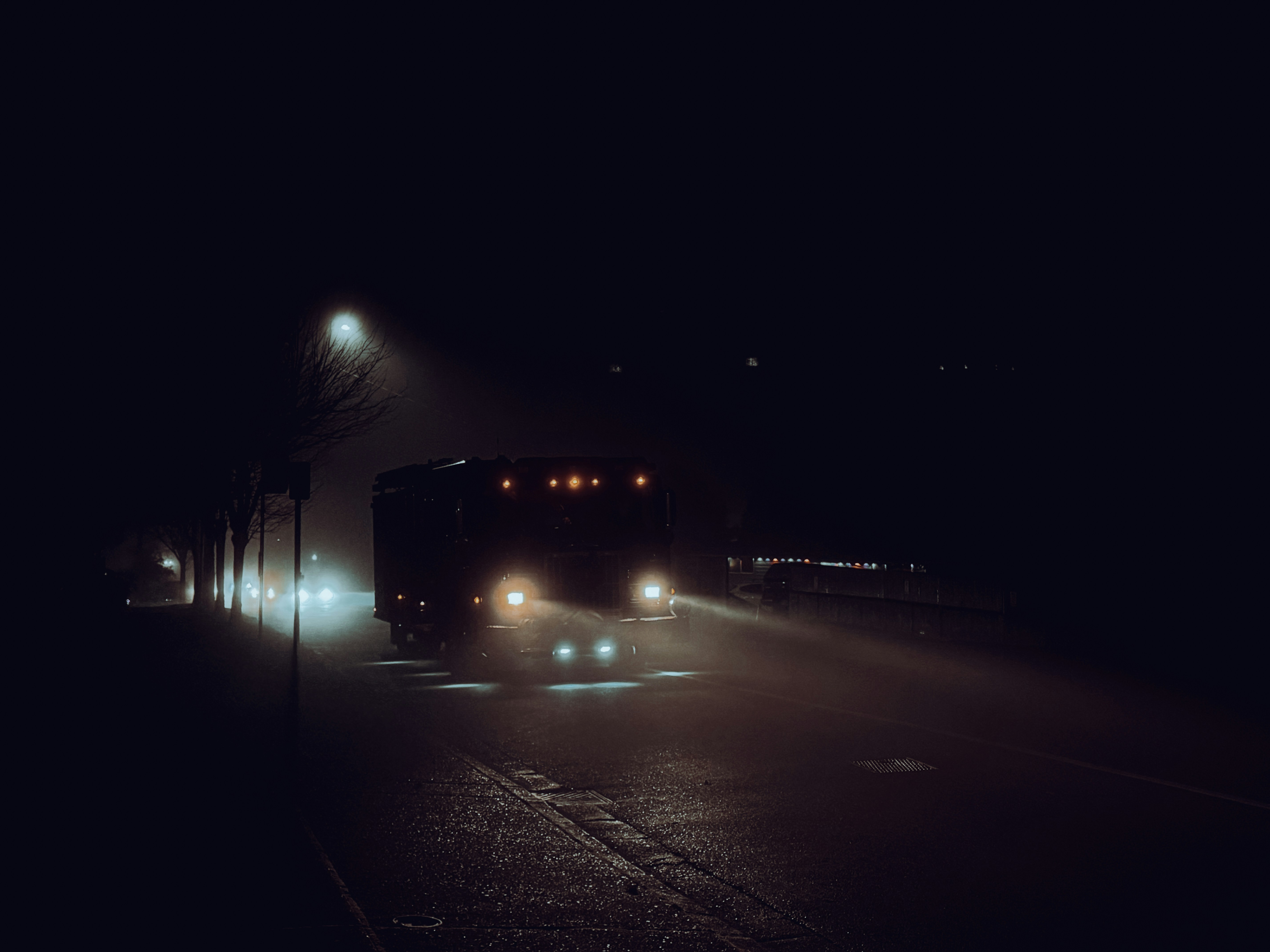
Gilda was about to say something more, when we heard the truck pulling up to the building. It’s lights were off, and as soon as it parked, they killed the engine. A person climbed out of the driver’s seat, and pulled something from their pocket. It was a flashlight, and the driver clicked it on and off three times quickly.
“It’s safe,” Gilda said. She took off towards the truck and I followed, the kids clinging to me as I moved after her. She called into the old post office, and then we were being handed children, and helping women climb through the window. Two men came last. I turned around to see that the driver had opened the back of the truck, and was similarly helping women and children climb into it. When everyone else had gone the driver looked at the two of us and the kids and said, “Can’t take both of you. Which one of you is going?”
Gilda and I looked at each other, and before I could say anything, she pushed me towards the truck, saying, “Go, Emily.”
“No, Gilda. Take the kids. Go to Canada. Get away from here.”
“No,” she said again, more forcefully. “Go with you children, Emily. They need their mother.”
My hands were trembling so hard that I almost dropped the bag I was packed. “But, Gilda, they’ll put you back in the stocks,” I said.
“You think they won’t do that to you?” she said.
“Ladies, we have to go,” the driver said. She came towards us, and lifted Mira from the ground, pushing her into the truck. She stifled a cry. Simon went into the truck more willingly, but I could hear them both sobbing as soon as they were inside.
Gilda shoved me towards the truck. “GO!” she said, almost angry now. “I’ll get out later!”
I looked over my shoulder at her, the guilt almost unbearable. But Gilda didn’t look disappointed or disapproving at all. She looked just as hard and as determined as every time I had passed her in the stocks. She was a fighter. She would survive.
The driver shut the door of the truck, and then my kids were huddled against me, crying into my dress in the dark.
The worst part of recruiting anyone new to the network of letter writers was the uncertainty. It was always lurking in the shadow of your surety, waiting to pop out of the darkness and scream that you were wrong. It whispered to you that it wasn’t worth the risk, that it would be better to stay hidden, silent, safe. I had to remind myself of the truth- I wasn’t safe. Mira and Simon we’re safe. And neither were Maddie and Tom or their boys. We all needed to get out of Massachusetts so we could live as our full selves.
There were plenty of women who welcomed the rigid rules that governed their lives. They pretended it was piety, but God has fallen out of their lives long ago. What they clung to instead was what Gran used to call Patriarchy. She was always careful to use that word around us, because it was on that list of things that you couldn’t say. Women ended up in the stocks for uttering it, along with any of the other forbidden words: feminist, equity, organize, fair. These things did not exist according to the government. There was only the one right way: men in control, and everyone else subservient to them.
I prepared myself to cross the boundary of my lawn into Maddie’s. It was a ritual I took very seriously. When I left my home, I was entering enemy territory. Only at home, when I was alone, did I ever feel truly safe. I closed my eyes and inhaled deeply through my nose as I stood there at the boundary, marked out with a line of stones. When I exhaled, I let go off all the worry that had been bubbling. I had left a letter in the stone wall for Gilda to let her know that Mira and Simon would be the last two. I had written that I was recruiting my neighbor. She would find a way to get to my children if anything happened to me. The network had some resources- women who were trained for espionage when it was needed. I had to trust that Mira and Simon would get out even if bringing Maddie into the network went wrong.
I stepped over the boundary stones, telling myself that there was no going back. There would be no backing down, no pretending. My life as I knew it would be over in 3 days either way. This knowledge gave me resolve and propelled me forward without fear of the conversation ahead of me.
I knocked on Maddie’s door three times, a hard knock, but not an urgent one. I waited, hearing playful squealing in the house, and heavy footsteps moving towards the door. When the door opened, I pasted a smile onto my face so I would look pleasant. I had become adept at smiling under duress. It was how I had survived.
“Oh! Emily, hello,” Maddie said. I could see trust and surprise and excitement dancing in her eyes, reflected in her young face that hadn’t yet hardened with suspicion of others. I ached for her naiveté, a part of me longing for it in the same moment. I reminded myself that she was purchased, sent her to be kept safe, to help play a role so her husband could hide. Maybe she had learned how to act and her expression was just at disingenuous as mine.
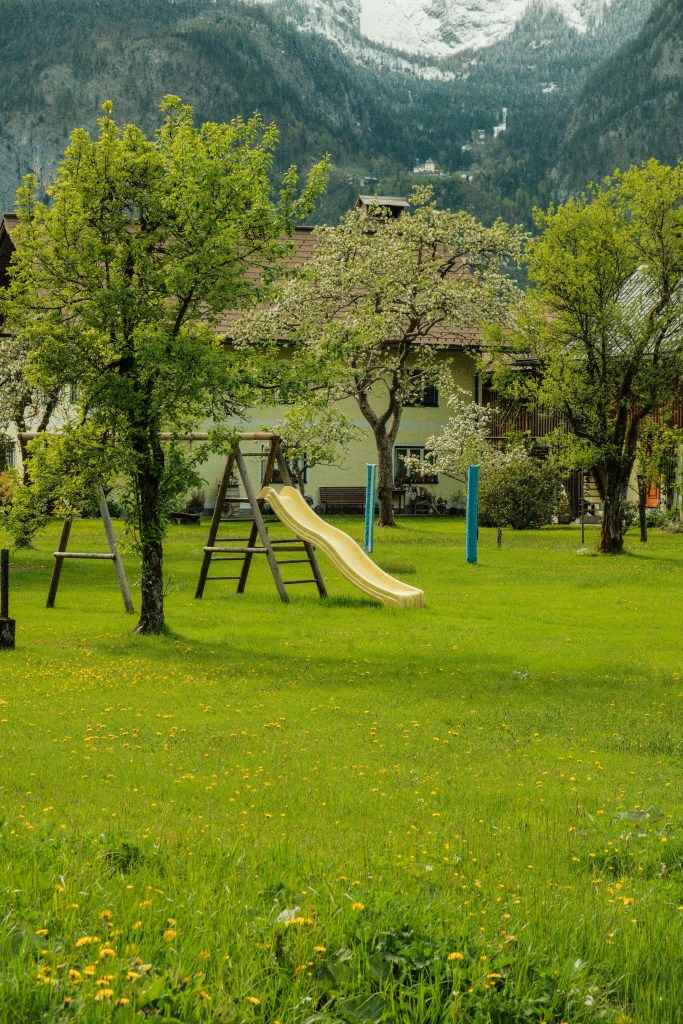
“Would you and the boys like to go with us to the park?” There was a nearly secluded playground, old and crumbling, tucked away behind the grocery. It was where I had been taken by Gilda. Almost no one went there twice. It wasn’t a kind of place you returned to once you had been. Young moms wouldn’t necessarily know that, so it was easy to disguise the visit as ignorance. Older moms with older children wouldn’t necessarily care that it wasn’t the safest place for children to play. I had only been there twice myself, and each time, Gilda and I had been the only people there.
“Yes!” she said quickly. I tried not to make a judgement about how quickly. “I’ll meet you in the yard in about five minutes. Let me get the boys ready, and a few snacks packed.”
I went back to my own house to gather my own children. Children used to go to school, Granny had said, but that was only for boys now, and only for those families which could afford the expense. Everyone else attended the school of every day life, which involved cooking, cleaning, yard work, shopping, mending, and staying on the good side of whatever man governed your household. Simon would eventually go with work with Mark, learning his trade as a carpenter and architect, and that’s what Simon would do for a living for the rest of this life. There were no options for him, but just there were no options for Mira or me.
We walked in comfortable silence to the playground. Like always I never looked anyone in the eyes, and I moved out of the way for everyone man we encountered. Maddie awkwardly followed my example. She would learn, I told myself, and one day it would be second nature.
The playground was deserted just as I expected. Maddie took a look at the leaning jungle gym, and the rusted swing set, concern creeping across her forehead. She turned to her boys and said, “Just use the slide for now, and I’ll push you on the swing in a minute.” The four kids all went running off, mine unafraid to use the equipment which needed replacing. I watched them climb the rickety tower, the whole thing wobbling as they went. Maddie’s two did as she instructed, taking turns using the slide, the only thing in the whole play yard that looked safe.
I waited to say anything to her. Waiting the only power I had. Waiting and silence were my tools and my weapons. It kept me safe from revealing too much, and it forced others to speak first. Maddie was fidgeting with her hat, and the buttons of her blouse, and she hair, and the pleats of her skirt. Finally, I laid my hand on her shoulder to still her. She went slack under my touch.
“Emily.” My name was her whole sentence, all her worry, all her anxiety, wrapped up with my name as its bow. Our eyes met and as her lips quivered, I pressed my finger to my mouth, a sign to silence her.
“I know,” I said. It was all I needed to say. She bit her trembling lip but it still shook under her teeth. “Do you want to do something about it?” I asked. She frowned , but she didn’t ask any question. “Because I need someone to take my place.”
“Your place?” she echoed.
No going back, I reminded myself. Without Gilda and without me, the network would need someone new. “Writing letters,” I said. “Working to smuggle people out of Massachusetts.”
Maddie let out a tiny gasp, but she stymied in quickly, though her eyes remained wide. “How?” she exhaled.
I had hooked her, or else she was an incredible actress. “There’s a group leaving soon. The spots are all full.” I had to give me enough information without revealing anything specific. “My contact in the network is leaving. My work on this particular endeavor puts me at risk.” I paused, watching her horrified and yet hopeful expression. “Maddie, I might end up in the stocks.” I swallowed the fear that was running away with my heart rate. “Forever.”
She nodded vigorously, suddenly stone faced. “I understand,” she said, all hint of awe gone. She was as stoic as death.
I knew I had chosen well. “On Wednesday, I’ll take you to the drop spot. It will contain directions for you. Whatever you retrieve must be destroyed after it has been retained.” I tapped my forehead, indicating that she needed to memorize whatever was written. “Everyone uses code. You’ll have to learn.”
“Can you teach me?” she asked.
I didn’t have time. “Some,” I offered.
A squeal from Isaac echoed through the play yard. The boys has moved from the slide to the base of the wobbling jungle gym. Maddie took off across the grass, hollering, “No! No! Let’s do the swings now, boys!”
I watched her pushing her children on the swings, wondering how long it would be before they too could be smuggled out.
I’ve leaving on the next shipment. There are two placements remaining. If you need to get something to Africa, send it by airmail. There won’t be another opportunity until the guard changes in the old capital. Be on your best behavior.
I folded Gilda’s letter tightly and stashed it into my bra. I picked up my shopping bags from the ground at my feet and moved off down the gravel path that would past the cemetery to the street where a row of brick houses stood side by side with barely any yard between. I walked past the church, not looking at anyone, thinking about Gilda’s words. Cryptic for a reason. Dangerous and full of hope. Sacred.
She was going to Canada. That’s what we called Africa in the letters. She was being smuggled out, and there were two spots left with the smuggler. The pick up location would be the ruins of the US Post Office outside of Fulbright. It would happen in four days. It would be the last one of the year. If I stayed behind, she didn’t want me to end up in the stocks. I was so practiced at reading and deciphering Gilda’s messages that I hadn’t had to wonder about anything the letter contained.
Two spots left. I couldn’t go alone and leave the kids with Mark. I didn’t want them to grow up here, where they would have to learn to conform and repress. I couldn’t go with just one of them. How would I ever choose between them? And the thought of sending them alone without me made me shudder. What would await them, orphans, in Canada? And what would Mark do to me once he learned what had happened?
Assuming they made it to Canada at all. Not everyone did. There were quotas for how many refugees for political asylum they could take each year. Going west wasn’t an option. We didn’t have an open border with the Free State of New England, a territory composed of what used to be New York, New Jersey and parts of Pennsylvania. There wasn’t any point in going south either. Connecticut and Rhode Island had never fully recovered from the collapse of the United States. It was a lawless land riven with drugs, gangs, disease and despair. North was the only choice, into the territory that Canada had adsorbed. But it had to be done carefully. If you were caught, you would rot into the stocks.
Was it worth it though? If Mira and Simon made it out of here, wasn’t my life worth giving for that?
I continued up the street, towards the cul-de-sac where my story and half stone house sat. It looked older than it was. All of Fulbright was built when Massachusetts became its own nation, modeled after colonial America, carved out of the land that used to be a state park. It was intended as a refuge, but the militia had quickly seized it and made it part of the new regime.
I opened the gate to the yard where I had left Mira and Simon with my neighbor, Maddie, and her two boys, Isaac and Jacob. My children were on the swings, and her boys, significantly younger than mine at ages two and three, were chasing each other around the yard with sticks.
“Everyone doing okay?” I asked as I approached. I didn’t know Maddie well, but I trusted her to watch my twins for a the time it took me to do the shopping. We helped each other in this way often. She had been married to Tom, the man next door, four years ago, purchased on the bridal market. She had come from outside of Fulbright. It always seemed to me that she didn’t belong here.
“Everyone is great,” she said. “The little boys were in the sandbox for a while. Your two mostly were on the swings and the slide,” she said.
Simon came running up to me, his face sweaty and cheeks red from outside play. “Did you buy apples?” he asked.
“A few,” I said. “They didn’t have many today.” I handed him the shopping bags. “Take this inside with your sister and start putting it away for me.”
He took the bags without complaint, calling for Mira as he headed for the back door of the house. She jumped from the swing mid-arc, landing clumsily before she found her footing and jogged to house. They disappeared into the kitchen.
Maddie had crossed her arms as I was watching my twins. It was a stance that signaled how uncomfortable she was, either with me or with something she was hiding. I was cautiously curious. “Are you cold?” I asked.
She shook her head, not looking at me, watching her boys chase one another around my yard. “Well, I guess we should go,” she said.
I was disappointed, and it led me to be reckless. “Was there something on your mind?”
She slid her eyes to me. I studied her face, the way her eyes grew wide and unfocused, the subtle twitching of her brow, the slight pout of her lip. She grew a quick breath through her nose, holding it for too long. “Tom doesn’t like me,” she said.
I pretended to know what she was talking about. “Nobody likes being beat, Maddie, but it’s not something you can escape from. You just have to find the people who understand how hard it is, and endure.” Mark didn’t beat me. Plenty of men did beat their wives though.
“That’s not what I mean,” she whispered.
I leaned forward, and she realized that she was trapped. The fear grew in her eyes, her whole demeanor shifting to one of penitence. I didn’t want her penance. I wanted her honestly. I craved honesty in my life. There was too much dishonest harmony around me. It kept me alive, but it was suffocating. “What do you mean?” I asked.
I could see the clockwork inside her calculating the risk of lying versus telling the truth. “Tom doesn’t like me because…I’m a woman.”
It made sense. Tom, a bachelor until nearly age 40, buying a woman as a wife. He was hiding. I looked at her eyes more closely, wondering if she had seen her 20th birthday yet, wondering why he parents had agreed to sell her at such a young age to a man who didn’t live in the same community. Perhaps she was hiding too. I thought about the two placements, silently considering how I would tell Mark that the parents of the two boys next door disappeared and we had to adopt them. But would she leave her boys behind to be free? Why would she make a choice I was unwilling to make for myself?
“Don’t say anything else,” I said carefully, my tone a mix of reassurance and warning. “Not to me, not to anyone.” She nodded, swallowing her fear noisily. “You’ll be safer that way,” I said. I smiled at her and the tears that had threatened to spill from her eyes finally did.
She wiped her face with her hand, then called to her children. I waved to them happily as they exited my yard. I watched her go through the front door of her house before I went into my own. I thought about those two little boys, living with two closeted parents, wishing there were four placements with Gilda, and not just two.
The placements had to go to Mira and Simon, and I would have to live with the consequences.
I drop the letter to Gilda in the normal way. There is an old brick in the stone wall behind the post office that wiggles loose. I always fold the letter three times, tuck it to the right of the brick, then shove the brick back in place. I check the brick every few days. I mark my letters with a red line so that I know they are mine waiting to be delivered, just not picked up. Gilda marks hers with a blue line so that I know it came from her. It’s an easy system. We’ve never been caught.
Other women have been caught. They ended up in the stocks. Jenny Masterson, Laurie Headsworth, Abigail Bingham. Once a woman ends up in the stocks for being caught with letters, she never gets any new letters. We take her out of the network. It is too much of a risk.
The thing about letter writing is that you have to know the code names for everything. Once you learn them it’s never hard to figure out what the message is. Sometimes a new code name appears in the letters and you have to spend days or weeks deciphering. And sometimes you have to create a code name, putting enough details into the letter that your contact will know what you are passing on, but not putting so much detail that anyone not in the network can figure it out if they find the letter. It’s a fine balance.
Once the letter is behind the brick, I pick up my shopping bags and head towards the middle of town. I need a few groceries for supper and I need to pick up cough syrup. I hate spending money on cough syrup when hot tea sometimes will work just as well, but Mira has a nasty cough and she can’t sleep through the night. I adjust my scarf, pretending not to notice that Gilda is still in the stocks. The blood hasn’t been wiped from her head. Perhaps she really is dead this time.
The lines are always long at the grocery. They have to check your purchases against the list of rations you’re allowed. Massachusetts instituted rationing when the war first broke out, and all the states broke up into their own territories and nations. They’ve never gotten rid of the system of paper coupons, although they are no longer hand written by the city official. They print them now, on perforated paper, and they get delivered with the rest of the mail every week.
I stand there with my bag of potatoes and my bag of carrots, and my one onion, leafing through the coupons until I find the ones for fresh vegetables. The cough syrup is kept behind the desk. I’ll have to use one of my coupons for medicine as well to purchase a bottle. When It’s my turn at the register, the clerk takes my basket and my coupons, then rings up the order. Just as she is about to tell me the total I interrupt her by handing her the medicine coupon. “I need cough syrup,” I saw.
The clerk takes the coupon to the desk, where the manage is sitting on a stool, surveying the store. They have a short conversation, and the manager goes to the shelf behind him where all the medicines and razors are kept, pulling a bottle off the rack and handing it to the clerk. I watch her make her way back to the register with the cough syrup and the coupon. She stuff the coupon into her register drawer and bags the bottle with my other items. She types in a few numbers on her keypad and then turns to me.
“That’s $35,” she says.
“$35,” I repeat. I shake my head as I count out the bills. They look a lot like the old money I used as a kid. I wonder where this money is printed. I had heard that one of the mints (the one near DC, I think) was printing money for all the countries in the northeast and Atlantic coast now. I didn’t understand how one country could do that for all the other ones around it, but it didn’t matter too much, I guessed. I wondered if everyone was using the same money and we just didn’t know it.
I tucked the rest of the bills back into my wallet and took my purchases from the clerk. On the way home I glanced at the stocks, quickly, to see if Gilda was still there. Someone had set her free since I had come through. There was a new woman in her place. I wondered how long it would be before she had the courage to check for my letter behind the brick.
We don’t talk about the women in the stocks. Not openly on the streets. Not openly in our homes. Not openly in the most intimate of settings with our spouses. It’s never safe to talk about them, and how they got there, because if we ever discuss, it could be seen as questioning. We can trust no one. The women who ended up in the stocks made that mistake. So we say nothing, not to each other, not ourselves. We simply avert our eyes as we pass, and move on with our daily business.
Every child learns this at a young age. I had to teach my own children not to ask long before I was ready to have “the talk.” Granny used to tell me that before the laws all changed, “the talk” was explaining sex to kids who were getting close to the age where they would want to start having it. Now, “the talk” was much simpler. Don’t ever ask about the women in the stocks. They are there because they deserve it. Inevitably, this would lead to more questions- why Mommy? What did they do? The answer is like poison inside me, but I couldn’t tell the children the truth without risking ending up in the stocks myself. So I gave the standard, government approved answer, “They didn’t follow the rules.”
I had twins, a boy and a girl; although I had a suspicion that maybe I actually had two girls, and that one of them just happened to have a different physical body than my other one. That used to be legal. Granny said they used to call it Trans. Her sibling, Matilda, had been that way. I remember Untie Mat (that’s what we always called them, back when we still could), and sometimes it breaks my heart. Untie Mat went into the stocks too. But that was a long time ago. The tears were all dried out, just like my ability to feel anything.
We didn’t live in one of those big cities, like New York or Boston. No, we lived in a small town in western Massachusetts that was perfect for a movie set, with a main drag that was only about four blocks long. Anybody could walk anywhere, and that was a good thing now, because gasoline had become so expensive that only the super rich could afford to have a car. Some of our neighbors had a horse or a mule, but they were expensive too. For most of us in Fulbright, we walked. There was a big town square, with a park and a courthouse and a fountain, and it was always full of people walking here and there.
That’s where the women in the stocks were. Right where everyone could see them.
“Mommy,” my daughter Mira said, tugging on my arm. That’s all she had to say. I followed her eyes to the newly imprisoned woman. I had known her all my life. Her name was Gilda Hughes, and she was married to one of the most rotten, abusive men in Fulbright. He was always accusing her of infidelity, or disloyalty, or disobedience, or a host of other invented vices. Everyone knew that Gilda wasn’t any of the things Victor said she was. But it didn’t matter. Whatever men said about you was true, and into the stocks you went. Gilda’s face was swollen with a black bruise on one side, her eye squeezed shut from the trauma. Her hair still had blood in it from where she’d been struck on the head. If she hadn’t been moaning, I would have been afraid that she was dead. Someone walking by took a moment to offer her a drink of water (we weren’t allowed to do that; a government man came by around noon every day to do that on behalf of the city). I didn’t get a good look at who the kind stranger was. I wondered if it was someone who was involved in the letter writing.
The letter writing was the only way that information we could trust got to us. In the wake of the complete collapse of the federal government thirty years ago, each state became it’s own sovereign territory. The political battles had turned to actual battles. That’s when Massachusetts set up it’s own standing army. I’m fuzzy on the details of what happened after that. I think everyone who was alive then is too, and that’s why we don’t have a true record of events. All I know is sometime after the standing army was established, it took control of everything, turning Massachusetts into a police state. That’s when they brought in Cotton Smith, and set him up as the puppet dictator. Cotton Smith couldn’t have possibly been his real name; it was supposed to make people think about the old Puritan colonies, and religious figures like Cotton Mather. He wound the clocks all the way back to the 17th century and there wasn’t a thing anyone could do to stop him by the time he took power.
He wasn’t even a good governor, or so I’ve been told. He was a bafoon who had a lot of connections and money with absolutely no walking around sense. But you can’t argue with the rich when thy decide to do something. And for some reason, they wanted Cotton Smith, backed by the Army of Massachusetts. We all had to either get out, or fall in line.
Untie Mat and Aunt Jill made a plan to get out, but they never made it. They took Untie Mat in the middle of the night, raiding the house while they slept. Mat went into the stocks. Jill was shot trying to fight off the soldiers who stormed the house.
Granny told me that story through a letter before she died. She wrote it all down, and stuffed it under my mattress. When she was dying, she whispered in my ear that I should check there for her last gift. That letter had bits of the history she had lived through, and it passed on the information for her one contact within the letter writers: Gilda Hughes.
I looked longingly at Gilda, hoping that she’d get out of the stocks in a day or two like usual. I did not want to have to go hunting for another letter that contained her contact, but I would if I had to.
“Let’s go,” I told Mira, as I ushered her away from the square.
The White Stone, a short story I published on The Quick and the Dead in 2022 has been lengthened into a novel, and is now live on Kickstarter. The campaign runs until October 31 at 6 pm EDT. If you enjoyed reading The White Stone and the companion stories published on this blog, I encourage you to check out the full novel. Use the the embedded link below to make a contribution to the campaign and select your reward- either a hardcover or softcover version of the book. Issa Brown has beautifully illustrated 14 characters from the novel which will be included in color in every print copy. My pie-in-sky stretch goal is to narrate an audiobook of this story along with two of my friends.
Thank you for reading my work. I hope you enjoy The White Stone.
Astrid watched from the shadows near the house as her father and Sigmund stacked the wood for the bonfire. Aelric’s chain flashed in the fire light of the torch she held. Ljót was at his side, her arms snaked around his waist. Astrid smiled to herself. It was a good match. He would be happy with her. She watched the dancing and the fiddling from the darkness, just like when her eldest brother was chained, and just like that night, she also watched her cousin Lodvik peel away from the festivities. She moved behind him, quiet as the night, catching him just as he was stepping into the lane at the front of the farmhouse.
“Going back to your woman?” she asked. Eylaug had delivered the twin girls. They were not thriving. Hrist had mixed several medicines for them, but nothing seemed to help. Eylaug did not have enough milk.
Lodvik spun on his heel, his surprise at being addressed evident on his face. But he frowned when he saw it was her. She felt her frown deepening too. “I don’t know. It’s not like I want to be there either,” he said.
“Why has she not chained you?” Astrid asked.
Lodvik looked at her like he couldn’t believe that she didn’t know the answer already. “Don’t you witches know everything?”
She had decided not to correct anyone when they called her witch. They would call her one behind her back anyway. “Because you didn’t give her boys?”
He shrugged. “It is not a happy match, Astrid. I do not care.”
She let her revulsion settle before she spoke again. “You should have come to me first Lodvik.”
“I know,” Lodvik said.
“Remember that, cousin,” she said, “And next time, trust me.”
He looked at his feet, his expression darkening. She nearly choked on the shame he felt. “I will trust you, Astrid,” he managed to say.
In the distance, she could feel Edda, full of power, full of love for Hrothgar. Astrid wondered if the other Bairns could feel her love for her brothers and her cousins through the wild magic. It had never occurred to her to ask until she had felt Edda’s love sliding towards her on the waves of the power.
She turned her attention back to Lodvik. “Ask Helga to help Eylaug,” she said.
He sneered, but at her stern frown, he softened. “Will it help?”
Astrid laughed. “Did you not know that Helga nurses babies for women who have trouble?”
Lodvik’s jaw dropped. “She does?!”
Astrid nodded. “Strip away all the wild magic, Lodvik, and we are just ordinary women,” she said.
“Ordinary women,” he echoed. Then he laughed. “Goodnight, Astrid,” he said.
She watched him walk down the hill, his form melding into the night. But the fear he had felt just a moment before was gone. It had been replaced with hope. It called back to her as he moved away. She smiled to herself and went back to Aelric’s celebration.
She knew it was a dream when she saw the Skuld smile—a pretty smile, not her typical sad, boney smile, stiff and sugared with regret. No, this smile she was given was one of pride, without any accompanying guilt or grief. A warm smile. A smile that illuminated all her dark places.
“You did it, Astrid,” she said, her voice singing like the rain.
Astrid was at complete peace, drifting like a hawk on the breeze. “I did?” she asked.
“Of course you did,” the Skuld said. Now she sounded watery, and the smile wavered before the woods around them went dark.
The voice, the spirit, that had been calling her sounded clear. Protect the boys!
“Protect the boys, Astrid,” the Skuld said, her smile now just a flash in the dark.
Astrid woke in a cold sweat, her heart racing. Spirit dreams did not typically come to her, but how could it have been anything else? She steadied her breathing, pressing her hand to her chest, tuning to the rhythm inside her. Thud-thud. Thud-thud. Thud-thud. It slowed as she exhaled, a long release. She let the tension flow from her body. She opened her eyes, and shivered in the morning air.
Protect the boys. She wondered how.
There was a knock at her door. “Astrid?” Sigmund called from the other side.
“Come,” she said. She had slept in her dress, too tired to remove it. She swung her feet to the floor.
Sigmund opened the door slowly, peering in through the crack before he opened it fully. “We heard you calling,” he said.
“I was asleep,” she explained. She had a habit of talking in her sleep. The whole house was used to it.
Sigmund nodded, though his forehead was creased in worry. “You sounded…” He searched for words. “You sounded afraid, Astrid.”
She wrestled with how much to tell him, but in the end decided she couldn’t tell him any of it. She didn’t understand what was happening herself. She didn’t think she could explain it to anyone else. “I’m fine, Sigmund. Just a bad dream.”
He didn’t move. He didn’t nod. He shut her door, sealing them inside and came to sit on the bed next to her. He offered his hand to her, and she took it, though she frowned in suspicion before she did. They sat together in silence for a moment before he said, “You said you were almost carried off?”
“Oh,” she said, trying to dismiss any of his concern with a slight laugh. “Yes, I…we did a hard task, and it…well, I wasn’t carried off.” She smiled. “Still here for you to worry over,” she said. She squeezed his hand.
But Sigmund was not smiling, nor was he charmed by her dismissal of the situation’s seriousness. “What were you doing?” he asked. “You’ve never come home looking like that.”
She stiffened. “What do you know about Lodvik and Eylaug?” she asked.
Now he stiffened, and pulled his hand away from hers, rubbing his palms down his pantlegs. “Aelric said he put a babe in her belly.” His eyes met hers, looking for confirmation. “It’s true?” he asked.
“You know the house where they say this wild magic lives?” He nodded. “We took Eylaug there yesterday, and we…looked inside her. At the babies.”
“Babies?” Sigmund repeated, his face dropping in surprise.
She nodded. “Girls.” Astrid sighed, and rubbed her forehead, feeling emptied of all her strength. “I almost was carried away looking at girls.” She could not keep the sneer from crawling across her face.
Sigmund seemed to shrink away from her. “I did not know you could do such a thing,” he said, awe and terror mixed up in his words.
“It’s not worth it to try,” Astrid said. “It took all five of us, and what did we gain from it?” She scoffed, then closed her eyes, centering herself so her anger would not catch up to her. “We leveled the house,” she said.
“You what?” Sigmund asked, breathy with disbelief.
“To prevent stories from spreading,” she said. “That place will not help us make more boys, Sigmund. It was a false hope.”
He swallowed down a question that was on his lips, taking a moment to think before he spoke. “Is there any real hope, Astrid?”
The spirits chattered. She closed her eyes, listening to the arguing. One of the voices was chanting softly to her. Edda. It’s Edda.
She smiled to herself before opening her eyes. “There is real hope, Sigmund,” she said, allowing a slight smile to part her lips. The spirits chattered around her. Protect the boys! She listened to the call, thinking of her white stone. She closed her eyes, meditating on the words, drowning in the arguing of the spirits. Someone was screaming, long, devastated, agonized screams of terror. Who are you? She asked into the misty realm where the spirits dwelled. The screaming stopped, then the voice repeated the familiar instructions. Protect the boys! The same voice?
Astrid opened her eyes, and her brother was eyeing her cautiously. “What do you know Astrid?” he asked softly.
The wild magic was not for him, and she was always careful not to reveal what had been revealed to her. Unless he asked for a reading, she would not tell him what she suspected. “I know many things that I would not know without the spirits to tell me,” she said, ignoring his question by giving him an indirect answer.
Sigmund sighed. “Astrid…” he began, but she turned her face away from him, distracted by Sif’s swirling power. She was far away, accompanied by a deep groaning that sounded like the earth swallowing her. Astrid concentrated, pulled towards the power, towards the emotions that were not her own. She stood, hair prickling on the back of her neck.
“What is it?” Sigmund asked, standing as quickly as she had.
She shook her head, then, forgetting Sigmund, allowed herself to be hooked by the call, pulled out of the house and down the street towards whatever trouble had enclosed around Sif.
The streets were empty, which Astrid thought was unusual. She felt an unnatural sensation in the air as she passed the houses, moving towards the center of Soledge. She moved with purpose, slowly, feeling each of Sif’s threads growing taut with tension. Astrid paused momentarily as she passed the apothecary. She could feel the girl, Edda, slippery with love for her man, bouncing from uncertainty to clarity. She lingered too long. Edda reached out, felt her presence. Astrid melted away quickly, not wanting a distraction.
But a distraction found her anyway. At the end of the lane, just as the dirt road disappeared into the grass and old rock that led to the edge of the woods, Aelric was standing with his hands on his hips. He looked stormy, his face overcast with fatigue and fear. Fear. There was always fear.
“What are you doing?” she asked her brother, approaching at a snail’s pace.
Aelric grimaced, rubbing a hand over his mouth to wipe away the expression. “I was…” His eyes shifted away from her. “Astrid, can you…” Whatever it was, he didn’t want to say it. She could feel Sif in the woods, filling with wild magic. The groaning she had heard she now recognized as Aelric’s fears. She stepped nearer to him, closed her palms over his arms. Her touch drew his gaze back to her.
“Aelric,” she said tenderly, soft as air. “What are you doing out here?”
“I couldn’t sleep—listening to Sigmund and Magnhild…” He seemed embarrassed, but she nodded to indicate he didn’t need to explain any further. “I feel sick, Astrid,” he confessed as he brought his face closer to hers. “Like a future is coming for me that I don’t want.”
Lodvik had also expressed this fear—the fear that his life would be chosen for him, without his say. “What do you want, Aelric?” she asked.
“I want to be rid of my fear,” he said. He dropped his eyes, frowning. “I don’t want to be a tool, to used by the spirits and women just to get what they want.”
Astrid remembered the feelings of fear that had taken her when the spirits first began to call her. “I know what you mean,” she said.
Aelric grew angrier, which surprised her. She withdrew her touch, as he spun away, pacing back and forth before her with his hand to his temple. He was thinking furiously, his emotions spinning in a chaotic swirl. She sucked in her breath, resisting the dizziness they brought.
“You don’t know, Astrid!” he yelled, though he didn’t look at her. “You and the other witches think you know, but you don’t know anything!”
For once she didn’t correct him about his choice of descriptor for her and her sisters. “What do you want, Aelric?” she asked again.
He stopped pacing, and looked at her hard, his eyes a sharpened blade of fear. “Sigmund told me to have you read the runes,” he said, deflating as the words left him.
“Is that what you want?” she asked tenderly, reaching for him again.
He pulled his hands away so she couldn’t touch him. “It doesn’t matter what men want, Astrid.”
The words pierced her, brought a flood of tears to her eyes. “There is one who will be called to make it better for you,” she confessed, surprised at the free flowing admission.
He frowned, but his anger cooled. “Who?” She should not have told him anything at all, so she kept her mouth shut. He scoffed, and waved a hand between them, dismissing the conversation. “It doesn’t matter,” he said.
Astrid could feel Sif moving towards them. “Do you want me to the read the runes for you?” she asked.
“And what would you ask?” Aelric said.
She shrugged. “I’ll ask whatever you want to know,” she said.
He considered her for so long that she felt she would grow roots. “Okay,” he finally said, the word a sigh of resignation. “Ask if my sister can find me someone who won’t care so much about what’s between a baby’s legs.”
She swallowed her surprise, blinking back any questions that might have crept into her eyes. She nodded, then retrieved the runes stones from her pouch. She called the wild magic, let it slide through her, twirl around her. She felt warm in its smooth embrace. It filled her, and her she knew the moment that her hair and eyes lost all color, because Aelric took a step back from her. She raised one of the blank white stones to her lips, kissing the smooth surface. She cast the stones to the ground.
The woman. The river. The roots. The grain. She listened to the chatter of the spirits. She knows the land…she farms the lands…she will take him…his chain will be light…She smiled. She did not know the woman well, but a smile crept over her face at the imagined pairing.
“Well?” Aelric asked, his tone a mix of curiosity and suspicion.
“Ljót,” Astrid said, the name sliding easily off her tongue.
Aelric raised an eyebrow. “Why her?”
“Boys and girls both can tend to farms?” she offered.
Her brother nodded, thinking it over. “The runes don’t lie?” he asked, uncertainty creeping into his voice.
Astrid nodded. “If it’s in the runes, it’s true,” she said, repeating the often cited reason for why one should believe the message from a reading.
Aelric was about to ask her another question when Astrid’s attention was drawn to Sif coming out of the woods behind him. Her brother noticed, and sucked in his breath when he saw the other Bairn. “I’ll see you at home,” he said, as he almost ran from the scene. Astrid watched Sif’s approach. She was ecstatic with power—too much, Astrid thought. She looked unearthly, like the Skuld.
“Sif,” Astrid called, reaching out her hands to her sister.
Sif released some of the wild magic. Her eyes were wild with delight. “She’s ready,” she whispered, her face close to Astrid’s.
“Protect the boys,” Astrid whispered compulsively. Sif did not seem to understand what she meant. Astrid didn’t know why she had said it. It had come out of her almost on its own. “I’ll go with you,” she said.
Sif led the way.
The man, Hrothgar, was leaving the house as Sif and Astrid approached. She could feel Freya moving towards them. Hrothgar paused on the doorstep, scowling in their direction. He hadn’t yet shut the door. “Are you here for me?” he called. Fear. Astrid could taste it in the air.
Sif shook her head. “Edda,” she said.
She appeared in the doorway as if summoned. Astrid noticed her unkempt hair, the way her clothes seemed to move on their own. She was holding wild magic, but she likely was not aware that’s what she did. “What do you want?” she asked. She sounded like thorns, like a crashing stone from the cliff, like ice.
“You,” Sif said.
Freya was behind her, and Astrid took a step to the side to let her slide between her sisters. Freya too was delighted. The threads of wild magic linking them passed her emotions to Astrid. Sif ran her tongue over her bottom lip, and Freya pressed a hand to her chest, stilling her heart. Astrid let the heightened emotions of the moment carry her forward. She took one step, but paused as she watched Edda and Hrothgar draw away from her.
“You’ve heard the spirits,” she said.
Hrothgar whirled around, staring at his woman with confusion and panic. Astrid tasted the salt of his dread. “Have you?” he asked.
Edda’s eyes beaded with tears. She nodded. “I don’t want to…” she began.
“You cannot say no,” Freya said. She took a step forward. “It takes more than a man to keep you from the spirits.”
Hrothgar blazed with anger. He shouted at Freya. “Why can’t you just leave us alone? Call someone else!” The echo of his bellows filled the corridor.
“We don’t choose. The spirits choose,” Astrid said calmly. She took another step forward. Hrothgar recoiled further, nearly retreating into the house.
“Choose someone else,” he said.
But from over his shoulder, Edda caught her eye. She was swirling with anticipation, with curiosity, with fear. They were always afraid. “We’ll teach you. You will be safe,” Astrid said.
Edda looked almost willing, but then frowned, and clutched Hrothgar’s arm. “Not if I lose Hrothgar,” she said. “Nothing is worth that.”
“He’s a man, Edda,” Sif said, laughing. “He’s only good for one thing.”
Astrid knew it was the wrong thing to say before Sif even finished. “Go away,” Edda said. “Leave us alone!”
“The spirits will keep calling you,” Freya said. “And we will keep waiting for you.”
Hrothgar pushed Edda back into the house, shutting them inside. The click of the door’s latch seemed eternally final. Astrid did not think it would be easy to convince her. Perhaps her no would be the end of the call, just as Skogul’s had been.
Freya and Sif were smiling though. “She thinks she knows better than us,” Sif said.
Freya’s laugh was sinister. “She will learn,” she said.
Astrid swallowed the fear. There was always fear. Protect the boys, she thought, though she wasn’t sure if it was directed to herself, or to Edda. She thought of Asmund, dipping his finger in the puddle as she had, trying to touch the wild magic, and she had a sudden revelation. It shot through her like lightning. The spirit calling for her to protect the boys had not been calling her. It had been calling Edda.
“Are your sure?” Freya asked, intruding into her thoughts, as if she knew them.
Astrid slowly turned her head to regard her sister. “Whatever needs to happen to restore balance, it will begin with her,” Astrid said, nodding her head towards the house.
The three Bairns all turned their eyes, just in time to see Edda drop the curtain and vanish from the window.
When Astrid woke, she was in the grove. Her body was cool and stiff. She sat up, trailing her hand across the dew gathered on her skirt. Mist rolled over the ground. The Skuld was not with her.
She had come to the grove after Lodvik stormed away from her. It pulled her in, the spirits calling and chattering. She didn’t try to sort out their bickering. She followed the threads of the wild magic. It was a beacon summoning her. She never asked why, she simply obeyed.
In the grove, she and the Skuld had read the bones late into the night. The spirits had argued, screaming about boys and men, screaming about new Bairns, screaming for the sake of screaming. The bones told stories of what might be, stories of what could be, stories of what would be if all the right choices were made. Some of the futures did not please her. Some delighted her. Not a single one did not fill her with dread.
Everything would change. Everything. And soon.
“The woman that Freya has been watching,” the Skuld began.
“Edda,” Astrid said, looking out across the bones that foretold change and upheaval.
“She is ready,” the Skuld said.
“She has a man,” Astrid said. “It’s always harder when they have a man.”
The Skuld smiled. “He will not keep her from us,” she said.
Astrid looked out across the bones. She realized the Skuld was right. She had not seen it before. “Good,” she said. “I think we need her. We need her almost as much as we need boys.”
The Skuld took her hands in her own, staring deep into her eyes. “And those boys will need you, Astrid.”
Astrid nodded, thinking of the name on her white stone. Her true name. “I had thought I knew what my true name was when it was given to me,” she said. “But now I see that it goes deeper than what I thought.”
“What divides our people has never been about whether we are men or women. It has always been about power, and who can wield it.”
“Men like my brother Aelric know that there is too much that is out of balance,” she said. “And women like Freya like it that way.”
“That is why we need women like you. Women like Edda, who want to make this world better for our men,” the Skuld said. Astrid squeezed her hands hard, hoping to keep her in the world longer, coveting her wisdom. She tasted further revelation in the air, but the Skuld was already fading. “I must go,” the Skuld said. “I have work to do.”
Astrid watched her fade from the world, melting into the ground like water. Her anticipation fizzled. She was too tired to return home. She picked a spot under one of the trees and laid her head in a pile of fallen needles strewn with old leaves. She was asleep as soon as her head touched the ground.
Astrid hugged her knees to herself, remembering the previous night, the bones, Lodvik’s anger. She shook her head, still appalled. A girl of fifteen should not be a mother. Neither the Bairns nor the Skuld would have ever instructed such a thing. But could she blame him, now that she had heard his reasoning? She brushed the dead needles from her hair, deciding she could not. He had done it out of fear.
Protect the boys! The spirit’s voice cut through the chatter. She stood, shaking out her skirts, wondering at the Skuld’s words. How could they ever make this world better for their men if the spirits were so set against them? She began her trek back through the forest, and her thoughts drifted to Asmund. Would there ever be a world where he could use the wild magic?
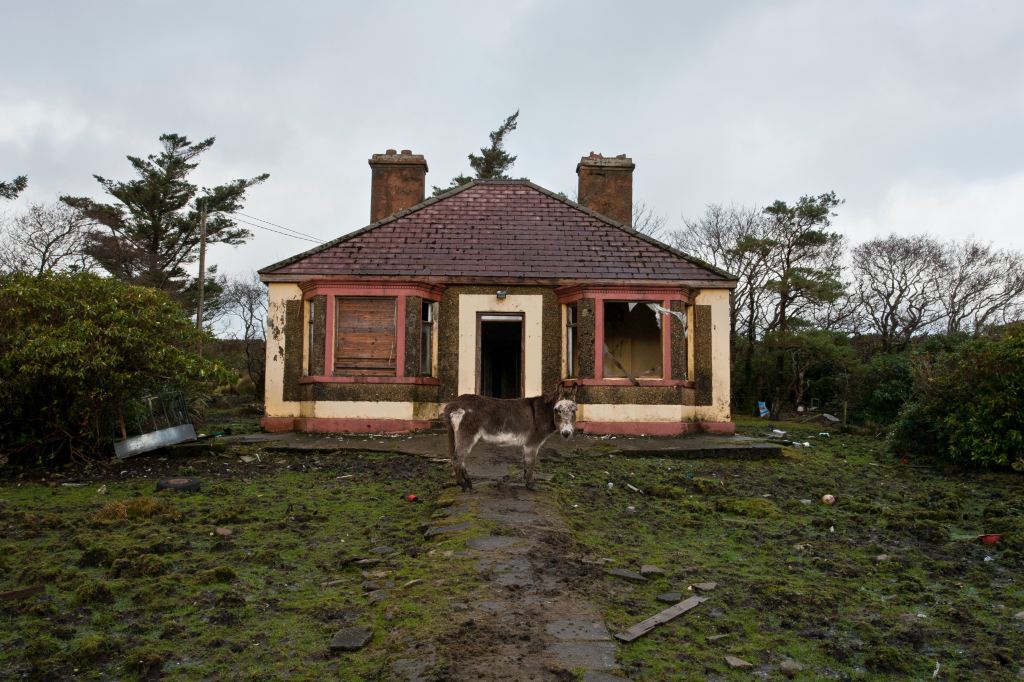
When she emerged from the woods, she stopped for a moment to sense where the wild magic was gathering. She could feel it swirling around someone. She watched a black bird sail overhead, dipping to alight in the open field before her. It was a graveyard, she always thought. Rows of empty houses, old and dangerously disrepaired, each site a tombstone for those who had lived there. Her eyes went to one house among the rows, the place where Lodvik said Eylaug had taken him. Astrid began to walk stiffly towards it, pulled by whoever was in that place.
When she pushed open the door, she saw Ama, Freya and Sif standing in a circle around Eylaug, who was sitting on the floor with her eyes closed. All four turned their attention to her, but then turned away without greeting. Ama and Freya shifted, making a space for her in the circle. They waited. The wild magic curled around her. She watched Eylaug, listening to the spirits calls. They were angry with Eylaug, just as the Bairns were. Not long after, Helga came through the open door as well. Without prompting, she joined the circle.
Astrid did not know what they were doing. From past experiences, she knew that no one would tell her until after it was done.
Fear. That’s primarily what she felt through the currents of the wild magic. Eylaug’s fear. She reached for Freya’s hand, compelled by the power stirring in the room. Freya took hold of her, and the power within her doubled. Freya’s body glowed. At her other side, Ama grasped for her. She took hold of Ama’s hand and nearly lost herself in the current that surged through her. She begged the spirits not to carry her off. She was holding entirely too much. Fear. Her fear, now. It tightened her throat.
Let go. It was Ama, speaking to her across the flow of the wild magic. She loosened every muscle, and felt the embrace of the power. Then she understood what was happening.
In the center, she saw Eylaug, translucent as glass, and within her, three bright red beating hearts. One was her own, near her chest. The other two were much lower, in her abdomen. One had an orangish hue. The other one was almost pink. Two babies. She looked harder, at the blood, at the runes it carried. All the same. Every rune identical. Two babies. Two girls.
She fell out of consciousness for a moment, drifting in the power, there was a light coming for her, and they were calling her name. Their voices were rough, like gravel. You don’t know what it is you’re doing to us, Astrid! You should not listen to the Skuld. In the distance, watery and ethereal, she heard the other spirit that had been calling to her for days. Protect the boys! She swallowed hard, her mouth like sand. She could taste the age of the earth on her breath.
She blinked and she was on the ground. She felt cold, but she was covered in sweat. Someone nearby was groaning. Freya was angry. She could hear the heat of her fire.
“This is why we’ve been told not to do this,” she said. A hand pressed against her forehead, and then her head was being gently lifted, laid in the skirts of someone’s lap. She opened her eyes, though the effort made her swoon. Freya’s dark hair enveloped her vision. “Stay with me, Astrid,” she said, pleadingly.
Someone else began rubbing her legs. The groaning on the other side of the circle continued. “Eylaug?” she asked.
“Helga is attending her,” Freya said crossly. Astrid’s eyes floated shut again but Freya snapped at her. “Keep your eyes on me, Astrid!” Fear. Freya’s fear had her heart racing. The rubbing continued, the hands moving up her body. She opened her eyes as wide as she could, though they were now stinging with tears as the hands worked. The cold faded from her, replaced with a shuddering nausea. “Keep working, Sif!” Freya called.
“Freya, I’m sick,” Astrid whined. She tried to roll off Freya’s lap, but Freya held her tightly in place. She gagged, then wretched, the bile and sick bubbling from her mouth. Freya allowed her to tilt her head, and she spat on the floor of the house. She recognized now it was Sif who was massaging her, working her arms now, and her neck. Sif’s face was red and slicked with sweat. Freya wiped the edge of her dress across her mouth.
The vomiting had taken away the nausea, and whatever Sif had done to her had worked to bring her more solidly back to the world. The spirits were now just a faint chatter, as they typically were. She sat up slowly, expecting to be dizzy, but she was only fatigued, like the first day up from a sick bed. “What happened?” she asked. She eyed Eylaug, who was still prone. She was crying noiselessly. Ama whispered in her ear.
“Something that we aren’t supposed to do,” she said. “You were almost carried off because of it.” Freya’s words were icy.
“I had to know,” Ama said. “She is my blood sister.”
“And it nearly cost you the life of another of your sisters!” Freya hissed.
Sif’s face looked like ashes, like a clouded sky before the rain. “It was too close,” she murmured, sitting back on her heels and hugging her knees. She wiped a tear from her face, shuddering.
Astrid knew Sif’s greatest fear was being carried off. Her blood sister had chosen it freely, and she had been forced to watch it happen, helpless to stop it. The scar broke open sometimes. Astrid reached for her hand. “I’m safe, Sif. You brought me back.”
Sif wiped another tear from her face. Her color returned. “We can’t do this again. It’s too dangerous. It costs too much.”
All four of her sisters carried their weariness in plain sight, in the way they slumped their shoulders and breathed heavily. Astrid wanted nothing but sleep. “What exactly did we do?” she asked.
Ama and Helga had Eylaug on her feet now, all three straining from the effort, leaning into one another to keep themselves aloft. “You saw, didn’t you?” Ama asked.
She had seen. She had seen the runes in the blood of the babes that Eylaug carried. The runes that marked them as girls. “But why take the risk?” she asked, anger lighting her words. “What good is it to know before the birth?”
“Because I wanted to know if this house is what they say it is,” Helga said.
Astrid drew back in surprise. She did not think of Helga as a risk taker. “Why?” she asked.
“To see if it could solve our problems,” she said.
Freya was steaming beside her, and Sif looked like she would fall over at any second. Astrid itched for the wild magic, her palms tingling. Unconsciously she reached for the rune stones, but Freya stayed her hand. Astrid swallowed down the craving, letting go a long sigh. She looked from Sif to Ama and Helga. All three of them were like stalks in a stiff breeze—swaying, bending, bowing. She felt the idea bubbling up from her depths before she had time to think about what she said. “Destroy the house,” she said. The wild magic swayed, swirling around her, but she ignored it. She looked from one sister to the next, and then to Eylaug, who was staring at her in disbelief. “There is no magic here that can make boys. It is worthless to have it tempt others to try.”
The spirits were pleased with her. She drunk in their delight.
Freya was the first to speak. “We should do as she says,” she said. She felt Freya pulling her to her feet, and she in turn reached for Sif. The three stood uneasily. The weariness was set deep inside her. She was not sure they should use the wild magic at all in their current state.
Freya and Sif were stronger than her though, and they led the way out of the house, Ama and Helga trailing, supporting Eylaug. They set Eylaug gently on the ground outside, then the five Bairns gathered in a line about the house. It was the only one in the row that had not caved or collapsed yet. Freya called the wild magic first, then Sif. Astrid was the last to call, afraid of what it would do it her. But she found it gave her some strength and eased the desperate heaviness in her chest.
Freya pushed the room of the house in, and Sif kept the dust from blowing over them. Helga pushed in the south wall, and Ama the north wall. Astrid scattered the timber away from them, across the field. When they were finished, it looked as if the house had exploded from within. She drained herself of the wild magic, then, overcome with fatigue again, sat down on the ground and closed her eyes.
It was night when she awoke. She rolled over in the grass, finding that Helga was asleep next to her. Her breathing was steady and even, and Astrid felt no fear for her. She sat up slowly. She was still tired, but not in the deadly way she had been before. Ama and Eylaug were nowhere in sight, neither was Sif. But Freya was standing watch over them, a statuesque protector.
“Freya,” Astrid croaked, and Freya reached for her, helped her stand. Their eyes met and she found herself wrapping her arms around Freya’s neck, hugging her close. Freya embraced her, her touch an anchor to the world. Her hair smelled like smoke and earth and rain. Astrid rested the weight of her head against Freya’s shoulder.
Freya released her, and gently rubbing her hands down her arms said, “Go home, Astrid. I will wait with Helga.” Astrid nodded and pulled herself away from the wreck of the house, from the scene that had almost been her death. She went slowly, moving at a snail’s pace through the town, then up the hill to her family’s farm. Each step she took grew heavier as she walked, her muscles aching as she neared the top of the hill. She could see the house and barn, their silhouettes dark against the night sky and the shining moon. One more step, she repeated to herself. Her stomach growled. She had not had any food since yesterday.
She opened the farmhouse door, surprising her mother, father, Aelric, Sigmund and Magnhild, who were all still sitting at the kitchen table drinking ale and playing cards. The fire in the hearth was burning, logs freshly stacked. The smell of fresh bread hung in the air. She leaned against the doorpost, too tired to go any further.
“Astrid!” Sigmund gasped, jumping up and racing to her aid.
“I need food,” she said weakly, as Sigmund walked her to a chair. “And a drink. I’m so thirsty, Sigmund.”
Her mother and Magnhild were moving almost as soon as she had requested sustenance. Soon there was a plate of buttered bread and bacon in front of her, along with a bowl of stewed vegetables and beans. Magnhild brought her a mug and a jar of honey. She thanked them softly and began to eat. The food gave her energy almost immediately, and then she was devouring the meal like a ravenous hound. The family said nothing as she ate. She could feel their confusion and awe through the wild magic. And their fear. Always there was fear.
“Where have you been?” Sigmund asked. Aelric huffed under his breath, and her father turned his eyes away from her.
“I’ve been doing my work,” she said, purposefully cryptic. “And it takes a great effort sometimes.” She began to cry then, which she had not expected at all. “I was almost carried off,” she said. She wiped the heel of her hand across her eyes, shuddering.
None of them moved to comfort her. They did not know how. She finished the stew by tipping the bowl, the broth sliding straight into her mouth. She blotted her lips on her sleeve, and smiled when the garment did not stain. She used the sleeve to dry her face as well, still wet from the tears she had shed. “Thank you,” she said, pushing the bowl and plate away from her. Then she left the table.
No one called goodnight to her as she ascended the stairs.







 The Quick and the Dead