Astrid closed her eyes that night, wanting for sleep, but the spirits were restless. They were arguing. The spirits never wholly agreed on anything. For every spirit who encouraged, there was one who tried to convince you otherwise. For every wise voice in the chaos, there was one who was always irrational. Then there were the ones who only wailed, their crying only broken by their screaming. She listened deeply to the ones who were crying tonight. She heard at least seven. Their piercing sobs drowned the other voices as she drifted down to them. They were young. She shifted her thoughts, focusing on the ones who argued. They are trying to break us! This spirit was old, like the earth, like the woods. They are trying to survive. This one was old too. She sounded like the fire. Like the moon.
Astrid. She opened her eyes, lifting the cover from her as she rose from her bed. She crept through the house, lifting her cloak from the hook rail at the door. She exited without a sound. Astrid, the Skuld called again. She moved through the empty streets as quickly as she could.
The woods at night were haunting. The wild magic was lively at night, and the forest creaked with power and memory. The spirits were more active too, drawing strength from the darkness and the shadows. The arguing grew cacophonous, but Astrid pushed all the words away, putting them from her mind. She was not as practiced as the older Bairns at sorting out all the meanings. She pressed onward through the forest, the leaves crunching underfoot. The animals fled before her, rustling the debris on the forest floor as she moved along the path, downward towards the grove.
The Skuld was waiting for her when she arrived. She looked tall, otherworldly, thin, almost transparent. She was glowing, a silver fire in the night. The moon was sailing high above the trees. Its bright light shone down upon the grove, and the ground was perfectly visible even though the night was deep. Astrid studied the scattered bones, the sticks, the single flower that had bloomed at the edge of the grove, alluringly red. Astrid cleared her throat and stepped forward, feeling empty, ready to receive the instructions or the wisdom that she would be imparted.
“Your brother is trying to touch the wild magic,” the Skuld said.
She thought of Asmund crouching in the dirt, asking her questions. “He knows that it does not choose boys.”
“Then why does he ask?” she said.
Astrid let go of the defensiveness that bubbled to the surface. “He asks because he is my brother. He admires me.”
The Skuld nodded as if she already knew this. “You are too close to them, Astrid.”
She swallowed her denial. “Too close to my brothers?” she asked, stalling the conversation to buy herself time to think. There was no arguing with the Skuld, but the conversations did not always end where one thought they would.
“They can all feel the wild magic when you use it,” the Skuld said.
“Of course,” she said. “Anyone can.”
“We should not share it with men,” the Skuld continued.
“I do not share it, Skuld,” Astrid said, the defensiveness creeping back into her spirit. “I have not shown them anything. I have not taught them how to catch it.”
She nodded. “I know, Astrid,” she said. “Promise me that you won’t.”
“I promise,” she said, without hesitation. Fear began to replace her defensiveness. This was not a scolding, this was a warning. But against what?
“We must protect them, Astrid,” the Skuld said. She came forward, her eyes pleading. Her face was smooth and pale, like fresh bone. She had tears in her eyes.
“Who?” Astrid whispered.
“The men,” the Skuld said, as if it was obvious. “The men and boys.”
Astrid’s questions rose before she had time to think about the implications of the answers to them. “From who?”
The Skuld stiffened, pulling back from her, swallowing hard. She closed her eyes. “From the spirits.” She whispered.
Astrid felt a surge of wild magic move through her. Protect the boys! The spirit was fresh, young, new. The voice was lost in the chatter of the arguing.
Her curiosity overcame her. “Do you know why there are so many boys in my family?” she asked.
The Skuld tilted her head, regarding her with ice-white eyes. Her hand drifted to her rune stone pouch at her belt. “Have you asked?” she said.
Astrid shook her head. “Not directly.”
“And why is that?” she said.
Fear. Fear hovered over Soledge. It was always lurking. “Why should my family have so many, so easily, when there are other women who birth six or seven girls, each time hoping against hope to have a boy?”
The Skuld was pulling her rune stones from her pouch. She cast them to the grass at her feet. The wild magic danced across them, burning the surface with a flash of light. The flame. The tree. The man. The womb. Astrid listened to the spirits, then lifted her eyes to the Skuld.
“To give you love for them,” she said. “They are part of your family so that you will care for them.”
The spirits chattered. Protect the boys! Astrid inhaled the scent of the forest to ground herself to the world. Her mouth was wet with longing to float away, but she resisted. “Every boy is precious,” she said, “but not all the Bairns feel this way.”
The Skuld was gathering her rune stones. “No. Some of them do no see any value for boys and men, other than the obvious.”
She nodded. “They make twice as many girls for us as they do boys.”
The Skuld nodded. “But you know their value, don’t you Astrid?” she asked. Her eyes seemed to burn holes through Astrid’s heart. She nodded vigorously in reply. “Good,” the Skuld said, dropping each rune stone into her pouch with a clink.
“Without boys, we would have nothing,” she said. “They are just as essential as the girls.”
The Skuld continued to nod her head. “Do not forget this, Astrid,” she instructed.
Astrid’s thoughts went to the name written on her white stone—her true name, given to her by the wild magic. “I will not forget,” she vowed.
She wandered the empty streets of Soledge until the moon began drifting down towards the horizon. The clouds she had called with the wild magic were moving closer. She could taste the coming rain. The air was wet and thick. Tomorrow would be a perfect day to sleep. She began to meander home, but the presence of a Bairn gave her pause. She moved towards her sister, drawn to the apothecary. She went quietly, feeling the pull of the wild magic, like a thread connecting them, tying them tighter together.
Ama was in the street, her white robes and white hair shining, swirling. Astrid approached curiously, wondering why she was out here in the middle of the night. Who was she spying?
Ama did not turn to her as she came to stand beside her. “Have you seen her?” she asked.
“Hrist?” Astrid guessed. It was her shop that Ama was standing outside of.
Ama shook her head. “Her granddaughter, Edda.”
Edda was wild, fiery, feisty, brave. She loved and she hated with ferocity. “Yes,” she said. “I see her when I am in the shop.”
“Freya and Sif have been watching her,” Ama said.
“And you’ve been watching her?” Astrid asked.
Ama smiled. “Just tonight,” she said. “I was curious.”
“Why?” Astrid asked. “The spirits call those whom they will. There is no pattern. No reason.”
Now Ama did turn, staring shocked, her mouth hanging open, her brows creased. “No reason?” she asked.
Astrid made an apologetic noise. “It does not seem so, to me.”
Ama’s expression smoothed and her eyes searched Astrid’s. The wild magic scattered, and Ama’s hair cooled to dark brown. “Have I told you about when I was called?”
“Some,” she said. Ama had been called at a time of upheaval, of fighting and loss. Of treachery and betrayal.
“We lost so many Bairns, gained so many new ones in such a short time,” Ama reminisced. She shook her head, looking away from Astrid. “The old Bairns I knew, some of them—Aelffled, Brynhilde, Thordis, Iduna—they were soft most of the time. They were only ironlike when they were filled with the wild magic. And there were others—Mjoll, Ulfrun. They were wild like the wild magic itself. Then there was Helga, and me, Sif and Freya. New Bairns. Afraid of our call. Afraid of what would happen to us if we were too soft or too hard. Afraid of being carried off, or stamped out.”
Astrid could not imagine Sif and Freya ever being afraid or soft. Helga was as protective as a mother, and Ama carried doom with her wherever she walked. Astrid felt like a rose among thorns when she was with them. They were all steely, and tough. All grit and little love.
Ama squeezed her lips together, closing her eyes against the memories. “Edda is like Freya,” she said.
Freya. Dark Freya. Astrid was in constant awe of her. She was hard, sarcastic, powerful, angry, proud, fierce. “Is that why Freya watches her?” Ama nodded. “Has she been called?” Ama nodded. “But there’s a man!” Astrid said.
Ama only nodded her head again. “She has not chained him.”
“Why?” Astrid asked, too loudly. Her question echoed around them, and the spirits laughed, repeating her words.
“Would you chain a man if the spirits spoke to you?”
And then Astrid understood why Ama was standing in the street, watching Hrist’s house. She was checking in on the girl, wondering if she would try to refuse. One could only refuse for so long before the call became too hard to ignore. “No,” she said. But it was easy for her to say this. There were no men who had taken her eye before she was called.
Ama sighed, turning away from the house. “My sister will chain your cousin, if she has a boy.”
Astrid wondered why Ama was telling her this. “What?” she asked. “Is she…?” When Ama nodded, she scoffed. “She is too young for that.”
Ama shrugged. “She is afraid of the spirits,” she said.
She felt a slither of bile in her throat, imaging Lodvik chained to a 15 year old girl. “And if she doesn’t have a boy?” she asked.
Ama shrugged. “She might chain him anyway before someone else does.”
This was common practice. Men were in high demand. For every girl that wanted to be a Bairn, there were always two or three that wanted a man instead. “Sigmund will be chained soon,” she said. Ama had offered a glimpse into her life; the desire to return the gift overcame her.
Ama smiled. “I like your brother,” she said. “He seems like a good man.” Astrid didn’t know how to response, other than to smile and nod. “I hope his woman makes him happy.” She continued. “We could use more of that in Soledge.”
Astrid couldn’t argue. Fear always lay in wait for them.
This summer, I will be crowd funding the printing costs of my next (yet to be named) book: a collection of novellas set in the world of my fantasy novels The World Between and The Chaos Within. Two of the three novellas tell the story of characters before the reader first encounters them in either book. The third tells the story of what happened in the aftermath of the events of The Chaos Within. Though each story in the series, including the novels, can stand on its own, they all work together to provide a fuller picture of Jamir of Lur-lataer, Marina, and their families (both blood and found). I shared a piece from one of the novellas earlier this year, which you can read here. Below is another excerpt, this time from the story of Marina’s mother.
She watched the man from her perch in the canopy. He was walking with her mother towards the Hall of The Great Maker. He moved as if he were pained, as if being with her burdened him. Her mother turned her face to him for a moment as they walked. She saw the hint of a smile before they disappeared from her view.
The man, Jamir of Lur-lataer, was odd. His presence filled her with a longing and a hopelessness she didn’t understand. He was full of some deadly darkness, and even though she was terrified of it, she was curious too. Vilthina imagined it would consume him if The Great Maker didn’t sustain him. How could he live with it? Why did he have it? Why didn’t her mother recoil from it? She could feel the deep, chanting voice of it calling to her even from this far. Terrible words. Horrifying words. She wanted to know what they meant.
Vilthina climbed down the great golden tree, jumping from a branch to land on one of the bridges that wound through the canopy. She landed hard in a squat, shaking the entire bridge. Steadying herself before she rose from her crouch, she grabbed hold of the rope railing. The bridge rocked from side to side for a moment more. She peered through the trees again, watching the spot where Jamir and her mother had disappeared. Then she stood, wondering about humans and all the ways they were different from her.
“You shouldn’t do that,” a voice said behind her.
Luthina, one of her cousins from her father’s family, stood on the platform encircling the great tree from which Vilthina had jumped. She had crossed her arms over her chest and wore a disapproving expression. It wasn’t quite a glare, but Vilthina imagined she was one witty word away from seeing Luthina’s frown.
“What?” Vilthina asked, pretending innocence. “Jump?” Luthina’s silence filled the space between them. Vilthina felt her face reddening from embarrassment. She looked away. “I can’t help it. I like watching him.” The admission crawled out of her, feeling like a snake writhing from her mouth.
“You’re a child, Vilthina. He’s a man. A human man, at that.”
Vilthina tried not to let her anger show in her face. “I’ve seen fourteen summers,” she argued. “I’m not a child.”
Luthina clicked her tongue in disapproval. “Even if he did see you as a woman, Vilthina, he won’t stay here.” Luthina could See. She was never wrong.
“What do you know of him?” Vilthina asked, lost in her thoughts of the strange man and the stranger darkness that waited inside him.
Luthina’s eyes changed, Seeing into the future, peeling back all the layers of time. Vilthina watched in fascination as the power filled her cousin. “He will break the power of lesser gods and watch the world die.” Her voice had grown deep, like the roots of the great trees. She blinked, coming out of the trance, then eyed Vilthina with a warning stare. “He is filled with darkness, Vilthina. It is slowly consuming him.”
Vilthina nodded her head slowly, a weighty sadness settling over her. “I know. I hear it.”
Luthina nearly gasped. “You hear it?” she asked in disbelief.
Vilthina pinched the fabric of her skirt between two fingers. She rubbed the fine fibers nervously. “You don’t?” she asked.
Her cousin slowly shook her head, her eyes widening.
“I don’t care that he’s filled with darkness,” Vilthina continued, ceasing her fidgeting. “I know it’s silly, Luthina. But it doesn’t stop me from wondering. Or from wishing.”
“Wishing what?” Luthina asked. Her emotions seemed calmer now. Her eyes were not as stunned as they had been.
She watched as a gentle breeze blew through Luthina’s hair, the strands around her face dancing as if alive with power. Luthina was bright and beautiful. Vilthina envied her, feeling again the painful burning of embarrassment. Luthina had seen nearly one hundred summers, and she had courted with many men. Surely, she didn’t have to explain her feelings to Luthina. “That he would look at me,” she admitted, her voice small.
“The way he looks at Velundovil?”
Vilthina’s eyes widened in surprise. She had been spying for moons and had seen only glimpses of the love that Jamir harbored for her mother. She had thought it one of his well-guarded secrets. “You know?”
Luthina shrugged. “I See.”
“Will he ever…” she began but stopped herself. Luthina was giving her a curious stare, one that suggested she should take care when asking questions. “Does she know?” she asked instead. Then, quickly after, “Does my father?”
Luthina shrugged. “Jamir has never done anything worth knowing about,” she said. “Don’t you know that from all your spying?” she asked playfully.
Vilthina looked away for a moment, not enjoying the slight reprimand. “I’d promise not to watch them anymore, but I know it would be a lie.”
Luthina came forward a step, unfolding her arms. “Why do you watch them, Vilthina?” she asked softly.
The truth hovered on her lips. “I told you…I like him.” She hid her face from her cousin.
“Yes, I know. But why him?” she asked.
“I don’t know,” Vilthina murmured. She slid her eyes to Luthina’s face. Her eyebrow was raised in a question. Vilthina swallowed nervously. “It’s the darkness,” she admitted softly. “It…pulls me,” she tried to explain. “I feel such sadness for him, Luthina. Isn’t that a kind of love?”
Luthina only offered a soft grunt in reply.
Vilthina cast her gaze back towards the Hall of The Great Maker. Jamir was descending the hill that led to the shrine alone. She watched him—the length of his stride, the way his arms swung at his sides, how his hair moved in the soft breeze. She imagined the sound of his footfalls on the dirt, the rustle of his cloak, the breath that escaped him. She wondered what his shaven face would feel like under her fingers and if his arms were soft and comforting like her father’s.
“You should not dwell on him, Vilthina.”
Vilthina drew her gaze from Jamir reluctantly. “Why?” she asked, irritated at Luthina’s insistence.
“He is dangerous,” Luthina replied, gazing into the future again, her eyes wide and unfocused.
The words slid out of her before she could stop them. “Dangerous in what way?” Vilthina whispered.
“Vilthina…there will be a child,” Luthina answered with surprise in her voice, her brow creasing in confusion.
“A…child?” Vilthina repeated, too stunned to ask anything else.
Luthina nodded her head, eyes wide. Her face was carved into a terrified expression. She looked on the verge of panic.
“What do you See, Luthina?” Vilthina pressed, stepping near her cousin and taking her hand.
Luthina’s gaze softened. Her eyes searched Vilthina’s face. She hesitated. “You with a human man,” she answered, “and a half-human child.”
Vilthina’s mouth worked awkwardly for a moment, on the verge of speech, but without words. “Jamir’s child?” she finally managed to ask.
Luthina shook her head, seeming not to understand what she Saw. She looked away for a moment. “That’s all I See, Vilthina.”
She blinked in confusion. “How can that be all you See?!” she exclaimed.
Luthina shrugged. “I don’t See everything.”
“Then what’s the point?”
“Only The Great Maker sees everything, Vilthina,” Luthina replied tenderly.
Vilthina dropped Luthina’s hand, huffing in frustration. She looked down through the canopy, to where Jamir had been walking, but he was gone. A heaviness settled over her. Why didn’t The Great Maker show this to her? Why reveal it to Luthina instead? She listened for his voice, but as usual, she heard nothing other than her own swirling feelings.
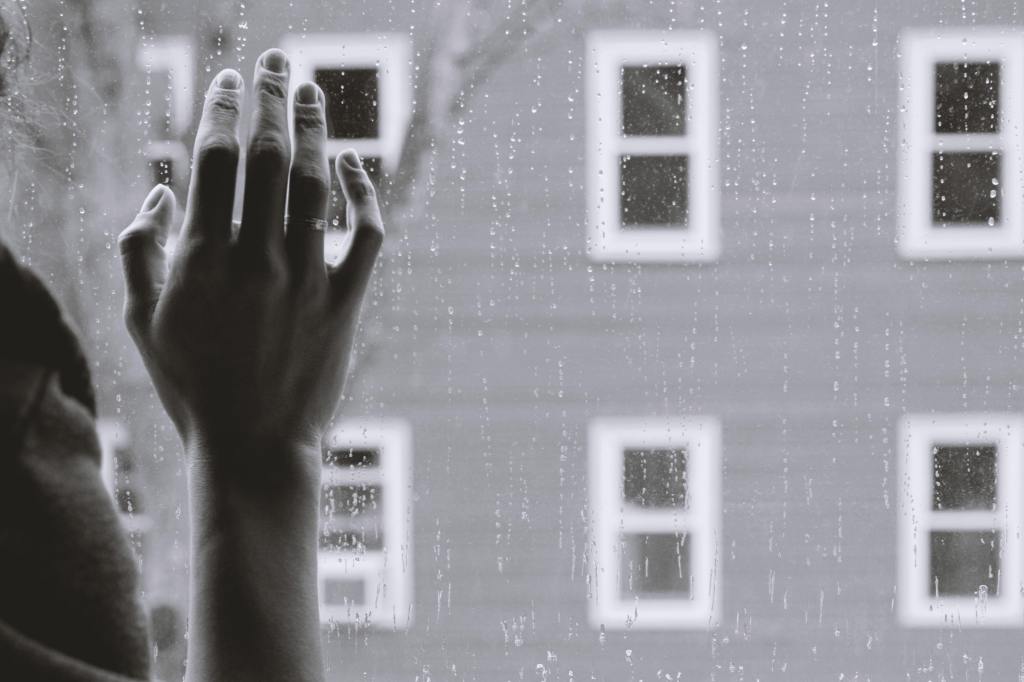
I know sometimes you get sad, and it feels like there isn’t really a reason. I get that way, too. I just wanted you to know that you aren’t alone in that. It may feel so silly, because you have nothing to be sad about. But I’ve learned something that may help you feel less broken for this unexplained sadness that sometimes gets you down: You aren’t sad “for no reason”, even if it feels like you are.
No, you’re sad because it’s raining. Or it’s winter. Or it looks like it is about to storm. You’re sad because pets die, and stuffed animals get left behind, and there are kids who still have to sleep with nightlights. You’re sad because there are kids with no nightlights, or adults to care about them. You’re sad because even on your best day there are still people who are hurting. You’re sad because you care.
Because the planet feels like it’s slowly dying. Because maybe your kids will one day live in a world without polar bears and elephants. Because no matter how hard you try, you can’t seem to get your tomatoes to ripen, or your houseplants to thrive. You’re sad because despite all the lovely little things around you, it’s all fleeting. Those blossoms will fall. The trees will lose their glorious color. The days will shorten and it will be dark. For a long time.
You’re sad because governments and corporations and revolutions and non-profits, no matter what they say, don’t really seem to care about all people. You’re sad because you want everyone to feel the same love and tenderness that you feel from those in your circle, but not everyone has a circle like yours. You’re sad because despite our best efforts, people are still homeless, and people still starve, and people still can’t get life-saving medical care, and people are still dying with no one to come to their funeral. You’re sad because all of that is inside you, and sometimes it’s just too much to know. Too heavy to carry.
Because the sun will set. Because another hurricane will hit. Because someone will be disconnected for not paying their electric bill. Because somewhere, there is a mother who will refuse to pick up the phone when her son calls. Because there is never enough money for those who don’t already have enough. Because those who have too much will never be willing to share enough of it to make a difference.
You aren’t sad “for no reason.” You’re sad because you’re human, and because you love other humans. You love the planet and all its beautiful, wild wonders. You love day and warmth and light because that is how you were made. And when those things diminish, fade, are obscured, retreat, are hidden…well, that makes you sad.
And you know what? All of that is perfectly okay. I just thought you might like to hear it from someone who knows.
I re-read your letter today. I keep it in a drawer in case of emergency. Sometimes when I miss you, it helps to pull out that letter and see your handwriting. I imagine the way your hand moved across the page, and recall the feel of it in mine when we prayed together. The paper had none of the warmth that was in your fingers, but it has all the warmth that is in your heart. Spilling out for me in that short note. All your humor and passion and anger and sorrow—the things that kept us returning to each other when the world felt cold. That’s why I keep it. To remember how it felt to be with you.
I miss you. I miss your laughter. I miss talking about nothing and about everything. I miss how my reverence ignited next to yours. I miss feeling seen. Feeling heard. There are other people now who have stepped into that role, but it’s not the same. These people deeply love me, and as much as I love them in return, it’s not like it was with you. I don’t know how it’s possible for a piece of my spirit to be inside another person, but that’s what it feels like. You have a piece of me inside of you. I recognized it. I touched it. I longed to reunite with it.
I have this whole separate space now, apart from you. And though there are similarities between our lives, they move in different spheres, only crossing when we make the time for them to overlap. What was once easy has become hard, especially when one of us is not feeling like our best self. I know I haven’t been lately. The rough patches were easier when I was with you, because you were right next to me. And now even though I know I could call you, there is a great canyon between us. You in your sphere. Me in mine. We do not overlap now unless we carve out the place where we will meet.
Sometimes I wonder where you go, what you do, who you talk to now that you don’t talk to me as often. Did you find someone to fill that space, or are you filling it with digital and liquid demons? I’ve done that. I am doing that. I think I know what you would say about it. I know what I would say to you if I found out you were spending your time the way I’ve been spending mine.
It feels like I’ll never stop missing you. I know it’s only been a little while since you went away and that I need time to heal from your departure. I also know that next month, next year, next decade, I’ll be better. While that gives me some hope, it makes me a little sad too. It means that there will be a time when I won’t miss you as much, when I won’t wish I could see you, hear your laugh, feel your hand in mine. I’ll remember you fondly like I remember being a kid at Christmas, especially if there was snow. I’ll remember you like my long-departed grandparents, who lived in that big white farmhouse that I loved. When this hurt ends and I come to the end of this road, you won’t be standing there, and that will feel like progress. But that’s not what I want at all.
That’s why I re-read your letter today. To keep you close to my heart. To cherish you. Because I love you.



 The Quick and the Dead