This is the second of three short scenes from stories that aren’t fully written. Some of these scenes are part of a larger work that remains unfinished and some of them are from tales that haven’t come to me…yet.
“Lydia Agnes,” the shepherd called.
I snapped by head up, fully at attention, though I had been drifting off to sleep. The training had been grueling that morning, and now the worship service was a welcome place of quiet and reflection. It was so quiet that I had forgotten to reflect, and instead found my head bowing in a nap, rather than prayer. I wasn’t entirely sure why the shepherd, Mary Josephine, had stopped in the middle of her homily to address me. But then I noticed that she and I were the only people left in the chapel.
Embarrassed, I stood and made a respectful genuflection to Mary Josephine. “I apologize, shepherd. The course this morning must have tired me more than I imagined it would.”
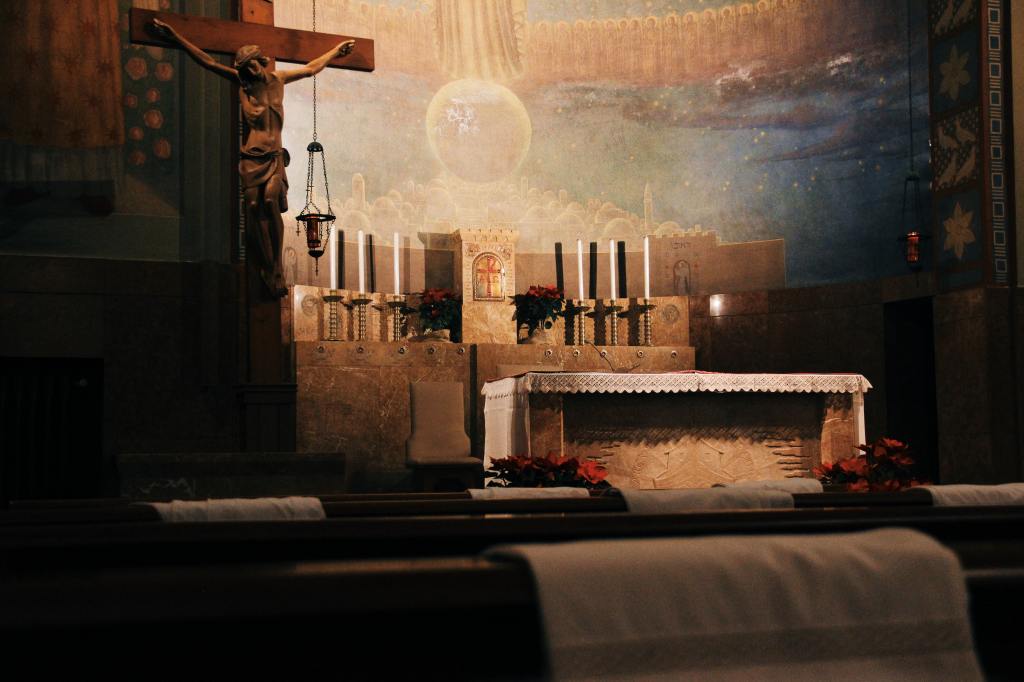
Mary Josephine nodded, an amused smile on her lips. There were still some candles burning behind her on the altar. No one ever blew them out; the prayer they represented would continue to flick to heaven until the candle burned out by itself. I looked for the one I had lit just that morning. The taper was roughly half melted away. I wondered if I would receive an answer, a sign from heaven, or a good word before the wick burned down to nothing.
“The training for Lydias is more rigorous than the others,” she agreed. “A lot of math.” She laughed, she ancient face wrinkling even more as she did. I’ve never seen anyone with crow’s feet quite as pronounced. “Never had a head for math, myself.”
She was in a good mood, and was being good natured about my lack of attention during the celebration and sharing of the word. I managed a weak laugh of my own. “Yes, sometimes I think perhaps I should have become a Martha instead.” My eyes went to the candle, burning away with my prayer.
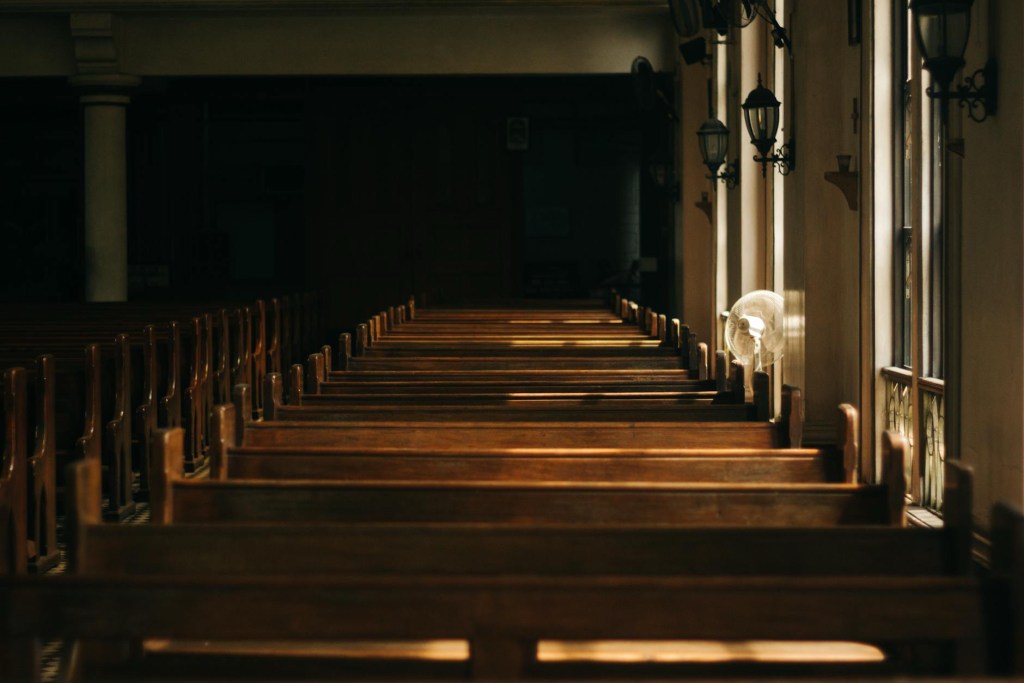
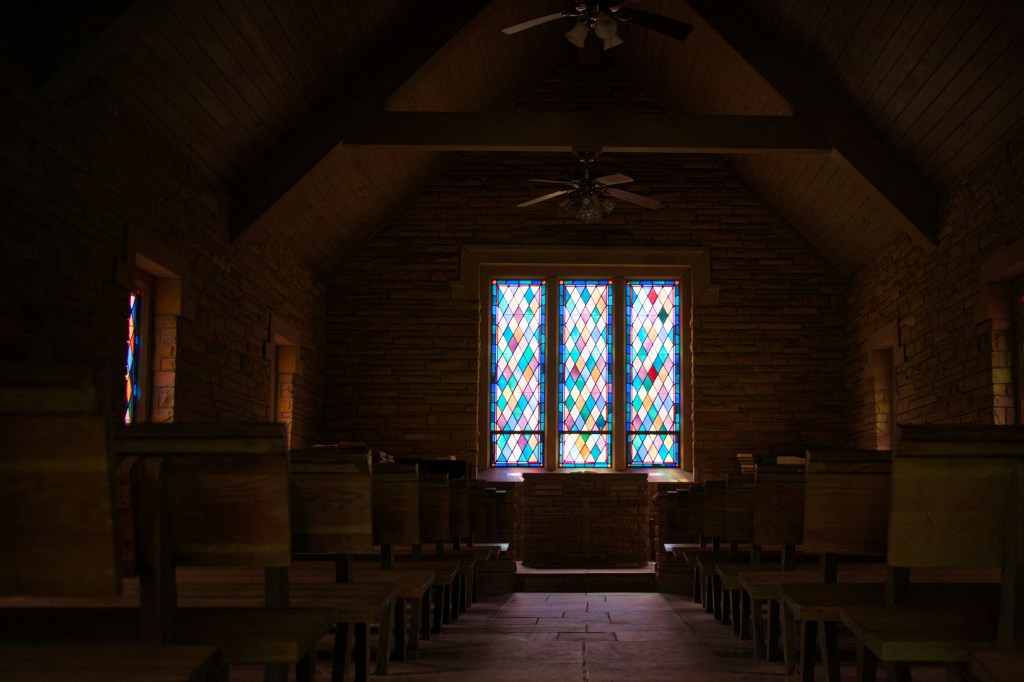
“A Martha?” the shepherd said. She walked a few paces towards me, stopping at the wooden pew right in front of the one where I sat. This chapel was tiny. Just 8 pews, 4 on each side. I had seen it full a few times, but that was only when all the women were together. We had another shepherd in this house, who kept different hours, and several women who did not like to attend chapel at night. Perhaps they were too afraid that they would be caught napping.
“Yes,” I said, drawing my eyes back towards Mary Josephine. She was a good shepherd, and I had no doubt in my mind that she had always known that she would be a Mary. “I think I could have been happy in a life of service,” I said.
“We are all in a life of service, Lydia Agnes,” she said.
It was not quite a scolding. “Yes, I know, shepherd. That’s not what I meant.”
“You meant that you enjoy cooking for others, and making them feel welcome with gifts and treats and the small treasures that you can offer from your own hands.”
I pondered the explanation of what a Martha did for the community. I ticked through the list of what my own mother had done as a Martha. Homemade bread, cakes, handmade gifts, taking away dishes, giving me a treat, words of encouragement, letters in the mail, small notes left for me in surprising places, a tidy space, a long, lingering hug. “Yes,” I agreed. “I think I would have been a good Martha.”
“Do you think you’ll be a good Lydia?” Mary Josephine asked.
Lydias were good with money. They were all business. They liked solved problems. They were the backbone of the organization. The fundraisers. The advocates. The string pullers. The connection-makers. “Oh, yes, I think I’ll make a wonderful Lydia,” I said. But my eyes went back to the candle I had lit that morning as soon as the confident words had left my lips.
Mary Josephine took another step forward. “I think, Lydia Agnes, that almost all of us question from time to time if we have chosen the right path.” She smiled again, but this time it was tight. “I, for instance, have always had a nagging doubt that instead of a Mary, I should have been an Anna.”
“An Anna!” I exclaimed. Annas were few. It was said that the role of Anna chose you, rather than the other way around. I fidgeted with my Lydia ring. “To be an Anna is a great responsibility.”
“Yes, I know,” Mary Josephine said. “Which is why I chose the role of Mary.” She looked pensive, almost disappointed. “But…” she shrugged. “I’m old now, Lydia Agnes. I don’t think I will be changing my role among the sisters.”
“Nor should you,” I said, not thinking about how it might sound disrespectful. “You are a wonderful Mary. I love listening to you proclaim that word.”
Mary Josephine smiled again. “I thank you for that, little sister.” She placed her hand lovingly on my shoulder. “Off to bed for both of us, I think, now.” She moved away from me, towards the chapel exit.
I twisted the Lydia ring on my finger again, watching my prayer burn.
I drop the letter to Gilda in the normal way. There is an old brick in the stone wall behind the post office that wiggles loose. I always fold the letter three times, tuck it to the right of the brick, then shove the brick back in place. I check the brick every few days. I mark my letters with a red line so that I know they are mine waiting to be delivered, just not picked up. Gilda marks hers with a blue line so that I know it came from her. It’s an easy system. We’ve never been caught.
Other women have been caught. They ended up in the stocks. Jenny Masterson, Laurie Headsworth, Abigail Bingham. Once a woman ends up in the stocks for being caught with letters, she never gets any new letters. We take her out of the network. It is too much of a risk.
The thing about letter writing is that you have to know the code names for everything. Once you learn them it’s never hard to figure out what the message is. Sometimes a new code name appears in the letters and you have to spend days or weeks deciphering. And sometimes you have to create a code name, putting enough details into the letter that your contact will know what you are passing on, but not putting so much detail that anyone not in the network can figure it out if they find the letter. It’s a fine balance.
Once the letter is behind the brick, I pick up my shopping bags and head towards the middle of town. I need a few groceries for supper and I need to pick up cough syrup. I hate spending money on cough syrup when hot tea sometimes will work just as well, but Mira has a nasty cough and she can’t sleep through the night. I adjust my scarf, pretending not to notice that Gilda is still in the stocks. The blood hasn’t been wiped from her head. Perhaps she really is dead this time.
The lines are always long at the grocery. They have to check your purchases against the list of rations you’re allowed. Massachusetts instituted rationing when the war first broke out, and all the states broke up into their own territories and nations. They’ve never gotten rid of the system of paper coupons, although they are no longer hand written by the city official. They print them now, on perforated paper, and they get delivered with the rest of the mail every week.
I stand there with my bag of potatoes and my bag of carrots, and my one onion, leafing through the coupons until I find the ones for fresh vegetables. The cough syrup is kept behind the desk. I’ll have to use one of my coupons for medicine as well to purchase a bottle. When It’s my turn at the register, the clerk takes my basket and my coupons, then rings up the order. Just as she is about to tell me the total I interrupt her by handing her the medicine coupon. “I need cough syrup,” I saw.
The clerk takes the coupon to the desk, where the manage is sitting on a stool, surveying the store. They have a short conversation, and the manager goes to the shelf behind him where all the medicines and razors are kept, pulling a bottle off the rack and handing it to the clerk. I watch her make her way back to the register with the cough syrup and the coupon. She stuff the coupon into her register drawer and bags the bottle with my other items. She types in a few numbers on her keypad and then turns to me.
“That’s $35,” she says.
“$35,” I repeat. I shake my head as I count out the bills. They look a lot like the old money I used as a kid. I wonder where this money is printed. I had heard that one of the mints (the one near DC, I think) was printing money for all the countries in the northeast and Atlantic coast now. I didn’t understand how one country could do that for all the other ones around it, but it didn’t matter too much, I guessed. I wondered if everyone was using the same money and we just didn’t know it.
I tucked the rest of the bills back into my wallet and took my purchases from the clerk. On the way home I glanced at the stocks, quickly, to see if Gilda was still there. Someone had set her free since I had come through. There was a new woman in her place. I wondered how long it would be before she had the courage to check for my letter behind the brick.
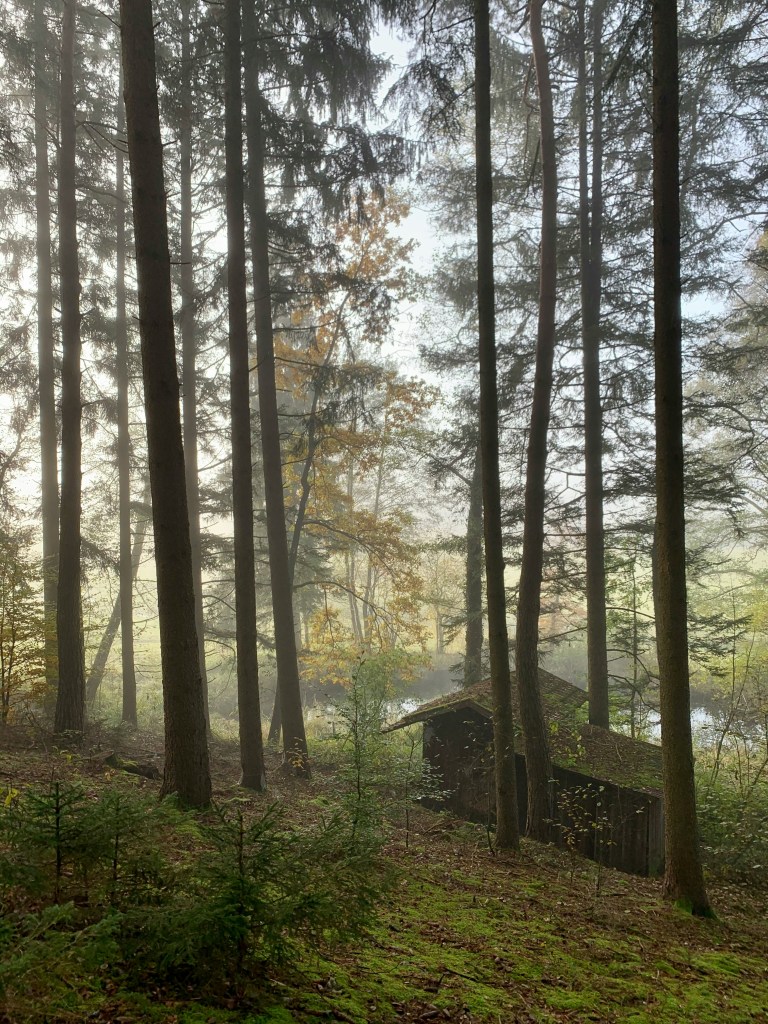
I peered through the bracken, staring at the smoke coming from the little cottage just deep enough into the woods that you couldn’t see it from the clearing. The mossy, rich smell of earth and wet leaves filled my nostrils as I crouched behind the fallen tree, mustering the courage to creep forward. I knew the woman inside the house wasn’t dangerous. My cousin had seen to her plenty of times. Goda came for love potions but I had come for something harder to find: answers.
My legs were cramped from crouching for so long, and the damp from the leaves was starting to take to the hem of my skirts. I rose unsteadily, clenching and unclenching my fist a few times to still my nerves. Then, I hopped over the fallen tree, and crunched my way through the underbrush to the front door of the house. Before I could talk myself out of it, I knocked softly three times. Goda said that Osburga, the wise woman, would answer from within before she opened the door. You had to tell her what you wanted first. If she didn’t like your reason for coming, she wouldn’t let you inside.
“Who comes and why?” Osburga called out from inside the cottage. I could hear the faint sound of movement towards the door. I closed my eyes, imagining her on the other side of the wooden slats between us, pressing her ear to the door just as I was.
“It’s Eadgyth,” I said shakily, “and I want to know what happened to my mother.”
The door creaked open slowly, and the woman who stood in the doorway was not as I had imagined from Goda’s description of her. She was tall, and she looked much younger than I had thought she would. Her hair was a rich brown that hung in waves to her waist. She was wearing a simple brown dress and an apron. Her eyes were kind, but there was also wariness there. I could feel the hurts she carried, for just a moment, a flash of the sight that had me seek her, to ask for her help in seeking out my mother. I shut my eyes against the vision that was taking me- a woman hanging in a tree, and a fire that consumed the place where she had lived, a horse screaming in pain, and a man who walked with a limp. I gasped at the clarity of it, but shook it away from me as I searched the eyes of Osburga, waiting for her to invite me in.
“What do you need me for if you have the sight like that, little witch?” she asked.
The dreaded word on her tongue stilled my heart. It was one of the only things I remembered of my mother. Witch. That’s what my father said she was. That’s all she was remembered for. “Please,” I said, not knowing what else to say. “I don’t know how to control it, and I know my mother would, but I don’t know where she is.”
Osburga opened the door wider, and stepped out of the door frame, to allow me room to pass. “You don’t control the sight. You learn how to let it not control you.”
I hesitated at the threshold, shifting my weight from one foot to the other. “Can you teach me?” I asked, tentative as a mouse, my voice barely more than a whisper. As if in response, the wind rushed through the trees around us, rustling the leaves in an eerie way that made my skin crawl. My mouth went dry, as the feeling of power moved through me. I shut my eyes again, stilling it, willing it away.
When I opened my eyes, Osburga was still standing before me, her hand resting on the door as if she had half a mind to close it on me. We stared at one another for a time before she finally asked, “Well, are you coming in, or not?”
I dipped my head in a bow to her, and ducked through the doorway into the dim cottage. She had a fire going in the hearth. Herbs were drying, hung from the ceiling along the walls. She had a stack of books, which astounded me. Only the monks had books. She smiled at me, as if she knew what I was thinking. She gestured to the table, shoved against the wall, next to a bed that looked too big, too grand, for a single woman alone in the woods. She had fabric over the windows, rather than shutters. I wondered how she kept out the chill.
I sat, and Osburga joined me. “Now, little witch,” she said. “Tell me why you’ve come.”
“I told you. I need help finding my mother…”
She interrupted. “You also said you want to learn how to control the sight.” She raised at eyebrow at me.
I swallowed hard as my hands began to sweat. This was a test. I held her eyes as she held mine. There was a spark of amusement there. She laughed after a moment, a short, pleasant sound that reminded me of an owl. I wondered what she would look like as an owl. A wise one, haunting the woods. It seemed fitting.
“Eadgyth,” she said slowly, as if she was savoring the sound and the feel of my name in her mouth, “you are a strange little witch.”
“I’m not a witch,” I protested. I thought I did not sound confident at all. “At least, I don’t want to be a witch.”
“Neither did I. But we don’t get to choose these things, do we?” Osburga reached for my hand, and she stroked my palm with her finger. She hands were weathered, the nails caked with earth. Her touch was light and soft. A smell of honeysuckle filled the air. I sighed with pleasure. Osburga smiled back at me, lovingly, like a proud mother. Like I had done something wonderful, though I wasn’t even sure I had done anything at all.
“How long have you had the powers?” she asked. She withdrew her touch from me, and the honeysuckles faded along with the pleasure.
Fear replaced it, a tightening across my chest and in my throat that threatened to have me squeaking out answers to her again. “It awakened in me before my mother disappeared… I was four, maybe five.”
Osburga nodded. She looked thoughtful, eyeing me as if to determine how old I was now. Would she know my age as she knew my name? Her eyes wandered to the hanging herbs. “Your mother was Wulfrun,” she said, her tone inquisitive.
“You knew her?” I asked.
“I know of her,” Osburga said. “They say she cursed the son of King Eadwig’s favorite ealdormen.”
I nodded, confirming the story that had propagated like gnats. “That is what is said of her.”
Osburga wrapped her knuckles across the table three times. “Tell me what really happened, little witch,” she said.
I wished she would stop calling me that, but as the sight took me, I knew I couldn’t argue. “Lord Cynewulf wanted her,” I said. The vision of my mother with Cynewulf was shadowy, the darkness of the forest at night, obscuring what had happened. I had seen this many times before, and the memory of it, though not entirely mine, lived inside me. I let the sight take me further into the dream. “She was gathering in the dark… something for her medicines. She did it at night so no one would see. Except he was there that night. And his son was there too.” I watched as Cynewulf and his son, Ealdred, confronted her, tried to persuade her, offered to pay her. She refused, and she had run from them to save herself from their violence. I felt the sweat begin to soak through the armpits of my shift as my heart raced. My mouth felt dry as a old bark.
Osburga touched my hand. I gasped in surprise and the sight left me. She leaned her face towards me, her eyes searching for something within, some kindred flame to which she was drawn. I could feel it too, our shared nature, as if we had been wrapped together in the same package once. There was a similar color to her soul, and I could smell on her the power that took hold of me sometimes. “I know Cynewulf, ” she said, her words like iron. “And his son would have been just like him, except for that fall from his horse.”
The horse had tripped over a stone. I heard the horse scream while I was darning socks. But the horse was not near at all. I saw my mother react to it too, dropping her knitting. I shook with fear, wondering, later, as I watched Cynewulf’s men carry Ealdred into the village on a litter, how I had heard it happen. Ealdred’s leg was twisted, he was screaming in pain. His cry was like the scream of his horse. Even then, the sight had me, even as young as I was. I had seen the horse go down, saw Ealdred fly from the saddle. The snap of his leg in the vision sent a shiver through me. His howling woke the dead. My mother had heard it just as I had heard it. I swallowed down the taste of his marrow that filled my mouth as I remembered. “They blamed by mother. Said that she had bewitched him.”
“Did she?” Osburga asked, her eyes now sparkling with mischief.
“Of course she didn’t,” I said, but the protest was weak, and grew weaker as I watched Osburga’s smile grow. “What do you know?” I asked.
“I know that if you are accused of bewitching, it usually means you have the power to do it.”
A shiver ran over me, as hair of my arms stood on end. “And… how would I know if I have the power to do it?” The question slid from me before I knew I was asking it.
I have had the great benefit of having many spiritual mentors over the course of my life. I grew up surrounded by people that loved me and had my best interests at heart. But I also grew up in a denomination that was fracturing over a number of issues. The biggest question that impacted me personally was the role women had to play in spiritual life. My congregation was affirming of women and their gifts. We valued women and their leadership. We ordained women and placed them where they were being called to serve. Unfortunately, none of those choices could fully protect women in our church from sometimes feeling the pain of a denominational crisis that centered on them.
When she is broken
And she doesn’t have words
She will creep down the dim hallway
To the place where she doesn’t need them.
And there on the door
She will read the rules:
“Menstruating women are not permitted to use the prayer room.”



 The Quick and the Dead