They were not called for another three days. The letter Frank was given was thick. As he tucked it into his pocket, he heard whispers in an unknown tongue. Corrupted. He tried not to think of it, but that only made me think of the words that had been seared onto his eyelids. Daag glash naag abaat glaag blan. He shivered as he tucked the letter into his breast pocket.
Fred drove. About halfway into their journey, Frank took the letter from his pocket, and read. The paper did not have words; it was more like impressions. It was like falling down a darkened hole. He lost himself for a moment, and blinked back the darkness only to find that it had infected him. He could hear the voice of someone else in his head. The letter lay in his lap. He refolded it, hid it in his pocket. Frank looked up and Fred, who was singularly focused on driving. His helmet and goggles hid all his expressions, and masked all his thoughts. Frank closed his eyes, seeing the strange the words.
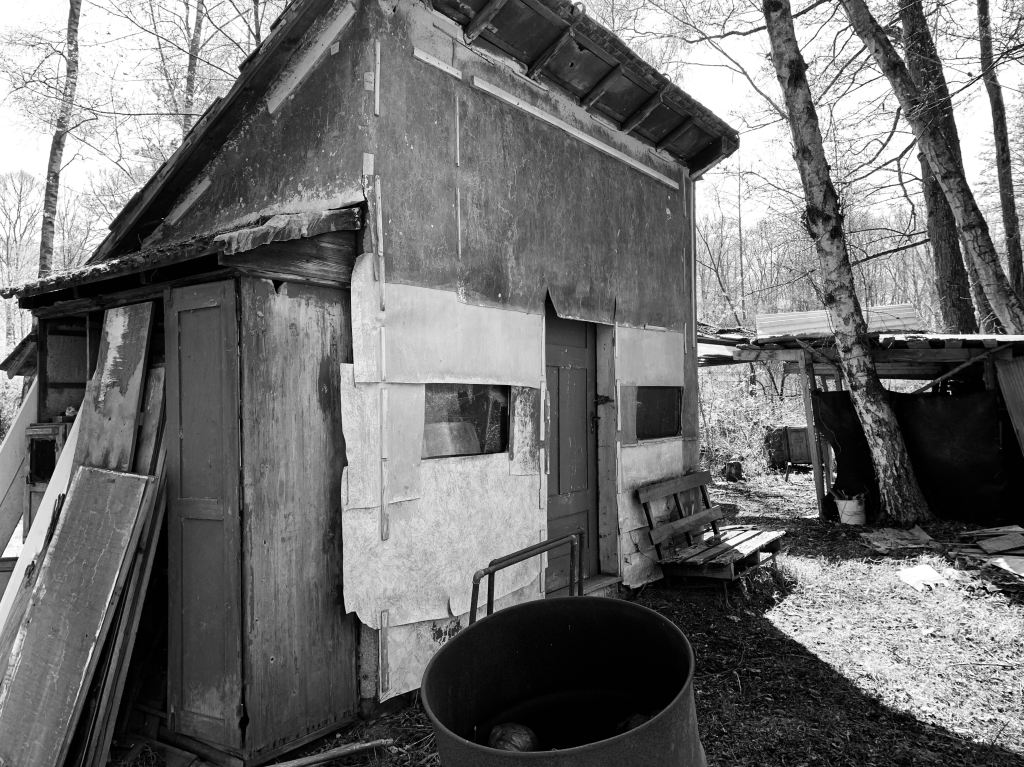
At the shack, they did not find Madame Joile. Her encampment looked to have been abandoned for years. She had left paper and pencil though, as well as an oil lamp, with a bit of oil in it. Everything was covered in dust, as if she had never been there at all.
“What do you think happened to her?” Frank asked.
Fred trailed a finger through the dust on the desk. “I don’t know, but I don’t like this at all.”
Frank could feel that slow creeping darkness sliding through him. He tasted it, the smell of it filled his nose. “Corruption,” he said. His voice was like sandpaper.
Fred glanced at him, the concern plain in his eyes. “What did you do?” he asked.
“I read the letter,” Frank said. He was bubbling, like a boiling pot. His whole being felt like water dripping through rocks. “I couldn’t help it.”
“Let’s get out of here,” Fred said, reaching for his arm. He pulled him towards the door, but Frank’s feet grew heavy. Fred’s eyes were wild with confusion, with fear that he was barely containing. Then Frank felt the presence around him. The klumskaag. What had Reiner said? It had been trying to call him. It lived here and it wanted him here too. He thought back to Madame Joile’s skeletal smile, trying to remember what she had said. She would ascend. That’s it. Frank laughed to himself, aloud, and Fred dropped his arm in horror. The klumskaag was helping them; that’s what Reiner thought. It was helping them ascend.
“Go, Fred,” Frank said. He hesitated. “Go home.”
“Frank!” Fred tried to argue, but Frank hushed him.
“Don’t you want to go home?” he asked.
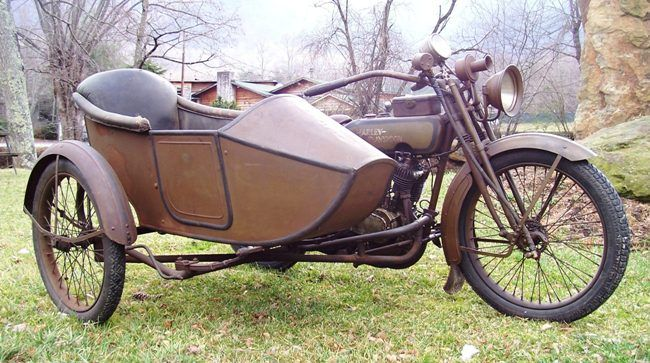
Fred backed away from him, the fear beading on his forehead, and then he ran towards the motorbike. Frank watched him speed away, the dust cloud of the raid rising behind the vehicle. Frank watched for a long time, until the dust was gone from the air, and the night had settled over him. Then he shut the door of the shack and sat down at the desk.
Frank handed the letter with the strange markings to the captain once they got back to the camp. He tucked it into a folder without comment, then shooed him away, as he waited to the collect the next letter from the next soldier. Frank moved off slowly, wondering about what he had seen. He could still make out the markings if he closed his eyes. They still didn’t make any sense, but if he tried hard enough, he could see how all the markings were connected. Maybe there was an order to it after all.
Frank and Fred stood in line in the mess hall, waiting for their stewed potatoes and beans, or whatever other meager meal was being dished out today. The hall seemed emptier than it had the first week. Frank looked around, studying the face. Several notable people were missing tonight. He nudged Fred. “Hey,” he whispered, and Fred dipped his face closer to him. “What happened to everyone else?”
Fred looked around the mess hall too. The wooden walls and dark floor seemed to swallow all the light that came in through the windows. Frank scratched his head, wondering why it felt dark, even though the sun was still out. Chatter was sparse tonight. An uneasy nervousness buzzed in the air.
“Did Jack and Peter go out today?” Fred asked, still eyeing the room.
They had almost made it to the front of the line, where a man everyone called Kitchen Joe was dishing out the stew. “I think so,” Frank said.
“Where are they?” Fred asked.
As soon as he asked, their friend stumbled into the mess hall, looking haggard, like the dead. Harry was with them, and he too looked almost gray with fatigue. Or fear. Or something else, Frank thought, the idea sliding up from the dark parts of his heart. Something other, like the script.
They found each other at the table. “You look bad,” Frank said to Harry.
“I think I’m sick,” he said.
“Go to the medic,” Fred offered. He chewed on a potato.
“No, I think I’m sick in my mind,” Harry said.
Fred stopped eating, looking hard at Harry from across the table. “So, go to the medic,” he said again.
But Harry didn’t go to the medic. He went outside in the middle of that night and he never came back.
It was another five days of waiting before they were given a letter to take to Madame Joile. This time Frank drove the motorbike. Fred carried the letter, and argued with Madame Joile, who looked older than the last time they had seen her by several decades. Her smile was almost skeletal as she handed them the reply they had forced from her. Fred tucked it into his breast pocket without even glancing down at the paper.
“We are nearly completed,” Madame Joile said. “That is my final reply. I will not be hear when you return.”
“Why? Where are you going?” Frank asked.
Fred nudged him hard. Maybe he shouldn’t have asked.
“Why do you ask? You want to go with me?” she said. Her lips peeled back into an awkward grin. There were too many teeth.
“No,” he said, even though yes was the first word that came to mind.
“You can learn how to ascend if you follow the maps through the tree,” Madame Joile said.
“What?” Frank asked. His chest felt tight with anticipation. He swallowed the lump growing in his throat.
“No thanks,” Fred said, steering him away from the woman, who stood in front of the shack watching them go. He could feel her eyes on him, like twin beacons of fire at his back.
“You drive,” he said to Fred, as he climbed into the sidecar. “Let me carry the reply.”
“Why?” Fred asked, looking hard at him, all but saying that was a terrible idea.
“Because…I’ve already seen it, and this way, you won’t be tempted to look…”
“I don’t want to look,” Fred said.
Frank’s hands shook as he thought about the script in the letter he had opened the previous week, and the letter that was in Fred’s pocket. “You don’t?” he asked.
Fred looked at him as if he was out of his mind. “No,” he said with disgust. “Why would I?” Frank didn’t have an answer, and Fred continued to stare at him, his expression morphing to one of concern. “You shouldn’t either,” he said.
“Why?” Frank asked, though he knew why, and now it was beginning to make sense why they had needed so many messengers.
“Don’t you want to go home?” Fred asked.
He nodded. He did. He wanted to go home more than anything. But whatever had taken hold of Harry, of the others who had gone missing, he suspected was already rooted in him. “I shouldn’t have looked at the script,” he said.
“Nope,” Fred said. He started the bike, and rolled off down the road, away from Madame Joile and her strange, other-worldly smile.
Peter had not come back with Jack. Frank, Fred and Jack all stood around the burn barrel that night, silent to their companions, through Frank was internally screaming. The markings he had seen where still on the backs of his eye lids. When he looked, he could almost read them now, but he didn’t understand the language. It wasn’t French or German. It didn’t sound like Russian or Polish. He wondered if it was an invented language, something the army created just to send letter back and forth to informants. He watched the fire, closing his eyes for just a minute, to get another glimpse, another taste. Daag glash naag abaat glaag blan. He didn’t understand what it meant but it felt wonderful sliding around his mind.
“We followed a girl into the house,” Jack said. “The one that looked wrong, like a rotten apple in a bag of perfectly crisp ones.”
“I don’t want to know,” Fred said. He stomped out his cigarette and walked away without another word.
Jack looked at Frank, and Frank could almost hear a whisper in the air, the words in his mind on the wind. “Tell me about her,” he said to his companion.
Jack scrubbed a hand through his hair, scratched the back of his head before he launched into the tale. “She was gaunt, and looked sickly, but in a sort of nice kind of way, you know? I followed her up those stairs ‘cause I thought…well you know, a girl invites you inside and you think…you know? So I went, but Peter was ahead of me, and he seemed crazed over her.” Jack’s eyes had grown wide. “And he said he’d go first and then I could go in after he was done, but he never came out. Something just…I don’t know, I think I came to my senses, and I remembered I was supposed to wait five minutes and then leave.”
“Was her smile all wrong? Too many teeth? Too big for her face?” Frank asked. His mouth had gone dry and his fingers tingled. He wiped the sweat from his face.
“What do you think she is?” Jack asked.
“Klumskaag,” he said, the word coming to his lips without a thought.
“What is that?” Jack said, his voice shaking. “German?”
But Frank didn’t know, so he just shook his head.
A crunch behind them alerted them to the presence of someone in the shadows. “Reeves,” the voice said, using Frank’s last name.
“Sir?” he asked, turning towards the voice, which he was pretty sure was the German captain. He had learned his name was Reiner.
“Come with me,” he said.
He took a long, desperate look at Jack before peeling away. Jack couldn’t save him from whatever it was he had gotten mixed up in. He turned from the light of the fire, and followed Reiner across the green behind the barracks, to the building where the officers worked. Reiner said nothing until they had moved all the way into the building, and the door was shut behind them. There was an oil lamp on a desk. Reiner sat at the desk and pointed to the chair on the opposite side. “Sit,” he said.
He sank slowly into the chair, waiting for revelation, for reprimand, for release. He wasn’t sure. He fidgeted nervously as Reiner folded his hands in front of him, elbows resting on the desktop. The captain stared at him for what felt like half the night. Then he cleared his throat and asked, “How did you know about the klumskaag?”
“What?” he asked, surprised by the question. He tried to think of anything to say that wasn’t the truth—that he had no idea how he knew about the klumskaag, whatever that was. “I…well, I think…I don’t…”
“Did you read it in a letter?” Reiner asked.
“No,” Frank said forcefully. He was sweating under Reiner’s stare.
“But you read other things in the letter?” Reiner asked.
His mouth worked against his will. “Daag glash naag abaat glaag blan” he said mechanically.
Reiner nodded. “Yes, that’s what I thought.”
“What does it mean?” Frank asked.
“It means the klumskaag is trying to find you,” he said.
“What is the klumskaag?” Frank said, his anxiety rising. His heart was racing like he was climbing a hill with a full kit strapped to his back.
“We don’t know,” Reiner said. “That’s what we’re trying to find out.” He stood and moved across the room, to another desk, where he picked up a piece of paper. He turned slowly, held it out for Frank to take.
Frank hesitated, but then, snatched up the paper, reading through it as rapidly as his eyes could move. He inhaled sharply when he had finished. “So that’s why we’re all here? That’s what we’re doing?”
Reiner nodded. “We’re messengers to the Others,” he said.
“But…why?” Frank asked, the word burning on his tongue.
“Don’t you want the war to end, Reeves? Don’t you want to go home?” Reiner asked, folding his arms over himself.
Frank suddenly wanted to go home more than he had ever wanted anything in his life. “Yes, of course I want to go home.”
Reiner seemed pleased. “Then let the klumskaag have you. It is trying to help us.”
“Why would it want to help us?”
Reiner shrugged. “We are also trying to discover why that is.”
Did he have a choice? “What are people like Madame Joile?” he asked. Reiner raised an eyebrow, and he elaborated. “What is she?”
“Corrupted,” Reiner said.
The answer satisfied him for the moment. He imagined how many others there were in the world—people who used to be people, but were now something else. “So what do you want me to do now?”
“Now you will write messages,” Reiner said. He took a fresh sheet of paper from the desk, and handed it to him. From the desk drawer, he fished out a pencil. He sat, then passed the pencil over to Frank.
“What messages?” Frank asked.
“Any message that you think will help us solve this puzzle,” Reiner said.
Frank looked down at the sheet of paper in his hand, laid it on the desk gently. ‘I don’t know if I should,” he said.
Reiner leaned forward in the chair. “This is why you were brought here. You are a messenger now,” Reiner said. “Most will only deliver the messages, and return the replies. But some of you will write the messages.”
Reiner had a desperate expression, as if his future depended on Frank picking up that pencil. Frank wondered how Reiner got to be a captain of the French army, managing an American encampment. None of this made any sense. “Can you write to the klumskaag?” he asked. “Does it speak with you?”
Reiner smiled. “No,” he said.
So they were being used. They’d been drawn into a war that wasn’t their own, to fight a fiend they couldn’t see so that the French could protect what men they had left. And they’d drawn this defected German into the picture as well, and he seemed happy enough that he wasn’t the one risking his neck. “I’m not doing it,” Frank said.
Reiner raised his eyebrow, then thought to himself before pointing to the door. “Then you’re free to go.”
The words crawled through his head again—those odd words that didn’t mean anything, and yet held all the answers he had ever searched for. “That’s it?” he asked, skeptical.
“That’s it,” Reiner said. “You can go. Next time I need a messenger, you and Kilpatrick and go back out on your motorbike.”
It was too easy. It unsettled him. “Okay,” he said. He stood, watching Reiner suspiciously. He looked expectant, but he didn’t say anything. He didn’t even rise from his chair.
“Okay,” Frank said again, before he began moving to the door. He paused, looked over his shoulder at the captain. He was calm, waiting patiently for an exit, or an argument. Frank shook his head in bafflement. He yanked open the door and left the building.
Harry was eating in silence that evening while the others chatted idly about the things they had seen that day while delivering letters. No one had believed Frank when he told the story about the woman eating his letter, until Fred piped in that he had seen it too. Peter and Jack had gone somewhere called Aubigny-en-Artois, which Jack had pronounced very poorly.
“Our delivery was in an actual town,” Jack said, speaking of the events of the day. “It had a church in the center, and a main road that went past shops, though most of ‘em were closed. And I saw moms walking ‘round with their kids, almost like there wasn’t a war going on at all.” He paused, then shook away a thought, or a memory, with a way of his head. “Anyway, we roll up to this townhouse…I guess that’s what it was. Looks real old and run down, not at all like the other building on the street. They’d all been painted recently I think. Can you imagine painting the town when there’s a war in your backyard?”
Peter laughed, as Jack rambled on about the experience. Frank and Fred both listened too, but Frank’s eyes kept sliding over to Harry. He wasn’t eating anything now, and he had a terrible look about him, like he hadn’t slept in days.
“Hey, Harry, you alright?” Frank asked, interrupting Jack’s story about some young woman he’d chatted with on the way out of Aubigny-en-Artois.
The table went quiet as everyone turned their attention to Harry. He had his head in his hands, staring straight down into his soul bowl.
“Come on, man,” Peter said, slapping him on the shoulder. “Was it that bad?”
Harry dropped his hands from his face. “Bill didn’t come back with me,” he said.
Fred leaned forward. “What do you mean?”
“You know how they told us to leave if the letter carrier was gone for more than 5 minutes?” he asked. They all nodded. The captains in charge of this unit had been very clear about this direction. 5 minutes, that’s it. Wait any longer and you might be dead too. “Well,” Harry said, letting the story hang unfinished. They were all smart enough to fill in the details.
“Where did you go?” Fred asked.
“Well it wasn’t a row of sheds like where they sent you, but it wasn’t much better,” Harry said. “We could tell that it used to be…community of some sort. There were actual houses there, maybe 12 or so, packed not too tight, but still close enough that it seemed like it was a village. There was a huge crater just on the outskirts of what I’d say was the village boundary. Big hole in the ground. Couldn’t see the bottom of it as we drove by.”
The men all looked around the table at each other, each wondering if they should ask a question or let Harry continue in his own time. The dining hall was emptying out. Mess was almost over, and they had to be in their bunks in one hour. An hour didn’t feel like enough time to talk about everything Frank wanted to talk about.
“Anyway, we went to the house. They said it would be marked with a red circle on the door. Bill knocked, and somebody answered, and next thing I know Bill is walking into the house. I waited 5 minutes, and then…” He was choking on the words. “I left him,” he said. “I left him behind.”
Frank could see the guilt was eating Harry alive. “Hey, Harry, man, you don’t know what happened. For all we know, he’s with some nice family getting a home cooked meal.”
Harry’s eyes were hard. “Now you know just as well as I, that isn’t true,” he said. “And I left him there, to face whatever it was alone.”
“You followed orders,” Fred said.
“Doesn’t mean it was the right thing,” Harry said, clearly on the verge of a breakdown. He scrubbed a hand through his hair, and looked away from the other men at the table with him.
“You’re right,” Frank said. “But, it’s the reason you’re alive right now.”
Harry got up from the table, leaving the mess hall without another word, his soup uneaten.
There was no assignment the next day for Frank and Fred, so they hung around the barracks, and the village where they had been built. There was a tiny church, and what Frank thought of a park near the center of the village. There were a few women and kids there that day. None wanted to chat. They all kept their eyes averted, downcast. Frank smoked about half of his cigarettes, thinking about home and his mom. Fred didn’t say much at all, but he was good company. They wandered back to the barracks, looking for lunch, when the sun rose high. Bread, butter and beans. He couldn’t complain. It was better than 8 hours in a sidecar.
The next day there was no assignment. And the day after that they did a whole lot of nothing too. But on the fourth morning as they were standing in queue, the captain handed Frank a letter, tri-folded and stamped with wax just like the other one had been. This captain was someone he hadn’t seen before. He was tall and looked distinctly unhappy.
“Get a reply from Madame Joile this time,” he said. His accent was different than the other French captains. He could never remember any of their names. They didn’t all look the same, but they all sounded the same. Except this one. He spoke English like he was shooting a machine gun.
“I was hoping we wouldn’t have to go back to her,” Frank said, not sure why he had let it slip.
The captain stared at him, scowling fiercely. Frank felt like a puppy about to be scolded. “Madame Joile is doing important reconnaissance,” he said.
“Yessir!” Frank said, saluting robotically before stepping out of line with the letter, Fred on his heels. When they were far enough away from the officer, Frank leaned his head towards his companion. “What’s with that guy?” he asked.
“He sounds like a German,” Fred said. Fred was smart like that. He had taught school or something. Or maybe he’d just been to school. Frank couldn’t remember.
“A German!” Frank whispered in disgust, nearly scandalized. “What’s he doing here?! Did he defect?”
“Beats me,” Fred said.
They made the drive again, nearly four hours stuffed into the side car, slipping past wastes and pastures and those funny, cold places that felt like death. Back to the little hill with the five sheds. One of them had lost a door since the last time they’d come. When Fred killed the engine on the bike, Madame Joile burst from the house, running towards them with frantically wild eyes. She took the letter from Frank before he could get himself up out of the sidecar. She turned her back to them, and began pacing as she read. Her cap was gone, and her whitening hair was in disarray. They waited.
Madame Joile turned around, and wet her lips before she said very smoothly, as if she hadn’t been frazzled at all. “No reply today.” Then she began to tear the letter.
“Oh, no, we need to take a reply today,” Frank said. He was out of the sidecar now, and Fred had hopped off the bike as well. They stood side by side, and he assumed the most threatening posture he could.
Madame Joile stuffed parts of the letter into her mouth. “No reply,” she said around the paper.
Frank drew his pistol and pointed it at her. The fear was getting ahead of him. He tried to settle himself as Madame Joile drew a pistol of her own. They stood there, a game of chicken that neither one would win. Frank swallowed his nerves. His hand was shaking. “We need a reply,” he said.
Madame Joile swallowed the lump of letter shreds in her mouth. “Fine,” she said. “Come here.”
She returned her pistol to its harness and stomped back across the short yard to the shed. Frank looked at Fred, and then they both slowly followed, keeping their distance. Madame Joile huffed her way into the shed, but neither entered with her. For one, it was too small for all three of them. For another, Frank had an itching sensation crawling up his back that she was dangerous. He thought about Bill disappearing into the house where Harry had driven him. He didn’t even step up to the door. Fred hung back even further than that. They could hear her in the shed, shuffling around, scratching out a reply, folding paper. When she emerged from the darkened structure, she pressed the note into Frank’s hand. She was like ice, too hard and too cold.
“Your reply,” she said huffily. Then she returned to the shed and slammed the door.
The letter was not sealed. Frank’s curiosity overcame him and he unfolded the letter. The script was like nothing he had ever seen, all scratched out without any apparent order. Was it even an alphabet? Was it a map? Was it a joke? He passed the letter to Fred, but he turned his head, averting his eyes.
“I don’t want to see,” he said.
Frank knew that Fred had better sense than him, and he regretted looking at the paper. He refolded it and put it in his breast pocket. The markings were on the backs of his eyelids when he blinked, like when you stare at a light too long. He rubbed his eyes, trying to rid himself of the view of them.
“Let’s get out of here,” Fred said, dragging him back to the motorbike.
The Messengers is a piece of fiction set in the world of Never Going Home, the flagship TTRPG of Wet Ink Games about eldrich horrors in the trenches of the first World War. I have the honor of being the fiction writer for the game line and the forthcoming campaign books allowed me to write more narrative fiction. This story will appear in supplemental materials after the books are released.
They stood in a circle around the fire that burned in the barrel behind the barracks. It was not a nice evening—nippy, he thought, like winter just couldn’t let go—which made him think of his mom, back home in Ohio. She would be wondering where he was, and looking for a letter in the mail. He’d sent one a few days ago, letting her know he had arrived safely, with a slew of other men from American, on the shores of France. From the docks along that northern coast they’d gone inland, not quite as far as the front lines that crisscrossed Europe. He was glad they’d never make it to those trenches. Nope, not this battalion. They were brought over for something else entirely.
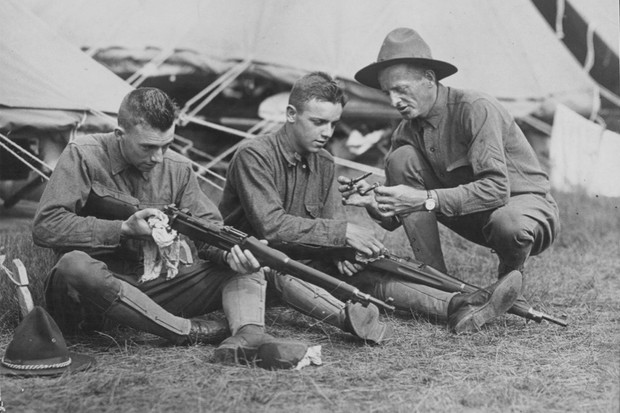
He took a swig from the bottle that the other doughboys were passing around. One of them declined. He was a quiet fella from somewhere in east Michigan named Jack. Then there was Harry, he was from Ohio too, and Peter. He’d come from Pennsylvania. And the last man standing around the barrel that night was Fred. He was from Indiana. They’d only met earlier that day, but the five had taken a liking to each other fast, which is why they were all standing around the meager fire that burned, smoking cigarettes while their toes froze in the not quite spring weather.
“I think I’ve glad to be on this assignment, Frank,” Jack said. “I know I signed up to help end this mess, but I was afraid I’d end up in one of those trenches.”
He spit in the dirt. “I heard they aren’t even fighting in the trenches anymore. There’s nothing left of Belgium. There’s not much left of France.”
“Except this place,” Peter said. The bottle had passed to him, and he knocked it back, gritting his teeth at the end of the swig. He passed the bottle.
“I wondered about that,” Jack said. “These barracks seem new, don’t they? Why are they building new barracks just for Americans?”
“You want to be in a mud hole like the French?” Harry asked.
“No!” Jack said. The end of his cigarette glowed orange as he took a drag, like a setting sun all to himself. The fire lit his features, a lurid sight, before the hastening evening obscured him in darkness again. “This assignment though,” he said.
Sometime did feel off about it, if he was honest with himself. Delivering messages by hand. They were going to be gloried mail carriers. They’d been told it was to prevent the information from falling into the wrong hands. But the messages were going to other encampments in France; who on this side of the front would intercept them for harm? Did the Germans have double agents? Was someone being double-crossed?
“What about it?” Peter asked.
“I don’t know,” Jack said. Now he had the bottle. “It just seems like they could…use a telegram I guess.”
“Anyone could be listening on the wires,” Fred said. It was the first time he had spoken since they lit the fire.
“Don’t they know how to send messages in code?” Jack argued.
Fred smiled to himself, dark humor floating from him. “You haven’t heard what happened to the coders?” he asked.
Now Frank was on alert. He and the other four men leaned in. Fred cleared his throat, his eyes drifting to each other pair of eyes in the circle before he said, “Something got them.” His voice was a velvet whisper. “They all went mad.”
The fire popped and Frank jumped, then tried to disguise it with a stretch and a cough.
“What do you mean, they went mad?” Peter asked.
Fred just laughed, this time heartily. All the mystery and gloom was gone from him. “I don’t know,” he said. “I just heard some guys talking about it on the boat over here. You know, telling tall tales, is all.”
“You think?” Frank asked. “I mean, they French broads we met in the last town—they were talking some weird things. Monsters and magic, and…what did they say, Jack? Faeries?”
“Yes,” Jack said, nearly rolling his eyes. “Faeries,” he said mockingly, then laughed.
“The only monsters over here are the Germans, man,” Peter said. “And there’s nothing killing men in the trenches but Germans.”
“Well,” Frank said, watching the hot coals in the barrel. “I guess it’s good that we volunteered for duty then. Can’t win a war if you got no men.” His words felt hollow, and he could see from the faces of his companions that they had fallen flat. They had all wanted to come here, to serve. But now that they were here…
“It’s not like I thought it would be,” said Jack. He drank from the bottle.
“What were you expecting, a vacation?” Harry teased.
Jack just shook his head, shrugged his shoulders, passed the bottle.
“I tell you what I was expecting,” Harry said. “I was expecting to be met by some French men, eh?” He gestured around their camp. “Instead, they stuck us here in these brand new barracks, and tell us we’re gonna be delivering messages. There’s about a hundred of here, you know. How many messengers do they need?”
“We go in pairs,” Fred said. “Safer that way.”
“I still say something is off about this,” Jack said.
And Frank could feel it too, but he couldn’t put his finger on it.


 The Quick and the Dead