
Harry was eating in silence that evening while the others chatted idly about the things they had seen that day while delivering letters. No one had believed Frank when he told the story about the woman eating his letter, until Fred piped in that he had seen it too. Peter and Jack had gone somewhere called Aubigny-en-Artois, which Jack had pronounced very poorly.
“Our delivery was in an actual town,” Jack said, speaking of the events of the day. “It had a church in the center, and a main road that went past shops, though most of ‘em were closed. And I saw moms walking ‘round with their kids, almost like there wasn’t a war going on at all.” He paused, then shook away a thought, or a memory, with a way of his head. “Anyway, we roll up to this townhouse…I guess that’s what it was. Looks real old and run down, not at all like the other building on the street. They’d all been painted recently I think. Can you imagine painting the town when there’s a war in your backyard?”
Peter laughed, as Jack rambled on about the experience. Frank and Fred both listened too, but Frank’s eyes kept sliding over to Harry. He wasn’t eating anything now, and he had a terrible look about him, like he hadn’t slept in days.
“Hey, Harry, you alright?” Frank asked, interrupting Jack’s story about some young woman he’d chatted with on the way out of Aubigny-en-Artois.
The table went quiet as everyone turned their attention to Harry. He had his head in his hands, staring straight down into his soul bowl.
“Come on, man,” Peter said, slapping him on the shoulder. “Was it that bad?”
Harry dropped his hands from his face. “Bill didn’t come back with me,” he said.
Fred leaned forward. “What do you mean?”
“You know how they told us to leave if the letter carrier was gone for more than 5 minutes?” he asked. They all nodded. The captains in charge of this unit had been very clear about this direction. 5 minutes, that’s it. Wait any longer and you might be dead too. “Well,” Harry said, letting the story hang unfinished. They were all smart enough to fill in the details.
“Where did you go?” Fred asked.
“Well it wasn’t a row of sheds like where they sent you, but it wasn’t much better,” Harry said. “We could tell that it used to be…community of some sort. There were actual houses there, maybe 12 or so, packed not too tight, but still close enough that it seemed like it was a village. There was a huge crater just on the outskirts of what I’d say was the village boundary. Big hole in the ground. Couldn’t see the bottom of it as we drove by.”
The men all looked around the table at each other, each wondering if they should ask a question or let Harry continue in his own time. The dining hall was emptying out. Mess was almost over, and they had to be in their bunks in one hour. An hour didn’t feel like enough time to talk about everything Frank wanted to talk about.
“Anyway, we went to the house. They said it would be marked with a red circle on the door. Bill knocked, and somebody answered, and next thing I know Bill is walking into the house. I waited 5 minutes, and then…” He was choking on the words. “I left him,” he said. “I left him behind.”
Frank could see the guilt was eating Harry alive. “Hey, Harry, man, you don’t know what happened. For all we know, he’s with some nice family getting a home cooked meal.”
Harry’s eyes were hard. “Now you know just as well as I, that isn’t true,” he said. “And I left him there, to face whatever it was alone.”
“You followed orders,” Fred said.
“Doesn’t mean it was the right thing,” Harry said, clearly on the verge of a breakdown. He scrubbed a hand through his hair, and looked away from the other men at the table with him.
“You’re right,” Frank said. “But, it’s the reason you’re alive right now.”
Harry got up from the table, leaving the mess hall without another word, his soup uneaten.
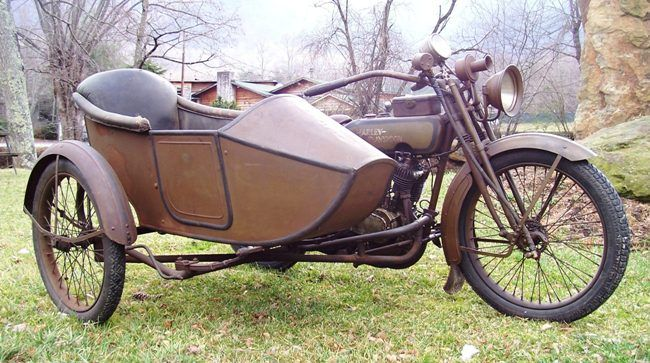
There was no assignment the next day for Frank and Fred, so they hung around the barracks, and the village where they had been built. There was a tiny church, and what Frank thought of a park near the center of the village. There were a few women and kids there that day. None wanted to chat. They all kept their eyes averted, downcast. Frank smoked about half of his cigarettes, thinking about home and his mom. Fred didn’t say much at all, but he was good company. They wandered back to the barracks, looking for lunch, when the sun rose high. Bread, butter and beans. He couldn’t complain. It was better than 8 hours in a sidecar.
The next day there was no assignment. And the day after that they did a whole lot of nothing too. But on the fourth morning as they were standing in queue, the captain handed Frank a letter, tri-folded and stamped with wax just like the other one had been. This captain was someone he hadn’t seen before. He was tall and looked distinctly unhappy.
“Get a reply from Madame Joile this time,” he said. His accent was different than the other French captains. He could never remember any of their names. They didn’t all look the same, but they all sounded the same. Except this one. He spoke English like he was shooting a machine gun.
“I was hoping we wouldn’t have to go back to her,” Frank said, not sure why he had let it slip.
The captain stared at him, scowling fiercely. Frank felt like a puppy about to be scolded. “Madame Joile is doing important reconnaissance,” he said.
“Yessir!” Frank said, saluting robotically before stepping out of line with the letter, Fred on his heels. When they were far enough away from the officer, Frank leaned his head towards his companion. “What’s with that guy?” he asked.
“He sounds like a German,” Fred said. Fred was smart like that. He had taught school or something. Or maybe he’d just been to school. Frank couldn’t remember.
“A German!” Frank whispered in disgust, nearly scandalized. “What’s he doing here?! Did he defect?”
“Beats me,” Fred said.
They made the drive again, nearly four hours stuffed into the side car, slipping past wastes and pastures and those funny, cold places that felt like death. Back to the little hill with the five sheds. One of them had lost a door since the last time they’d come. When Fred killed the engine on the bike, Madame Joile burst from the house, running towards them with frantically wild eyes. She took the letter from Frank before he could get himself up out of the sidecar. She turned her back to them, and began pacing as she read. Her cap was gone, and her whitening hair was in disarray. They waited.
Madame Joile turned around, and wet her lips before she said very smoothly, as if she hadn’t been frazzled at all. “No reply today.” Then she began to tear the letter.
“Oh, no, we need to take a reply today,” Frank said. He was out of the sidecar now, and Fred had hopped off the bike as well. They stood side by side, and he assumed the most threatening posture he could.
Madame Joile stuffed parts of the letter into her mouth. “No reply,” she said around the paper.
Frank drew his pistol and pointed it at her. The fear was getting ahead of him. He tried to settle himself as Madame Joile drew a pistol of her own. They stood there, a game of chicken that neither one would win. Frank swallowed his nerves. His hand was shaking. “We need a reply,” he said.
Madame Joile swallowed the lump of letter shreds in her mouth. “Fine,” she said. “Come here.”
She returned her pistol to its harness and stomped back across the short yard to the shed. Frank looked at Fred, and then they both slowly followed, keeping their distance. Madame Joile huffed her way into the shed, but neither entered with her. For one, it was too small for all three of them. For another, Frank had an itching sensation crawling up his back that she was dangerous. He thought about Bill disappearing into the house where Harry had driven him. He didn’t even step up to the door. Fred hung back even further than that. They could hear her in the shed, shuffling around, scratching out a reply, folding paper. When she emerged from the darkened structure, she pressed the note into Frank’s hand. She was like ice, too hard and too cold.
“Your reply,” she said huffily. Then she returned to the shed and slammed the door.
The letter was not sealed. Frank’s curiosity overcame him and he unfolded the letter. The script was like nothing he had ever seen, all scratched out without any apparent order. Was it even an alphabet? Was it a map? Was it a joke? He passed the letter to Fred, but he turned his head, averting his eyes.
“I don’t want to see,” he said.
Frank knew that Fred had better sense than him, and he regretted looking at the paper. He refolded it and put it in his breast pocket. The markings were on the backs of his eyelids when he blinked, like when you stare at a light too long. He rubbed his eyes, trying to rid himself of the view of them.
“Let’s get out of here,” Fred said, dragging him back to the motorbike.
 The Quick and the Dead