
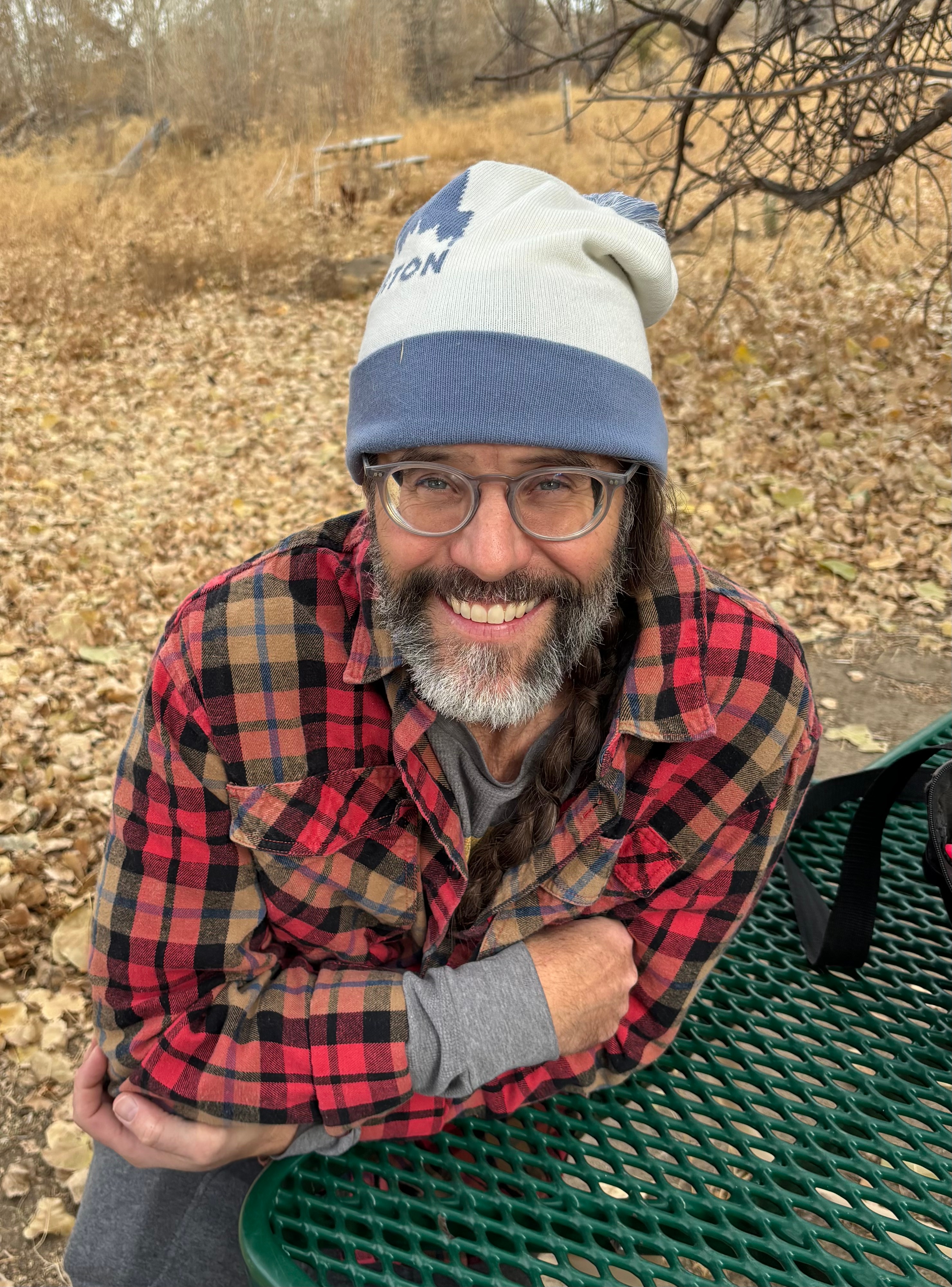
The interview posted below was conducted by Stephen Bent, a writer, blogger, and contributor to A Writer’s Shindig. Authors from the collaboration were all interviewed about their work as part of the initial project. This interview is about Ted’s short story Strapped for Love. An author interview will be posted after the conclusion of each story in the collection.
You can read Ted’s works at https://tedsdeskof1000voices.com/
You can read Stephen’s works at https://steveforthedeaf.wordpress.com/
You can read more about our collaboration at A Writer’s Shindig.
Steve:
Hi Ted. I’ve got half a dozen immediate questions. We can dig down into each one for further stuff when you’ve considered them. Let’s start with origins and research. Strapped for Love feels grounded in real systems and objects, from Nevada’s brothel laws to the Vincent Black Lightning itself. Did the story begin with any of that real-world research, or did those details emerge as the narrative took shape?
Ted:
I started with two very loose ideas, a song and an incident at work. The song is a Todd Snider story song called 45 Miles, where he’s talking about driving between Lake Tahoe and Reno to do a show, and there’s snow on the road, and they have a car accident. My wife and I do that drive all the time, so I’m familiar with the location and the fear of driving in snowy conditions-I’ve hit
the mountain a couple of times, if you know what I mean. In the song he says they’re all listening to Richard Thompson on this drive. Now I had no idea who Richard Thompson was but Todd’s turned me on to lots of good stuff before, so I went looking to see what I could find, and there was this great sort of folky outlaw fable with amazing guitar and it was about this really famous motorcycle and a girl called Red Molly and Box Hill, which I’m guessing you’re familiar with. So that was something I wanted to do something with about the time we started this project. The second thing was a fellow and a girl who came into the bar and the girl was just really mean to both me and him. She asked for a shot of expensive tequila and when I told her there wasn’t enough and I would have to get more she got angry with me. “Just give me what’s
in there-I’m not paying for it-he is.” I wanted to know why someone would order something like that and not want all of it. It only dawned on me later that she didn’t give a rat’s ass about the tequila-she was there meeting the guy who’d hired her and they were just passing time before they went off to their hotel room. Those sorts of transactions happen sometimes here and they’re
always fascinating. The dynamic stuck with me and I wanted to talk about it from the girl’s side. I did do a little Wikipedia diving on both Nevada brothels and the Vincent Black Lightning, and from that I got to learn about Fairport Convention and Sandy Denny too. Did you know she did the background vocals on “The Battle of Evermore?”
Steve:
I did know that, Ted. The only female on any OG Led Zeppelin recording. Sandy is sorely missed. And that song is my sister in law’s favourite (Vincent Black Lightning, she doesn’t care for LZ). Fantastic answer and all more reason to love Todd Snider. Next I want to dig into your writings historical and technical specificity. In this and your other work I’ve noticed you reference specific historical events and period technology. Is Strapped for Love part of that same impulse you felt in your novel Mansfield Ohio?
Ted:
Mansfield, Ohio I really wrote for my mother, who grew up in a terrible situation. My family’s roots were in the Ohio River Valley. My father’s family were dairy farmers and railroad engineers, two things that have largely disappeared in this world. Grandma on Mom’s side was an architect, at that time a woman in a man’s world. I don’t have many memories of my visits to
Ohio, so I did do some research. Timothy Brian McKee’s blog about Richland County was invaluable, and I offer him belated thanks here for the leads he gave me on Park Avenue West, the Hotel Lincoln, the Three Graces fountain, the heady days of Malabar, the Mansfield Tire and Rubber Company, and especially Mansfield’s underground restroom, which led me to William E.
Jones’s Tearoom. The Westinghouse Ballroom I found on Facebook, along with many folks’ happy memories. I watched Mechanized Death at some point in high school, and that tied right in; at that point, it was almost like someone else was writing the story for me. I have a fascination with cameras, the balance of security and intrusion they give us. In the world where we exist those little girls might never have died, but on the flip side the invasion of Michael’s privacy killed him. Strapped for Love is much more based on my personal experiences and locations I can see from my front door, or near it. I think markers readers can relate to are important in a story, to bring them in, to make them say
“hey, I remember that” or “I get that.” I hope I got some of them right.
Steve:
Fantastic answer, Ted. I agree on markers in stories. They tell on the author and the reader in the same way. A great leveler. Like the references in songs you mentioned they can also provide a new perspective. Just like Todd and Vincent Black Lightning. I’m now seeing some things differently due to this marker insight in your own work. It’s a powerful tool and you wield it well. Music seems integral to your work even when you sideline the description of it slightly. Do you write to music?
Ted:
I use music as inspiration for all of my writing. I still buy all my music (no streaming) and I make playlist after playlist. There’s so many references in my writing that I probably can’t even find them all any more, and that goes back to being fourteen or so and wanting to use every song title on Def Leppard’s Pyromania album as a chapter title for the idea that eventually became
(The Moon is Too Bright) to See Many Stars. If you see something that tickles your music memory, know that I was probably thinking the same thing when I wrote it. It’s great for shared experience. It’s great for emotion. And another
thing I like about music is the permanence of it. Steve, I know you’re a music guy, and that’s actually how I came across your blog. For those of you who aren’t aware, Steve is a wonderful resource for music, especially new stuff. I’ve gotten so many good recommendations from him. I wasn’t even searching WordPress when I found his work. I’d googled Mick Ronson guitar solos, and that sent me looking for the Wildhearts, and SteveForTheDeaf’s blog was the top hit.
Steve:
That is very kind of you, Ted.
Ted:
I have music playing almost constantly. All sorts of music, every genre that I’ve ever connected with. When I’m writing, if I’m in the right place, I don’t even hear it. For instance, we’re listening to “Sh-boom” by the Chords on constant replay in the house at this moment, because my wife is going to have to sing it in a play, which is going to be hilarious. And it’s not even driving me insane. Yet.
Steve:
Ensemble storytelling is a tricky thing to nail. This story works as an ensemble, with no single character claiming the narrative outright. What draws you to ensemble structures, and how do you decide where to place narrative weight when several characters are in play??
Ted:
I believe it’s the characters that drive a story, so when I need a story to go somewhere I tend to have a character that sends it along in that direction. Then I try to develop that character as much as I can, so that they’re not just a plot device or cardboard cutout. In Strapped for Love I had the very specific goal of starting with four characters who wanted something they couldn’t have. For
Stacy it’s love. For Tim it’s excitement. For Janey it’s that motorcycle and the freedom it represents. And then for Two-Cents it becomes lifelong companionship, something he realizes he can have if he gives up other parts of his life. I also like to think that any of us could be any of those four characters with only a degree or two of separation from our actual lives.
Steve:
Let’s step into uncomfortable territory for a moment. I want to ask you a classic writers question now. About writing characters unlike yourself.
Many of your characters make choices you clearly don’t endorse. How do you approach writing people who do things you’d never do yourself, without either excusing them or turning them into villains?
Ted:
With characters I try to see their side of things. I don’t tend to believe in either heroes or villains. I actually have a lot of trouble writing villains, because I don’t see the world as black and white and I find myself bypassing the temptation to judge choices or tell others what they should do. I think everyone and everything is influenced by the situation at hand and that creatures generally
do what they have to do to in order to survive. For example, in my long fantasy tale (The Moon is Too Bright) To See Many Stars, I write from the perspective of both sides of the conflict. That could confuse readers who want answers to what is right and wrong in a world where those answers don’t exist. In my own life I often find that those answers come later; that my full understanding of a situation lags a long way behind what’s laid out right in front of me. I suppose the character of Tai is the exception to that in this story; he doesn’t really have any redeeming qualities. He’s a bully and a user, and I don’t like those sorts of people in real life; I hope he’s not two-dimensional.
Steve:
Let’s do the hero worship thing now and discuss who you’re reading, influence, and admiration. Which published writers do you most enjoy reading right now, purely as a reader? And do you think it’s possible to admire other writers without their influence creeping into your own work?
Ted:
I’ve been writing a long time now, and I do believe I’ve developed my own voice, but strong writers influence my writing tremendously, to the point where I know I can’t read them and write at the same time without brutal self-examination and editing. I always loved to read, but I hated being told what to read in high school, so I skipped a lot of it. I am forever grateful to the college professors who taught me what was really good and fostered my love for world literature. To get listical, my favorite authors are Malcolm Lowry, Garcia
Marquez, Faulkner, Hemingway, Melville, Woolf, Achebe, Nabokov, Pynchon, Flann O’Brien, Rushdie, and oh my goodness I could go on forever. I just ordered Franny and Zooey for the front line library and I’ll tell you straight up that your recommendation of Under Milk Wood is going in there too. What poetry resided in Dylan Thomas. Thank you for that. For short stories my two favorites are “The Dead” by Joyce and “Good Old Neon” by David Foster Wallace. And I do believe those authors are all there, Up Above My Head, showing me what to do. Well, all of them except Rushdie, who is still with us in spite of the religious hatred directed at him. He’s there in my bookcase when I need him.
Steve:
Your work circles permanence a lot, whether it’s music, place, or memory. Which makes me wonder about platform. So let’s talk about the medium that brought us all together in the shindig. You choose to publish your work on WordPress rather than through more traditional literary venues or platforms. What does that choice give you as a writer, creatively or practically?
Ted:
When I was in eighth grade I remember telling a teacher that “anything that gets published has to be good, right?” They just laughed. I queried Chivalry and (The Moon is Too Bright) hundreds of times with agents and publishers.
I’ve had agents get mad at me for badgering them. I went to this writing conference and when we were talking about query letters I asked why none of mine got a response. The agent replied, “Well, your query letter’s not any good.”
I thought about that for a long time. Mainly because I pretty much copied that query letter from the one Brandon Sanderson used to get a publishing contract with a prominent agent who I won’t name. His was printed in Writer’s Market.
And then I came across this quote from Toni Morrison, who I believe worked for Viking at the time. She said, “Even in the late nineteen-seventies, acquiring authors who were certain sellers outranked editing manuscripts or supporting emerging or aging authors through their careers.” That blew it wide open for me. Agents weren’t there to read my stuff, or help me get published, or to guide my writing. They were there for one thing and one thing only: to make money. So if my name was Trump, I could write any crap I wanted and get it published tomorrow. But without name recognition, no one at Knopf was truly going to read my work. And I’m not going to do the things that are required to get name recognition. I’m not going to play that game. It’s not my style, or even within my abilities. What I’m interested in is reading and writing. So I said fuck it
and just started putting my novels up on WordPress for free. And guess what? People did read them. And people did like them. And that made me feel so good. And they’re not going anywhere. WordPress doesn’t delete old posts, and with the way AI is harvesting our words now who knows when one of us might write something that lasts forever? So I’m going to keep doing it, and I’m going to keep encouraging others to do it, because it’s real. I’m only half joking when
I say I think I’m WordPress’s biggest proponent.
 The Quick and the Dead