
Written by guest author Stephen Bent
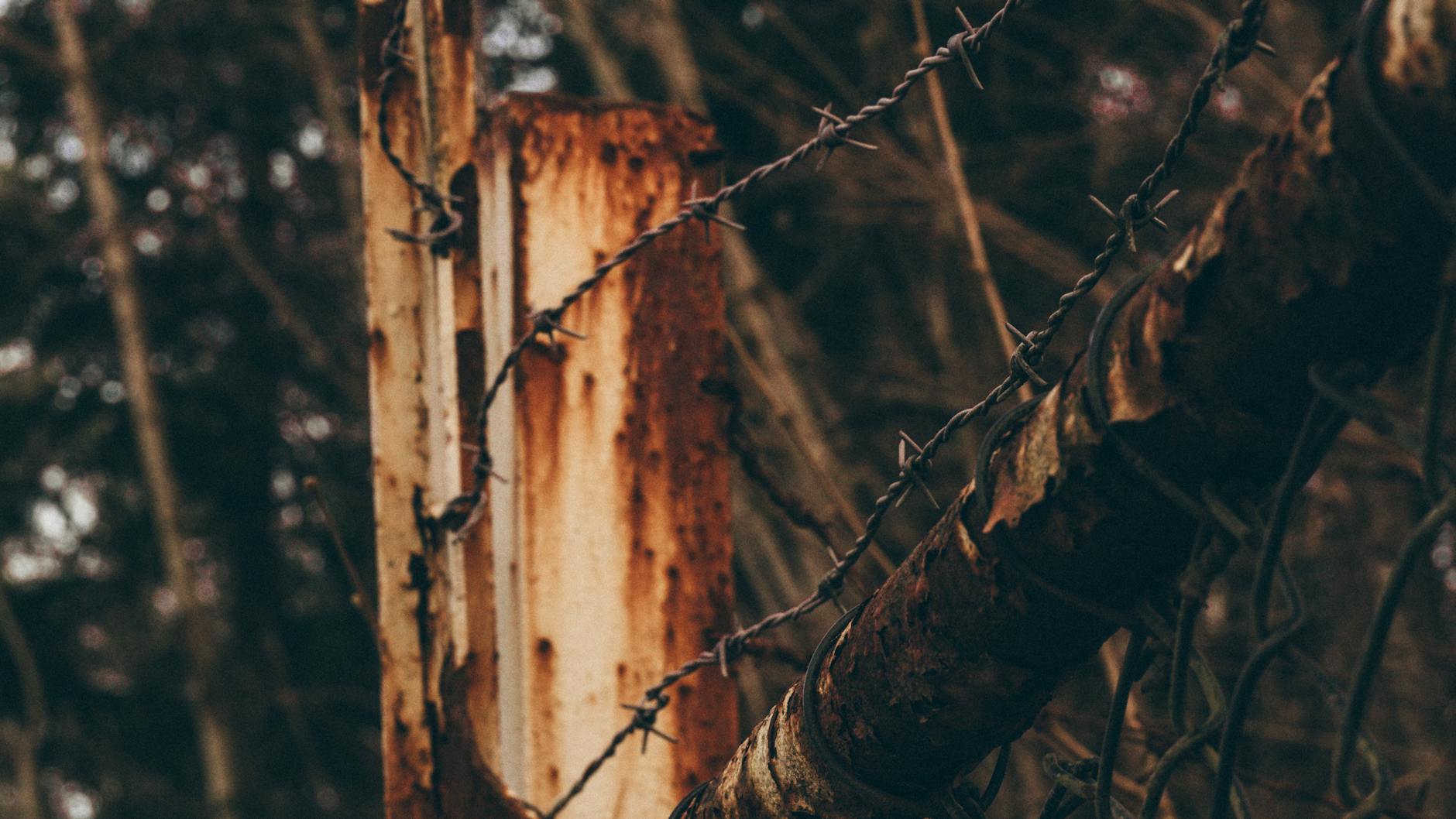
This story is part of the project A Writer’s Shindig. Stephen Bent’s story is the last of 6 short stories written for the project. You can read more about our collaboration and read all the stories posted thus far at A Writer’s Shindig.
The air outside was bright and heavy. Insects hummed in the grass. The clearing shone, almost white. Well, what passes for white around here. In each corner, where the sun caught the gravel, the bleached earth denied it had ever been mud, a bog, a puddle or dirt. It lay hard and unyielding. My favourite time of year. But I had no time to enjoy it. He was already walking toward the trees, rolling his shoulders like a boxer loosening up for a crowd that wasn’t there.
I followed because I was supposed to. “So this is it?” he said, not even looking around. “Your big wide whatever? Your secret world is just… all these bloody trees?” He gave a whistle, long and low. “Creepy as hell.” I felt utter contempt for this fool. “They’re just trees,” I said. “Yeah, and you’re just weird.” He found a stick and swung it at a branch overhead, snapping off the smaller twigs, enjoying the noise. “Have you got anything stashed out here? I reckon you’ve got dead birds out here. Or bones. Or dead girls.”
I said nothing. He laughed. “Look at you. Jesus. You go red when anyone talks.” We crossed the clearing. The house disappeared behind us the same way it always did. Obscured bit by bit, swallowed by trunks. When we first arrived, I used to stop halfway and check over my shoulder to make sure it hadn’t vanished for good. Now I knew each knock and turn. Each dip and shade. These woods. My Woods. Home.
So this time, I didn’t turn around. He kept talking. About how big his life was. About girls. About fights. About the bus ride home from school, and how a boy called Darren had cried when punched in the nose and mocked for bleeding. All of it was like he was performing for someone else. He prattled on. I endured, and the forest led us onwards. We reached the dip before I knew we were close. The trees thinned there. Like usual, the ground sloped away into the dell. He looked at me, eyebrows raised. “Is this something?” I gulped inside but didn’t let it show. “Oh. Careful,” I said. “It’s dangerous down there. It’s steep. Hard to climb out. I fell in once.” He grinned. “Then I guess we do it here.”
He shook himself down, arms loose and wobbling again. He made sure I saw his jaw was set. It was like he’d seen boxers do on TV, and I’d seen him do already. “I told you, didn’t I?” he said. “One day, you and I were going to fight. Guess what? Today’s your lucky day.”
He raised his fists. And here we were. Two cousins, facing each other. I didn’t lift my hands. I didn’t defend myself. He threw his first jab. Smiling. It was a phantom punch, all noise and wind.
It didn’t even graze me; it was designed to make me look to the left, where he pushed the air. It didn’t work. I just stared at him. He took a second swing. I moved aside. Not because I’m smart or agile. But because it was obvious and I was edgy and scared. That’s when he smiled. He knew the sport had begun.
“Alright then,” he said. “You’re in.” It was then that he hit me square in the stomach. The breath went out of me like a balloon. I doubled over, coughing. He stepped closer, still smiling. “Hard to climb out, is it?” he said. “Sumo rules. What if I push you in?”
He shoved me hard and full of contempt. My ire awoke. I shoved back. Dry dust sprayed around our shoes, my boots, and his trainers, scrabbling for grip. He was bigger. He was stronger. But I had fear. So much fear. Fear of the drop, fear of the thing that lived beneath it.
He lunged again. I crouched, half by instinct, half by prayer. His balance is off. He went over me, his weight too far forward, arms flailing. A grunt, a slip, a shadow, and then he was gone. Silence hit first. Thick, like time holding its breath.
Another one of those moments. There was before, and now we are in the after. I curled into a ball, as small as I could make myself. I tried to stop the world from moving. I knew full well what was down there. I’d known before we left the house. I knew.
I saw the speed he went in. The air in my chest felt cold and old, like the forest was holding it for me. But no… It turned out that’s not what happened. There was a noise. Not a scream. Not the clean, dry sound of something sliced. Just a heavy scuffle, the slide of earth, the crack of twigs. Then his voice. “What the hell is this?”
Coughing, spitting leaves. Then laughter, high and breathless. “Jesus. Thought you’d killed me.” I didn’t move. Didn’t answer. My hands were pressed flat to the ground, shaking. I waited for something else, some confirmation from below. But there was only his voice again, louder, surer now. “Are you coming down here, Shrimp? Are you going to help me out or what?”
The forest stayed still. No birds, no wind. Just the faint hum I sometimes thought I could hear until I centred myself and realised every time that it was my own heartbeat. I thought of it as the sound of the line remembering itself. But really, it was the hum of my own existence. I stayed kneeling at the rim, the sunlight hot on my back, listening to him thrash and swear. And somewhere underneath, that thinner sound, like a violin string pulled too tight, deciding, almost, whether to cut. I knew that sound was in my head. But it was deafening.
“My ear!” he exclaimed. “I cut my sodding ear.” The brute’s voice sickened me. But the risk to him down there was too great. Thrashing around in the presence of the thread, he was a danger to himself. That was too much for me to bear. “Cousin. Look to me,” I called down. “Give me your hand; I will pull you out.” He was still cupping his left ear as he made his way to the side I was standing on. Blood was making thin tributaries between his fingers from the cut to his lobe. I watched his every move. When he was close to the thread. When it was safely distant from him. I didn’t say a word. But he only ever really came close to it a second time once. And just for a moment.
He came over to my side. The safest side to climb out. Where tree roots made something close to a ladder if you knew how to look. I held down my hand. My cousin took it, and one foot after another, he made his way out of the dell. He walked back to the house, cupping his ear. Silent and changed, he went inside while I sat in the clearing looking back to the woods.
That month, I stopped returning to sit with the thread. Not out of fear. Out of respect. And because I no longer trusted myself around such simple solutions for things.
I carried with me for many years the weight of that day. The memory, shame and fury are ingrained with the time I almost led a member of my own ‘flesh and blood family’ to their doom at the threshold of an ancient and immovable presence.
The pallor that summer afternoon cast over my adolescence, my prime years and my middle passage from youth to man was immeasurable. I carried that weight like a cross. I knew full well what was there. But still, I let us go. I let him face that tall, thin and final thread. But he didn’t see it. It sliced him. His ear was disfigured for all time. And yet. He knew not what had happened. Not really. A scar. A moment. A long-forgotten occurrence.
Adulthood didn’t arrive with grand announcements. It came in small print: rent due on Fridays; laundry coins stacked in a jar; bus timetables folded into a wallet that always felt too thin. Or a pocket that was always too full of junk. I moved into town. College first, then university, then a job that changed names more often than duties. I kept reading, kept looking for straight lines where nature refused them. Those impossible edges that felt eternal. Sometimes I’d find them in a theorem proof, a gallery frame, or a shaft of light cut square in a cinema aisle. More often than not, there was nothing. Nothing with the exact, indifferent purity of what waited in those woods. Nothing that matched the thing I had studied and almost fed blood to.
Years did the quiet work years do. I became the person I wake up as. I met someone kind. Kind in the practical ways. The kettle is always half-filled; the coat is lifted from your shoulders before you ask; a laugh doesn’t need an audience. We lived above a laundrette. We are always surrounded by warm air and machine hum, a weather system of steam and lint. Lint that shows itself in the air. We built a routine you could lean your weight on without it giving way.
On Sundays, I phoned Dad. Weather, groceries, the price of this and that. Silence. His memory began to thin the way old fabric does: worn through at the elbows first, then everything else. Words slipped from his pockets like receipts he’d meant to keep. The hospital rang.
We drove back. He smiled at me without recognition, as if the person he meant to greet were standing just to my left. He’s been doing that for some time. This time, he was not listening when they gave his diagnosis. Three days later, he was gone.
Forester’s Cottage filled with murmurs after the funeral. Plates travelling from hand to hand, the low-tide noise of family using up all the words that never help. My aunt hugged me hard enough to mean it. My cousin hovered with a drink. His hair had grown long enough to swallow the missing crescent of his ear.
“Yeah, I’ve got a scar back there,” he said, scratching absently at the covered absence. “Never healed right. Funny how you don’t remember half these things.” He laughed once, weightless. “Bike accident, maybe. Or barbed wire. Doesn’t matter.”
That was the moment a gear clicked in me. Some wounds are larger from the outside; some histories are only visible if you were standing where the light fell. He clapped my shoulder and moved on, already smiling at the next listener, untouched by the clean, straight edge that had once found him.
When the house thinned of bodies, we stepped out. My wife didn’t ask where. The woods had a way of inviting and excusing at the same time. We walked without speaking. Branches recognised me. Accepted us. The path arranged itself out of habit.
At the lip of the dell, I breathed in air that had not moved since I was a boy. “Still here,” I said, not to be clever, just to answer something that had been asked. I went down the way my body remembered: heel sideways on the root that holds, palm on the slick bark that doesn’t. My mourning sitting on dirt and detail is unbecoming of the occasion. At the bottom, I hovered a hand over the place where the world narrows to a razor. My wife above me, outside the dip. Just looking around the woodlands and chatting to me like I was not facing the point in time that all separates into one of two.
I stood before the line. Looking up. High into the sky. Looking down. Deep into the earth. Cleaving all that passes through it into before and then after. I held out my index finger. Moved it closer and closer still to the break in the universe. Then I touched the thread. No noise. No speed. No hum. No movement.
A sting, bright and clean. A single bead of blood formed and fell, dividing itself again on a leaf below as if to show its working. Something loosened in me that had been tight for decades. Breathing deep, I stood stock still for a moment. Then, satisfied, I climbed back up.
My wife was waiting, looking down into the dip as if reading a warning sign only she could see. “This doesn’t look safe,” she said, voice low. “We should fence it off. If a child fell in there, they’d struggle to get out.” My throat tightened. “Yeah,” I said. We probably should.” She took my uninjured hand, and we walked away together. Behind us, a leaf let go and, mid-air, calmly became two. We didn’t turn.
Together, we packed the last of Dad’s things. The door took the key and clicked in that small, respectful way old locks do. In the car, the headlights combed the trunks, pulled long shadows up toward the sky and let them go. The road ahead curved the way roads curve in the real world: not straight, not fair, simply going where it goes.
“Given time…” I said to the windscreen. “Mmm? Sorry, love?” she said, drowsy from the day. “Trees grow around wire,” I said, and smiled because she didn’t know the source but understood the sentence.
 The Quick and the Dead