Much of this post was taken from an earlier post of the same title, which can be read here. Since walking the Camino de Santiago, I have had additional thoughts about Mary, and wanted to share something slightly different about her this Christmas.
One of my favorite Christmas albums was recorded by Roger Whittaker, and is inauspiciously titled The Roger Whittaker Christmas Album. It was a staple in my home as a child and each Christmas I make sure to play the songs while I bake cookies and decorate the tree. I’m not sure I can pick a favorite track from the album, but one that always moves me to tears is Whittaker’s Mary song, Mama Mary. Throughout each verse, the singer asks Mary, “How did you feel?” Focusing Mary’s experience of being the mother to the long-expected baby is what grabs me about the song. When he asks, “Tell me, how did you feel when the angel came to the garden?” or “When you arrived in Bethlehem to hear them say; no room, no table, stay in the stable; tell me how did you feel?” he isn’t focused on the baby at all. He wants to know what Mary thinks of it all.
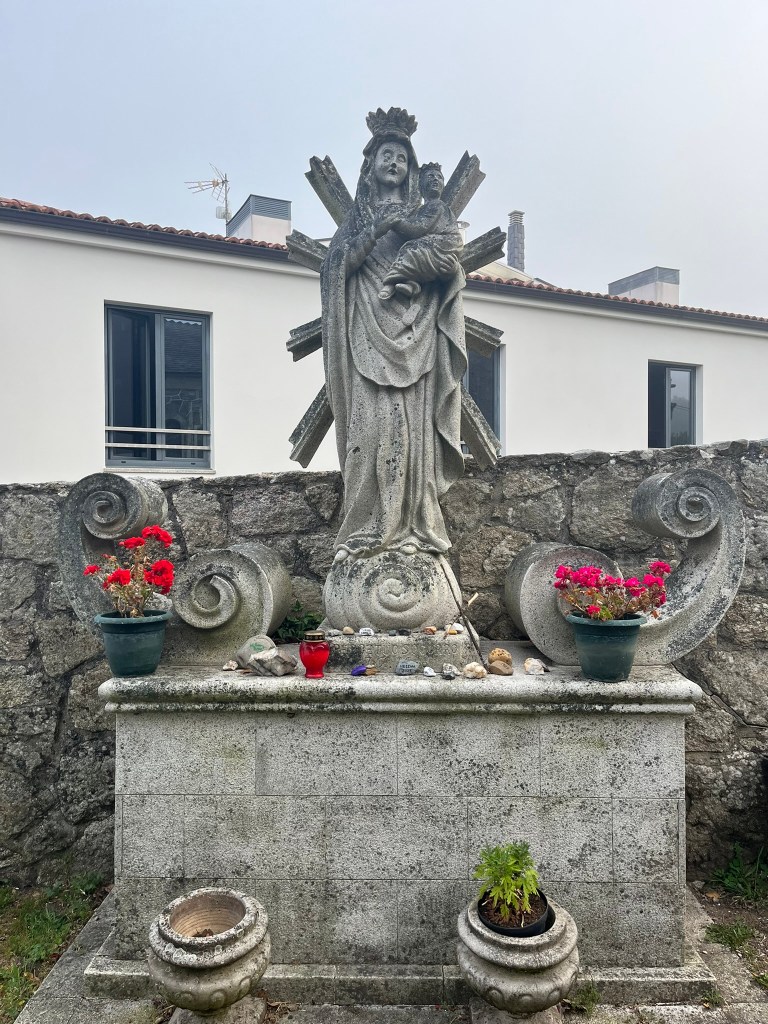
It is this question that I would ask Mary, too. We seldom see the messiness of Mary, instead favoring the images of a happy mother and child. This image of Mary is carved in stone throughout the world, with just as many paintings of her serenely holding the baby. But the Mary depicted as calm, the one who holds Jesus without a drop of sweat on her face, is at odds with the Mary that Roger Whittaker asks, “How did you feel?”
Mary, I’m certain, might have a lot to say about how she felt. There was a long and difficult road she walked before she beheld him, before she wrapped him in her arms and cradled him against her chest. Before the miracle that we now call Christmas, she spent months carrying him—months that I imagine were full of wonder, but just as easily could have been filled with doubt and fear. When she visited her cousin Elizabeth, was she hiding? When Joseph planned to divorce her, did she know? Did she have a plan for what she would do? Did she travel to Bethlehem worrying about giving birth before they arrived? When her labor began, did her her stomach sink?
I’ve had the honor of assisting women in birth when I worked as a doula. No matter where or how a baby is born, there is always a moment when the mother says, “I can’t do this.” She is always wrong of course, but I would never say so. Instead, I would remind her that she can. I told numerous mothers, “I’m watching you do it.” I asked them to surrender. “Don’t fight with the pain,” I coached. “Let it carry you.”
How did you feel, Mary? I imagine her not as serene or accepting, not calm and pristine and beautiful. When I think of Mary and the infant Jesus, I think of the birth, the marathon level of physical work that goes into it. I imagine Mary, told that she must sleep where the animals sleep, laboring among them. This Mary cries out in desperation. She doubts her strength. She ignores the world around her to survive the agony. Which women did Joseph find to attend her? Did they remind her of her strength as she squatted, dripping with sweat, shaking and puking from the pain, to push her son into the world? Did they wipe her brow? Did they give her a sip of water? Did they let her clutch their arms until her knuckles were white? What items did they place in her mouth to bite as she bared down? Did she cry out, “God! Please make it stop!”
I think about afterwards, when the shepherds came to see the baby. How many times had Mary nursed her son? Was he screaming from hunger? Was she weeping with frustration? Which woman showed her how to hold her breast so he could suckle? Had she already delivered the afterbirth? Was she still bleeding? Did she lose the color in her lips when she tried to stand, or when a midwife pressed her abdomen? Was she aching from a tear? She wouldn’t have had ice packs, or witch hazel pads, a peri-bottle, or a sitz bath; what did they give her for the pain?
I know this Mary, because she is me. This Mary has been through hell, who has done the messy, exhausting work of birthing the Christ child, of laboring to bring hope. She must work, harder than she has ever worked, to bring joy. She doesn’t trust herself; she doubts the power she has been given. She focuses on the agony of the moment to get through it without coming undone. She cries out “how much longer?” She screams, “I can’t do this.”
The desperate Mary in labor does not know the joy of the serene Mary holding the baby, just as Mary holding the baby forgets the nerve-shattering experience that brought him to her arms. Yet, she is the same woman. This is how hope enters the world. It comes in desperation. It comes among pain. It comes through fatigue and blood. It comes in the night, when an end is nowhere in sight. Afterall, if there was nothing awry, what would we need hope for?
In each chorus of Mama Mary, Whittaker sings, “Oh mama Mary, we wish you joy!” Who would not wish joy for someone who had been through harrowing trials, who now holds hope in their arms? Hope does not come from nowhere. It is born through great adversity. Hope, fragile just like a newborn baby, is a tender, precious thing.
Perhaps it is strange to be thinking of Judas and the Easter story during Advent. The hope, peace, love and joy we feel at the birth of the baby is always, for me, dampened by the reality of where the story eventually leads. It’s a bit like the first time I watched Star Wars Episode I: The Phantom Menace, seeing the young boy Anakin on the screen and feeling such sorrow about where his life would take him. We know what happens to the baby, and it tugs at me each Christmas, not just because of what happens to Jesus, but also because of what happens to Judas.
I wonder who put those thoughts in Judas’ head
Contrary to what he had seen with his eyes
And felt with his heart
As he walked alongside Jesus on dusty roads
Offering peace and hope and love.
What lies disturbed the soft territory between them
The bond of trust forged from shared passion
Who disrupted that sacred space?
Someone so vile that his companions named the devil
The only possible explanation for a betrayal so bizarre
So upsetting
So unbelievable
That it must have been outside of his control.
Ordained from the beginning
A path to redemption.
But I wonder now about that simple answer
And how Judas might feel about it
Because I know better than to blame demons
For a world that is filled with good people who get twisted up
By misinformation
And how those half truths take hold of you
And start to put thoughts in your head
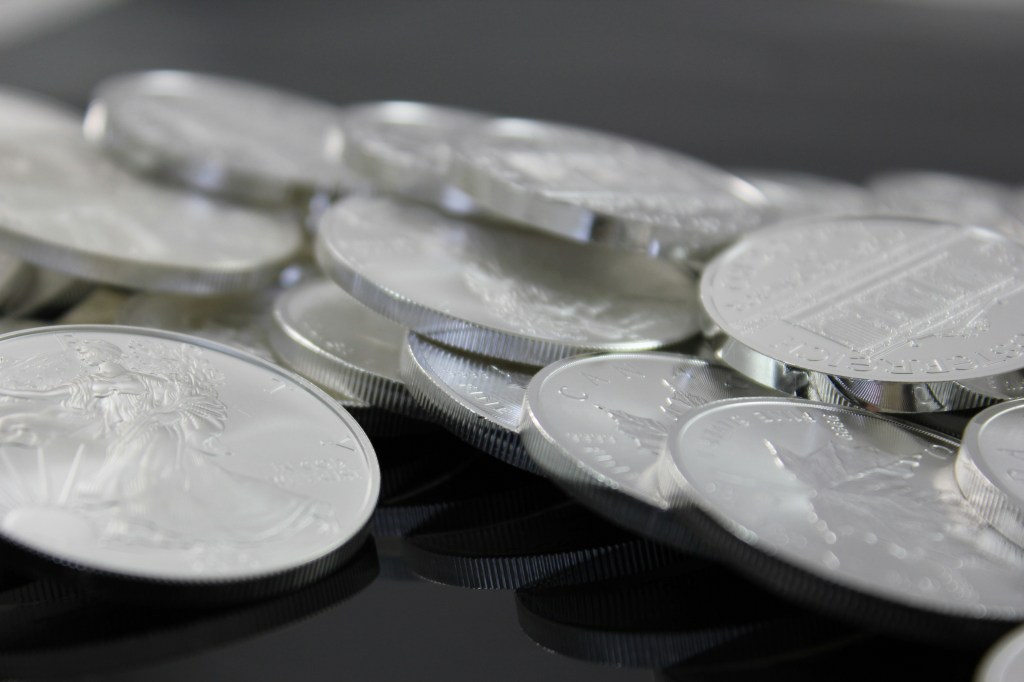
That look a lot like silver coins.
And so I wonder about Judas
The thoughts in his head as he approached the garden
As Jesus was taken away
As the money changed hands
As he watched the results of his choices.
And when it was over, did he know who had lied to him?
This is the second of three short scenes from stories that aren’t fully written. Some of these scenes are part of a larger work that remains unfinished and some of them are from tales that haven’t come to me…yet.
“Lydia Agnes,” the shepherd called.
I snapped by head up, fully at attention, though I had been drifting off to sleep. The training had been grueling that morning, and now the worship service was a welcome place of quiet and reflection. It was so quiet that I had forgotten to reflect, and instead found my head bowing in a nap, rather than prayer. I wasn’t entirely sure why the shepherd, Mary Josephine, had stopped in the middle of her homily to address me. But then I noticed that she and I were the only people left in the chapel.
Embarrassed, I stood and made a respectful genuflection to Mary Josephine. “I apologize, shepherd. The course this morning must have tired me more than I imagined it would.”
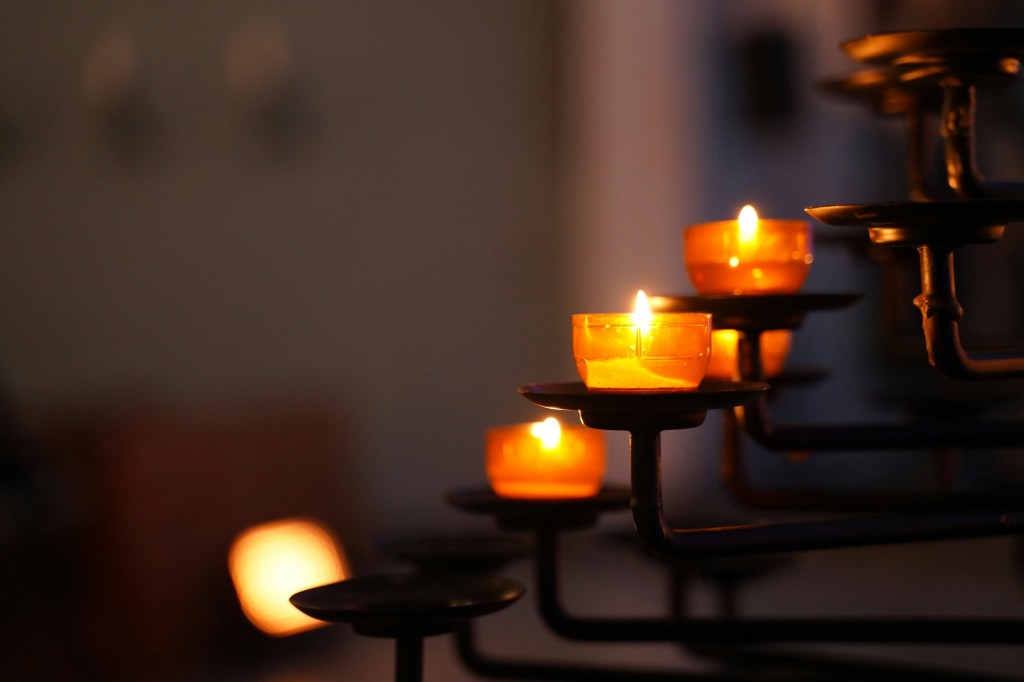
Mary Josephine nodded, an amused smile on her lips. There were still some candles burning behind her on the altar. No one ever blew them out; the prayer they represented would continue to flick to heaven until the candle burned out by itself. I looked for the one I had lit just that morning. The taper was roughly half melted away. I wondered if I would receive an answer, a sign from heaven, or a good word before the wick burned down to nothing.
“The training for Lydias is more rigorous than the others,” she agreed. “A lot of math.” She laughed, she ancient face wrinkling even more as she did. I’ve never seen anyone with crow’s feet quite as pronounced. “Never had a head for math, myself.”
She was in a good mood, and was being good natured about my lack of attention during the celebration and sharing of the word. I managed a weak laugh of my own. “Yes, sometimes I think perhaps I should have become a Martha instead.” My eyes went to the candle, burning away with my prayer.
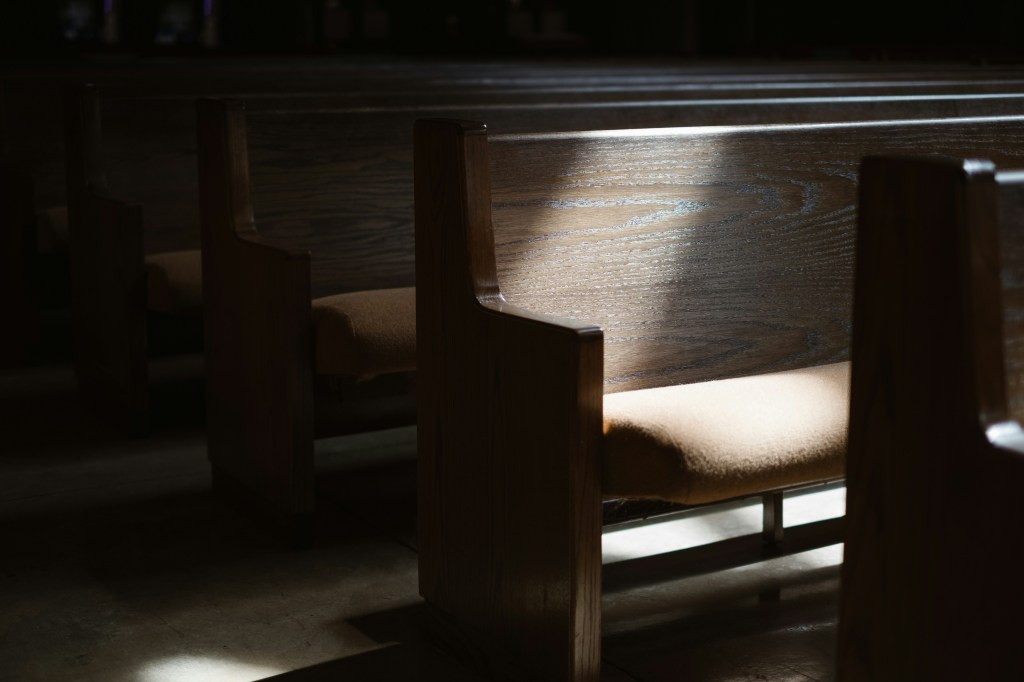
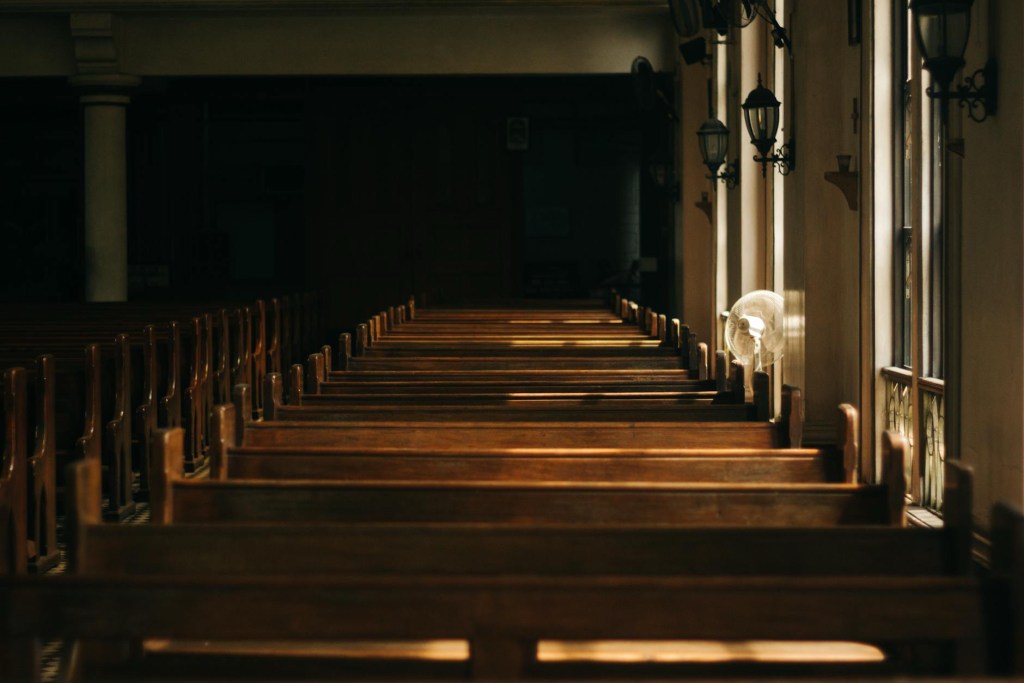
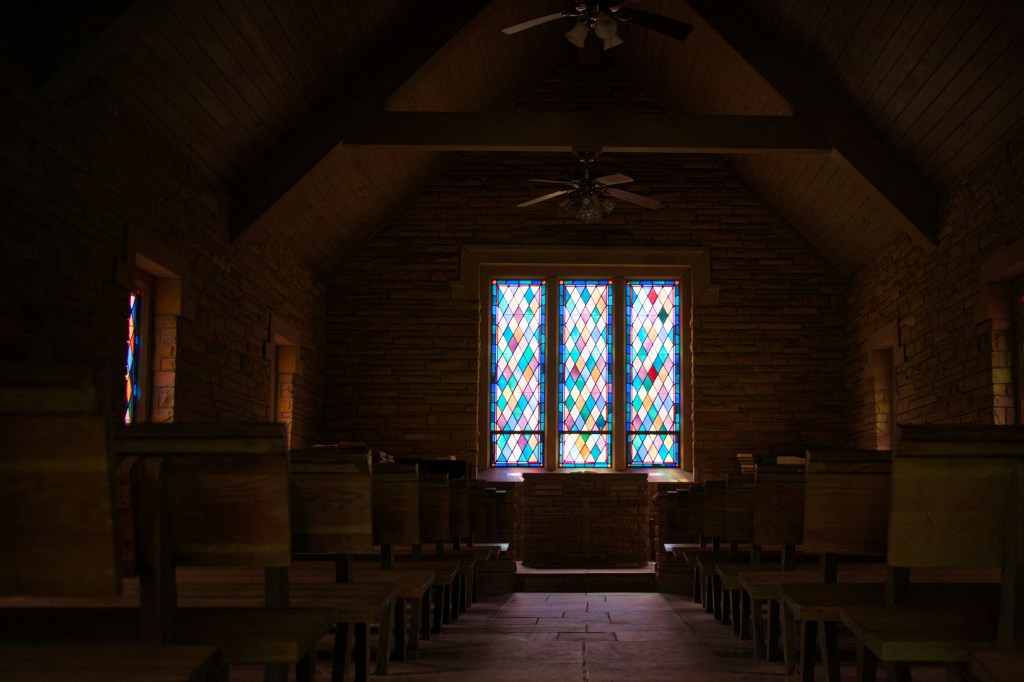
“A Martha?” the shepherd said. She walked a few paces towards me, stopping at the wooden pew right in front of the one where I sat. This chapel was tiny. Just 8 pews, 4 on each side. I had seen it full a few times, but that was only when all the women were together. We had another shepherd in this house, who kept different hours, and several women who did not like to attend chapel at night. Perhaps they were too afraid that they would be caught napping.
“Yes,” I said, drawing my eyes back towards Mary Josephine. She was a good shepherd, and I had no doubt in my mind that she had always known that she would be a Mary. “I think I could have been happy in a life of service,” I said.
“We are all in a life of service, Lydia Agnes,” she said.
It was not quite a scolding. “Yes, I know, shepherd. That’s not what I meant.”
“You meant that you enjoy cooking for others, and making them feel welcome with gifts and treats and the small treasures that you can offer from your own hands.”
I pondered the explanation of what a Martha did for the community. I ticked through the list of what my own mother had done as a Martha. Homemade bread, cakes, handmade gifts, taking away dishes, giving me a treat, words of encouragement, letters in the mail, small notes left for me in surprising places, a tidy space, a long, lingering hug. “Yes,” I agreed. “I think I would have been a good Martha.”
“Do you think you’ll be a good Lydia?” Mary Josephine asked.
Lydias were good with money. They were all business. They liked solved problems. They were the backbone of the organization. The fundraisers. The advocates. The string pullers. The connection-makers. “Oh, yes, I think I’ll make a wonderful Lydia,” I said. But my eyes went back to the candle I had lit that morning as soon as the confident words had left my lips.
Mary Josephine took another step forward. “I think, Lydia Agnes, that almost all of us question from time to time if we have chosen the right path.” She smiled again, but this time it was tight. “I, for instance, have always had a nagging doubt that instead of a Mary, I should have been an Anna.”
“An Anna!” I exclaimed. Annas were few. It was said that the role of Anna chose you, rather than the other way around. I fidgeted with my Lydia ring. “To be an Anna is a great responsibility.”
“Yes, I know,” Mary Josephine said. “Which is why I chose the role of Mary.” She looked pensive, almost disappointed. “But…” she shrugged. “I’m old now, Lydia Agnes. I don’t think I will be changing my role among the sisters.”
“Nor should you,” I said, not thinking about how it might sound disrespectful. “You are a wonderful Mary. I love listening to you proclaim that word.”
Mary Josephine smiled again. “I thank you for that, little sister.” She placed her hand lovingly on my shoulder. “Off to bed for both of us, I think, now.” She moved away from me, towards the chapel exit.
I twisted the Lydia ring on my finger again, watching my prayer burn.



 The Quick and the Dead