
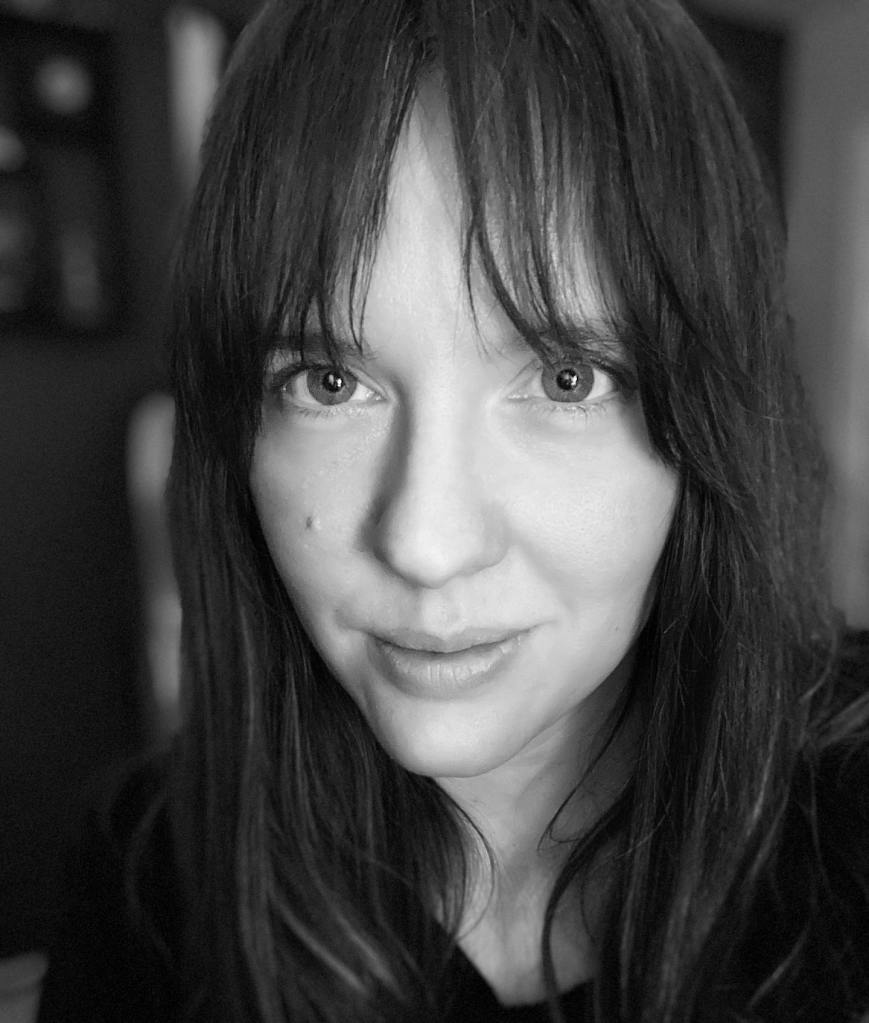
The interview posted below was conducted by Jolene Rice, another member of A Writer’s Shindig, in response to the story Smoke on the Water. Authors from the collaboration were all interviewed about their work as part of the initial project. An author interview will be posted after the conclusion of each story in the collection.
You can read Jolene’s works at www.chicosmom.com.
You can read more about our collaboration at A Writer’s Shindig.
Jolene:
Smoke on the water is a sweet and innocent story about love. Great care has been taken in telling us about the excitement and nerves associated with that first meeting. Do you prefer writing love stories?
Sarah:
I would say that most of the stories I write have an element of romance in them.
Exploring the relationship between people is what drives my writing, and one of the most universal feelings there is is romance. But love comes in all kinds of shapes. This story is about the innocence of a first love, puppy love, a crush that is uncomplicated. It’s probably the most heartfelt love story I have written. I wanted readers to feel good when reading this one, instead of feeling how complicated love can sometimes be.
Jolene:
You did that very well. Smoke on the Water left this reader with a smile on my face. It’s simple and very pleasing to read. Part of that simple feeling comes from the place and time frame the story is set in. What were the factors in picking the story’s setting?
Sarah:
My preferred setting is a fantasy world. I also have a great love of European history. These two tactors drove the decision to set the story in a light fantasy world. The protagonist, being so young and naïve, played into the decision to make the world feel cozy.
Jolene:
On your blog,www.sarahorraten.com, there are a lot of posts with religious content. Particularly Christianity. Does faith (good for bad) play an active role in all your writing?
Sarah:
Yes. I grew up in a Southerner Baptist church that rejected regressive changes to church doctrine and polity in the 90s. After meeting my husband, I left the denomination for a more inclusive one for women, the United Methodist Church. However, this denomination has also been fraught with conversations about who is in and who is out over the last decade, particularly around queer individuals. It’s been frustrating to watch. I earned a Master of Arts in Religion from Louisville Seminary in 2025 (which is a Presbyterian school), and was once upon a time pursuing ordination as a deacon. The last year of my life has been a time of struggling with the institutional systems that make up most of religious experience in the United States. Processing some of my own experiences (and traumas) has led to many posts on the blog.
Jolene:
I realize over the course of our lives, we change. As your life has developed, who has influence your writing the most?
Sarah:
In my early writing, Tolkien’s writing was a heavy influence, especially in my first novel.
But the more | grow into my own writing, the more I find it shaped by the biblical text, mythology and fairy tales. Sometimes I write very regular fiction as well, much like Jodi Picoult, focusing on ordinary people living lives that are difficult or navigating relationships that are trying. I also find that my personal experiences are beginning to shape my story telling and my poetry. There is rich material to draw on from my own life, and I put those things into my writing.
Jolene:
I had a teacher in high that said the best stories are the ones that reflect true to us experiences. What one character or one experience in your body of work is ‘true to you’?
Sarah:
Though most of my characters have elements of me and my experience in them, Rebecca Laudner, from my novella “Overcome” is the most like me. Rebecca struggles with keeping up appearances, fear of being judged for her choices, and the frustration of not being able to pursue what she desires. I’ve spent my adult life unlearning these patterns. I think Rebecca ends up in a good spot with these struggles by the end of her story.
Jolene:
With the experience of being part of A Writers’ Shindig in mind, what have been your biggest takeaways from this group?
Sarah:
My biggest take away is that there are other people out there telling great stories. I’m a software developer in my “real life” and I have learned that developing and writing code is so individualized. However, it’s better when you get with 1 or 2 others and talk about best practices. Writing is a bit like that too. I have a unique voice, and so does every other author. But the voices together can bring out the best song. Very cheesy sounding,| know, but l am a firm believer that collaboration sharpens the tool.
Jolene:
In the biography you posted for A Writer’ Shindig, you stated you live in Kentucky. How does your geography affect your writing?
Sarah:
I live in one of the most urban areas of Kentucky. That said, we are still not even in the top 10 largest cities in the United States.
We often say that Louisville (where I live) is one of the biggest small towns in America. If you’re from here, you undoubtedly know a guy who knows a guy. Many of the people that I know who have relocated to Louisville are from Appalachia, and the history of that part of the state really is embedded in our culture state wide, as is love of race horses, bourbon and basketball. Hardly any of these things show up in my writing. Because I myself am not from Appalachia, I feel that it would be disingenuous for me to write about it- especially when we have amazing authors like Barbara Kingsolver and Silas House who are already doing that. If any of the uniquely KY, or more specifically, Louisville culture shows up in my writing, it is probably in the kinds of communities I put into my stories-either religious, close knit friends, or family and kin. Since most of my stories are not set in the real world, not much of the real world of KY gets used as part of the setting.
Jolene:
When did you first get bitten by the writing bug?
Sarah:
I have been writing since I was a teenager. I used to work at Kroger (which is a grocery store for those who don’t know) and when I was bored in the evenings working after school, I used to print out strips of the receipt paper from the printer and write pieces of stories and poems on them. I had notebooks full of ideas. Lots of the scenes I wrote on those receipt papers or in the notebooks ended up in my first novel, The World Between.
Jolene:
Is there anything I didn’t ask you about that you want people to know about you and your writing.
Sarah:
I think the most important thing for my readers to know is that as a self-published author, I rely on word of mouth to get my writing in front of readers. I don’t have fanfare, or ads, or a publicist, or any tricks that help me get my work out there. My writing gets read because I find readers who then invite others to my writing. The greatest compliment I can ever receive as an author is for someone to tell a friend about me.
Jolene:
Final question: Where do you see the future taking you as an author?
Sarah:
I have just been accepted to a PhD program for Comparative Humanities. If l am able to stay in academia after l earn my degree, I see more academic writing in my future. My interests lie in Religion in literature, specifically how Christianity is being processed and/or rejected in contemporary novels. I hope exploring this topic opens up a different kind of writing for me in the future.
That said, I will always be a fiction writer, and I will always want to tell stories. I have some ideas for future projects based on the book of Judges, the book of Esther, a prequel novel for The World Between, and an upcoming poetry collection (my artist and I are putting the finishing touches on the book now, and we will be crowdfunding it this Spring on Kickstarter). Other than that, I would like to increase the number of author events I do throughout the year so I can continue to meet people who are interested in the kind of writing I do.
Jolene:
Congratulations on being accepted into a PHD program. Sounds like you are going to be very busy.
Sarah:
Yes, but it will be a good kind of busy.


8 responses to “An Author Interview: Sarah Orr Aten”
More questions if you’re in the mood. When you write fantasy do you usually include magic? When you do include magic in your writing do you feel that it needs “rules” or can be left as more of a plot device?
LikeLiked by 1 person
I like to have some rules for magic. I usually include it in a fantasy story, even if it’s only a minor part of the narrative. Everyone does magic a bit differently, so it’s good to show your readers how the magic the characters practice in your story works.
LikeLiked by 2 people
Since getting more involved in the writing community I’ve been surprised to find out how many writers work in coding and software development – do you find there’s a natural influence there?
LikeLiked by 1 person
Not really. It just pays the bills 🙂
LikeLiked by 2 people
😝
LikeLike
For readers who are just discovering your work through Smoke on the Water, which of your other projects would you recommend they read next?
LikeLiked by 1 person
Great question! This story is unique in its feel. Most other things on the blog are a bit heavier, and set in the real world. I have a 6 part dystopian story titled The Women In The Stocks that might scratch the fantastical itch for readers.
LikeLiked by 2 people
That’s the first one I remember reading. Grim.
LikeLiked by 1 person