
Written by guest author Stephen Bent
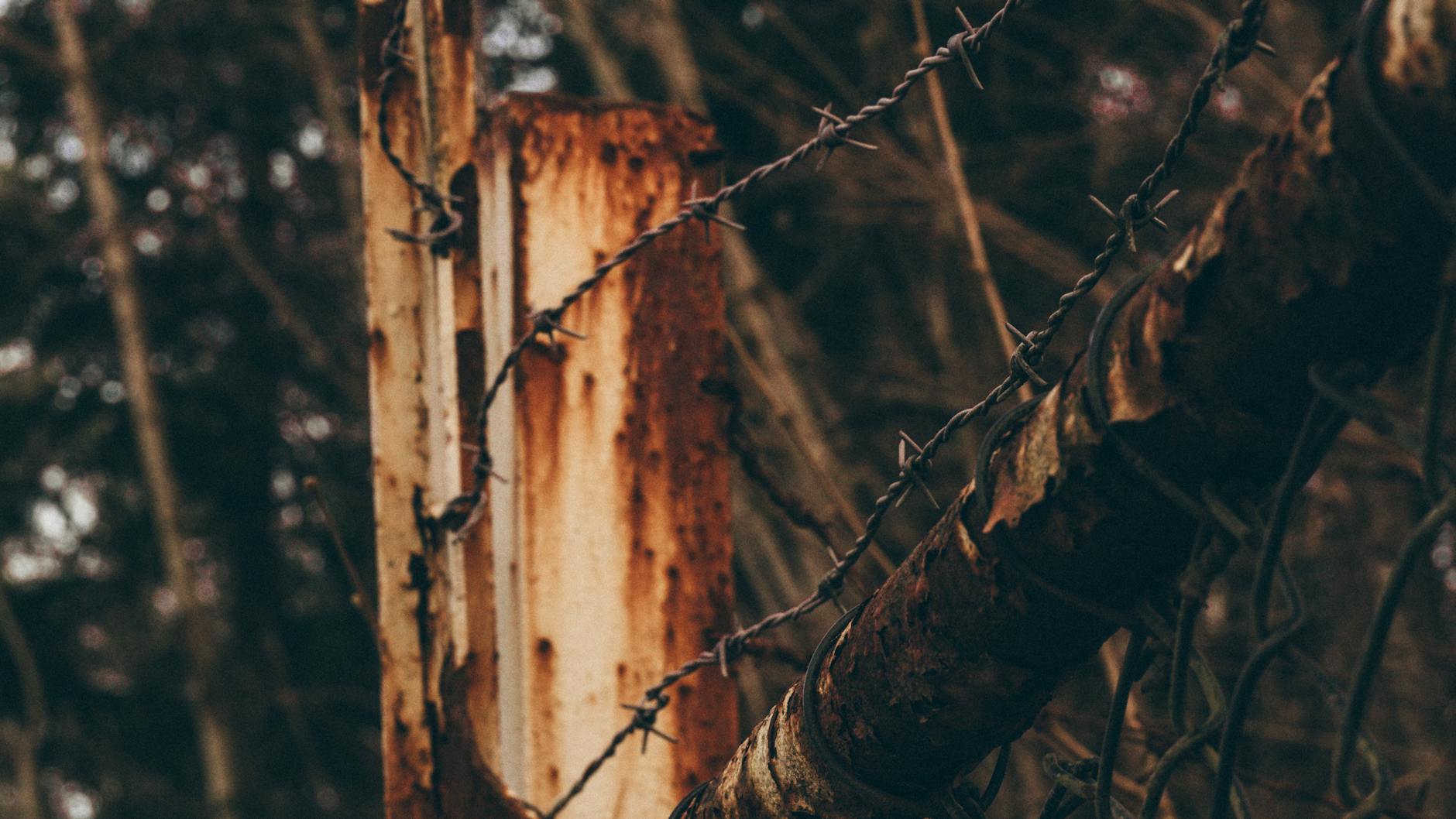
This story is part of the project A Writer’s Shindig. Stephen Bent’s story is the last of 6 short stories written for the project. You can read more about our collaboration and read all the stories posted thus far at A Writer’s Shindig.
I was 11 in 1985. We moved into Forester’s Cottage in early November, when the light went thin, and the trees stood like grey ribs around the clearing. Every winter before that, the streets had been lit by street lamps and rain on concrete, reflecting headlights. Living among these trees was the first time I’d seen real dark. Black featureless nature. A void of light on the really overcast nights.
The cottage had belonged to my grandfather. I didn’t ever get to know him, not really. I remembered boots by the door on the day of the funeral, mud flaking off them like scabs of dried outside dragged in. I remembered silence. It wasn’t like darkness. Silence always had something else in it. Smaller things, in the distance, in the walls.
Inside, the house smelt of damp wood, old stone and older tobacco. Dad propped the back door open while he hauled our boxes from the car, his wheezy breath fogging in the cold like it came from good lungs. I followed behind, hugging a damp cardboard box marked Bedroom. The cardboard had gone soft, and none of the straight edges held their intended lines anymore. The tape curled up the sides, peeling away from the pulpy frame but keeping the flaps in line. I held the bottom just in case.
We unpacked badly. Like men. Boxes slumped half open on the landing; coats hung from bent nails hammered into beams decades ago. Dad’s dad was a rudimentary decorator. Dad stacked tins in the cupboard and wiped dust with his sleeve. In the lounge, a gas fire hissed, trying its best. The smell was round and cloying. It filled the room up to your chin.
My box held my battling robots, lots of socks, some old schoolbooks from my last school, and the little brass compass Mum gave me when we walked the coast last summer. The hinge stuck, but when I pressed the clasp, it sprang open. The needle quivered toward north. I snapped it shut. Mounted on a rectangle of metal with a hole drilled in the bottom. I’m supposed to wear it around my neck, but the string went missing long ago.
That first night, the noisy new quiet pressed against my ears. When it was this kind of silent, even my breathing felt rude. I’d have to work out where it fits in between the fox barks, the owl hoots, the trees creaking and the plumbing groans. I lay awake, listening to the wind rattle the eaves and the gas ticking in the lounge. Somewhere deep in the house, floorboards sighed like someone shifting their weight.
Days blurred, cold and grey. Dad made tea that tasted of mud and disappeared into the woods with maps he didn’t explain; when he returned, he was always tired and short-tempered. The woods surrounded the cottage. Some days, I wondered how he got the car out because the trees were so dense in all directions.
I explored the clearing we lived in cautiously. There were carpets of moss, lying slick on fallen logs. I found many pale mushrooms clustered like tiny hands with little hats on the fingertips. Pools of cold, dirty water could always be found lurking between stones. If you ventured into the shadow, the place changed so fast. Three minutes into the trees, and the cottage vanished behind a crowd of indistinguishable trunks.
When I went to school, I would often sit alone on the bus. Mud on my shoes and a bit up my trousers, the smell of Dad’s cigarette smoke in my jumper. The other kids didn’t speak unkindly to me. They just didn’t speak to me. At all. School was cold. Small and smelled of disinfectant constantly.
We had been in the cottage about six weeks. I had been at the new school for about two years. Dad was drinking before he cooked. That was never a good sign. Burnt liver and onions again. He’d even put some wine in the pan. It made it taste funny. All I said was, “Mum never cooked my food with wine.” He took my plate, which still had most of the meal on it, and poured it into the bin. “She’s not coming back,” he said.
My fork was still paused halfway to my mouth. The last morsel of food balanced on it over the table. He swooped in and swallowed it whole off the prongs. “She left. The stuck-up cow! Wanted something else. Someone else. You’re stuck with ME! That’s just how it is.” He boomed as he chewed my last bite of food. My throat tightened. My belly rumbled. My eyes swelled. The cottage’s walls pressed in.
“You’re lying,” I whispered. Dad’s jaw bunched. “Don’t start. You’re done. Dinner is done. Get upstairs. BEDTIME!” He roared as he reached for the wine bottle.
“Mum loves me. I know she does.” I said as I sloped away from the table. His voice cracked. “Then why isn’t she here?” In a low hum, the sentence trailed off into a pained noise. “Because of you,” I said, and as I spat the sentence out, the words tasted older than me. They smelt of tobacco and wine. He sighed in that way he always did when he’d had enough and conversation was over. “Bed!” he commanded. I did as I was told. I always do as I am told.
Upstairs in that creaky, damp, wonky, stinky bedroom, I curled myself tight in my blankets. Pulling them in so hard against my chest. My hands hurt, and my shoulders set like clay. The patchwork one Mum had knitted for me still had the faintest smell of her washing powder in it. I’m not even sure Dad used washing powder.
I don’t think I slept a wink that night. It was like the floorboards, the owls, and the plumbing were mocking me.
I didn’t ever hear Dad creak up the stairs all night. I kept hearing him moving around. There were chairs, doors, and the tap on the sink making a deep donkey-like groan as he washed something up at two am. But I am sure he didn’t sleep. When I felt brave enough to come down for breakfast, he was still sitting there in the kitchen. The wine bottles were three now. Two big ones and a half-size one. Like a little family. Mum, Dad and me…
He barely looked up when I walked across the stone floor of the kitchen. I rushed to find my plimsolls by the back door because I could feel the cold through my socks so strongly that it felt like my feet were getting wet. I pulled them on and turned back to the kitchen table. He was leaning like a wounded hero in a movie. Holding his side. “Do you want tea?” I asked almost silently.
“Mmmm” was his only reply. I took it to mean yes. So I lifted the kettle from the stovetop and, with both hands, hauled it over to the big porcelain sink. I had to tiptoe still to reach the tap at the back. The whole time, Dad just sat there. Barely moving.
When the kettle was full, I hoiked it back over the edge of the sink. Spilling a little from the movement of the water inside. I carried the heavy steel kettle back to the stove. Passing Dad a second time on my way. I lifted it over one of the burners. A scraping noise rang out as it found the central point over the ring. Placed the hefty container on the iron grid around the rink. “Tea?” I enquired as I reached for the matches. “Dad? Tea?” He looked directly at me as I stood there with the matchbox in one hand and a lone match in the other. His big hands held out before him now silently commanding me to hand over the fire-making tools. I never get to do the best bit of anything.
I placed the matchbox and the lone match in his two palms. He rolled the stick across his fingers and through his knuckles without really gripping it at first. It arrived between his thumb and finger like a magic trick. He struck it hard and short against the rough side of the box. The crack and spark of the match head fascinated me as I watched. For a moment, he held it still. Letting the baby flame grow past the risky stage of an early end. Once we had an assured ‘burner’ on the go, he handed it to me like a tiny torch.
Carefully and with my hand cupped to protect the flame, I made my way back to the stove. I held my palm so close to the glowing bulbous light, hoping to feel more heat than I could bear. But it wasn’t so hot. Once the gas was lit, I searched the fridge for butter and milk. We had enough of both. And the bread bin still had three slices in a Sunblessed bag. The noggin looked OK, but the slices had early signs of blue dots. “Bread’s mouldy,” I muttered and shook the bag so the slices landed on the cutting board. Dad still barely moved. “Dad. The bread’s mouldy. Do you want something else?” He looked at me as if I’d just insulted him. “A bit of penicillin never hurt anyone,” he said, unblinking. I didn’t understand. “Do you need a tablet, Dad?” He held out his hand, but I was unsure of what he was asking for, so I just put my small hand in his. “Are you OK?” He closed his rough, warm fingers around my whole open palm. “Toast those slices, Son. A bit of mould will do us no harm.” I made a face. He didn’t like it. “No harm at all,” I tried to pull my arm away.
“I don’t want to eat mouldy bread, Dad. I don’t want to.” He closed his eyes, like he always did when he was ‘searching for his patience’. “You eat what we have, so there’s no waste, and you get a full tummy, Son.” I knew he was in a mood that could not be resisted, but unwisely, I continued to disagree.
“No. I don’t want to eat mouldy bread.” I pulled my arm from his grip. He looked outraged. “Mum never let the kitchen get like this,” I blurted, looking for words that would have maximum impact. That one didn’t land. He just put his hands on his knees and glared at me. “She’d never let things get into this state,” I reiterated. Dad smiled a threatening smile. “Don’t you mention her again, Boy.” I knew this was a precipice. A cliff edge in the conversation. I just walked out into thin air anyway. “Don’t YOU talk about her. She’s my mum. She’s mine, not yours. Not anymore.” I felt the air leave my lungs, the kitchen, and the world. I could hear a pin drop in that moment. He looked at me like nothing I’ve ever seen before or since. Like the world split in two that moment. There was before. And now we were in after.
Dad’s chair scraped. He rose sharply, but I was already running.
Cold air slapped my face as I bolted out of the kitchen door; I darted across the clearing. In twenty long strides, the forest swallowed me whole. Sharp black branches whipped my arms. Leaves skidded underfoot. Roots snared my boots. But I was not talking to gravity. I was a prey animal in flight mode. I pounded and pounded my feet against fallen leaves and squelchy muddy bits, leaping over twisted fallen branches and heading downhill. Deeper and deeper into the woods. I saw the leaf colours change. The reds and browns darkening to muddy, spotty, wet, half-rotted blacks. The ground tilted.
And then I fell.
 The Quick and the Dead
2 responses to “Trees Grow Around Wire: Part One”
Thank you for posting. Love the image you used too
LikeLiked by 2 people
This is a wonderful story and I’m happy to share it for you!
LikeLiked by 2 people