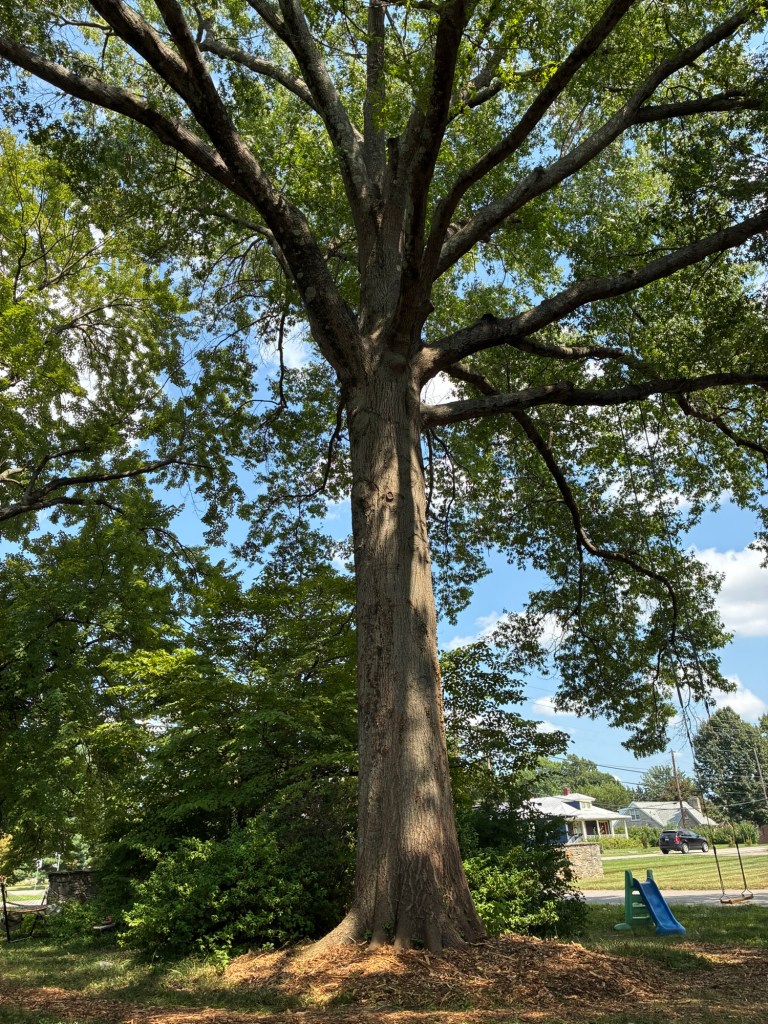
There is a pin oak on my property, a gorgeous giant that spreads out its branches over the whole house. It is my favorite feature, and if I lost it, the devastation stick to me. Its enormous, steady presence is a comfort. I’ve spent many hours sitting under its canopy trying to heal from hurts that linger, and many other hours happily enjoying the sound of the wind in its branches. I can’t imagine how our yard would look without it.
Across the street, there used to be one just like it. I noticed one morning that a tree service was parked along the road, and I heard the sawing and chipping for a couple of hours. Then, I had to run out on an errand, and to my horror, I realized that the crew was not trimming the tree. They were taking it down.
I’m not an arborist. The only thing I really know about trees is that you should hire someone you trust who knows about trees to tell you what is best for them. To my completely untrained eye, my neighbor’s tree was perfectly healthy. It looked nearly identical to mine. It was likely planted at the same time, dual sentinels to the neighborhood. The houses we live in were build in 1968. Nearly 60 years ago. I imagine that all that time, these two trees towered over the roadway.
It looked less than 12 hours to cut my neighbor’s pin oak down to a stump.
I look out my window now, and instead of seeing verdant, protective twin giants, I see my lovely pin oak, and the place where the other once stood.
And my heart just hurts.
There may have been legitimate reasons to cut down the oak. Upkeep on a tree that size is expensive. It might have been damaged or diseased, something I couldn’t tell from across the street. The risk of it coming down on the house might have moved my neighbor to have the tree removed. It might be the case that she is equally as devastated to lose it as I was to see it go.
But my heart hurts anyway. When something beautiful is destroyed, isn’t it supposed to move us to tears?
I can’t unsee the limbless trunk of her pin oak, a momentary monument to humanity’s domination over the earth, stretching upward fruitlessly. A naked tree is an unnatural, unnerving sight. It made me sick to even look at it.
Watching that tree come down over the course of a day filled me with resolve to appreciate what I have. To be thankful for the goodness it brings. To take a moment every so often to truly feel the gratitude, and to experience the majesty. I might be faced one day with the same choice as my neighbor; only time can tell. But if I take care of this piece of earth that has been entrusted to me, perhaps this tree will outlive me.
It was not what she intended to do on a Sunday afternoon, but there she was anyway, driving her ex 3 hours across the state. The radio was on too loudly, as they weren’t talking, and she needed to fill the silence. She queued up a Gorillaz album in Apple Music (she knew he hated it), and as she listened to Del the Funky Homosapien sing about sunshine in a bag, she watched the road. It felt surreal, having him occupy that familiar space, though he had been a stranger for the last 14 months. She resisted glancing over at him. Last time she had, he’d been staring straight ahead too, stone faced, jaw set hard as ice. Ice also described the energy that wafted from him, just a few inches away.
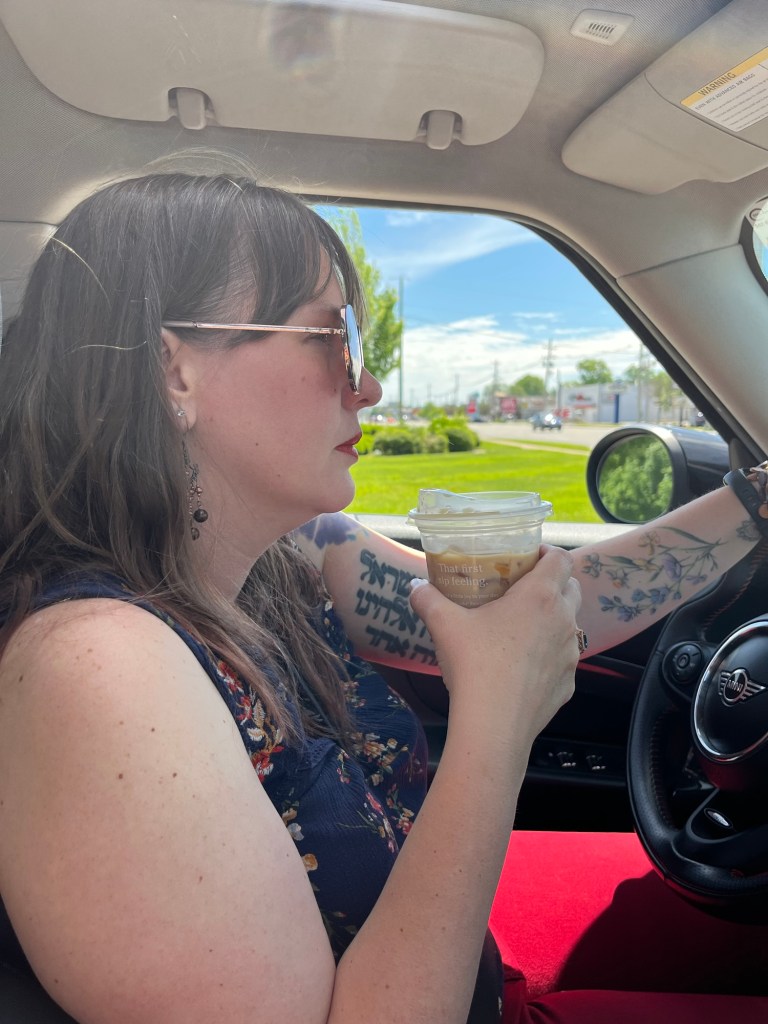
Cold. That’s what he was. Cold as her iced coffee. She put the drink back into the cupholder. Better to drive with two hands on the wheel.
Of all the gas stations, and rest areas, and turn offs on the turnpike, what were the chances that she would have run into him, with a broken down car, on his way to a convention in the same city where she was already headed? A year ago, she would have left him there, waiting for a tow truck as she drove away laughing at his misfortune and the random timing of their encounter. Instead, she had found herself awkwardly waiting with him for a tow truck, and then offering, against her better judgment, to take him with her.
This was her good deed for the day, she decided. Sitting next to this complete asshole, who sat rigid in her passenger seat, clutching his 32 oz Big Gulp against his stomach, as if he couldn’t lower himself to put it in the cupholder of the car she owned. Her eyes started to slide towards him, and she caught herself, flicking her stare forward again. She reached for the radio instead and turned up the volume.
Sometime after she realized how white her knuckles were gripping the steering wheel, she saw his hand move slowly towards the display, and turn the radio down to a reasonable volume.
She cleared her throat. “So, did you ever figure out why fish had teeth on the outside of their bodies?” He was a paleohistologist. There were only a handful of people who dug up fish fossils to look at teeth, and he was one of them. Dr. Daniel Williams. Professor, scholar, sometimes archeologist, and the world’s most royal dick. King of fish bones and male egos. Respected, talented lecturer and researcher, on his way to talk to a bunch of other academics who also dug up fish bones in the desert. Her almost husband. Her reason for leaving her dream job.
And now what was he to her? Just a loser who needed a ride to Philadelphia, who couldn’t even relax enough to put his drink in the cupholder.
She heard him drinking, and wondered what sort of sugared poison he’d chosen. “No,” Daniel said. It was the first thing he had said in one hour and seventeen minutes.
“Too bad,” she said. She turned the radio up again. When he expressed his displeasure with a dramatic sigh, she smiled. But she didn’t look at him. She watched the road ahead of her and counted down the miles.
When the album ended playing about 30 mins later, she reached for the touchscreen, intending to search for something else to play so they didn’t spend the rest of the drive to Philly in complete, uncomfortable silence. She clicked the back button, then Library. Daniel shifted in his seat, and just as she began to scroll, his voice broke into her thoughts about which of her driving playlists would irritate him the most.
“Beth,” he said. Just her name. A whole sentence. A whole year’s worth of emotions. She heard the cracks in it, the way the sand shifted from the bilabial to the fricative. Both sounds voiceless, and yet carrying their entire story.
She looked at him. She couldn’t do it for as long as she wanted, not while driving. The look he wore dug up the love she had buried. Wasn’t that an essential part of his job? The reason why everyone wanted him on their panels about ancient sea life? That ability to dig things up and analyze it had won him grants, awards and accolades. And now here he was again, in her car, digging up her emotions, laying them as bare as any of his fossils in the lab.
It had all gone horribly wrong between them. It started as a friendly competition over who could publish their paper first. She’d spent hours looking at fossilized specimens of leaf spines, and he’d spent an even greater number of hours looking at fossils of fish bones and teeth. She was only looking to confirm what was already common knowledge about the spines of the leaves, cataloguing previously uncatalogued specimens, and analyzing them against existing data. Daniel, however, had been trying to prove a new idea. Her fossils confirmed the previous research, adding to the discipline more examples of the same, more evidence that their understanding of paleobotany didn’t have any major holes. Daniel couldn’t find the one fossil he needed to prove his theory, though. There was still no connection between the squishy, blobby fish and the armored, teeth-on-the-outside fish.
She published first. She won; he lost. And he did not like to lose.
There had been other signs before then that showed her how his temper could spin out of control. He’d never hurt her, but his meltdowns unnerved her. He was a grown man, a scholar, a respected expert in his field. But he couldn’t manage his temper. Fighting over it made it worse. There was no cooling his rage once it got going. It simply had to burn out.
The anger about the paper (which in hindsight Beth knew was really just anger about the gap in the fossil record) had her falling out of love with him as fast as she fell into it. And when she’d called him a child, and followed that insult with “you’re a toothless pedant,” it had been the end. He had walked out the door of her apartment, and had never come back. He ducked her calls, ditched around corners to avoid her, refused to reply to her emails. She couldn’t take working in the same space as him, so she had quit.
So much for the suggestion that they should marry. So much for her dream job in paleobotany. So much for love.
And yet, Daniel was here, in her car, saying her name in the way that he had said it hundreds of times before, looking at her with those same wet eyes he’d had after every single spat. It was his “I’m sorry” face. It was the face she had hoped she’d see when she found him hours ago, fuming over his broken down car at the first stop on the turnpike. The anger had burned off, and what was left was a fossil of their old relationship, showing the grooves of the spine, and the soft impression of the verdant leaf.
“Daniel, don’t,” she said. “Don’t do that. Not now.”
“Okay,” he said. They drove in silence that was thick with things unsaid.
On the final approach to the city, when the traffic began to slow to a crawl, she couldn’t take it anymore. She went into her Apple Music library, but this time, she picked something that she knew he would enjoy. Why he loved Billie Elish so much was a mystery. Not that Beth didn’t like her. It just seemed such a mismatch to Daniel’s personality.
“Tell me how to get to your hotel,” she said.
“It’s the Notary,” Daniel said. “Right next to city hall.”
She laughed and when he questioned her about it, she said, “That’s the hotel I’m staying in.”
Traffic was at a standstill, and now she did look at him, for a long time. She imagined what he’d been doing for the last 14 months, wondering if he ever thought about her, wondering if he regretted leaving. He smiled, and she felt herself melting for him, though she didn’t want to. Not before they both said the things that needed to be said.
“When are you leaving?” she asked.
“Thursday,” he said.
Beth’s coy smile had him blushing, even as he drew away from her by a hair. “Me too,” she said. “Do you need a ride?”
The traffic started to move again, and she had to take her eyes off him. She waited for the reply, which was slow in coming. “Only if you want to drive me back.”
So he would put the ball in her court. Let her have this on her terms. “I’ll drive you back,” she said. “But only if we can talk about what happened.”
Daniel gave a nearly unintelligible grunt, a sound signifying he agreed, even if he didn’t like it.
Had she intended this for her Sunday afternoon? No. But the ice had melted off of him, and she hoped it would slide right off of her too.
Today on Kickstarter, my project Falling Down the Well is live. This new poetry collection explores the emotional spirals that trap us, particularly when we’ve experienced a traumatic loss. The collection is beautifully illustrated by the supremely talented Issa Brown, who has been my friend and creative partner since 2018. Our funding goal is $1000, which we will use for the printing costs of the book.
If you value the writing on this blog, if you have found meaning in my work, or if you like to make sure that cool stuff gets physically put on paper, I invite you to contribute to this project.
For the next few weeks, I’ll be posting short scenes from unfinished stories. Some of these scenes are part of larger works that remain unfinished. Others are a solitary, a single scene from a story that hasn’t come to me in any shape or form…yet.
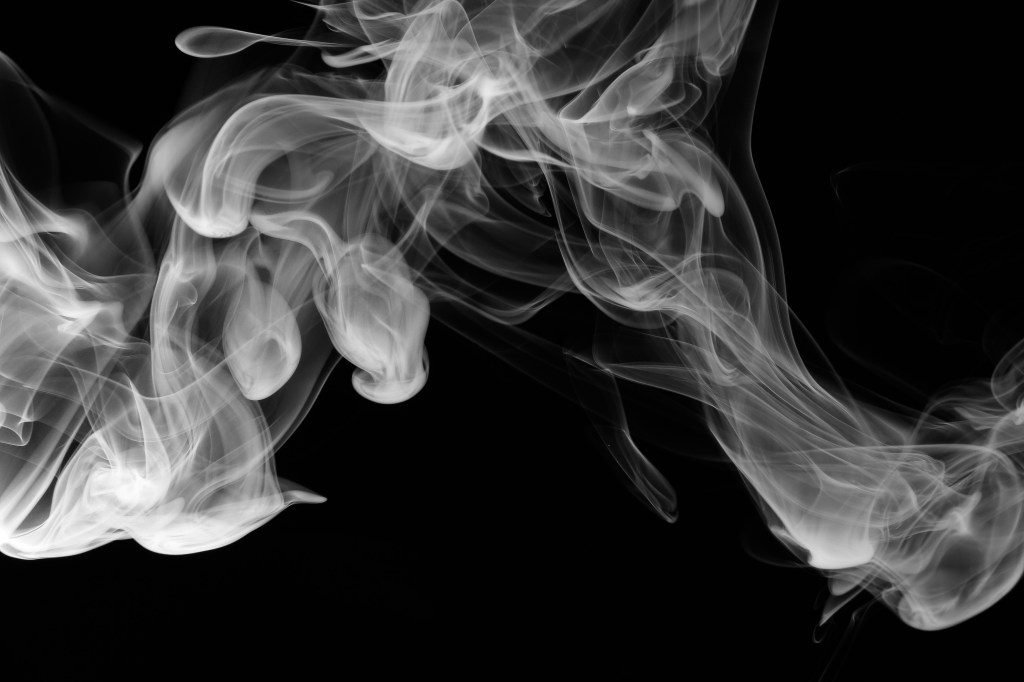
The cup sat on the table before him, and he hung his face over it, willing the smoke from the candle in his hand down into its contents, to dance on the surface of the brown water it contained. The smoke glided up, not down, and he silently cursed for what felt like the hundredth time. He tried again, this time concentrated on the flame, directing it down, down down. Yes, good, this is good, he thought as he watched the way the flame dipped into the cup. The smoke began filling the vessel, but most of it escaped. He doubled his concentration, speaking to the smoke now, and smiled to himself as it started to descend, responding to his command be heavy and his plea show me what I seek.
When the smoke was dancing, swirling, hovering over the water within the cup, he blew out the flame on the taper and placed it on the table. Then he lift the cup to his face with two hands and peered into the smoke, watching how it formed shapes and pictures on the surface of the water, staining the surface of the liquid dark as ink. He smiled as he saw a girl dancing, before she was whisked away by friends, covered in a veil, presented as a bride. A slow chuckle burbled from inside him as he imagined it. He, a novice sorcerer, and her, a girl who kept the geese.
The door of the house creaked open loudly before it banged against the wall. he was so startled that his jump of surprise caused the water in the cup to splash up into his face. He could taste the dirt and the smoke in it as it ran over his lips. He blinked stupidly before looking towards the door, to see his teacher, Hargin, who was a real sorcerer, hauling in a load of firewood. He was grunting from effort as he moved towards the fire place. He spilled the load all over the floor of the house before he got to the place where the few logs that were already inside were neatly stacked. Hargin was muttering as he picked up the logs one by one, huffing and puffing as he placed them into the stack next to the hearth. Then, finally, he turned at looked right at Beagus, sitting at the table with smoke and water and shock still covering his face.
“What did you see?” Hargin asked as he stomped towards the door to close it. The man was huge; Beagus wondered why he hadn’t built a bigger house.
“The goose girl is getting married,” Beagus said.
“To who?” Hargin asked, shutting the door with more force that was probably necessary.
“Oh…” Beagus. He hadn’t thought it anyone other than him.
Hargin put his hands on his hips, and Beagus thought he couldn’t decide if he wanted to laugh or frown.
“Next time don’t use dirty water,” he said. “You can’t see as well if it’s full of dirt.”