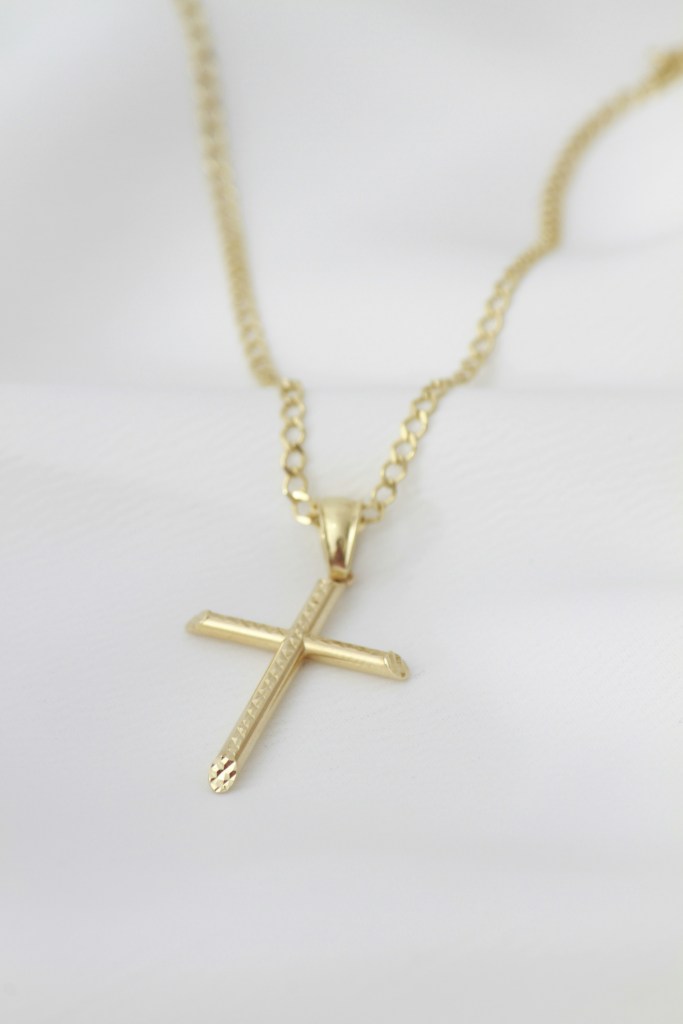
There are moments when my father in law’s absence really hits me. They are coming fewer and further between now, but they certainly still give me a gut punch when they happen. My nephew had a (very belated) graduation party at the baseball park (we have a minor league team, the Louisville Bats) and he was wearing Ron’s necklace. It’s a golden cross on a short chain that he wore everyday. Mason leaning over and it fell out of his shirt and I had to catch my breath. In some ways, it was wonderful to see that piece of jewelry around my nephew’s neck, but it made for a reflective moment of thinking about what could have been, and what Ron might still have done in life had he not died so suddenly.
Then there are the times when I catch one of my kids looking sad to point of illness, and I ask what’s wrong, and they tell me “I miss grandpa.” I know. We all do. It’s in those moments that I wish I had words to put to the kind of grief that we’ve all lived through. But I don’t. How do you sum up the life of a man who had such an impact on the people around him, that the church was packed on a icy January day, with dozens more watching the service streamed over the internet? How do you even begin to describe a hole that big?
I’ve been trying to do just that for a few months now, but I don’t have the right words yet. However, true to the project of this blog, I wanted to share the piece I do have, even though it’s not quite right, and feels cheesy (it’s probably the rhyme. I’m not really great at rhyme without being corny). This is one of those unfinished projects, and idea that might not work out, but I’m okay with it. Can you ever really distill a life down to a few lines without leaving something out?
The title of this post/poem comes from my friend Mark, who, since Ron’s passing, has taken to asking himself “What would Ron do?” in the situations that come up in life in order to help him make a decision about what he should do. If that’s not the sign of a amazing legacy, I don’t know what is. And so, I offer this first, perhaps only, stanza of a poem about my father in law’s work ethic and the mark he has left on people.
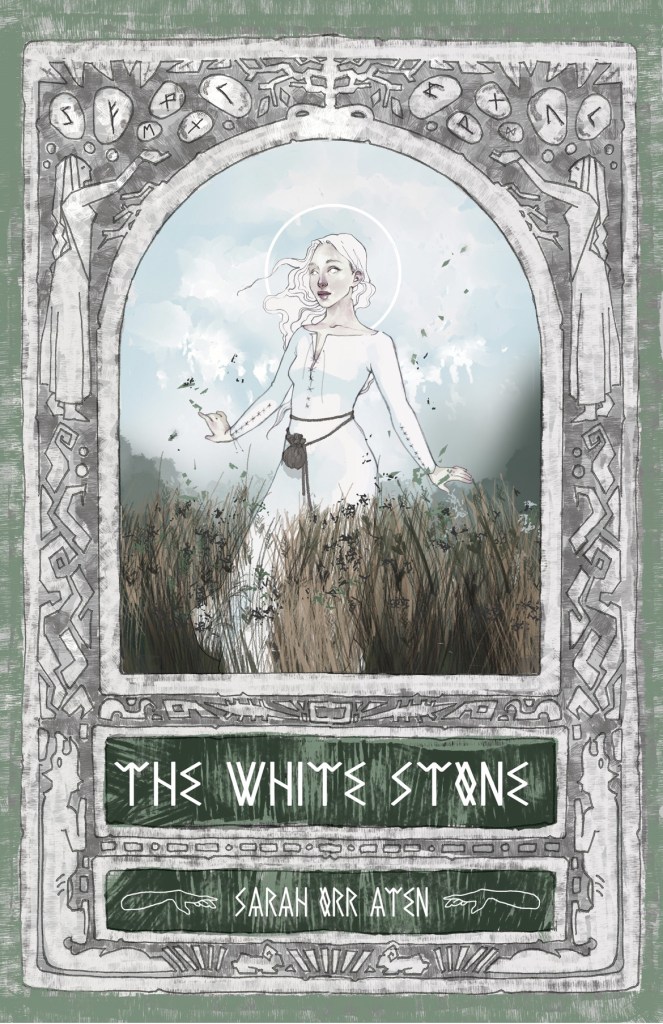
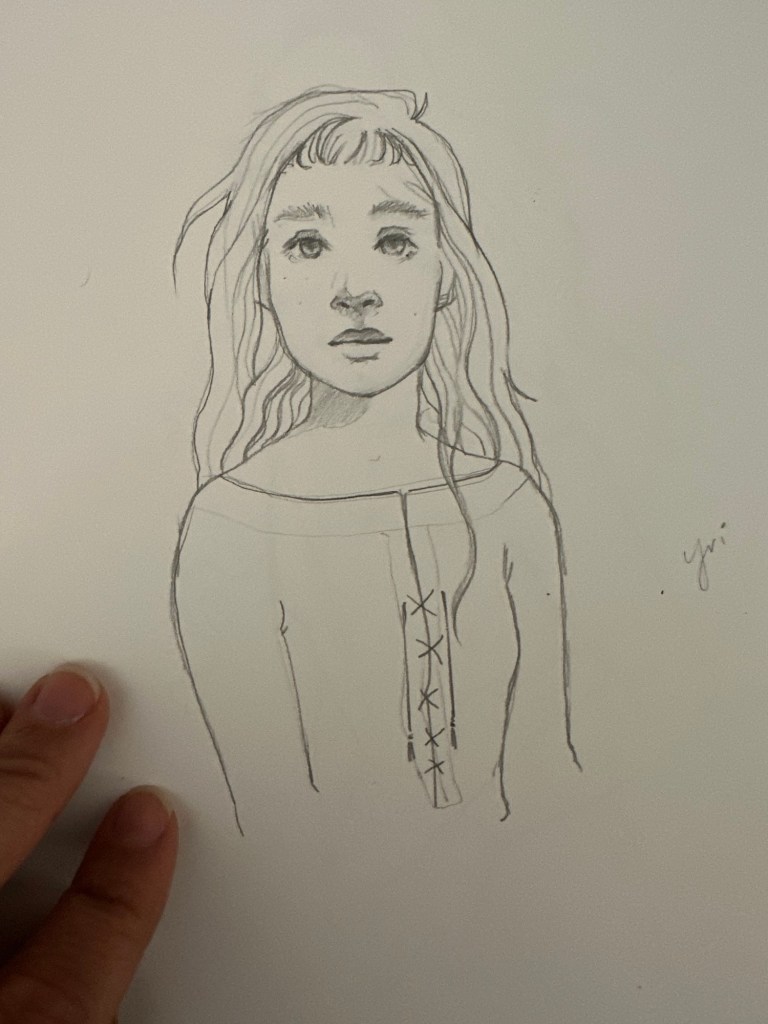
Like many of my projects, I didn’t quite know where The White Stone was going when I wrote the original short story. I have expanded the story world and will be releasing a new book this fall of the same title. The book will tell the story of how Soledge came to be in the situation where we found it in the original short story, published here on the blog, exploring each of the bairns backstories in their own individual chapters. Artist Issa Brown is creating 14 character portraits to be included in the book. She brings a wealth of talent and creativity to this project, and I’m so pleased to be working with her again.
Our goal is to cover our publishing costs. If we receive enough money in pledges, we will print the character portraits in color and we will also do an audiobook. If this project excites, you share it with others who would enjoy reading. Thank you in advance for supporting our work.
I have been spending a lot of my time reading and re-reading the text of Genesis 12-25 as I work on writing my master’s thesis. In the project, I am exploring the family of Abraham, and the many systems within the narrative that create conflict between the characters. As part of my analysis, I have written some midrash for each of the key characters, based on the research I have done and the pieces of the text I want to pull to the forefront. This last piece is about Isaac.
Rebekah, please tell me if I’m not thinking clearly. I want to be righteous, but I feel that I can’t when there are all these questions I have about myself, about my father. Why me, Rebekah? Why us? Why did God choose my father, and why did God choose me over Ishmael? Why am I any more special than anyone else?
I thought, when my father took me to Moriah, that it would be the end of it. My special status would be confirmed to everyone as I went up in flames. The first human offering to God. That is why God waited so long before he opened by mother’s womb. I was a miracle child, and I would become a witness to God’s loyalty in the fire. I would be made a sacrifice so that my father would be seen as the holiest of men. And in some way, I too was to be made holy because of my death.
But this is not what God wanted from either of us. It was only a test. It tested my father’s faith, but I think it also broke him in some ways. As for me…I feel betrayed by it. Betrayed by my father, and betrayed by God. How could this thing be asked of either of us? Why would my father ever have agreed to take me up that mountain at all? Is it because I was special, or was it because I was replaceable?
You frown! I knew I should not be thinking these things. Tell me, please, is there another way I should feel about all this? I have thought about that moment every day since it happened, how terrified I was, but how I also saw no way out. And I thought of my brother, and Hagar, living in the wilderness. I thought of my mother, and what she must have thought when we were packing up the camels. I thought of the servants, who would wonder why I had not come down the mountain afterwards, and what my father would say to them. I thought, with horror, that no one would know how holy I was to become if no one was there to witness my death!
Don’t turn your head from me, Rebekah! I can see that this distresses you, just as it distresses me. But I must know, if my father was willing to kill me to prove his faith, does that mean I was born, chosen by God, so my father could be seen in this light? Or is there something else that makes me chosen? Some other quality within me that I simply cannot see? Or is it only the fact that I am Abraham’s son?…or perhaps, is it that I am Sarah’s son? Is she the one who was special, and we just never knew it? Don’t laugh at me! Please Rebekah, if you love, tell me the truth. What do I have that no one else does? Why am I singled out? What is it about me that makes me worthy?
I can see that you do not have any more answers for me than I have for myself. I think, now that my mother has passed, I will need to find Hagar and Ishmael. I should ask my brother about these things. Perhaps he has some insight into my father that I cannot see, and will never see after the events at Moriah. Yes, I need to find my brother. I need to understand why neither one of us is as important as our father.
I have been spending a lot of my time reading and re-reading the text of Genesis 12-25 as I work on writing my master’s thesis. In the project, I am exploring the family of Abraham, and the many systems within the narrative that create conflict between the characters. As part of my analysis, I have written some midrash for each of the key characters, based on the research I have done and the pieces of the text I want to pull to the forefront. This week I share my thoughts on Hagar.
The midwife who had attended me was packing the diaper-like undergarment with old bits of cloth when Sarai came to see the baby. I was exhausted and wanted no visitors, but I could not refuse my mistress. She came into the tent without asking, nearly frantic. Her eyes shimmered with tears as she came, leaning her aged face over me to see my son. My son. I felt the stirring anger grow hotter as she cooed over the infant laying on my chest. The only reason she was here was to see the boy. I was nothing to her. She hadn’t considered what I wanted at all.
The midwife finished adjusting and jostling me, working around Sarai’s imposing frame without comment. I gritted my teeth as she pushed down on my belly once again, feeling for my womb, making slightly approving mutterings as she palpated me. I felt another gush of blood between my legs. Sarai didn’t notice my discomfort or my indecency. She didn’t seem to notice me at all. She was weeping openly now, eyeing the baby. My baby.
When she reached for my son, I did something I knew I should not do, something that I could never take back once it had been done. When she reached for my son, I clutched him to myself, so she could not take him. When she reached for my son, I turned my body away from her, so she could not even see him.
I peered over my shoulder at her. The joy melted from her face, replaced with surprise, sternness following on its heels. “Let me hold my son, Hagar,” she instructed me.
I did not think. I did not know how the next words I spoke would impact my future, and the future of my boy. I could not do anything but defend myself and my baby from Sarai’s overreaching, indifferent dismissal. I did not think. I spoke only the truth in my heart. “He’s my son.” I could feel my scowl deepening as Sarai pulled back from me. I saw it reflected in her own expression back to me.
“Hagar,” she began, perhaps thinking to chastise me for my insolence. But she did not have the chance before we were interrupted by a commotion outside.
Abram came into the tent, much to the surprise of everyone present. Such a thing was not done. It was a defiance of custom, an unraveling of the sacred space of birth. But Abram, bursting through the tent flap with a joyous sound looked as if custom and norms were the last things on his mind. “My son!” he called out I could hear men outside the tent, calling for Abram to come out. “Let me see him!” he said to me, as he rushed to where I reclined.
Too shocked to disobey him, as I had moments before disobeyed my mistress, I offered the boy to his father, who snatched him up into his arms, as he was crying and praying aloud and praising his god. As I watched him, my own eyes stung with tears because of what I knew to be true. The boy was not mine. This boy belonged to Abram. No one would care who the mother was. No one would care that it was me who finally gave Abram what he desired most. All they would see is that Abram now had a son.
My eyes slid to Sarai, whose joy was now gone as she studied her husband with the baby. Though she didn’t speak to me, didn’t so much as look at me, I could tell that her thoughts were similar to my own. This baby did not belong to either of us. This baby was Abram’s.
And I saw her displeasure as clearly as I felt my own.
I have been spending a lot of my time reading and re-reading the text of Genesis 12-25 as I work on writing my master’s thesis. In the project, I am exploring the family of Abraham, and the many systems within the narrative that create conflict between the characters. As part of my analysis, I have written some midrash for each of the key characters, based on the research I have done and the pieces of the text I want to pull to the forefront. This week I share my thoughts on Ishmael.
When my mother laid me under that bush, to cool me from the scorch of the sun, I thought it was where I would die. Indeed, I wanted to die. My father had cast me away, listening to the voice of her first woman, Sarah. She did not like my mother, though they had tolerated one another all my life. But when my brother was born, we all could see how Sarah retreated into herself, becoming almost obsessed with protecting the boy from any danger. I guess he saw me as a danger too, and that is why she was eager to be rid of me.
I loved my brother! If I had known that my happiness at the feast would have been my undoing, my exile, I would have pretended indifference. I would have acted as my mother did, dutiful, grateful, but never warm, never loving. I loved my father, but my mother did not. Though I know he loved me, I don’t think he ever thought of my mother. That’s why it was easy for him to throw her away. But I never imagined he would throw me away too.
As I laid under that bush, thinking of my father, and all he had taught me, I could think of nothing to do with the pain that grew in my chest other than cry of to God—God, whom my father had taught me about, to whom my father had taught me to pray. I called out to God, crying out for death, begging to be taken from the pain of my father’s rejection. I called, and God answered me.
At first, I thought I was delirious from the heat, and from dehydration, and from fatigue. I saw the angel speaking with my mother, and I saw the spring gush from the rock. My mother filled the water skin and hastily brought it to me, forcing it down my throat. The angel stood by for a moment, watching. He did not speak to me and I did not speak to him. But I saw his flaming eyes, and I knew that God would not grant me death. No, God would grant me a new life. God would rescue me.
I have lived in Paran since then, away from my father and my brother. I heard when Sarah died, but I did not visit them. I heard when my father married again, but I was not invited to the wedding feast. I heard that my father had more sons, and that like me, he sent them away from him, so they would not share his wealth with Isaac. I do not understand these things. My father has forgotten everyone but Isaac. I wish I could also forget my fondness for him. It lives in me still, but I wish it would burn out.
But I have never forgotten my father’s God, the one who heard me and saved me.
I have been spending a lot of my time reading and re-reading the text of Genesis 12-25 as I work on writing my master’s thesis. In the project, I am exploring the family of Abraham, and the many systems within the narrative that create conflict between the characters. As part of my analysis, I have written some midrash for each of the key characters, based on the research I have done and the pieces of the text I want to pull to the forefront. This week I shared some thoughts about Abraham.
I have sent my sons—your brothers—away.
Lot, my brother’s son, whom I would have kept as my own, had I been able to—Lot was lost to me before he was destroyed in Sodom! I sent him away too, thinking it was best, thinking it was for his good and for me. I had need of him, but I also had a promise from YHWH. I did not think that I would lose him forever. I had hoped that we could reunite.
Your brother Ishmael—he pained me the most. For years before your birth, he was the joy of my household. The son whom I loved. The son of my body that YHWH promised to me—I was sure of it. But then your birth was foretold to me, and your mother birthed you through a miracle. I was happy, Isaac. I was happy to have you as well. But I loved your brother Ishmael, don’t you see? He is also my son. And Sarah and YHWH took him from me. I sent him away from my household. What kind of father am I?
And then, I shudder to think of it—the way I assumed YHWH would also take you from me—as Lot and Ishmael had been taken. And I didn’t even protest! I did not complain or question. I took you to Moriah, and raised a knife to slay you! What kind of father does these things? Don’t comfort me! I am ashamed of my weakness. I did not have the strength to save you from death, as I could not save my other sons.
But for you, Isaac, I have sent my sons, your brothers, away from me. I had to—don’t you see? I am a danger to the ones I love. There is no one YHWH cares about more than you. Everyone else is expendable—Lot, Ishmael, Hagar, even Sarah! Why would it be any different for Keturah and your brothers? It was to protect them that I sent them from me. If they are not part of my household, they cannot be part of this covenant that was made.
Now, promise me Isaac! When I die, take me to where I buried your mother. Lay my bones beside her bones in the cave I purchased to be her grave. Let me be reunited with her, my wife, my sister, my kin. She was right to leave after I took you to Moriah. I wish I could have told her what we saw there. I wish she would have understood what I had been through. I wish I hadn’t treated her the way I did.
But it is too late for me now, Isaac. My eyes close and my life nears its end and I have many regrets, many amends to make yet, that will never be made. Make them for me. Find your brothers that I sent away. Reconcile yourself to them, do not carry on the harms I have done. Do better by your own sons. Make a life worth living, one that does not end with thinking of all the harm you’ve caused the ones you loved. Don’t repeat my mistakes, Isaac! Follow God, but fight with God too. Fight for yourself and what you want. And teach your sons to do the same.
I have been spending a lot of my time reading and re-reading the text of Genesis 12-25 as I work on writing my master’s thesis. In the project, I am exploring the family of Abraham, and the many systems within the narrative that create conflict between the characters. As part of my analysis, I have written some midrash for each of the key characters, based on the research I have done and the pieces of the text I want to pull to the forefront. This second story is from the perspective of Sarai/Sarah, Abraham’s first wife.
My husband must have a son. I repeated this to a myself as I approached her tent, a mantra that armored me against the sinking reality that had plagued me all my marriage—YHWH had closed my womb. Every moon, when my blood flowed, it was as if my very life was flowing out of me. I hated the sight of it, the constant reminder that there was no child in my womb. The reminder of what every woman dreads—that she is of no value to her husband. Abram knew I was of no value to him, which is why he had tried to adopt Nahor’s boy, why he had tried to give me away to Pharaoh, and why he has chosen Eliezer as his heir.
My husband must have a son, I thought again, for the thousandth time that morning. The wrinkles on my hands as I pulled back her tent flap were a stark reminder to me that I was old. Abram is even older that I. But he came back from his communion with YHWH—full of strange visions and stranger talk of descendants enslaved, speaking about how the generations after us will inhabit this land in which we are only wanderers. What descendants? I could laugh if I wasn’t so sick from the words. There will be no descendants for Abram! Not unless he has a son. And his time is surely running short.
My husband must have a son. These words were my armor against the indignation I knew she would feel. I thought of how I would not want to be used in such a way, as I had not wanted to be used by Pharaoh, but I did not see another way. I entered her tent and inside my eyes could not see for the darkness. “Hagar,” I called into the stillness.
“Yes?” I heard her voice, soft, sleepy, as if she had already been worked too hard, though it was only just now dawn. The thing I was going to command of her might be more than she could bear. I pitied her, but only because I also pitied myself. But she would be my redemption, just as I had been hers when she was cast away.
I squinted into the darkness of the tent, my eyes adjusting to the dim light. I found her sitting in the corner, looking as if I had awakened her. I had not thought of the hour. I had been up all night, ever since Abram had come back home, telling me of his vision of the smoking pot and the torch passing between the pieces. “Hagar, my husband must have a son,” I said to her.
I could see her face now, and she stared at me blankly, as if she hadn’t heard me, or as if she did not understand. It angered me; she was not a stupid girl. That’s why I had picked her for this task. She would understand the severity of our situation. She would understand, and she would do this for me, since she also knew what it was like to be worthless. I had taken care of her when she had been handed to me, and I had been good to her. Surely, she would know that I asked her this out of desperation. But she looked as if she did not know at all. “Did you hear me?” I said, my voice nearly trembling from my nerves and the unfairness of it all.
“Yes, Sarai, I heard you,” she said. But she did not move from where she sat. She did not even smooth down her mussed-up hair. She only stared at me, not defiantly, but blankly, as if she did not care. I could have chewed on the silence that settled over us, it was so thick. I raised my chin, and straightened my back, trying to appear as tall and proud as I could, even though inside I felt small and weak. She caught the slight gesture of my superiority. She lowered her eyes.
“Look at me, Hagar!” I snapped at her, feeling the age in my bones, and the pressure of the years of my barrenness, as I drifted in my unhappiness. “Does it look like I will be the one who will give Abram a son?!” But Hagar did not raise her eyes to meet mine. Even this girl—enslaved, cast off from her house of birth, discarded from her land for my sake—even she knew that I was nothing.
Hagar clenched her jaw in anger at my outburst, which only angered me more. What did this girl know of anger? What did she know of pain? I knew then that this thing would set a wedge between us, one that would split us apart forever. But my husband must have a son. I told myself this because every other path he had tried had failed. Short of a miracle, this was the only way.
“He will come to you tonight,” I said. Hagar did not acknowledge my words, but I did not berate her for it. There was no point. She did not have a choice. Neither did I. We had been pressed into this predicament by YHWH and Abram. What else was I supposed to do?
I departed from her tent feeling ill, the creeping sickness stymying the few tears I had left.
I have been spending a lot of my time reading and re-reading the text of Genesis 12-25 as I work on writing my master’s thesis. In the project, I am exploring the family of Abraham, and the many systems within the narrative that create conflict between the characters. As part of my analysis, I have written some midrash for each of the key characters, based on the research I have done and the pieces of the text I want to pull to the forefront. This first story is from the perspective of Lot, Abraham’s nephew.
My uncle Abram has been good to me, but I can’t continue to live in his household. Though he was obligated to take me in when my father died, he didn’t have to be kind to me. Yet he was. He gave me everything. I was his chosen heir, since he had no son of his own.
But I always knew that I wasn’t enough for him. Every year that his wife, my aunt Sarai, grew older, every year that she did not produce a child of his own body for him—I saw how it weighed on him. He only wanted me because I was the next best thing. He would not have chosen me at all if it were up to him.
I knew this from the time we left Ur, and I knew this when we left Haran. I even knew this about him when we went from Canaan down to Egypt because of the famine. I knew that in his heart, he only took me with him to secure his legacy. He was a rich man, and he was concerned about the future of his name. He was obsessed with that promise that YHWH had made with him. When he looked at me, I knew that he did not want the descendants to come through me. For I am Nahor’s son, not Abram’s. He knew this, though he never said so aloud.
Your great-uncle Abram was a trickster, my girls, and when we went down to Egypt, he played a trick on all of us. He said he was afraid for his life because of your great-aunt’s beauty. He told a lie, that wasn’t really a lie, to save himself. “Tell them you’re my sister,” he said to my aunt. “Tell them that you’re my sister, so I will be spared.” Girls, you must understand, my aunt was a beautiful woman, but there was no indication that my uncle’s life would have been forfeit because of her. But he told this lie anyway, because it was partially the truth. Yes, it is true, girls. Your great-grandfather Terah was the father of them both. You may sneer, but this is how things are done in our family. One day, you will understand.
So Abram sold Sarai into Pharaoh’s house, because he was afraid. I have no doubt he was afraid, but I don’t think he was afraid for his life. I think he was afraid that if Sarai remained his wife, that he would die without a child of his own body. He tried to be rid of her, which means he tried to disown me.
Don’t look so shocked. Doesn’t it make the most sense? You girls do not know uncle Abram, and his obsession with the things YHWH has spoken.
He tried to disown me, right before my very eyes, by giving away his wife. And so, when we left Egypt, with all the sheep, donkeys, goats, cattle, servants and slaves in tow, taking Sarai with us away from the house that had been struck with plague on account of her mistreatment, I decided I would disown him before he could disown me. Sarai was barren, and she was old. What would happen if she died, and he took another wife, who was not barren? I stewed over this thought, raging over it so that my anger spilled out of me, infecting my herders, who in turn fought with uncle Abram’s herders. He knew I was unhappy, that I had been unhappy since we went into Egypt, and so he came to me to settle the dispute.
“Let us separate,” he said, “If you want. We are kinsmen, we should not quarrel.” But all I heard was “go.” So I went, and I took my flocks and my herders and I came here to Sodom, where the people do not listen to Abram’s god. Abram thinks his god has chosen him over everyone else on earth, and it shows in the way he treats others.
The next day, Annie was not working and Eden wished that was not the case around 11:30, when Meg walked into the coffeehouse with another guy. It was nearly shocking. Meg’s entire demeanor was different. She was not smiling. Her hair was not shining. She was not glowing from happiness. She looked tired, old and mean, even though she was wearing the same kind of sharp outfit complete with blazer and heels that always adorned her. Even her earrings seemed to have less life in them, as they dangled around her face.
“Hey Meg,” Eden said as she approached the counter. “You want the usual?”
Her eyes when wide at the question, and before she could answer, the man she was with looked at her curiously and asked, “The usual?” He was a whole head taller than Meg. He had graying curly hair and a very trim beard. He looked like an aging villain from a Saturday morning cartoon. Handsome, yet ominous, smiling but in a dangerous way. Meg seemed to shrink away from him when he spoke to her.
“I come here a lot for work,” she said, brushing away his inquiry. “The usual is fine,” she said to Eden.
Eden wished she could pass her a note. Meg was clearly in distress with this man. Why didn’t they have something like an “angel shot” on the menu, only known to those who used the women’s bathroom. She wondered if she mentioned it, if Meg would pick up on what she was asking. Instead, Eden just stared at her for too long, smiling, waiting for her to say anything, or suggest anything, or ask for anything else from her. When she didn’t, Eden very slowly turned her attention to the man. “And what can I get for you?” she asked.
“The usual, I guess,” he said. He was smiling, but Eden could see the way it made Meg shudder. She stepped out of the way so that man could pay and Eden’s eyes went to the man’s left hand, where she saw a plain gold wedding band. Her stomach dropped. This man must be Meg’s husband.
“Anytime else?” Eden asked, trying not to let her voice waver. She glanced at Meg, who just looked away from her, and crossed her arms. She looked like she was on the verge of tears.
“No,” the man said. And he sounded rude when he said it.
Eden made the drinks and passed them over to the couple. When they left the counter, she immediately pulled out her phone and texted Annie. She’s in here with another guy.
Meg? Annie’s reply was instant.
I think it’s her husband. I don’t like him. I don’t think she likes him. She furiously typed out all the details, sending about 12 messages in a row before she finally ran out of things to say about it. She chewed on her thumbnail as she tried to watch the two of them surreptitiously. They were arguing in hushed tones. The man had a folder full of papers that he was flipping through, pointing things out to her as she shook her head. Eventually, Meg got up from the table and headed towards the bathroom.
She’s going to the bathroom. I’m going to follow her and ask what is going on.
Annie sent a thumbs up emoji with the words Good choice. This guy sounds like a prick.
Eden waited about a minute before she started to move. “Wendy, I’m stepping away,” she called to the back room, where her coworker for this shift was organizing the delivery from that morning. Eden marched to the bathroom and nearly threw open the door in her haste to find out what was going on with Meg. When she entered the bathroom, she heard the crying, but it quickly stopped.
She was in one of the two stalls. Eden didn’t even pretend like she needed to use the unoccupied one. “Meg?” she asked softly.
The sniffling stopped, but she didn’t answer. After about a minute of uncomfortable silence, the stall door opened and Meg emerged, wiping away her tears with a wad of toilet paper. She looked at Eden with desperation, but the words that came out of her mouth were, “It’s okay, Eden. Don’t worry about me.”
Eden wasn’t going to let her back away though. “It’s not okay,” Eden said. “I can see that. I’ve never seen you look…like this,” she said, gesturing at Meg. “Do you need to call somebody? You want me to get the police to get him out of here?”
“No!” Meg said. She looked horrified, but only for a moment, before it melted into a smile. “No, Eden, I don’t need that. Although, I really appreciate you looking out for me.”
“Of course,” she said. She was confused, but she was just going to let the situation play out. “I wanna help, if I can. What can I do?”
“Well,” Meg said, moving to the sink and starting to wash her hands. “You can let me finish signing the divorce papers, so that he can get out of here.” She finished washing, and pulled a paper towel from the dispenser. She looked right at Eden, and she could see that beautiful, bright smile, the one she had when she was with Park, trying to spread across her face. “I love that you came in here to check on me.”
“I…I had to,” she said.
Meg nodded. “You’re a really sweet person,” Meg said. She threw the paper towel away and moved around Eden towards the door. “Hopefully this won’t take long.” She left the bathroom, leaving Eden with too many questions.
She pulled her phone out of her smock. It is her husband. They’re getting divorced.