They said it wasn’t a real bad stroke, but it must have been bad enough because Mrs. Mabry didn’t come down to the grocery store after that. But that didn’t mean I never saw her again. Now that I knew where she lived, me and Momma went to go check on her, just like we were used to checking on Mr. McCaffree. ‘Course, we had to take the car to where Mrs. Mabry lived, it was too far on foot. But we went once a week to take her some groceries and make sure she had what she needed. She could get around the house alright, but she had trouble with stairs and one of her arms didn’t work so well. Other people went to check on her too, since she didn’t really have nobody. That’s just how folk are around here.
About three months after she came home from the hospital, Momma and I pulled up the house just before dark. I was raining and the storm was getting worse. The mud was sucking at my boots even though I tried my best to avoid it. The paper bags got all wet and I was afraid the canned goods would spill out the bottom all across the yard. By the time we had finished taking the groceries inside me and Momma were both drenched. I felt wet right down to my bones.
Mrs. Mabry couldn’t talk too well, but she always tried. It seemed to tire her out some days. I learned kinda quick how to recognize when she was just bone tired. The rain seemed to be sucking all her pep out of her that day. She just sat in her rocking chair watching me and Momma put the groceries in the fridge and cabinet. She didn’t say nothing as we worked, just watched with a steady gaze. When we were done I went out to the living room to sit on the couch while Momma tidied up a bit.
Sometimes Mrs. Mabry got her paper pad and wrote things down for us, little instructions that she didn’t want to struggle through trying to explain. She still sounded a little like she had marbles in her mouth. She was looking at me with kind of a funny look as I waiting for Momma. She reached to her end table, which was draped with a lace doily that looked like it hadn’t been washed since she put it on the table top, and picked up her pad of paper. It was one of them yellow legal pads. She scratched out a note with her dull pencil and passed it over to me.
I didn’t know when I told you to come visit that you’d be visiting me a lot. I stared at the words for bit, not knowing what to say back to her. I raised my eyes, and she was giving a smile that only raised half of her face. “Why’d you invite me?” I asked, thinking back on that day in the grocery store. She had looked so mean and cruel and scary, not at all like the frail old lady who sat across from me, smiling as best she could.
“Lonely,” Mrs. Mabry said, the single word crawling out of her like a inchworm. It crawled up inside my heart and I felt it trying to find a home there. Lonely.
“Did you think I would come, when you asked?” I had been almost sure it wasn’t a real invitation at the time, but I had been so curious I didn’t care.
There was suddenly a twinkle in her eye. “I hoped,” she said. Then she gestured for the legal pad. I handed it back to her and she slowly scrawled another sentence underneath the one she’d already written. I waited, the scritch-scritch of the pencil the only other sound in the house other than Momma humming while she tidied. Mrs. Mabry handed the legal pad back to me. The word nearly stopped my heart, but not stopped it cold. Almost like, it stopped it warm, if that makes any sense. Like my whole heart was ready just to burst with something that felt good that I couldn’t identify. Pride, or maybe joy, or perhaps even love.
You remind me of me when I was young.
I looked up at her and I smiled a big smile. “Will you tell me about it?” I asked. I handed the legal pad back to her.
Getting a Masters in Religion, especially since I focused on Biblical Studies, has filled my head with a number of things that I would love to hear and say from the pulpit. Hard topics are not typically the ones that get preached, but it is the hard topics that captivate my imagination the most. What if instead of giving easy answers that always point towards the fulfillment of scripture in Jesus’ ministry, we really let people wrestle with the text, the way Jacob wrestled all night, and was wounded for the rest of his life because of it? What if instead of always coming back to the same ideas of grace, mercy and love, that we recognized without our scriptures are stories that we can easily use as proof to do the opposite? I have no idea if I will ever get to share these ideas in a more public way, but it feels right to voice them nonetheless.
Hagar and Sarai (Gen 16)
Can we stop looking at this text as if one of the women loses and the other gains? I don’t see anyone in this story gaining anything other than a complicated mess. If we push past the tendency to pick a side, I think we can see that both women are trapped in systems that do not benefit either one of them, and these systems also prevent them from working towards their mutual good.
Samuel and Eli (1 Sam 3)
Can you imagine being a child and having to tell Eli, the priest of all Israel, that his sons are so corrupt, and that it reflects on his leadership? Do you hear the quaver in Samuel’s voice when he tells Eli that he will be replaced? Do you feel the weight of the words he speaks, a small voice given authority to speak the truth to a mighty power? And what is Eli’s response? “Let it be.” What a perfect example of humility.
Vashti (Esther 1)
Vashti said no. She said no to being used, to being a tool for the powerful, to being a plaything for her husband and his friends, to be a possession to prop up his ego. She said no despite what it would cost her. How brave.
The Woman Healed from Her Flow of Blood (Mark 5)
The desperation that drove this unnamed woman to touch the hem of Jesus’ garment must have been so powerful, that the story made a remarkable impression upon the writer of the text. Her story interrupts the story of a man asking for healing for his daughter. Her story represents the millions of people who live with chronic illness and yet somehow must live their lives. That Mark includes a case of healing from gynecological disease should give us hope that the gospel is powerfully inclusive. Jesus’ ministry includes women’s and reproductive health. Are we preaching the same kind of gospel?
The Faith of the Father of a Demon Possessed Boy (Mark 9)
Asking for a miracle for his son, this unnamed man utters “I believe! Help my unbelief.” And isn’t that a wonderful five word summary of the whole journey of faith?
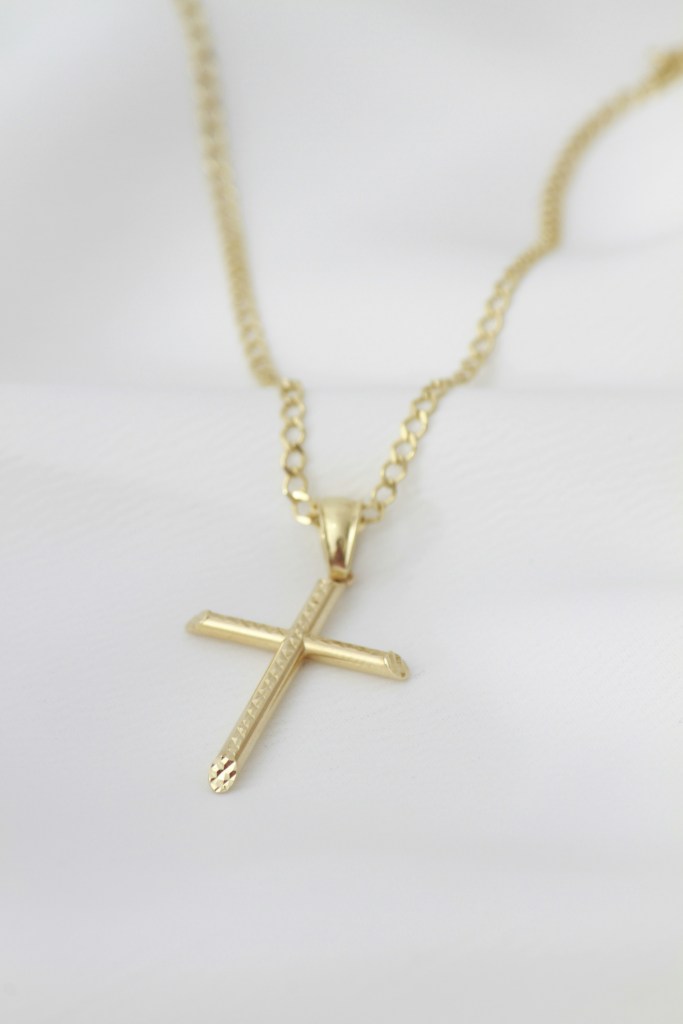
There are moments when my father in law’s absence really hits me. They are coming fewer and further between now, but they certainly still give me a gut punch when they happen. My nephew had a (very belated) graduation party at the baseball park (we have a minor league team, the Louisville Bats) and he was wearing Ron’s necklace. It’s a golden cross on a short chain that he wore everyday. Mason leaning over and it fell out of his shirt and I had to catch my breath. In some ways, it was wonderful to see that piece of jewelry around my nephew’s neck, but it made for a reflective moment of thinking about what could have been, and what Ron might still have done in life had he not died so suddenly.
Then there are the times when I catch one of my kids looking sad to point of illness, and I ask what’s wrong, and they tell me “I miss grandpa.” I know. We all do. It’s in those moments that I wish I had words to put to the kind of grief that we’ve all lived through. But I don’t. How do you sum up the life of a man who had such an impact on the people around him, that the church was packed on a icy January day, with dozens more watching the service streamed over the internet? How do you even begin to describe a hole that big?
I’ve been trying to do just that for a few months now, but I don’t have the right words yet. However, true to the project of this blog, I wanted to share the piece I do have, even though it’s not quite right, and feels cheesy (it’s probably the rhyme. I’m not really great at rhyme without being corny). This is one of those unfinished projects, and idea that might not work out, but I’m okay with it. Can you ever really distill a life down to a few lines without leaving something out?
The title of this post/poem comes from my friend Mark, who, since Ron’s passing, has taken to asking himself “What would Ron do?” in the situations that come up in life in order to help him make a decision about what he should do. If that’s not the sign of a amazing legacy, I don’t know what is. And so, I offer this first, perhaps only, stanza of a poem about my father in law’s work ethic and the mark he has left on people.
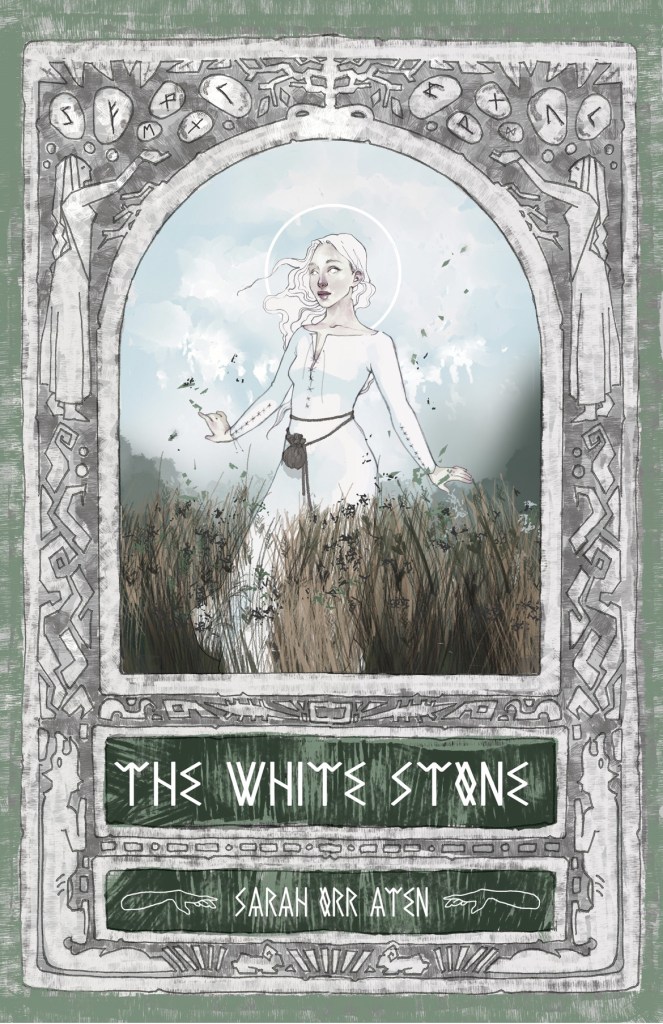
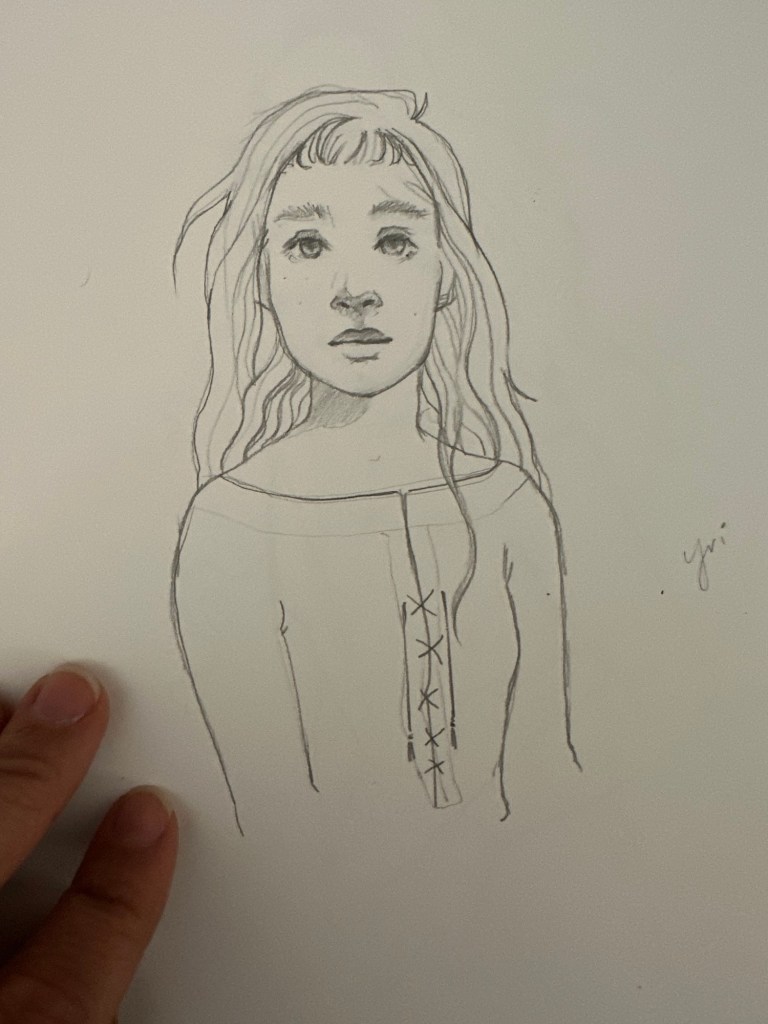
Like many of my projects, I didn’t quite know where The White Stone was going when I wrote the original short story. I have expanded the story world and will be releasing a new book this fall of the same title. The book will tell the story of how Soledge came to be in the situation where we found it in the original short story, published here on the blog, exploring each of the bairns backstories in their own individual chapters. Artist Issa Brown is creating 14 character portraits to be included in the book. She brings a wealth of talent and creativity to this project, and I’m so pleased to be working with her again.
Our goal is to cover our publishing costs. If we receive enough money in pledges, we will print the character portraits in color and we will also do an audiobook. If this project excites, you share it with others who would enjoy reading. Thank you in advance for supporting our work.
I have been spending a lot of my time reading and re-reading the text of Genesis 12-25 as I work on writing my master’s thesis. In the project, I am exploring the family of Abraham, and the many systems within the narrative that create conflict between the characters. As part of my analysis, I have written some midrash for each of the key characters, based on the research I have done and the pieces of the text I want to pull to the forefront. This last piece is about Isaac.
Rebekah, please tell me if I’m not thinking clearly. I want to be righteous, but I feel that I can’t when there are all these questions I have about myself, about my father. Why me, Rebekah? Why us? Why did God choose my father, and why did God choose me over Ishmael? Why am I any more special than anyone else?
I thought, when my father took me to Moriah, that it would be the end of it. My special status would be confirmed to everyone as I went up in flames. The first human offering to God. That is why God waited so long before he opened by mother’s womb. I was a miracle child, and I would become a witness to God’s loyalty in the fire. I would be made a sacrifice so that my father would be seen as the holiest of men. And in some way, I too was to be made holy because of my death.
But this is not what God wanted from either of us. It was only a test. It tested my father’s faith, but I think it also broke him in some ways. As for me…I feel betrayed by it. Betrayed by my father, and betrayed by God. How could this thing be asked of either of us? Why would my father ever have agreed to take me up that mountain at all? Is it because I was special, or was it because I was replaceable?
You frown! I knew I should not be thinking these things. Tell me, please, is there another way I should feel about all this? I have thought about that moment every day since it happened, how terrified I was, but how I also saw no way out. And I thought of my brother, and Hagar, living in the wilderness. I thought of my mother, and what she must have thought when we were packing up the camels. I thought of the servants, who would wonder why I had not come down the mountain afterwards, and what my father would say to them. I thought, with horror, that no one would know how holy I was to become if no one was there to witness my death!
Don’t turn your head from me, Rebekah! I can see that this distresses you, just as it distresses me. But I must know, if my father was willing to kill me to prove his faith, does that mean I was born, chosen by God, so my father could be seen in this light? Or is there something else that makes me chosen? Some other quality within me that I simply cannot see? Or is it only the fact that I am Abraham’s son?…or perhaps, is it that I am Sarah’s son? Is she the one who was special, and we just never knew it? Don’t laugh at me! Please Rebekah, if you love, tell me the truth. What do I have that no one else does? Why am I singled out? What is it about me that makes me worthy?
I can see that you do not have any more answers for me than I have for myself. I think, now that my mother has passed, I will need to find Hagar and Ishmael. I should ask my brother about these things. Perhaps he has some insight into my father that I cannot see, and will never see after the events at Moriah. Yes, I need to find my brother. I need to understand why neither one of us is as important as our father.
I have been spending a lot of my time reading and re-reading the text of Genesis 12-25 as I work on writing my master’s thesis. In the project, I am exploring the family of Abraham, and the many systems within the narrative that create conflict between the characters. As part of my analysis, I have written some midrash for each of the key characters, based on the research I have done and the pieces of the text I want to pull to the forefront. This week I share my thoughts on Hagar.
The midwife who had attended me was packing the diaper-like undergarment with old bits of cloth when Sarai came to see the baby. I was exhausted and wanted no visitors, but I could not refuse my mistress. She came into the tent without asking, nearly frantic. Her eyes shimmered with tears as she came, leaning her aged face over me to see my son. My son. I felt the stirring anger grow hotter as she cooed over the infant laying on my chest. The only reason she was here was to see the boy. I was nothing to her. She hadn’t considered what I wanted at all.
The midwife finished adjusting and jostling me, working around Sarai’s imposing frame without comment. I gritted my teeth as she pushed down on my belly once again, feeling for my womb, making slightly approving mutterings as she palpated me. I felt another gush of blood between my legs. Sarai didn’t notice my discomfort or my indecency. She didn’t seem to notice me at all. She was weeping openly now, eyeing the baby. My baby.
When she reached for my son, I did something I knew I should not do, something that I could never take back once it had been done. When she reached for my son, I clutched him to myself, so she could not take him. When she reached for my son, I turned my body away from her, so she could not even see him.
I peered over my shoulder at her. The joy melted from her face, replaced with surprise, sternness following on its heels. “Let me hold my son, Hagar,” she instructed me.
I did not think. I did not know how the next words I spoke would impact my future, and the future of my boy. I could not do anything but defend myself and my baby from Sarai’s overreaching, indifferent dismissal. I did not think. I spoke only the truth in my heart. “He’s my son.” I could feel my scowl deepening as Sarai pulled back from me. I saw it reflected in her own expression back to me.
“Hagar,” she began, perhaps thinking to chastise me for my insolence. But she did not have the chance before we were interrupted by a commotion outside.
Abram came into the tent, much to the surprise of everyone present. Such a thing was not done. It was a defiance of custom, an unraveling of the sacred space of birth. But Abram, bursting through the tent flap with a joyous sound looked as if custom and norms were the last things on his mind. “My son!” he called out I could hear men outside the tent, calling for Abram to come out. “Let me see him!” he said to me, as he rushed to where I reclined.
Too shocked to disobey him, as I had moments before disobeyed my mistress, I offered the boy to his father, who snatched him up into his arms, as he was crying and praying aloud and praising his god. As I watched him, my own eyes stung with tears because of what I knew to be true. The boy was not mine. This boy belonged to Abram. No one would care who the mother was. No one would care that it was me who finally gave Abram what he desired most. All they would see is that Abram now had a son.
My eyes slid to Sarai, whose joy was now gone as she studied her husband with the baby. Though she didn’t speak to me, didn’t so much as look at me, I could tell that her thoughts were similar to my own. This baby did not belong to either of us. This baby was Abram’s.
And I saw her displeasure as clearly as I felt my own.
I have been spending a lot of my time reading and re-reading the text of Genesis 12-25 as I work on writing my master’s thesis. In the project, I am exploring the family of Abraham, and the many systems within the narrative that create conflict between the characters. As part of my analysis, I have written some midrash for each of the key characters, based on the research I have done and the pieces of the text I want to pull to the forefront. This week I share my thoughts on Ishmael.
When my mother laid me under that bush, to cool me from the scorch of the sun, I thought it was where I would die. Indeed, I wanted to die. My father had cast me away, listening to the voice of her first woman, Sarah. She did not like my mother, though they had tolerated one another all my life. But when my brother was born, we all could see how Sarah retreated into herself, becoming almost obsessed with protecting the boy from any danger. I guess he saw me as a danger too, and that is why she was eager to be rid of me.
I loved my brother! If I had known that my happiness at the feast would have been my undoing, my exile, I would have pretended indifference. I would have acted as my mother did, dutiful, grateful, but never warm, never loving. I loved my father, but my mother did not. Though I know he loved me, I don’t think he ever thought of my mother. That’s why it was easy for him to throw her away. But I never imagined he would throw me away too.
As I laid under that bush, thinking of my father, and all he had taught me, I could think of nothing to do with the pain that grew in my chest other than cry of to God—God, whom my father had taught me about, to whom my father had taught me to pray. I called out to God, crying out for death, begging to be taken from the pain of my father’s rejection. I called, and God answered me.
At first, I thought I was delirious from the heat, and from dehydration, and from fatigue. I saw the angel speaking with my mother, and I saw the spring gush from the rock. My mother filled the water skin and hastily brought it to me, forcing it down my throat. The angel stood by for a moment, watching. He did not speak to me and I did not speak to him. But I saw his flaming eyes, and I knew that God would not grant me death. No, God would grant me a new life. God would rescue me.
I have lived in Paran since then, away from my father and my brother. I heard when Sarah died, but I did not visit them. I heard when my father married again, but I was not invited to the wedding feast. I heard that my father had more sons, and that like me, he sent them away from him, so they would not share his wealth with Isaac. I do not understand these things. My father has forgotten everyone but Isaac. I wish I could also forget my fondness for him. It lives in me still, but I wish it would burn out.
But I have never forgotten my father’s God, the one who heard me and saved me.
I have been spending a lot of my time reading and re-reading the text of Genesis 12-25 as I work on writing my master’s thesis. In the project, I am exploring the family of Abraham, and the many systems within the narrative that create conflict between the characters. As part of my analysis, I have written some midrash for each of the key characters, based on the research I have done and the pieces of the text I want to pull to the forefront. This week I shared some thoughts about Abraham.
I have sent my sons—your brothers—away.
Lot, my brother’s son, whom I would have kept as my own, had I been able to—Lot was lost to me before he was destroyed in Sodom! I sent him away too, thinking it was best, thinking it was for his good and for me. I had need of him, but I also had a promise from YHWH. I did not think that I would lose him forever. I had hoped that we could reunite.
Your brother Ishmael—he pained me the most. For years before your birth, he was the joy of my household. The son whom I loved. The son of my body that YHWH promised to me—I was sure of it. But then your birth was foretold to me, and your mother birthed you through a miracle. I was happy, Isaac. I was happy to have you as well. But I loved your brother Ishmael, don’t you see? He is also my son. And Sarah and YHWH took him from me. I sent him away from my household. What kind of father am I?
And then, I shudder to think of it—the way I assumed YHWH would also take you from me—as Lot and Ishmael had been taken. And I didn’t even protest! I did not complain or question. I took you to Moriah, and raised a knife to slay you! What kind of father does these things? Don’t comfort me! I am ashamed of my weakness. I did not have the strength to save you from death, as I could not save my other sons.
But for you, Isaac, I have sent my sons, your brothers, away from me. I had to—don’t you see? I am a danger to the ones I love. There is no one YHWH cares about more than you. Everyone else is expendable—Lot, Ishmael, Hagar, even Sarah! Why would it be any different for Keturah and your brothers? It was to protect them that I sent them from me. If they are not part of my household, they cannot be part of this covenant that was made.
Now, promise me Isaac! When I die, take me to where I buried your mother. Lay my bones beside her bones in the cave I purchased to be her grave. Let me be reunited with her, my wife, my sister, my kin. She was right to leave after I took you to Moriah. I wish I could have told her what we saw there. I wish she would have understood what I had been through. I wish I hadn’t treated her the way I did.
But it is too late for me now, Isaac. My eyes close and my life nears its end and I have many regrets, many amends to make yet, that will never be made. Make them for me. Find your brothers that I sent away. Reconcile yourself to them, do not carry on the harms I have done. Do better by your own sons. Make a life worth living, one that does not end with thinking of all the harm you’ve caused the ones you loved. Don’t repeat my mistakes, Isaac! Follow God, but fight with God too. Fight for yourself and what you want. And teach your sons to do the same.







 The Quick and the Dead