I have been spending a lot of my time reading and re-reading the text of Genesis 12-25 as I work on writing my master’s thesis. In the project, I am exploring the family of Abraham, and the many systems within the narrative that create conflict between the characters. As part of my analysis, I have written some midrash for each of the key characters, based on the research I have done and the pieces of the text I want to pull to the forefront. This second story is from the perspective of Sarai/Sarah, Abraham’s first wife.
My husband must have a son. I repeated this to a myself as I approached her tent, a mantra that armored me against the sinking reality that had plagued me all my marriage—YHWH had closed my womb. Every moon, when my blood flowed, it was as if my very life was flowing out of me. I hated the sight of it, the constant reminder that there was no child in my womb. The reminder of what every woman dreads—that she is of no value to her husband. Abram knew I was of no value to him, which is why he had tried to adopt Nahor’s boy, why he had tried to give me away to Pharaoh, and why he has chosen Eliezer as his heir.
My husband must have a son, I thought again, for the thousandth time that morning. The wrinkles on my hands as I pulled back her tent flap were a stark reminder to me that I was old. Abram is even older that I. But he came back from his communion with YHWH—full of strange visions and stranger talk of descendants enslaved, speaking about how the generations after us will inhabit this land in which we are only wanderers. What descendants? I could laugh if I wasn’t so sick from the words. There will be no descendants for Abram! Not unless he has a son. And his time is surely running short.
My husband must have a son. These words were my armor against the indignation I knew she would feel. I thought of how I would not want to be used in such a way, as I had not wanted to be used by Pharaoh, but I did not see another way. I entered her tent and inside my eyes could not see for the darkness. “Hagar,” I called into the stillness.
“Yes?” I heard her voice, soft, sleepy, as if she had already been worked too hard, though it was only just now dawn. The thing I was going to command of her might be more than she could bear. I pitied her, but only because I also pitied myself. But she would be my redemption, just as I had been hers when she was cast away.
I squinted into the darkness of the tent, my eyes adjusting to the dim light. I found her sitting in the corner, looking as if I had awakened her. I had not thought of the hour. I had been up all night, ever since Abram had come back home, telling me of his vision of the smoking pot and the torch passing between the pieces. “Hagar, my husband must have a son,” I said to her.
I could see her face now, and she stared at me blankly, as if she hadn’t heard me, or as if she did not understand. It angered me; she was not a stupid girl. That’s why I had picked her for this task. She would understand the severity of our situation. She would understand, and she would do this for me, since she also knew what it was like to be worthless. I had taken care of her when she had been handed to me, and I had been good to her. Surely, she would know that I asked her this out of desperation. But she looked as if she did not know at all. “Did you hear me?” I said, my voice nearly trembling from my nerves and the unfairness of it all.
“Yes, Sarai, I heard you,” she said. But she did not move from where she sat. She did not even smooth down her mussed-up hair. She only stared at me, not defiantly, but blankly, as if she did not care. I could have chewed on the silence that settled over us, it was so thick. I raised my chin, and straightened my back, trying to appear as tall and proud as I could, even though inside I felt small and weak. She caught the slight gesture of my superiority. She lowered her eyes.
“Look at me, Hagar!” I snapped at her, feeling the age in my bones, and the pressure of the years of my barrenness, as I drifted in my unhappiness. “Does it look like I will be the one who will give Abram a son?!” But Hagar did not raise her eyes to meet mine. Even this girl—enslaved, cast off from her house of birth, discarded from her land for my sake—even she knew that I was nothing.
Hagar clenched her jaw in anger at my outburst, which only angered me more. What did this girl know of anger? What did she know of pain? I knew then that this thing would set a wedge between us, one that would split us apart forever. But my husband must have a son. I told myself this because every other path he had tried had failed. Short of a miracle, this was the only way.
“He will come to you tonight,” I said. Hagar did not acknowledge my words, but I did not berate her for it. There was no point. She did not have a choice. Neither did I. We had been pressed into this predicament by YHWH and Abram. What else was I supposed to do?
I departed from her tent feeling ill, the creeping sickness stymying the few tears I had left.
I have been spending a lot of my time reading and re-reading the text of Genesis 12-25 as I work on writing my master’s thesis. In the project, I am exploring the family of Abraham, and the many systems within the narrative that create conflict between the characters. As part of my analysis, I have written some midrash for each of the key characters, based on the research I have done and the pieces of the text I want to pull to the forefront. This first story is from the perspective of Lot, Abraham’s nephew.
My uncle Abram has been good to me, but I can’t continue to live in his household. Though he was obligated to take me in when my father died, he didn’t have to be kind to me. Yet he was. He gave me everything. I was his chosen heir, since he had no son of his own.
But I always knew that I wasn’t enough for him. Every year that his wife, my aunt Sarai, grew older, every year that she did not produce a child of his own body for him—I saw how it weighed on him. He only wanted me because I was the next best thing. He would not have chosen me at all if it were up to him.
I knew this from the time we left Ur, and I knew this when we left Haran. I even knew this about him when we went from Canaan down to Egypt because of the famine. I knew that in his heart, he only took me with him to secure his legacy. He was a rich man, and he was concerned about the future of his name. He was obsessed with that promise that YHWH had made with him. When he looked at me, I knew that he did not want the descendants to come through me. For I am Nahor’s son, not Abram’s. He knew this, though he never said so aloud.
Your great-uncle Abram was a trickster, my girls, and when we went down to Egypt, he played a trick on all of us. He said he was afraid for his life because of your great-aunt’s beauty. He told a lie, that wasn’t really a lie, to save himself. “Tell them you’re my sister,” he said to my aunt. “Tell them that you’re my sister, so I will be spared.” Girls, you must understand, my aunt was a beautiful woman, but there was no indication that my uncle’s life would have been forfeit because of her. But he told this lie anyway, because it was partially the truth. Yes, it is true, girls. Your great-grandfather Terah was the father of them both. You may sneer, but this is how things are done in our family. One day, you will understand.
So Abram sold Sarai into Pharaoh’s house, because he was afraid. I have no doubt he was afraid, but I don’t think he was afraid for his life. I think he was afraid that if Sarai remained his wife, that he would die without a child of his own body. He tried to be rid of her, which means he tried to disown me.
Don’t look so shocked. Doesn’t it make the most sense? You girls do not know uncle Abram, and his obsession with the things YHWH has spoken.
He tried to disown me, right before my very eyes, by giving away his wife. And so, when we left Egypt, with all the sheep, donkeys, goats, cattle, servants and slaves in tow, taking Sarai with us away from the house that had been struck with plague on account of her mistreatment, I decided I would disown him before he could disown me. Sarai was barren, and she was old. What would happen if she died, and he took another wife, who was not barren? I stewed over this thought, raging over it so that my anger spilled out of me, infecting my herders, who in turn fought with uncle Abram’s herders. He knew I was unhappy, that I had been unhappy since we went into Egypt, and so he came to me to settle the dispute.
“Let us separate,” he said, “If you want. We are kinsmen, we should not quarrel.” But all I heard was “go.” So I went, and I took my flocks and my herders and I came here to Sodom, where the people do not listen to Abram’s god. Abram thinks his god has chosen him over everyone else on earth, and it shows in the way he treats others.
The next day, Annie was not working and Eden wished that was not the case around 11:30, when Meg walked into the coffeehouse with another guy. It was nearly shocking. Meg’s entire demeanor was different. She was not smiling. Her hair was not shining. She was not glowing from happiness. She looked tired, old and mean, even though she was wearing the same kind of sharp outfit complete with blazer and heels that always adorned her. Even her earrings seemed to have less life in them, as they dangled around her face.
“Hey Meg,” Eden said as she approached the counter. “You want the usual?”
Her eyes when wide at the question, and before she could answer, the man she was with looked at her curiously and asked, “The usual?” He was a whole head taller than Meg. He had graying curly hair and a very trim beard. He looked like an aging villain from a Saturday morning cartoon. Handsome, yet ominous, smiling but in a dangerous way. Meg seemed to shrink away from him when he spoke to her.
“I come here a lot for work,” she said, brushing away his inquiry. “The usual is fine,” she said to Eden.
Eden wished she could pass her a note. Meg was clearly in distress with this man. Why didn’t they have something like an “angel shot” on the menu, only known to those who used the women’s bathroom. She wondered if she mentioned it, if Meg would pick up on what she was asking. Instead, Eden just stared at her for too long, smiling, waiting for her to say anything, or suggest anything, or ask for anything else from her. When she didn’t, Eden very slowly turned her attention to the man. “And what can I get for you?” she asked.
“The usual, I guess,” he said. He was smiling, but Eden could see the way it made Meg shudder. She stepped out of the way so that man could pay and Eden’s eyes went to the man’s left hand, where she saw a plain gold wedding band. Her stomach dropped. This man must be Meg’s husband.
“Anytime else?” Eden asked, trying not to let her voice waver. She glanced at Meg, who just looked away from her, and crossed her arms. She looked like she was on the verge of tears.
“No,” the man said. And he sounded rude when he said it.
Eden made the drinks and passed them over to the couple. When they left the counter, she immediately pulled out her phone and texted Annie. She’s in here with another guy.
Meg? Annie’s reply was instant.
I think it’s her husband. I don’t like him. I don’t think she likes him. She furiously typed out all the details, sending about 12 messages in a row before she finally ran out of things to say about it. She chewed on her thumbnail as she tried to watch the two of them surreptitiously. They were arguing in hushed tones. The man had a folder full of papers that he was flipping through, pointing things out to her as she shook her head. Eventually, Meg got up from the table and headed towards the bathroom.
She’s going to the bathroom. I’m going to follow her and ask what is going on.
Annie sent a thumbs up emoji with the words Good choice. This guy sounds like a prick.
Eden waited about a minute before she started to move. “Wendy, I’m stepping away,” she called to the back room, where her coworker for this shift was organizing the delivery from that morning. Eden marched to the bathroom and nearly threw open the door in her haste to find out what was going on with Meg. When she entered the bathroom, she heard the crying, but it quickly stopped.
She was in one of the two stalls. Eden didn’t even pretend like she needed to use the unoccupied one. “Meg?” she asked softly.
The sniffling stopped, but she didn’t answer. After about a minute of uncomfortable silence, the stall door opened and Meg emerged, wiping away her tears with a wad of toilet paper. She looked at Eden with desperation, but the words that came out of her mouth were, “It’s okay, Eden. Don’t worry about me.”
Eden wasn’t going to let her back away though. “It’s not okay,” Eden said. “I can see that. I’ve never seen you look…like this,” she said, gesturing at Meg. “Do you need to call somebody? You want me to get the police to get him out of here?”
“No!” Meg said. She looked horrified, but only for a moment, before it melted into a smile. “No, Eden, I don’t need that. Although, I really appreciate you looking out for me.”
“Of course,” she said. She was confused, but she was just going to let the situation play out. “I wanna help, if I can. What can I do?”
“Well,” Meg said, moving to the sink and starting to wash her hands. “You can let me finish signing the divorce papers, so that he can get out of here.” She finished washing, and pulled a paper towel from the dispenser. She looked right at Eden, and she could see that beautiful, bright smile, the one she had when she was with Park, trying to spread across her face. “I love that you came in here to check on me.”
“I…I had to,” she said.
Meg nodded. “You’re a really sweet person,” Meg said. She threw the paper towel away and moved around Eden towards the door. “Hopefully this won’t take long.” She left the bathroom, leaving Eden with too many questions.
She pulled her phone out of her smock. It is her husband. They’re getting divorced.
One of my favorite things about reading the biblical text is imagining the scenes outside of the narrative. In one of my classes recently, I had the opportunity to think about the opening chapter of the book of Esther, and imagine what happened at the women’s banquet when the Eunuchs tried to bring Vashti before the king. I modeled my imagining off the work of Wil Gafney, whose Womanist Midrash is much loved by a wide array of Bible nerds, scholars, and ministers. In this scene, I’ve given voice to Vashti’s refusal to come before the king, and brought to the forefront the women who are tied to arrogant, selfish, incompetent men finally hit a breaking point.
You can command me all you want to, but I already told you, I’m not going. Ahasuerus and his pretend friends won’t get the honor of seeing me in their midst. I don’t dance for fools. And I’m sure as hell not a play-thing for men, not even for my great husband, the King.
Oh, don’t worry about yourselves. Listen to me—Mehuman, Biztha, Harbona, Bigtha, Abagtha, Zethar, Carkas—did the King ever do anything that his ministers didn’t tell him to? No! And he’s not going to start thinking for himself now.
I can tell you what is most important to men like Ahasuerus and Memucan, and it’s not pretty women like me that they can use for their own amusement—it’s that they appear powerful, because they know in their hearts that they are weak. They’ll blame me for all of this, not you. Because if they get rid of you, who then will keep watch over all the other girls that Ahasuerus likes to play with? Hmmm? You’ll be fine.
I’ll be punished in some way I’m sure, but it doesn’t matter. I’m done with being a toy for a man who is too insecure to figure out anything on his own, and who treats women as if they were just another of his possessions to be shown as a display of his power. He can get someone else to show off to his “friends.” I’m not going to be a tool to assuage his ego. Not anymore. And you can tell him I said that! If he has a problem with it, tell him he can come down here and say it to my face.
I garden. I would not say I’m an avid gardener. I’m more of a lazy one. You know, the kind. Plant a few bulbs and see what happens. Let things go to seed and see what pops up in the spring. Let the weeks grow so I can see what kind of flowers they have. Let things turn into a jungle when I can’t find the energy or time to clean them up. I like plants, and I like dirt, and I love the feel of the earth slipping through my fingers. But I also get tired and hot, and I lack the patience for weeding. Still, I garden. It reminds me of Grammy.
Grammy’s gardens were the most beautiful gardens you’ve ever seen. They were tall and bursting with color and blossoms. They were manicured, but also felt wild and free. They were magical in summer, when I would visit her and Pa in Michigan. The stalks of lilies and gladiolus waving in the breeze, a path through them that led to the pool. The bees were always drifting.
My gardens don’t look like Grammy’s. They are full of shade plants and annuals. They are too young, too roughed up by kids and dogs and hot Kentucky weather. I don’t have a path through mine because there is nothing on the other side of them. My gardens are not well established, they are too full of native plants. I look at them sometimes and wonder how she made her gardens look so beautiful.
Patience. She did it through patience.
This year, I decided to get serious about making my gardens look really beautiful. I invited a friend over to help me rip everything out of one of the beds, then replanted a few things and mulched the entire garden bed. I ordered tulips and lilies ahead of the fall planting season, planning out how I would place them for best results. I have weeded the bed almost daily. It looks really good right now, but it won’t look like Grammy’s gardens. Not for a few years. The plants need time to mature. I’ll have to be patient.
Then I decided that what I really needed was a sun garden. Grammy’s gardens were full of sun loving plants. But I don’t have any gardens that get sun. I looked around my yard, under the shade and shadow or maple and oak and wondered what I could do. The only place in the whole yard that got more than 6 hours of sun was a patch of the back yard that currently was covered in grass. There was only one thing to do.
After killing off as much as the grass as I dared using spray, I started removing the grass layer. It was tiring. It was slow. It was tedious. It was not satisfying. It was leaving huge holes that would need to be filled, and my dogs were very confused why I was tearing up their potty-spot. But I was excited. I ordered flowers- peony and coneflower, and brown eyed susan, shasta daisy, gladiolus, and hollyhock. Flowers that would grow tall. That would look as wild as they did planned. That reminded me of Grammy. I went to bed that night dreaming of my new garden.
But the next morning, when it was 90 degrees, I looked at the patch of dirt in the yard and sighed. This was a lot of work, and even when I was finished, it still would look like nothing. It would just be a patch of mulch incubating bulbs and roots all winter. Even in the spring it still wouldn’t look like much. Not for a few years at least, until the plants matured.
Patience. I reminded myself. Grammy grew that garden with patience.
I was in Michigan recently, and I stopped by the house. The House. The old farmhouse on M60, at the corner with the flashing light. We pulled into the driveway, but I didn’t get out of the car. The house is a different color, and the gardens are gone, and someone else lives there. But just being there on the property, filled me with love and peace an comfort. The kind that comes from a beautiful memory that you can’t ever get back. The kind of love that fills you up, and makes you tear up your yard, and envision how lovely everything will be if you just wait long enough for it.
Patience, I tell myself. It’ll take patience. Anything that can inspire someone so deeply, and move them to tears at just the thought, takes time, and care, and hard work.
She knew it was a dream when she saw the Skuld smile—a pretty smile, not her typical sad, boney smile, stiff and sugared with regret. No, this smile she was given was one of pride, without any accompanying guilt or grief. A warm smile. A smile that illuminated all her dark places.
“You did it, Astrid,” she said, her voice singing like the rain.
Astrid was at complete peace, drifting like a hawk on the breeze. “I did?” she asked.
“Of course you did,” the Skuld said. Now she sounded watery, and the smile wavered before the woods around them went dark.
The voice, the spirit, that had been calling her sounded clear. Protect the boys!
“Protect the boys, Astrid,” the Skuld said, her smile now just a flash in the dark.
Astrid woke in a cold sweat, her heart racing. Spirit dreams did not typically come to her, but how could it have been anything else? She steadied her breathing, pressing her hand to her chest, tuning to the rhythm inside her. Thud-thud. Thud-thud. Thud-thud. It slowed as she exhaled, a long release. She let the tension flow from her body. She opened her eyes, and shivered in the morning air.
Protect the boys. She wondered how.
There was a knock at her door. “Astrid?” Sigmund called from the other side.
“Come,” she said. She had slept in her dress, too tired to remove it. She swung her feet to the floor.
Sigmund opened the door slowly, peering in through the crack before he opened it fully. “We heard you calling,” he said.
“I was asleep,” she explained. She had a habit of talking in her sleep. The whole house was used to it.
Sigmund nodded, though his forehead was creased in worry. “You sounded…” He searched for words. “You sounded afraid, Astrid.”
She wrestled with how much to tell him, but in the end decided she couldn’t tell him any of it. She didn’t understand what was happening herself. She didn’t think she could explain it to anyone else. “I’m fine, Sigmund. Just a bad dream.”
He didn’t move. He didn’t nod. He shut her door, sealing them inside and came to sit on the bed next to her. He offered his hand to her, and she took it, though she frowned in suspicion before she did. They sat together in silence for a moment before he said, “You said you were almost carried off?”
“Oh,” she said, trying to dismiss any of his concern with a slight laugh. “Yes, I…we did a hard task, and it…well, I wasn’t carried off.” She smiled. “Still here for you to worry over,” she said. She squeezed his hand.
But Sigmund was not smiling, nor was he charmed by her dismissal of the situation’s seriousness. “What were you doing?” he asked. “You’ve never come home looking like that.”
She stiffened. “What do you know about Lodvik and Eylaug?” she asked.
Now he stiffened, and pulled his hand away from hers, rubbing his palms down his pantlegs. “Aelric said he put a babe in her belly.” His eyes met hers, looking for confirmation. “It’s true?” he asked.
“You know the house where they say this wild magic lives?” He nodded. “We took Eylaug there yesterday, and we…looked inside her. At the babies.”
“Babies?” Sigmund repeated, his face dropping in surprise.
She nodded. “Girls.” Astrid sighed, and rubbed her forehead, feeling emptied of all her strength. “I almost was carried away looking at girls.” She could not keep the sneer from crawling across her face.
Sigmund seemed to shrink away from her. “I did not know you could do such a thing,” he said, awe and terror mixed up in his words.
“It’s not worth it to try,” Astrid said. “It took all five of us, and what did we gain from it?” She scoffed, then closed her eyes, centering herself so her anger would not catch up to her. “We leveled the house,” she said.
“You what?” Sigmund asked, breathy with disbelief.
“To prevent stories from spreading,” she said. “That place will not help us make more boys, Sigmund. It was a false hope.”
He swallowed down a question that was on his lips, taking a moment to think before he spoke. “Is there any real hope, Astrid?”
The spirits chattered. She closed her eyes, listening to the arguing. One of the voices was chanting softly to her. Edda. It’s Edda.
She smiled to herself before opening her eyes. “There is real hope, Sigmund,” she said, allowing a slight smile to part her lips. The spirits chattered around her. Protect the boys! She listened to the call, thinking of her white stone. She closed her eyes, meditating on the words, drowning in the arguing of the spirits. Someone was screaming, long, devastated, agonized screams of terror. Who are you? She asked into the misty realm where the spirits dwelled. The screaming stopped, then the voice repeated the familiar instructions. Protect the boys! The same voice?
Astrid opened her eyes, and her brother was eyeing her cautiously. “What do you know Astrid?” he asked softly.
The wild magic was not for him, and she was always careful not to reveal what had been revealed to her. Unless he asked for a reading, she would not tell him what she suspected. “I know many things that I would not know without the spirits to tell me,” she said, ignoring his question by giving him an indirect answer.
Sigmund sighed. “Astrid…” he began, but she turned her face away from him, distracted by Sif’s swirling power. She was far away, accompanied by a deep groaning that sounded like the earth swallowing her. Astrid concentrated, pulled towards the power, towards the emotions that were not her own. She stood, hair prickling on the back of her neck.
“What is it?” Sigmund asked, standing as quickly as she had.
She shook her head, then, forgetting Sigmund, allowed herself to be hooked by the call, pulled out of the house and down the street towards whatever trouble had enclosed around Sif.
The streets were empty, which Astrid thought was unusual. She felt an unnatural sensation in the air as she passed the houses, moving towards the center of Soledge. She moved with purpose, slowly, feeling each of Sif’s threads growing taut with tension. Astrid paused momentarily as she passed the apothecary. She could feel the girl, Edda, slippery with love for her man, bouncing from uncertainty to clarity. She lingered too long. Edda reached out, felt her presence. Astrid melted away quickly, not wanting a distraction.
But a distraction found her anyway. At the end of the lane, just as the dirt road disappeared into the grass and old rock that led to the edge of the woods, Aelric was standing with his hands on his hips. He looked stormy, his face overcast with fatigue and fear. Fear. There was always fear.
“What are you doing?” she asked her brother, approaching at a snail’s pace.
Aelric grimaced, rubbing a hand over his mouth to wipe away the expression. “I was…” His eyes shifted away from her. “Astrid, can you…” Whatever it was, he didn’t want to say it. She could feel Sif in the woods, filling with wild magic. The groaning she had heard she now recognized as Aelric’s fears. She stepped nearer to him, closed her palms over his arms. Her touch drew his gaze back to her.
“Aelric,” she said tenderly, soft as air. “What are you doing out here?”
“I couldn’t sleep—listening to Sigmund and Magnhild…” He seemed embarrassed, but she nodded to indicate he didn’t need to explain any further. “I feel sick, Astrid,” he confessed as he brought his face closer to hers. “Like a future is coming for me that I don’t want.”
Lodvik had also expressed this fear—the fear that his life would be chosen for him, without his say. “What do you want, Aelric?” she asked.
“I want to be rid of my fear,” he said. He dropped his eyes, frowning. “I don’t want to be a tool, to used by the spirits and women just to get what they want.”
Astrid remembered the feelings of fear that had taken her when the spirits first began to call her. “I know what you mean,” she said.
Aelric grew angrier, which surprised her. She withdrew her touch, as he spun away, pacing back and forth before her with his hand to his temple. He was thinking furiously, his emotions spinning in a chaotic swirl. She sucked in her breath, resisting the dizziness they brought.
“You don’t know, Astrid!” he yelled, though he didn’t look at her. “You and the other witches think you know, but you don’t know anything!”
For once she didn’t correct him about his choice of descriptor for her and her sisters. “What do you want, Aelric?” she asked again.
He stopped pacing, and looked at her hard, his eyes a sharpened blade of fear. “Sigmund told me to have you read the runes,” he said, deflating as the words left him.
“Is that what you want?” she asked tenderly, reaching for him again.
He pulled his hands away so she couldn’t touch him. “It doesn’t matter what men want, Astrid.”
The words pierced her, brought a flood of tears to her eyes. “There is one who will be called to make it better for you,” she confessed, surprised at the free flowing admission.
He frowned, but his anger cooled. “Who?” She should not have told him anything at all, so she kept her mouth shut. He scoffed, and waved a hand between them, dismissing the conversation. “It doesn’t matter,” he said.
Astrid could feel Sif moving towards them. “Do you want me to the read the runes for you?” she asked.
“And what would you ask?” Aelric said.
She shrugged. “I’ll ask whatever you want to know,” she said.
He considered her for so long that she felt she would grow roots. “Okay,” he finally said, the word a sigh of resignation. “Ask if my sister can find me someone who won’t care so much about what’s between a baby’s legs.”
She swallowed her surprise, blinking back any questions that might have crept into her eyes. She nodded, then retrieved the runes stones from her pouch. She called the wild magic, let it slide through her, twirl around her. She felt warm in its smooth embrace. It filled her, and her she knew the moment that her hair and eyes lost all color, because Aelric took a step back from her. She raised one of the blank white stones to her lips, kissing the smooth surface. She cast the stones to the ground.
The woman. The river. The roots. The grain. She listened to the chatter of the spirits. She knows the land…she farms the lands…she will take him…his chain will be light…She smiled. She did not know the woman well, but a smile crept over her face at the imagined pairing.
“Well?” Aelric asked, his tone a mix of curiosity and suspicion.
“Ljót,” Astrid said, the name sliding easily off her tongue.
Aelric raised an eyebrow. “Why her?”
“Boys and girls both can tend to farms?” she offered.
Her brother nodded, thinking it over. “The runes don’t lie?” he asked, uncertainty creeping into his voice.
Astrid nodded. “If it’s in the runes, it’s true,” she said, repeating the often cited reason for why one should believe the message from a reading.
Aelric was about to ask her another question when Astrid’s attention was drawn to Sif coming out of the woods behind him. Her brother noticed, and sucked in his breath when he saw the other Bairn. “I’ll see you at home,” he said, as he almost ran from the scene. Astrid watched Sif’s approach. She was ecstatic with power—too much, Astrid thought. She looked unearthly, like the Skuld.
“Sif,” Astrid called, reaching out her hands to her sister.
Sif released some of the wild magic. Her eyes were wild with delight. “She’s ready,” she whispered, her face close to Astrid’s.
“Protect the boys,” Astrid whispered compulsively. Sif did not seem to understand what she meant. Astrid didn’t know why she had said it. It had come out of her almost on its own. “I’ll go with you,” she said.
Sif led the way.
The man, Hrothgar, was leaving the house as Sif and Astrid approached. She could feel Freya moving towards them. Hrothgar paused on the doorstep, scowling in their direction. He hadn’t yet shut the door. “Are you here for me?” he called. Fear. Astrid could taste it in the air.
Sif shook her head. “Edda,” she said.
She appeared in the doorway as if summoned. Astrid noticed her unkempt hair, the way her clothes seemed to move on their own. She was holding wild magic, but she likely was not aware that’s what she did. “What do you want?” she asked. She sounded like thorns, like a crashing stone from the cliff, like ice.
“You,” Sif said.
Freya was behind her, and Astrid took a step to the side to let her slide between her sisters. Freya too was delighted. The threads of wild magic linking them passed her emotions to Astrid. Sif ran her tongue over her bottom lip, and Freya pressed a hand to her chest, stilling her heart. Astrid let the heightened emotions of the moment carry her forward. She took one step, but paused as she watched Edda and Hrothgar draw away from her.
“You’ve heard the spirits,” she said.
Hrothgar whirled around, staring at his woman with confusion and panic. Astrid tasted the salt of his dread. “Have you?” he asked.
Edda’s eyes beaded with tears. She nodded. “I don’t want to…” she began.
“You cannot say no,” Freya said. She took a step forward. “It takes more than a man to keep you from the spirits.”
Hrothgar blazed with anger. He shouted at Freya. “Why can’t you just leave us alone? Call someone else!” The echo of his bellows filled the corridor.
“We don’t choose. The spirits choose,” Astrid said calmly. She took another step forward. Hrothgar recoiled further, nearly retreating into the house.
“Choose someone else,” he said.
But from over his shoulder, Edda caught her eye. She was swirling with anticipation, with curiosity, with fear. They were always afraid. “We’ll teach you. You will be safe,” Astrid said.
Edda looked almost willing, but then frowned, and clutched Hrothgar’s arm. “Not if I lose Hrothgar,” she said. “Nothing is worth that.”
“He’s a man, Edda,” Sif said, laughing. “He’s only good for one thing.”
Astrid knew it was the wrong thing to say before Sif even finished. “Go away,” Edda said. “Leave us alone!”
“The spirits will keep calling you,” Freya said. “And we will keep waiting for you.”
Hrothgar pushed Edda back into the house, shutting them inside. The click of the door’s latch seemed eternally final. Astrid did not think it would be easy to convince her. Perhaps her no would be the end of the call, just as Skogul’s had been.
Freya and Sif were smiling though. “She thinks she knows better than us,” Sif said.
Freya’s laugh was sinister. “She will learn,” she said.
Astrid swallowed the fear. There was always fear. Protect the boys, she thought, though she wasn’t sure if it was directed to herself, or to Edda. She thought of Asmund, dipping his finger in the puddle as she had, trying to touch the wild magic, and she had a sudden revelation. It shot through her like lightning. The spirit calling for her to protect the boys had not been calling her. It had been calling Edda.
“Are your sure?” Freya asked, intruding into her thoughts, as if she knew them.
Astrid slowly turned her head to regard her sister. “Whatever needs to happen to restore balance, it will begin with her,” Astrid said, nodding her head towards the house.
The three Bairns all turned their eyes, just in time to see Edda drop the curtain and vanish from the window.
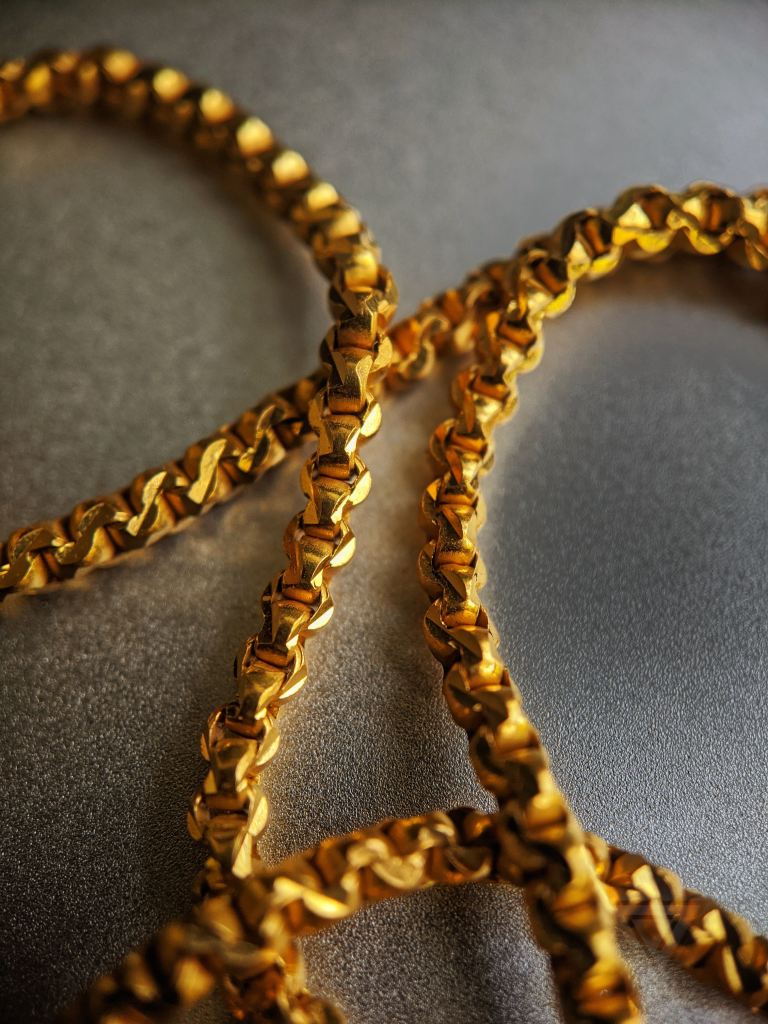
Sigmund lay awake in the dark, fingering the chain around his neck. The sun would come up soon; the sky was already lightening, the first pale light of dawn peeking through the curtain. He and Magnhild would stay on the farm. It was unusual for the man to take the woman into his family home, but his family had the room, and couldn’t afford to lose him to a different trade in town. He had not been apprenticed to anyone, and there was no use for him to learn medicine or weaving or baking or ale making. Soledge already had all it needed, except farmers. There were never enough farmers.
He rose from the bed as quietly as he could, dressing in the dark. His woman stirred. He thought about waking her, but decided against it. She woke anyway when she heard him creeping across the room to the door. “Where are you going?” she asked sleepily.
“It’s time to get moving,” he said. “Things to do around the farm.”
She sat up and stretched lazily, the covers falling into a pile in her lap. “And what do you want me to do?” she asked, yawning. She smiled brightly at him, almost playfully as she stood up.
Sigmund suddenly did not want to leave the room to do his chores. “What did you do yesterday?” he asked.
She grinned. “I chained you yesterday. I didn’t do any work.”
He laughed, and she came into his arms. “What do you normally do?” he asked.
“Eh,” she said. “I helped my mother with her plants and her herbs, but I don’t think she expects me to anymore.”
“No?” he asked, tucking her hair behind her ear. He dipped his face, kissing her shoulder.
“No,” she said. “She knew I was needed here instead.”
“Well,” Sigmund said, thinking of all the chores he and his brothers did each morning. He thought about the things Astrid used to do, then had an idea. “What if you walked through the fields today, and picked what was ripe?”
“Seems easy,” she said. “And what will you be doing?” She rubbed her face against his neck and his skin prickled from the touch of her lips.
“I milk the goats, then Aelric and I take them to pasture,” he said.
“I can milk goats,” she said, though from her tone and the look in her eyes, he wasn’t sure it was an offer to help with the chores. “And I could go with you to pasture?” she asked.
He considered it, but Aelric might not like it, and there was no reason to change it. Other than his desire for his woman. He slid a hand up her back, and kissed her softly. “I think my mother could use the help in the fields, Magnhild.”
She looked ready to argue, but then nodded her head instead. “If that’s what you want,” she said.
“Get dressed. There should be breakfast soon,” he said. He watched her, feeling lucky that he had been chained by a woman he liked, and not by one the Bairns had chosen for him.
Astrid was not at the breakfast table, but no one commented on it, not even Magnhild. The wild magic took her wherever and whenever it willed. He had not seen her at the party after the fire had been lit. He wondered what had happened to her.
“Did anyone see Astrid last night?” he asked.
His mother was spreading butter onto a bit of bread. She deposited it onto his father’s plate. “She was talking with Lodvik at the back of the house when I brought the boys home,” she said.
“What were they talking about?” he asked. He had heard a rumor about his cousin that unsettled him. He wondered if Astrid knew too. Then he nearly laughed at himself, thinking that of course Astrid knew. She knew everything now.
His mother shrugged. She was buttering a second piece of bread. She bit into it without saying another word about it.
“Did she come home?” Sigmund asked.
“Don’t think so,” she said.
Sigmund tried not to let her answer darken his mood. He wondered what might have prompted her to stay out all night. He did not understand the wild magic. “Magnhild is going to help with the harvesting today,” he said.
His mother brightened, looking at him for the first time since the conversation began. “Oh! That would be lovely Magnhild!” she said to his woman. “I can always use a hand, and the baskets just get too heavy for Josurr and Asmund. So most days it’s just me and Ulfarr.”
“Yes, of course! You should teach me anything that you need help with,” Magnhild said happily. Her posture was stiff. Sigmund rubbed her back and she relaxed. His family would accept her easily, he knew. She did not need to be afraid. He caught Aelric’s look of mild annoyance from across the table. With only a slight raise of an eyebrow, he asked what was wrong, a gesture long-practiced at the table. Aelric gave a tiny roll of his eyes, another long-practiced gesture. Sigmund trusted they would unpack whatever was eating him as soon as they were in the pasture.
Sure enough, as soon as they had shut the goat pen and begun to move after the herd, Aelric spilled. “She’s not going to be happy here,” he said.
“What?” he asked. “Why do you say that?”
“Just look at her face, Sigmund. She might be happy that she’s here with you, but she’s not happy about being in a house full of farmers.”
“We need farms, Aelric. She knows that.”
“Ah, but she had a choice, didn’t she?” he asked. “She could have picked one of the men who apprenticed. Someone who has a trade, so she could stay in town and not get her hands dirty.”
“There aren’t that many,” Sigmund argued. “It’s not like she had a slew of other men to choose from.” Aelric only scoffed in reply. “Plus, most families in town still grow on their land. They have to.” His brother’s sourness only grew. “Why don’t you like her?” he asked.
“It doesn’t matter what I think,” Aelric growled.
Sigmund stepped in front of him, blocking his way forward. Aelric stopped short in surprise, his eyes narrowing. “Move!’ he said.
“Why doesn’t it matter?” Sigmund asked.
“Because I’m a man, Sigmund!” he said, his anger coloring his cheeks. “And so are you. Nobody cares what we think, or what we want. We’re just toys for the women. Ways to get more men so they can keep making new Bairns for the spirits to possess.”
Sigmund clicked his tongue, narrowing his eyes. Aelric was wrong, wrong about everything, but he would never understand. “What do you want instead, Aelric?” he asked smoothly.
Aelric rolled his eyes, but Sigmund didn’t move out of his way. He raised a hand towards the disappearing herd, and made a sound of defeat. “The goats, Sigmund,” he said.
Sigmund glanced over his shoulder, then reluctantly began to follow them. Aelric fell in step beside him. The brothers were quiet for a time, the only sound in the air the wispy crunch of grass under their boots.
The goats reached the pasture and as they began to graze Sigmund and Aelric went to the river’s edge. Aelric pulled up a stalk of grass, peeled the strands and tossed it into the water. Sigmund did not press him to talk, but he could tell by his stance and his occasional gaze that his thoughts were stirring.
“I want to be free, Sigmund,” he finally said. “Everything that happens here…it happens because of the spirits, and the wild magic, and the Bairns. They control everything. They match up men and women in the hopes of making more boys, but all the pairs just end up making more girls too.” He shook his head, eyes staring downriver. “Sometimes I think they aren’t even trying to make boys. Maybe they’re trying to get as many girls as they can.”
“Why would they lie?” he asked, Magnhild’s reading and his own running through his mind. “And their readings are usually right, don’t you think?” he asked.
“They say the runes don’t lie, but something about it all is…off.” As soon as he said the word, Sigmund felt a chill run through him. “Think about it, Sigmund. What happened to us, that we can’t make boys now? What did the Freezing do to us?”
Sigmund shook his head. “I don’t know,” he said heavily, a stone in his belly.
Aelric sighed. He changed the subject. “I like Magnhild,” he said. Then he grinned. “But I’m glad you didn’t bring her with us to pasture.”
Sigmund laughed. “Me too, actually. I like our time together, without women.” Aelric’s smile melted. “What?” he asked.
“How long do you think it’ll be before I have chain around my neck too?” he asked weakly. His hand went reflexively to his throat, as if the chain he imagined choaked him.
Aelric was seventeen years. He had some time before he began to be pressured, but not much. “Is there anyone you’d want?”
He shook his head. “I haven’t looked. Haven’t been looked at,” he said.
Sigmund thought he’d discovered the root of Aelric’s derision for the Bairns. He didn’t want them to pick for him. “Ask Astrid,” he said.
“Astrid?!” Aelric gasped. “Ask her about what?”
“To find you a woman, Aelric. Someone you wouldn’t object to.” He was shaking his head. “Would you rather have Freya or Sif do it?”
His brother shuddered. “I’d rather do it myself,” he said.
“Then you better start,” Sigmund said, “or else they will do it for you.”
Aelric knew that to be true, and nodded fiercely. “Fine,” he said. “I’ll ask Astrid.” He rolled his eyes, yanking another stalk from the ground.
Sigmund placed a hand on his shoulder. “She loves you, Aelric. She’ll want to see you happy.”
“I know,” he said. “But she’ll use her witch magic to find a woman, and then how can I trust the suggestion?”
Sigmund leaned closer to him, whispered his next words. “Because it’s Astrid.” Aelric nodded slowly, but he didn’t look convinced.
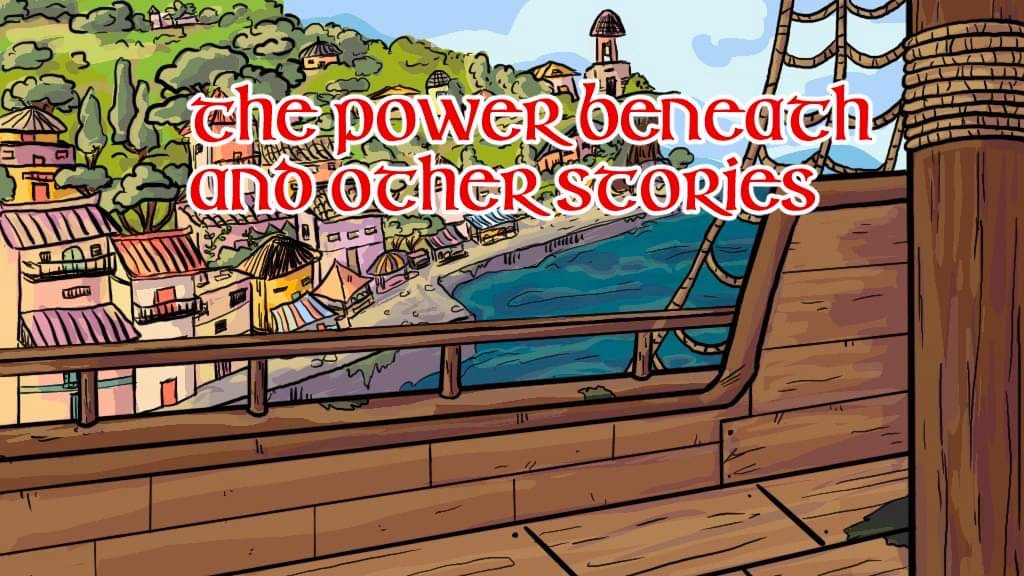
Just a quick post today to announce that I am releasing a new book- a set of novellas that explore more of the fantasy setting of The World Between and The Chaos Within (my previous novels). I am crowd funding the printing costs and will be sending physical copies to backers this fall. You can contribute to the campaign and reserve your copy through Kickstarter:
The title story was my “covid project.” I spent many nights at my kitchen counter eating potato chips and working on the story because there was simply nothing else to do to pass the time. The other two stories (The Darkness Inside, The Life Before) fill in the backstories of a couple of the characters from my other novels. Each of them grew from a single question I asked about the main character for the story, and each of them took surprising directions as I was working on them. It is always wonderful to watch the characters do things that you did not expect them to do.
If you’ve missed out on the previous novels, you can pledge at a level that includes the entire series. Thank you for reading!
Readers rejoice! You get an extra blog post this week because some things I’ve been thinking about for awhile can no longer be left unsaid.
Last night, I had the great joy of attending a production of Jesus Christ Superstar, a coproduction of Drag Daddy Productions and the Chicken Coop Theatre Company. There were gender swapped roles, sequins, drag queens, fantastic singers and dancers, and many moving moments. All around, an incredible reimagining of a classic show. And it left me wondering a lot about one of the main characters, Judas Iscariot.
If you’ve seen the show, you know that it is very difficult to not feel pity and grief for Judas. But feeling bad for Judas is not often the first response we have to the man who betrayed Jesus of Nazareth. In fact, Christians have for centuries been vilifying and demonizing Judas. Taking the gospel writers at face value, we have assumed that we know his full story: that Satan entered him, that he was tempted by riches, and that he betrayed one of his closest friends.
But when you watch Judas as imagined in Jesus Christ Superstar, we see a completely different story, and as I left the theatre last night, I couldn’t help but feel that we have gotten Judas all wrong. Judas, as portrayed so brilliantly last night by performer Myranda Thomas, is relatable. He is so human, so honest, so heartbroken, so pitiable, so tragic. Today, I keep coming back to the thought that we have done such a disservice to this man.
What if Judas was not possessed by Satan, and tempted by riches? What if instead, Judas was pragmatic and conflicted? What if Judas wanted to believe, but he just couldn’t get there? What if Judas was pulled into a plot by powers he could not fight off alone? What if Judas was pressured into something he did not want to do? What if Judas was trying to save himself? What if Judas was trying to save Jesus from himself? What if Judas just wanted things to go back to the way they were before?
At the risk of spoiling the show, Judas takes his own life because of his deep guilt and pain over what has occurred. When the cast sings “so long Judas. Poor old Judas”, it is a somber, reverent moment that filled my eyes with tears. Poor old Judas indeed. We have made him an enemy, because we do not want to face the things about ourselves that he represents.
Bernard Cornwell, writing from the perspective of his character Uhtred of Bebanburg, a pagan warlord who is living through the Christianization of Britain in the 9th century CE, wrote a line about Judas that has stuck with me since the first moment I read it: “The god had to be nailed to a cross if he was to become their savior, and then the Christians blame the man who made that death possible. I thought they should worship him as a saint, but instead they revile him as a betrayer.” To Uhtred, this seems like a contradiction, and honestly, the more I think about it, I’m on Uhtred’s side.
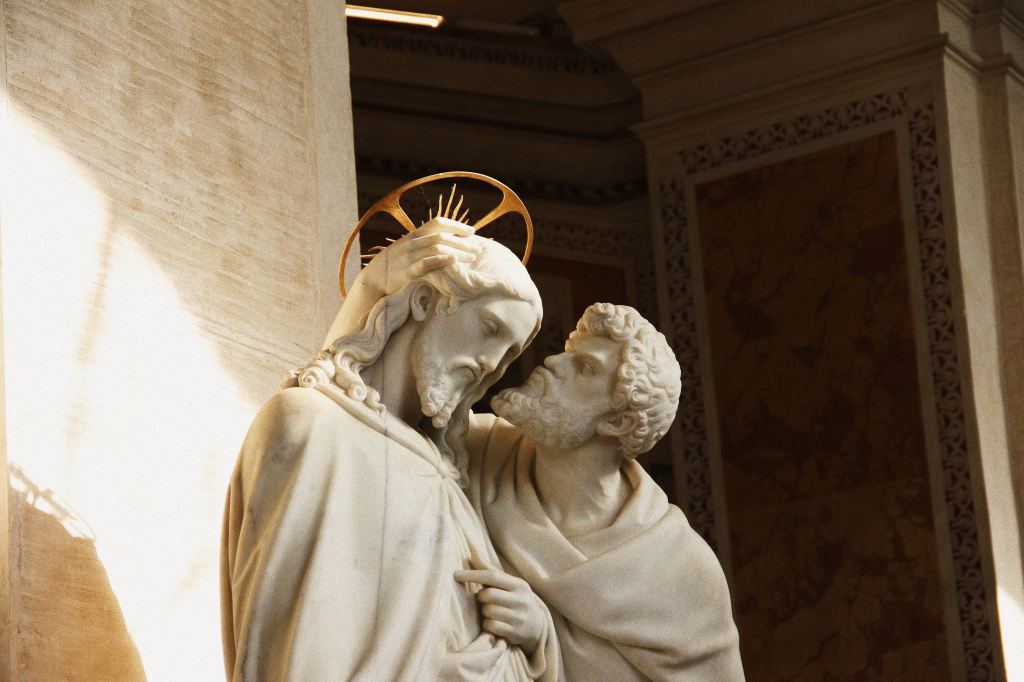
But that doesn’t preach well, nor is it an easy lesson, nor does it give us a model for our own behavior. Maybe it’s not supposed to. Maybe Judas is supposed to force us to look in the mirror, to see the ways in which we too are tragic, and conflicted, and self-preserving, and scared of change. To dismiss Judas as the worst of sinners, to “revile him as a betrayer”, to harbor disdain for him does no justice for Jesus, a victim of state-sanctioned violence. Furthermore, we imperil ourselves when we do not feel Judas’s internal conflict, when we take the gospel writers at their word without considering the forces of power and oppression that were also acting upon Judas that fateful night when he kissed Jesus in the garden. When we ignore the systems that created Judas, opting to supernaturalize his choices, we ignore how the systems that we uphold and participate in now create impossible choices for people. We are less likely to see Judas as human, and anyone else like him as human too.
I once heard that the test of Christianity is not loving Jesus, it is loving Judas. We cannot do that if we continue to vilify him. Poor old Judas. He deserved better than to die of shame and regret. We should all remember that on Good Friday.







 The Quick and the Dead