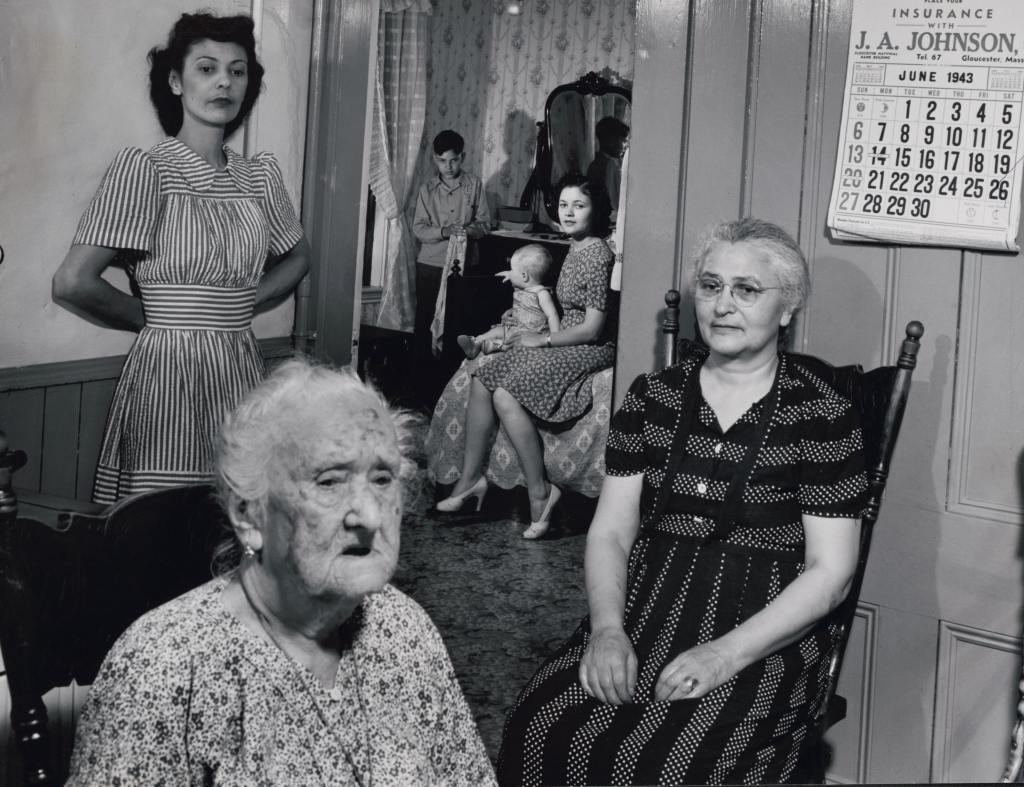
Photo made available through the Library of Congress
I knew I would have girls. I can’t explain how I knew, other than to say I envisioned them, and brought them to life. As if they manifested out of the dreams I had of them before they were born. When they were growing inside me, I knew who they were. I imagined how they would be. I felt their spirits residing in me and they felt different than my son. I thought about a family portrait hanging on the wall and saw that it had two little girls. Girls who would be like me.
When I think about the ways in which my girls are like me, it involves a level of creativity that continues a tradition of my matrilineal line. They are constantly asking me for art supplies so they can make things for themselves and their friends. My girls watch me make things- wreaths, blankets, mittens, scarves, gloves, jewelry, art, decorations. I picked this up from my mother. She always had a project going. Even now, when I visit her, I see all her threads, needles and yarn piled neatly on the side table, or tucked safely in a bag. I have a basket that serves the same purpose at my house. Her mother created ceramics, plastic canvas decor and toys, sewed her own clothes. One summer she made a dollhouse while she was recovering from a broken hip. Her mother made doll clothes, and a years long project she worked on (re-creating the dresses of the First Ladies of the United States) is on public display in the library where she lived in Constantine, MI. My matrilineage is creative. In this family, we make things.
When my 7 year old asked me to take her shopping for supplies for a project a few weeks ago, we wandered the aisles of Joann Fabrics looking for exactly the right items to buy. At one point we stopped in front of the modeling clay, and as I was looking at all the colors available, I reminisced about my own mother taking me shopping at Michael’s to buy modeling clay, so I could sculpt bears and mice and frogs. My daughter asked me if she could have some, so she could try it out. While I was crocheting a few nights later, my 5 year old asked me to show her how to make the stitches. She practiced for a little while before she handed the hook back to me. I’ve been asked to show them knitting, embroidery, cross stitch, plastic canvas, sewing, painting. When I look around my house and she all the things that were made by Grammy and Mom, these questions of “show me how” bring a smile to my face.
It’s strange though, having this heritage but not having a name to connect it. I would say that my girls are following the Orr tradition, but Orr is my father’s name, not my mother’s. So I could think that me and the girls are like the Kilpatricks. But this isn’t right either, because Kilpatrick is my grandfather’s name, not my grandmother’s. So, perhaps this is a Burgener trait. Grandma Burgener, after all, is the one who made the doll dresses, the one who taught my Grammy, who is turn taught Mom, who then taught me. But Burgener was her married name. Before that, she was Wittenberg, but Wittenberg was her father’s name…
What, then, do I call this heritage? What is the name of the passing of tradition from mother to daughter? How do we talk about the things we learned from our mothers, that we pass on to our daughters, when the names of the women have been erased, replaced by the names of the men who were tied to them? How can I describe myself and these girls when I don’t know the names of the women who gave these traits to me?
I can think of myself in terms of what I do know. I am Sarah, daughter of Barbara, daughter of Evelyn, daughter of Vernie. Beyond that I’m not sure. What I do know for sure though, is that this matrilineage lives as long as I remember it. So I will teach these little girls the names of the women who came before them, who passed down this love of creating. Maybe they will come up with a name for it when they are grown. Or perhaps they will think of themselves as daughters of Sarah, daughter of Barbara, daughter of Evelyn, daughter of Vernie. Either one is fine with me.
I re-read your letter today. I keep it in a drawer in case of emergency. Sometimes when I miss you, it helps to pull out that letter and see your handwriting. I imagine the way your hand moved across the page, and recall the feel of it in mine when we prayed together. The paper had none of the warmth that was in your fingers, but it has all the warmth that is in your heart. Spilling out for me in that short note. All your humor and passion and anger and sorrow—the things that kept us returning to each other when the world felt cold. That’s why I keep it. To remember how it felt to be with you.
I miss you. I miss your laughter. I miss talking about nothing and about everything. I miss how my reverence ignited next to yours. I miss feeling seen. Feeling heard. There are other people now who have stepped into that role, but it’s not the same. These people deeply love me, and as much as I love them in return, it’s not like it was with you. I don’t know how it’s possible for a piece of my spirit to be inside another person, but that’s what it feels like. You have a piece of me inside of you. I recognized it. I touched it. I longed to reunite with it.
I have this whole separate space now, apart from you. And though there are similarities between our lives, they move in different spheres, only crossing when we make the time for them to overlap. What was once easy has become hard, especially when one of us is not feeling like our best self. I know I haven’t been lately. The rough patches were easier when I was with you, because you were right next to me. And now even though I know I could call you, there is a great canyon between us. You in your sphere. Me in mine. We do not overlap now unless we carve out the place where we will meet.
Sometimes I wonder where you go, what you do, who you talk to now that you don’t talk to me as often. Did you find someone to fill that space, or are you filling it with digital and liquid demons? I’ve done that. I am doing that. I think I know what you would say about it. I know what I would say to you if I found out you were spending your time the way I’ve been spending mine.
It feels like I’ll never stop missing you. I know it’s only been a little while since you went away and that I need time to heal from your departure. I also know that next month, next year, next decade, I’ll be better. While that gives me some hope, it makes me a little sad too. It means that there will be a time when I won’t miss you as much, when I won’t wish I could see you, hear your laugh, feel your hand in mine. I’ll remember you fondly like I remember being a kid at Christmas, especially if there was snow. I’ll remember you like my long-departed grandparents, who lived in that big white farmhouse that I loved. When this hurt ends and I come to the end of this road, you won’t be standing there, and that will feel like progress. But that’s not what I want at all.
That’s why I re-read your letter today. To keep you close to my heart. To cherish you. Because I love you.
There was a hum in the air around me. The expansive room was filled with other people, but I barely noticed them. I was centered on the statue in front of me. It had been placed behind a wall of glass to protect it, to separate it from the people who came to view it. It didn’t seem separated from me though, as I stood alone, wondering. The perfectly placed lighting highlighted all of Mary’s features so I could see her serene expression. For a moment, everything around me faded—the noise, the other visitors to the basilica, the tour guides giving lectures around me. For one holy moment, Mary and I were the only people in the room.
My eyes trailed over the body of the crucified Jesus laid across her lap. I felt particularly drawn to the way his hand dangled lifeless towards the earth, and the way the hand of his mother cradled him around his ribs. Michelangelo did not give him any wounds on his hands or feet, or in his side, but he didn’t need to. The agony of the crucifixion was carved into the way his body draped over Mary’s. I could almost imagine the strength of her legs, how the muscles in her arms must have strained under his weight. My eyes went back to her face, her perfectly serene face. This was not the face of a mother who had lost her son. There was a transcendent expression there, as if she had prepared herself for this. As if she always knew holding her son in this way is something she would one day do.
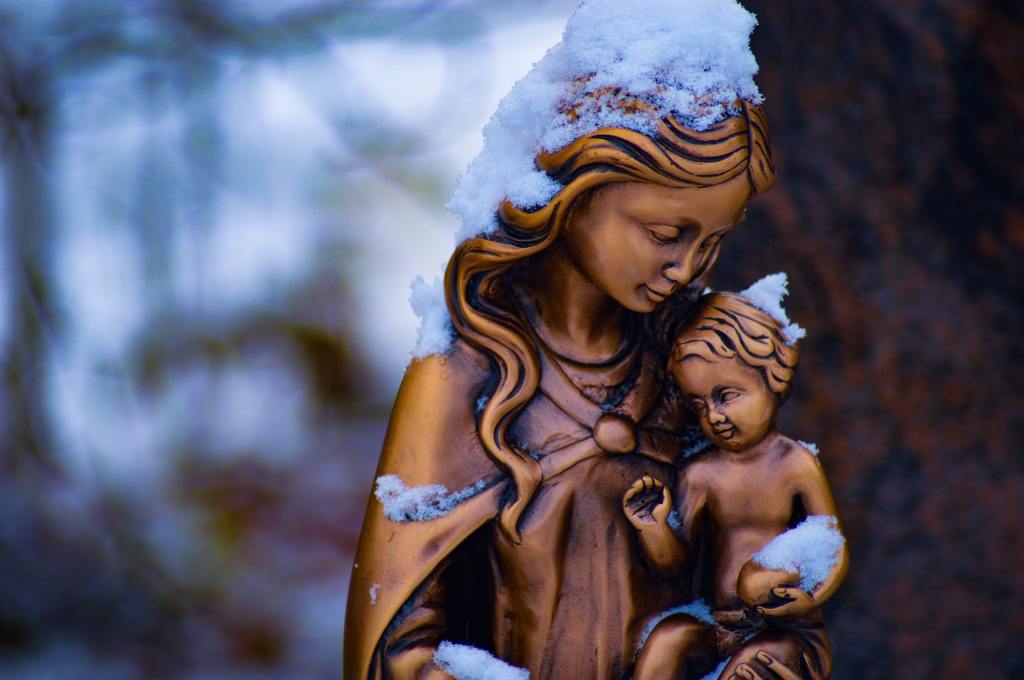
My ears tuned in to one of the tour groups in the basilica. The group was just a few feet ahead of me, and I could hear their guide clearly. She was explaining the debate about Mary’s youth. Why, she asked, did Michelangelo choose to make Mary so young when he carved his famous Pieta? She would have been in her forties when Jesus was killed, but Michelangelo’s Mary appears to be a young woman. The guide offered several explanations before sharing what she named to be her favorite. “This is not Mary holding the crucified Christ,” she said. “This is a statue of Mary holding the infant Jesus, imagining what her son would do for her.”
I looked at Mary’s face again, tears stinging my eyes, as I contemplated the price she paid.
I don’t claim to know how salvation actually works. I’m still unclear why Jesus died, and how his death is redemptive. I admittedly don’t like to think about his death at all, because uncertainty swirls around it when I do. The nagging questions—why?—never seem to fall away from me. Doubt is always mingling inside me, running right alongside faith. But that day, I didn’t feel any doubt. God was with me in the basilica as I contemplated his death, and I felt certain he would stay with me wherever else I went.
It was a formative spiritual experience. I can’t think of many other times in my life when I have felt as close to God as I felt that April afternoon in 2004. There are a handful of other experiences that moved me to tears or lifted the veil, but viewing the Pieta was wholly unlike them. I had traveled thousands of miles, with other teenagers whom I barely knew, to a city where I didn’t speak the language. I was truly a stranger, and yet, God transcended the borders and the barriers. God found me, exactly where I was, and it felt like God had led me there to hear the words of that tour guide as I cried over a beautiful piece of sculpture.
Even now when I think about Mary, no matter the context, my mind goes back to the face of Michelangelo’s Mary. Her absolutely pristine face, her painless expression, as if she truly believed her son was the savior of the world. As if she had prepared all her life to accept what God had planned for him. As if she was ready for it. As if she welcomed it.
Could I ever, if only for a moment, be like Mary? Just once? Please, God. Help me believe.
It’s a prayer. It’s a lament. It’s the angry words I have as I shake my fist. It’s yelling into the wind. It’s my insecurities laid bare. It’s me allowing myself to feel like I’m not enough as I am. That my faith isn’t good enough. That my faith isn’t strong because I still have doubts. That maybe next time, God won’t meet me where I am. Faith does not come easily for me, and it never has. But there has also never been a convincing reason for me to turn away from faith completely, because every time I’ve been right on the edge of unbelief, God meets me there. God will always meet me; that is my one certainty.
Yet, Mary didn’t have an easy road either. Michelangelo’s Mary, if she is holding her infant son and imaging his sacrifice, is Mary postpartum, when the hope and joy of the baby has already been realized. There was a long and difficult road she walked before she beheld him, before she wrapped him in her arms and cradled him against her chest. Before the miracle that we now call Christmas, she spent months carrying him—months that I imagine were full of wonder, but just as easily could have been filled with doubt. When she visited her cousin Elizabeth, was she hiding? When Joseph planned to divorce her, did she know? When she was laboring, did she cry out to God to end the pain?
I’ve had the honor of assisting women in birth when I work as a doula. No matter where or how a baby is born, there is always a moment when the mother says, “I can’t do this.” She is always wrong, but I would never say that to her. Instead, I gently remind her that she has all the power she needs inside of her already. I remind her that she can. I tell her that I’m watching her do it. I tell her that she must surrender to what is happening. “Don’t fight with the pain,” I say. “Let it carry you.”
There is another Mary is often imagine, especially at Christmas, and she is not serene or accepting. When I think of Mary and the infant Jesus, I can’t help but think of how Jesus was born. I’ve watched enough women give birth to know that it’s the hardest physical work that many of them will ever experience. I imagine Mary, told that she must sleep where the animals sleep, laboring among them. This Mary cries out in desperation. She doubts her strength. She ignores the world around her to survive the agony she’s experiencing. I wonder if Joseph went to find other women to attend her. I wonder if she had anyone to remind her of her strength as she squatted, dripping with sweat, shaking and puking from the pain, to push her son into the world. Did they wipe her brow? Did they give her a sip of water? Did they let her clutch their arms until her knuckles were white?
I think about afterwards, when the shepherds came to see the baby. Was she trying to nurse him? Was he crying from hunger and frustration? Had she already delivered the afterbirth? Was she still bleeding? Was she longing for sleep? Did she lose the color in her lips when they tried to move her about too soon? Was she aching from a tear? She wouldn’t have had ice packs, or witch hazel pads, a peri-bottle, or a sitz bath, so what did they give her for the pain?
I know this Mary, because she is me. The Mary who does the messy—and gross—work of birthing the Christ child is the Mary I can easily identify with. She must labor to bring about hope. She must work, harder than she has ever worked, to bring joy. She doesn’t trust herself; she doubts the power she has been given. She focuses on the agony of the moment to keep it from overpowering her. She cries out “how much longer?” She screams, “I can’t do this.”
The desperate Mary in labor does not know the joy of the serene Mary holding the baby, just as Mary holding the baby forgets the nerve-shattering experience that allowed her to hold him. Yet she is the same woman. The truth is both images are true, held in tension with one another. I’m sure Mary doubted at times, just as I’m sure she believed. If the mother of God had doubts, then surely, I can as well.
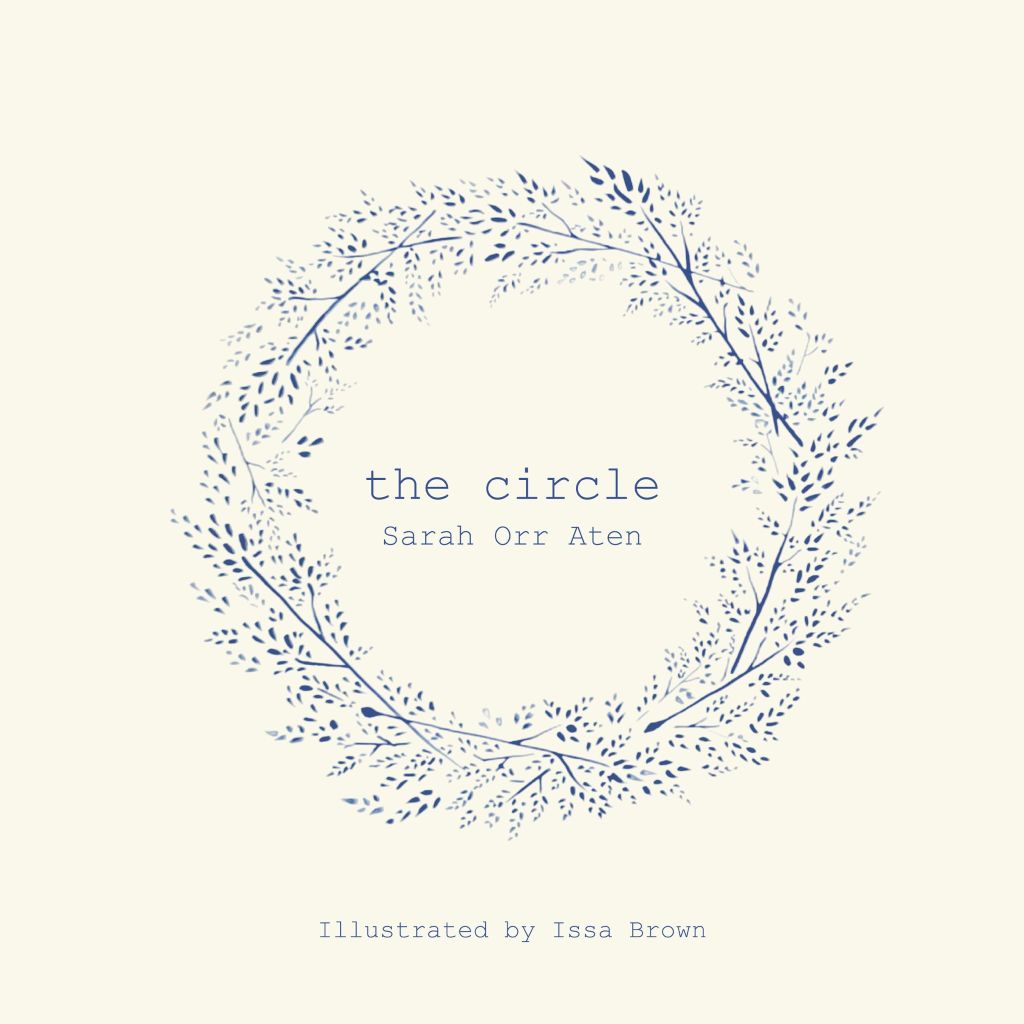
Hey friends! I have updated my Published Works page to include my newest work, The Circle. This is a short collection of poems about love in all its shapes. Physical copies can be ordered here. You can also purchase it through Kindle.
I started a master’s program this week. I am studying religion with an emphasis in Biblical studies at Louisville Presbyterian Theological Seminary. This is something I have wanted to pursue for about 14 years, but never had the courage to apply, until this past spring. There is something transformative that happens to you when you surround yourself with people who really believe in the value that you bring. I’m thankful for the friends who encouraged me explicitly and implicitly to pursue this. Below is one of the essays I wrote as part of my application.
When I think about who God is, there is ultimately one word that comes to mind: love. Love, and God, manifests in many forms, but each way can be stripped back to this basic idea.
God loves people. From the very beginnings of the story of our faith, we see God loving and caring for people. Genesis tells us that God did not want Adam to be alone, and so God created Eve. When God calls Abram out of Ur to go to a new land, God does not put conditions on the promises, saying “I’ll give you this land if…” God hears Hagar crying out in despair and meets her in her pain. God rescues the Israelites from slavery and protects them on their journey through the wilderness. God continually forgives when the Israelites repent of their idolatry. God even entered the human story as a human, to walk beside us and show us—personally—the ways of righteousness.
Jesus shows us great love in the way he welcomed and cared for the afflicted, the oppressed, those who were ridiculed or dismissed by society, and those who were seen as outside of the Jewish society. When Jesus talks of his father in heaven, we see the picture of a just God, one who loves and accepts, who calls for humility and offers grace. Jesus loved his friends, surely, but also his enemies, healing the ear of one of the soldiers sent to arrest him, and praying for the crowd as he was dying.
God loves the earth. Scripture tells us that what God created was good. It reminds us that God cares for the sparrows just as he does for us. It teaches us the earth will praise God—yes, even the rocks will cry out—and that the trees of the field with clap their hands in joy. God cared for the animals that the Israelites used as sacrifices, by commanding merciful treatment of them through Levitical law. God created a richly beauteous world that is full of wonder. The very complexity of interconnectedness of the natural world signals to me that God loves the earth enough to spend the care it takes to put such a complex system into motion.
When I think about the ways in which God loves, I also feel the amazing power God has to transform. God is always transforming me—sometimes through pruning, and sometimes through letting me grow. Just as a gardener will dead head the rose bushes, so the flowers will keep growing, so God clips away all the unhealthy parts of me. God is a caretaker, and caretaking is at its very heart, a kind of love. It is the kind of love that wants to see a flourishing, but it is also a sacrificial kind of love. As the caretaker of my garden, I want to see my plants thrive. I take time to make sure that happens, watering them, pruning them, giving them extra fertilizer when they need it, pulling out the weeds that could choke them out. In the same way, as a caretake for my children, I put in the effort it takes to have them grow into responsible, kind, loving and self-aware adults. This takes time, patience, effort—sometimes it even takes tears. This is how I imagine God, constantly working on me, constantly beside me, guiding me, leading me, teaching me.
Jesus’s parables are full of the imagery of the garden and the farm. There are cultural reasons why he would have chosen these metaphors, but I think the genius of Jesus’ teachings is that they transcend their own time period, calling us to think about one of our most basic needs. Humans will always have a need to grow food, whether we do it industrially or individually. Jesus used imagery of the earth and how to care for it in his teachings on how God cares for us, and to show us how to live life to the fullest. This underscores the importance of God’s love for the earth at the same time it shows us God’s love for people. Pastoralists and practitioners of early agriculture would have known that to care for the farm or the garden was critical to survival. Jesus using this imagery shows how critical God’s love and care is for our own spiritual health and survival. Without it, we would surely wither, just as the vine does without proper care.
Finally, God loves me. Yes, even me. Though I might not feel like it at all times, God continually loves me. God loves me enough to open doors for me. God loves me enough to push to me to grow. God loves me enough to send me comfort when I am hurting. God loves me enough to give me opportunities to flourish and to use the gifts I have been given. God loves me enough to reveal Godself to me continuously, through my mentorships and friendships. God has loved me when I am at my worst, and God has loved me when I am at my best, and I know God will always do this. God is, ultimately, the best gardener and caretaker I know.
Hey everyone! Thanks for your faithful readership. I have complied a book of poetry (some of which have appeared on the blog) and am running a funding campaign through Kickstarter until October 6. Hop on over to the project page to check it out using the following link: https://www.kickstarter.com/projects/1825805433/the-circle-2.
The world is full of wonderful things, both big and small. Here are a few very short tales of things from my life are beautifully wholesome. Feel free to leave your own wholesome little thing in the comments.
Sometimes when I’m out walking in the neighborhood, I see an older couple riding their bikes together. They ride slowly, casually. The woman has a wicker basket on her handlebars. The man stops to wait for the woman if he gets too far ahead. They both wear those big sunglasses that go over your regular glasses. They always look happy.
Once, during the pandemic, my family was taking a walk and we found ourselves in the middle of an impromptu bike lesson, complete with spectators. The father was helping a little girl learn to ride without her training wheels. The neighbors were all gathered at the ends of their own driveways, cheering and whooping and yelling things like “Come on! You can do it!” The little girl took off on her own after her dad had run beside her a few paces. The neighbors clapped and hollered. It was a beautiful thing to witness.
I was at a convention a few years ago, and a little boy had lost his parents in the crowd. I watched as a circle of other moms surrounded him, made a plan, hugged him, reassured him. It was one of the holiest things I’ve ever seen.
When I brought my first baby home from the hospital, I let my dogs find him on their own terms. I watched as one of them sniffed the bouncer, where the swaddled infant lay sleeping soundly. The dog nosed around under the blanket, trying to identify what was hidden beneath it. My son stirred and stretched. My dog leaped backwards in fright and began to bark at the baby, but the baby didn’t even open his little, sleepy eyes. The dog went back to sniffing him a few seconds later.
I gave my friend two plants for his garden once. I had too many and needed to make some room. He seemed genuinely surprised by the gift. The look of happiness and gratitude on his face still brings me a smile sometimes.
A friend came over one night to help me tear up a section of my yard and plant a garden. Afterwards, as we were chatting, I pruned a rose bush on the other side of the yard. She gathered some of the cut blossoms, and without explaining what she was doing, put them into a vase for me.
Every time a I see a rabbit in the yard at twilight, I always get excited.
I was having a really bad day once, and in the middle of making dinner, I realized I didn’t have any eggs for the recipe. I called my friend who lives a few streets away and asked him if he could bring me a couple. He dropped by the house with the rest of his carton (7 in total) and told me I could have them. Before he left, he told me I was beautiful.
There’s a hill behind the kids’ school that’s surrounded by pine trees. I like to sit there and think, or pray, or soak up its spiritual energy. One of my friends once referred to it as “the little hill of heaven” and it was a joy to learn that other people know of its power.
My husband bought himself a plushie once. Yes, you read that right. He was opening the package in front of my daughter and when it came out of the box, she exclaimed “Daddy! Is that for me!?” I giggled quietly as he asked if they could share it and she agreed.
My in-laws had a dog once that would sing (howl) if you played the harmonica. She was an 80 pound, beautiful snuggle-baby. On the night before they put her down, we took the kids to get ice cream, and then we sat in my in-law’s yard. The dog was laying in the grass, panting. My one year old daughter sat down next to her, leaned back against her like she was a recliner, and ate her ice cream cone. The dog seemed to relax.
A dear friend trusted me with writing a character reference letter for the adoption of her daughter.
The first time my son’s best friend spent the night with us, I ordered pizza. The friend’s mom told me liked olives on his pizza. Surprised, but rolling with it, I ordered a half cheese/half olive pizza for them for dinner. As the boys were eating, the friend looked at me and said, “I love olives,” in that sleepy, wonderfully satisfied way.
I was struggling with being the sole parent to my 3 kids for an extended weekend. My husband was out of town at a convention. I was on day 5 of single parenthood and it was starting to wear my bones to dust. My friend pulled up at my house unannounced, left a gorgeous white orchid on my porch, and snuck away. She texted me later asking if I got my surprise. It bloomed for months—which I have since learned is very unusual.
In the midst of an ongoing personal crisis, I had a friend drop off a party invitation to her parent’s 50th wedding anniversary party. Before she left, she thanked me for always being so open and accepting. She told me whenever she sees me, she thinks, “that’s what Christ was like.”
When my niece was born, my sister-in-law gave her to me to hold before anyone else in the family had a chance. It was the first time I really felt like part of the family I had married into.
My friend handwrites me letters. She doodles on the envelope or adds cool stickers. I love being surprised by her notes.
A bird died on our front porch when I was in high school. My dad buried it in the yard. I was crying on the couch when he came back in, and he asked if I was upset about the bird. I expressed frustration with myself that I was crying over a “stupid bird.” My dad sat down next to me, put his arm around me and said “It’s not silly to care about the creatures of the world. It means you have the heart of God.”
I read a book called Marsh Cat when I was in fifth grade. It was a short novel about a feral cat doing cat things in the wild. I looked for it off and on for years, even though I did not remember the name of the author. I finally found a copy on an online used book seller, and purchased it for the shocking price of $1. When it arrived, I was pleased to find that it had an inscription on the inside cover. It was a message from the author, Peter Parnall, wishing the owner a happy 21st birthday.
I was assisting at a home birth once, and the baby ended up being born in the early morning hours of December 3rd, which is also my birthday.
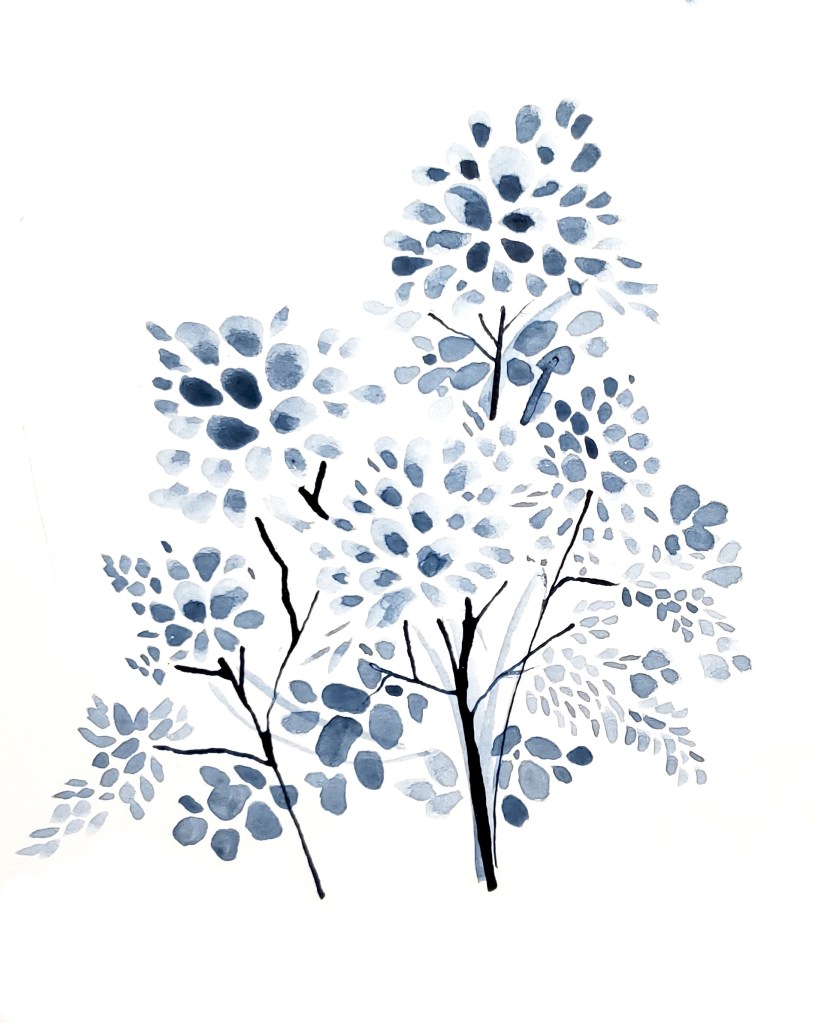
Hello readers and fellow writers! I wanted to drop a quick note to all of you (especially the poetry lovers out there) that I have been working on a new book, which is launching on Kickstarter on 9/6 at noon. The book will include several poems I’ve published here, plus several that I’ve not shared before (on this blog, or ever). I am working with friend and artist Issa Brown on this book, which is titled The Circle. Issa has created some beautifully simplistic illustrations to accompany the poems (one of which is the cover image for this post).
There is much more to this story than is recorded here. Maybe one day I’ll tell it all. Or not. It’s not really that great of a story. It’s full of pain and doubt.
The phone was ringing and I didn’t want to answer it. He hadn’t called me for over a year; why should I want to talk to him now? Swallowing my fear, I flipped the phone open. “Hello?” I asked hesitantly, trying not to panic. The last time I had spoken to him, it was to tell him I never wanted to see him again.
“Hey. It’s Brian.”
I closed my eyes, breathing unsteadily as I searched for any words to say to him. “Why are you calling me?” I finally managed. My voice was thick with the fear of his answer.
“I just wanted to let you know, that after we split up, I started going to church, and I’m getting baptized this Sunday.”
This was not what I expected him to say. These were the last words I ever thought would come out of his mouth. “Oh,” I stated flatly. His words untangled the knot of memories I had from our year and half of on-again, off-again romance. Had he ever shown any interest in church when we were together? What had made him change his mind about faith?
He didn’t give me much time to say anything else before he continued. “I want to give you back the money that I took from you. I’ve been thinking about how to make amends for a lot of the things I did, and this is something I can do to try to make it right. Can I mail you a check?”
My mind jumped back to the previous year—to the days long fight we had over a $500 gift he had given me. He had demanded that I pay him for it, claiming he had only purchased it for me because he thought we had decided to stay together. I drove to his apartment and tried to shove a wad a cash into his hand, but he didn’t take it. He was angry with me for manipulating him, telling me to leave and not to call him. It hadn’t ended there, though. He harassed me for days after the incident.
“Just give him the money and be done with it,” my mom said. With her encouragement, I asked Brian to come to my house, and after giving him 25 crisp $20 bills, I made him sign a statement that I didn’t owe him anything else. The next day he agreed to give me half of the money back because I had been so angry about it. As terrible as the relationship had been, he wasn’t a complete monster, not even then.
And not now either.
“Can you mail it to my parents’ house?” I asked tenderly. I did not want to give him my address. The wounds were too deep.
“I can do that.” He paused. “I’m really sorry for everything that happened.”
“I know.” It was nearly a whisper. I still couldn’t quite believe what he was saying. “Thank you.”
“I won’t call you again,” he promised.
“Okay.”
He hung up.
I flipped the phone closed and cried.
It had been good in the beginning. He was charming and funny. He had a “real” job. He was sweet with me. Most importantly he was smart. For reasons I came to understand later, he had learned how to be clever, how to be as smooth as honey, and how to give a person whatever they wanted. It was his learned survival skills, but at first, I thought it was meant just for me.
“I like you because you’re different,” he told me the night of our second date. “I told my roommate I wanted a nice girl. A church girl.” He smiled at me. “And not a blonde.”
He knew exactly how to fill me up, which is why I had so much trouble breaking away.
He’s not good for you. Melissa’s text message glared at me in the darkness of my bedroom. It felt like the place I went to hibernate, to forget that I was trapped. Only I never slept long enough to have the strength to free myself.
I don’t know what to do, I wrote back. I could feel the tears coming. My eyes were already red and sore from crying. I don’t know how to get rid of him. I still love him.
For months, Brian and I had been on rocky ground. I had learned to tell the difference between his charm and his manipulation. In between stroking my ego, he belittled and dismissed me. His promises to be better never came to fruition. I was tired, and he was killing me.
What about Aaron?
Aaron. He had tried to pull me out of the relationship. Brian didn’t like him, despite never having met him. Aaron was a threat in his mind. I don’t want to leave him for someone else. I knew the excuse was weak. I wanted more than anything for Aaron to scoop me up and carry me away.
But you don’t want to stay with him either. Melissa’s words were an echo of my own thoughts.
I pulled the covers up higher around my neck, seeking comfort where I could get it. I didn’t stay with Brian because I needed him. I stayed because he needed me. Without me, how would he ever become the person I knew he could become?
I used to pray that God would use me to bring someone to faith. Melissa would know this was not a non-sequitur. We had talked of this before. She was one of the only ones who knew.
But what is it costing you?
I thought about her words. What was it costing me? My happiness, surely. My sanity, possibly. But I still had my faith that it would somehow all be worth it. That one day, he would see there was a different way to live, and he would turn his eyes to something greater than him. Something divine. Then, our relationship would become possible; he’d become everything I wanted.
Melissa didn’t wait for a reply. It’s not your job to save him.
It wasn’t, but I still wanted to.
I pulled up to his apartment slowly, sitting in the car for a moment before turning it off. I was wearing the ring Brian had given me the week before. Not an engagement ring. He didn’t give it to me with any promises. He hadn’t asked for anything in return.
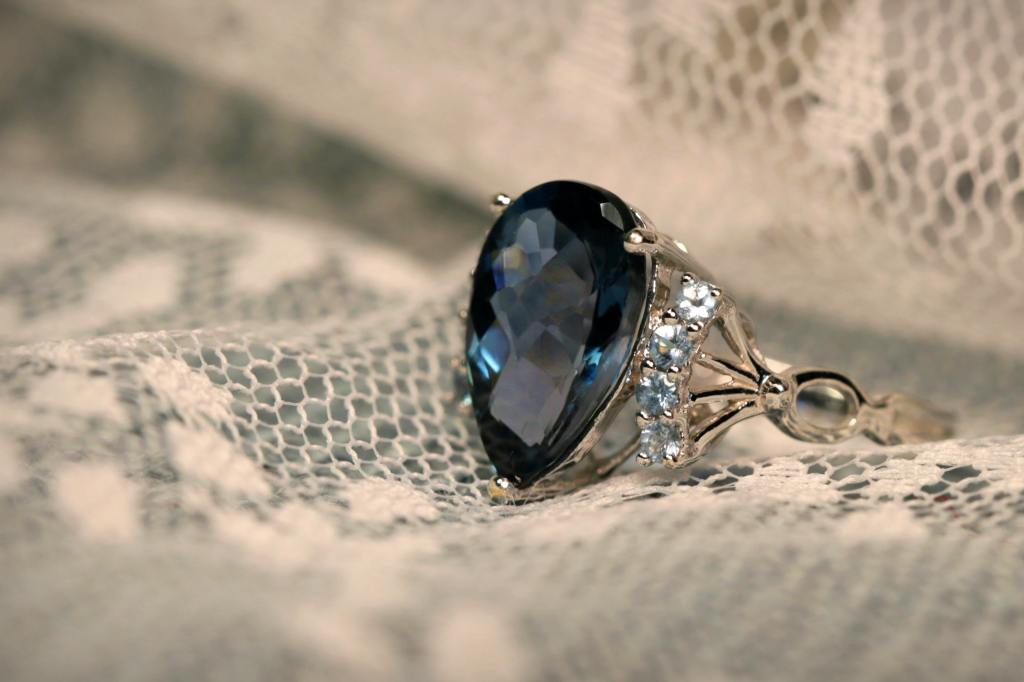
We had been on the way to buy him a stereo for his truck, and the piece of jewelry caught my eye. It was an emerald cut swiss blue topaz ring, with diamonds on the sides, wrapping up and over the corners of the stone. He watched me as I stared at it.
“Do you want to try that on?” he asked.
His slick smirk melted away the dozens of reasons why I should not be at the mall with him, especially not looking at jewelry. “No,” I lied.
He took me into the jeweler almost against my will. The sales rep pulled the ring from the case and handed it to me. It slipped on my finger as if it was made for me.
“It fits,” the woman said. Her smile was almost as bright as her eyes. Her expression was genuinely happy, not hungry like Brian’s.
I wanted it, but I imagined there would be consequences. I took it off my finger and handed it back to the sale associate.
“Go ahead and box that up for her,” Brian said.
I snapped my head around to stare at him in disbelief. “You were gonna spend that money on your stereo,” I argued.
“It’s my money. I can do what I want with it,” he answered.
He had used it to hook me again. I looked at the ring. I had purposefully not placed it on my left hand. I didn’t want anyone getting any ideas. There was no joy with him, and there never would be. I didn’t believe anymore that God could use me for anything good. There was nothing good left in the relationship, nothing good left inside me. I was filled with spite and anger and distrust.
I pulled out my phone. I’m gonna do it, I wrote to Melissa. I erased it without sending.
I opened the car door and slunk toward Brian’s apartment, stilling my anxieties. There was a prayer inside me trying to escape, but I couldn’t find the words for it. I hoped it didn’t matter. God already knew my heart.
I opened the door without knocking, calling for him as I came inside. I could hear him in the kitchen. I made my way across the tiny living room to the little galley kitchen where he was putting away dishes. “Hey,” I greeted.
He looked at me without any warmth. “Hey,” he answered.
Did he see how nervous I was? He could always read me. My emotions might as well have been on a billboard. “I’m gonna go with Aaron to a movie tomorrow,” I said.
His eyes, impossibly, grew a little colder. “Just Aaron?”
“No, some other people too.” I was purposefully not inviting him. I tried to stand a little taller, to feel bigger than I actually was.
“I don’t want to go,” he said, placing a plate inside the cabinet.
“I didn’t expect you to. I thought I’d just go by myself.”
The suspicion started to creep through his mind. I could see it in his eyes as they narrowed. “Is there anything going on between you two?”
“He’s my friend,” I answered. “He’d been my friend for almost 6 years.”
“I read the email you sent to Melissa,” he said.
The betrayal hit me squarely in the chest. For a moment I couldn’t breathe; not just because of the fear of what he read, but also because of the shock of what he had admitted. “You read my email?!” It might have been a shriek. The anger blurred my ability to think clearly.
“What have you been doing with him?” Brian asked, “Other than letting him ‘get too close’ to you. Whatever that means!”
I began backing away, not because I was afraid of him, but because I was ashamed. “It means I can’t see you anymore.” I had said it before, but this time it felt like a vow I would take to my grave.
There was resolve in his features, as if he had known what was coming. Of course, he had. He had read the incriminating email telling Melissa about the conversation I had with Aaron.
“I think I love you,” Aaron had said.
“I’ve been in love with you for a long time,” I answered. “But you were with someone…and so am I.”
Aaron looked across the room to where our friend James was sleeping on the other couch. The movie was still playing but nobody was watching it anymore. I rubbed my hand over his hair, leaning forward. “Come here,” I said, pulling his head down into my lap. He laid his head on my leg, content just to feel me next to him, and have my warmth on his cheek.
I’d written the email to Melissa the next day, in crisis over the episode. What was I supposed to do? I had to get rid of the man who would never love me the way I needed him to, but I also didn’t want to hurt him. I didn’t want to abandon him. Without me, he would continue to be directionless. He needed me. Isn’t that what had always pulled me back to him? His deep longing for something real?
I knew what Brian needed, and it wasn’t me. I could never fill that void within him. His spirit craved something I didn’t have—unconditional, unending love.
“Give me the ring back,” Brian said stonily. He stuck out his hand expectantly. He had trained me to give him whatever he wanted and there didn’t seem to be any doubt that I wouldn’t take the ring from my finger and place it in his open palm. His hard stare simmered with a raging anger as he waited for me to comply, but I met his eyes with confidence. From the depths of me, from a reservoir of strength I forgotten I guarded, I felt my defiance bubbling. I almost smiled as its power filled me.
“No,” I said calmly.
He dropped his hand and his features twisted into a snarl. “I need the money for rent!” he yelled at me.
I had endured worse yelling than that from him. His anger didn’t phase me. “You were going to spend that money on a stereo for your car,” I replied, countering his lie.
Brian didn’t look like he knew what to say or do. He started several sentences, but left all of them unfinished. I crossed my arms, enjoying his flustered display. “I bought that for you because I thought we were going to stay together!” he finally managed.
“Did you think you could buy me?” I asked. The reservoir of strength was surging now. I felt it bursting the dams I had constructed out of self-doubt. I felt free for the first time in nearly a year. There was no going back now. I never wanted to feel that walls around me again.
“Give it back!” he screamed at me, coming forward a step.
I turned from him, practically running through his apartment to the door. I dashed out of the building to my car and didn’t look back.
When I pulled into my driveway, I took a moment to compose myself. I had cried most of the drive home. The finality of what I had done was settling over me. I told myself to be strong.
Wiping away a stray tear, I pulled my phone from my purse. I did it, I wrote to Melissa. I left him.
I waited for a moment. Her reply came quickly. I am so proud of you.
Fresh tears stung my eyes. I feel like I’ve wasted the last 18 months. I really thought that if I stayed with him, I could show him how to be a better person. This conversation was nearly as old as the relationship with Brian had been.
God doesn’t want you to hurt, Sarah.
Brian had hurt me in many ways, but I had believed they would all be worth it. One day, if I stayed faithful, he would see God the way I did. It seemed like such a fantasy now. Why had I ever thought that? Why had I wanted it?
It was all for nothing. My despair hollowed me. I wasn’t sure what I could believe anymore. I had thought God would use me, but now it seemed I had simply justified shrinking myself to fit Brian’s whims.
My phone dinged again, the screen lighting up so I could see the message. But you’re free now. That’s not nothing.
A year later, after Brian hung up the phone, after I was finished crying from shock and relief, after the feelings of validation started to take hold, I called my dad.
“Hey, Dad,” I said shakily when he answered.
“Hey!” He paused, somehow sensing my heaviness. “Are you alright?”
“Yeah, it’s just…I, um, got a call from Brian just now.”
My dad, judicious and patient, had both liked and dismissed Brian. Like me, he had seen the potential in him, but unlike me, he had seen the danger in him too. “What did he say?” There was no judgment in his question.
“He said he was getting baptized on Sunday,” I answered, my voice cracking. “And that he wanted to send me a check for the money he took from me.”
Dad was silent on the other end of the line. He had been there the night that Brian came to take the money, the cost of the ring, from me. He had followed me to the public parking lot the next day, where Brian had given me half of the money back. He had seen the aftermath of fights, and the redness around my eyes the morning after I had spent the night crying. He had seen how Brian had hooked me, and how I had desperately tried to pull myself away from him. He had watched me become more and more stuck, and he had prayed that I would find a way free.
“I feel justified,” I choked. “I feel like, maybe, all that time I spent with him wasn’t wasted after all.”
“You never know how your actions will impact someone else,” he said quietly. “You plant seeds all over. Sometimes they grow.”
This is one of those ideas that may never go anywhere. If you’re wondering why it’s so raw, it’s because I’ve been this woman before. I know what she’s like.
She wakes up long before the alarm has gone off. She doesn’t fall back asleep. She stares at the ceiling, thinking of nothing, thinking of everything. She hits snooze when the alarm finally chimes. She hits snooze again because she is not ready to get out of bed. She silences the alarm a third time, rolling over and convincing herself she really does need to shower today. She peels the covers back. Her husband is still asleep. She pads softly to the bathroom.
She looks in the mirror. Her hair is greasy, but she could pull it back. She decides not to. She gets in the shower, makes the water as hot as she can stand it. She boils in it, reveling in the pain. For a moment it washes away the heaviness. The heaviness returns when she rolls back the shower door and the cold air hits her. She brushes her teeth mechanically. She doesn’t put on make-up. She doesn’t care if she looks like death. She feels like death. She looks at her eyes. She looks tired. She looks at her face. She doesn’t like what she sees. She brushes her wet hair.
She takes the kids to school. She comes home and forces herself to eat breakfast. She goes to work, counting down the minutes, hating every email she reads. The heaviness presses on her. She can’t answer all the questions. She has to do research. She has to follow up later. She has to go to meetings that aren’t related to her tasks. She sits in her chair and wonders what it would be like to be wealthy, to be independent, to do whatever she wanted. But there isn’t anything she wants to do, so she might as well just keep doing this.
She goes home. She goes out to the patio. She sits in the silence before her husband comes home with the kids. She watches the bees in the garden. The stillness of it soothes her. She soaks in the sunlight. Maybe she can keep doing this. Maybe she can keep going. She closes her eyes for a moment, drifting. She is tired. She should try to take a nap.
The gate opens. The children see her. They run to her, cling to her, as if she is the best thing in the world. She wishes she could see what they see. She wants it more than anything. But there is too much doubt, too much criticism, too much pain, too much wishing for things she cannot name.
She makes dinner. She ignores the bickering from the kids. She heats up chicken nuggets because she can’t stand to hear them complain about the food she has made. She sets the table. Her family is nowhere to be seen. She feels invisible. She is invisible. She calls for them and it takes them several minutes before they come. By the time they sit down, her food is cold. She eats it anyway. It doesn’t matter.
She takes out the trash, her slow walk to the trashcan like a funeral procession. She almost keeps walking past the cans and past the neighbors’ house and past the entrance to the subdivision. But she can’t. She can’t leave the kids. What would her husband do with them on his own? She places the bag in the trashcan, stands in the driveway for just a moment, gathering the few threads of strength she has left. She goes into the house.
She bathes the kids. Her youngest is sticky. She had no idea why. Her oldest complains about scrubbing his nails. She is immune to his complaints. She brushes their teeth while her husband lays on the couch, reading a book. She puts the kids in bed. She puts herself in bed. She waits. Her husband doesn’t come for her. He doesn’t check on her. He never says anything to her.
She picks up a book but she doesn’t read it. She opens Facebook and scrolls until her eyes are raw. Her husband comes to bed. He asks her what’s wrong. “Nothing,” she lies. She switches off the light, but she doesn’t sleep. She lays awake listening to her husband snoring, thinking of nothing, thinking of everything.
And this is how it is, day after day. It does not get any worse, so she thinks she might have actually found the bottom of the pit. But it never gets any better, and she had no idea how she is going to climb out of the hole she’s in.






 The Quick and the Dead